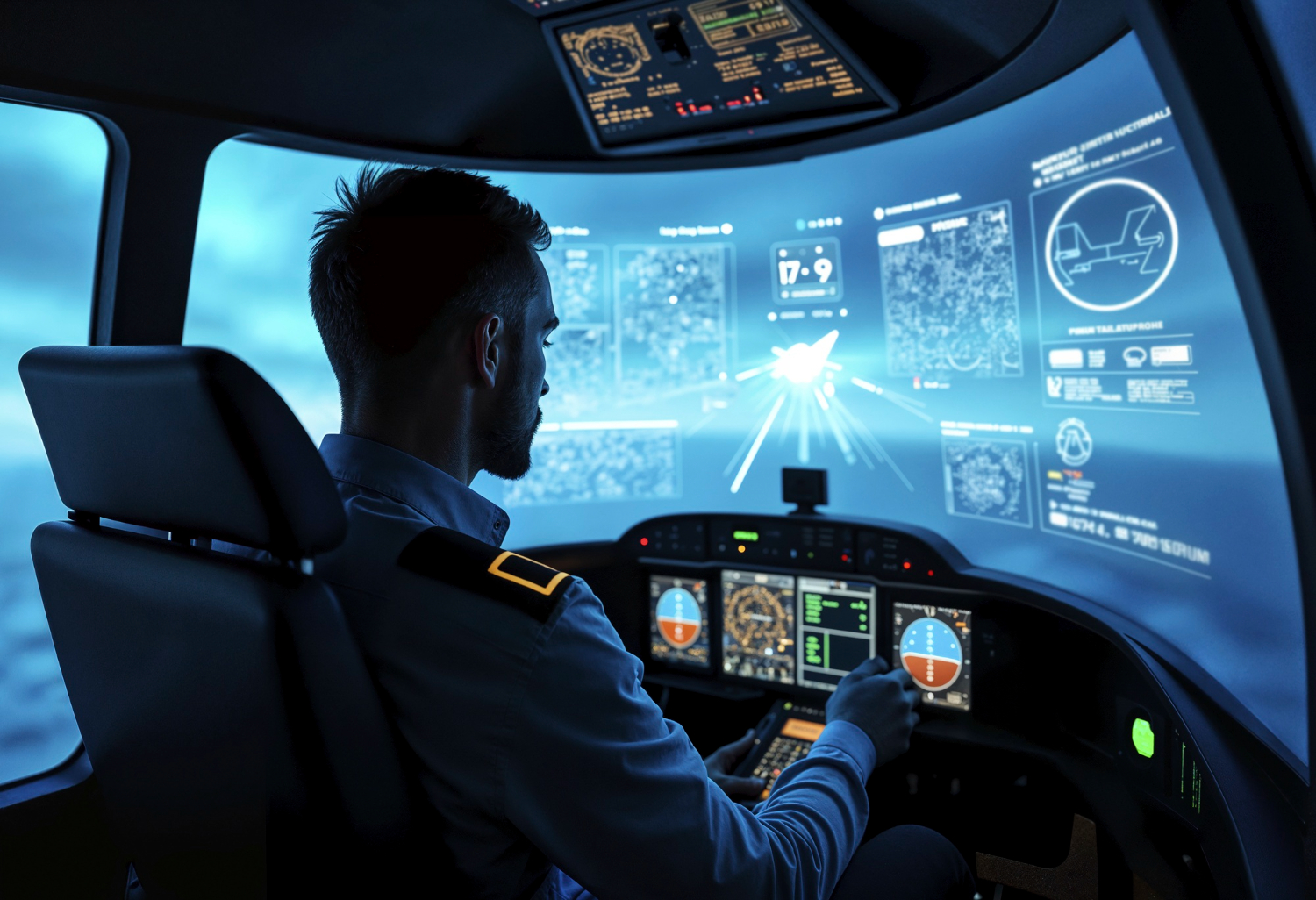

Smarter aviation: AI and fuel efficiency
On a typical wide-body operation, fuel accounts for thirty to forty percent of direct operating cost—every kilogram saved drops both expense and carbon output. That is why fuel optimisation has shifted from a periodic engineering exercise to a continuous, sensor-driven problem — exactly the kind of problem AI handles well. In our experience working with operators on industrial AI deployments, the gains rarely come from one dramatic intervention. They come from many small adjustments made consistently, flight after flight, across thousands of aircraft.
The five mechanisms below are where current AI systems do meaningful work. None of them require a new airframe. All of them produce measurable changes within an existing fleet.
What does “AI for fuel efficiency” actually mean in aviation?
It means a set of decision-support systems — most of them built on top of standard ML stacks like PyTorch, ONNX runtimes, and time-series feature stores — that consume telemetry from aircraft sensors, weather feeds, ATC data, and historical flight logs to recommend changes that reduce kerosene burn per revenue tonne kilometre. The intelligence sits in the pattern recognition: identifying the conditions under which a different route, climb angle, or maintenance interval produces a measurably lower burn rate.
1. Smarter route planning
Historically, dispatchers locked in a route hours before push-back, leaving pilots to fly the filed trajectory regardless of evolving winds or convection. AI-driven flight planning systems treat it as a continuous optimisation problem. They ingest live wind fields, jet stream forecasts, ATC restrictions, and historical performance for the specific tail number, then recommend lateral and vertical profiles that minimise burn for the given payload.
The savings per flight are small — typically observed in the low single-digit percent range for long-haul, less for short-haul — but they compound across an operation. More importantly, the system learns. After enough flights on a city pair, it identifies wind patterns and ATC behaviours that a human dispatcher would not extract from raw data.
2. Efficient climb and descent profiles
Thrust changes, flap schedules, and speed profiles during climb-out and approach dominate instantaneous consumption and cascade through the entire sector. A continuous descent approach, executed correctly, can save meaningful fuel against a stepped descent — but the optimal profile depends on weight, weather, traffic, and runway assignment, and it changes mid-flight.
Modern flight management systems augmented with ML models recommend speed, flap deployment timing, and thrust settings based on the live state of the aircraft and the destination airspace. The crew remains in command; the system narrows the decision space. Beyond the fuel saving, smoother profiles reduce engine cycling and brake wear, which feeds back into the maintenance cost line.
Read more: AI in aviation: boosting flight safety standards.
3. Real-time fuel and engine monitoring
High-frequency data—thrust parameters, thermal margins, rotor speeds, lubrication state, acoustic signatures—flows continuously from the powerplant to ground-based analytics. AI models trained on historical data flag deviations that a fixed-threshold alarm would miss — a fuel flow drift of a few hundred pounds per hour against the engine’s own baseline, for example.
The value is twofold. First, it catches degradation early, before it shows up as a hard fault. Second, it gives the crew and ground operations a live picture of whether the aircraft is performing to its expected fuel curve, so deviations can be addressed during the flight rather than reconstructed afterwards.
4. Predictive maintenance and the burn rate it protects
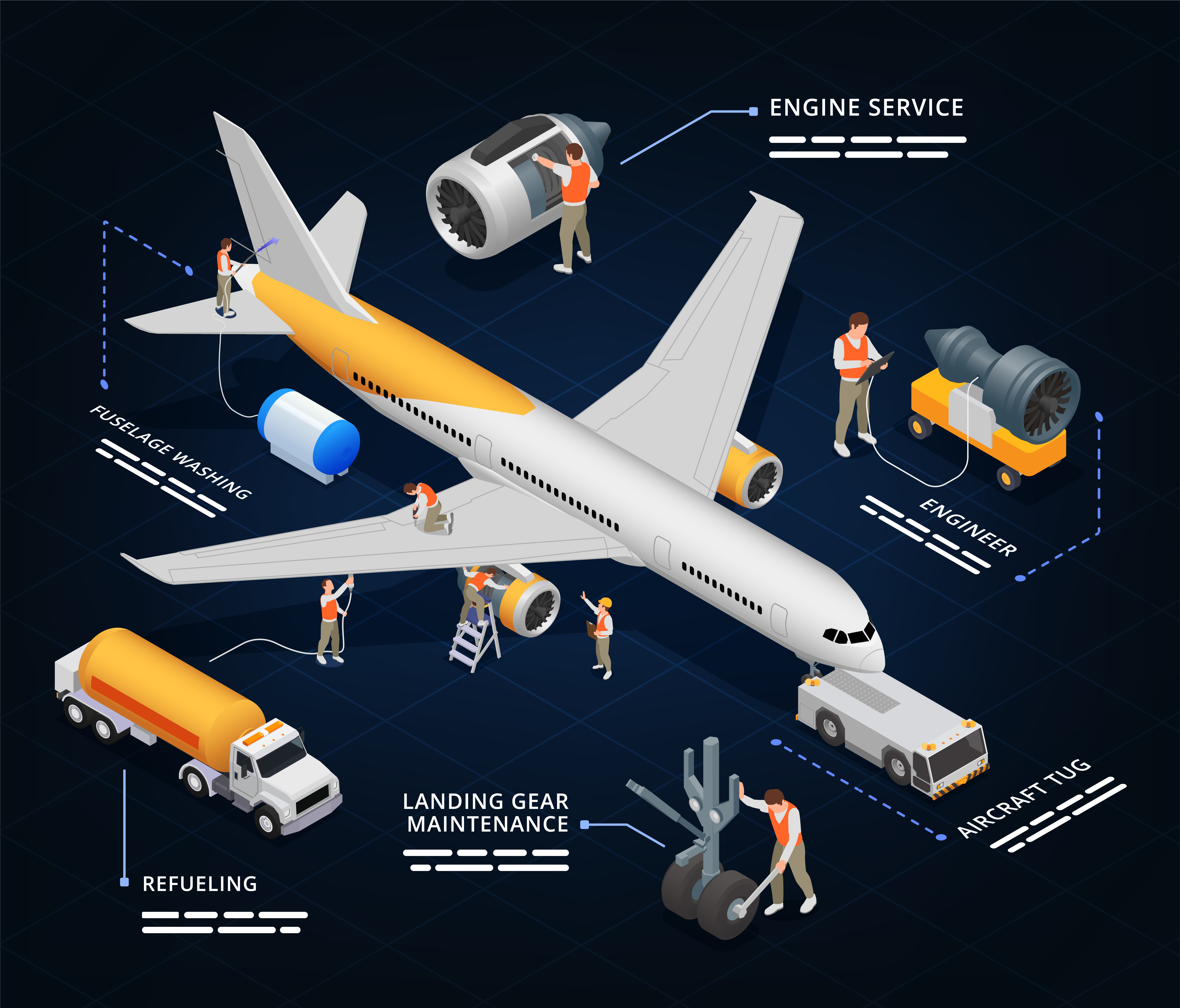
Compressor fouling, turbine tip clearance growth, and fuel-nozzle coking degrade thermodynamic efficiency long before dispatch reliability falls. Compressor fouling, worn seals, drifting fuel control units — none of these need to be at failure thresholds to cost measurable kerosene. Predictive maintenance models correlate fuel-burn trends with sensor signatures to identify which aircraft will benefit most from a wash, a component swap, or a software update.
This is a different framing from the traditional reliability-centred maintenance question of when will this part fail. The fuel-efficiency framing asks when is this part costing more in fuel than the maintenance event would cost. The economics often favour earlier intervention than reliability-only models would suggest.
Read more: AI in aviation maintenance: smarter skies ahead.
5. Pilot training and feedback loops
Human variability in speed management, thrust application, and descent energy planning produces a multi-hundred-kilogram spread in trip fuel for identical missions. AI-assisted training tools — using speech recognition for cockpit voice, plus the full sensor record of the flight — produce per-pilot reports that identify the actions that drove the difference. Idle thrust use during descent, reverse thrust on landing, taxi-out single-engine practice, APU usage on the ground: each gets quantified.
The point is not to grade individuals but to spread the techniques of the most fuel-efficient crews across the operation. This is a slow, behavioural lever rather than a technological one, but the long-run effect is large.
Where AI for fuel efficiency works — and where it does not
| Use case | Typical fuel impact | What it depends on |
|---|---|---|
| Dynamic route planning | Observed pattern: low single-digit % per flight | Quality of wind/ATC data; tail-number history |
| Climb/descent profile guidance | Observed pattern: variable, biggest on short-haul | FMS integration; crew adoption |
| Sensor-driven anomaly detection | Catches drift before fixed-threshold alarms | Baseline model per engine serial |
| Predictive maintenance | Reframes burn-cost vs maintenance-cost trade-off | Ground-truth fuel data joined to maintenance records |
| Pilot feedback systems | Slow, compounding behavioural shift | Honest, non-punitive deployment |
Real-world results span zero to five percent sector savings depending on baseline procedure maturity, fleet homogeneity, and route network complexity.
Beyond jet fuel: how AI supports alternative fuel adoption
Drop-in blends of bio-derived paraffins and power-to-liquid kerosene shift energy density, freeze point, and heat release in ways that fixed schedules cannot fully exploit. AI models help operators monitor real performance of these fuels — actual specific fuel consumption versus the certified envelope — and feed the results back into procurement decisions. The same telemetry that supports fuel efficiency optimisation supports the data case for SAF.
Ground operations matter too. AI-driven taxi routing, single-engine taxi advisory, and APU usage policies often produce more measurable fuel saving per departure than any in-flight intervention, because the marginal burn during ground operations is high relative to the small distance covered.
Read more: AI-powered computer vision enhances airport safety.
What this looks like in operational terms
Machine learning surfaces opportunities; capturing them requires procedural discipline, operational buy-in, and closed-loop feedback from every flight. It surfaces decisions, narrows option spaces, and quantifies the consequences of choices that crews, dispatchers, and maintenance planners were making anyway. The operators we see getting real value are the ones who treat these systems as decision-support, integrate them with existing FMS and MRO workflows, and instrument the outcomes so they can tell whether a recommendation actually saved fuel or just looked like it should have.
We build computer-vision and decision-support systems for industrial settings — including aviation-adjacent ones — where the constraint is exactly this combination of sensor density, safety criticality, and tight operational economics. The work is less about novel models than about getting reliable, low-latency inference into a workflow that pilots, dispatchers, and engineers will actually use.
Frequently Asked Questions
How much fuel can AI realistically save on a single flight?
Observed reductions in the low single-digit percent range per flight are typical for route and profile optimisation on long-haul; short-haul tends to see larger relative gains from ground operations and climb profiles. These are observed-pattern numbers, not benchmark guarantees — actual savings depend on fleet, route mix, and how deeply the recommendations are integrated into dispatch and flight operations.
Is AI replacing pilots or dispatchers in fuel decisions?
No. The systems in operation today are decision-support: they recommend, the crew and dispatcher decide. Regulatory frameworks and the safety culture in aviation both push strongly against autonomous fuel decisions, and the value of AI here is in narrowing options and quantifying trade-offs rather than removing human judgment.
Which AI techniques matter most for aviation fuel efficiency?
Time-series anomaly detection on engine telemetry, gradient-boosted models for route optimisation, and increasingly transformer-based sequence models for flight profile recommendation. The supporting infrastructure — feature stores, low-latency inference, integration with the FMS and MRO stacks — usually matters more than the choice of model.
Does AI help with sustainable aviation fuel adoption?
Yes, but indirectly. AI monitors real-world performance of alternative fuels against certified envelopes, supports procurement decisions, and integrates SAF use into the same fuel-optimisation workflows. It does not produce SAF or solve the supply-side problem; it makes the operational case for it more measurable.
How long does it take to see results from an AI fuel-efficiency programme?
For monitoring and anomaly detection, value appears as soon as the system has a stable baseline — usually weeks. For predictive maintenance and pilot feedback systems, the meaningful signal needs months of data to separate genuine improvement from operational noise. The behavioural and procurement effects compound over years.
The bottom line on 5 Ways AI Helps
Building the model is straightforward—deciding which prediction errors you can tolerate in line operations is the engineering challenge that determines adoption. That answer is workload-specific, and it is worth writing down before you build.