
9 Applications of AI in Agriculture
Agriculture has changed substantially in the last few years through Artificial Intelligence (AI). What “AI in agriculture” really means is the use of automated, data-driven systems to support farmers — not replace their judgement, but extend it across more acres, more crops, and longer planning horizons than human attention alone can cover. AI is now applied to irrigation, soil management, pest detection, climate control, harvesting, and supply chain optimisation. This article walks through nine concrete technology categories where the shift is most visible, and where current operational tooling is upgrading traditional practice.
1. Automation and sustainability of irrigation systems
AI is making a measurable difference in irrigation — from automated, eco-friendly water delivery to long-running monitoring of soil health and nutrient levels. Real-time crop monitoring, enabled by advanced imaging and data analysis, supplies timely insights into crop health, growth, and yield. Computer vision (CV) and predictive models are integrated into edge computing devices to manage irrigation locally, without relying on continuous cloud connectivity in the field.
Common use cases:
- Precision water management
- Resource efficiency
- Energy conservation
- Labour optimisation
- Adaptability to climate change
2. Soil monitoring techniques for long-term analysis
AI has emerged as a game-changer in soil monitoring, offering long-term methods that revolutionise traditional agricultural practice. Farmers gain comprehensive insights into soil health over extended periods. Computer vision in soil monitoring involves image analysis to assess soil conditions: it can identify variations in colour, texture, and moisture content, detect root growth, and differentiate between crops and weeds. The result is information farmers can act on — targeted nutrient management, better rotation choices, and earlier detection of degradation.
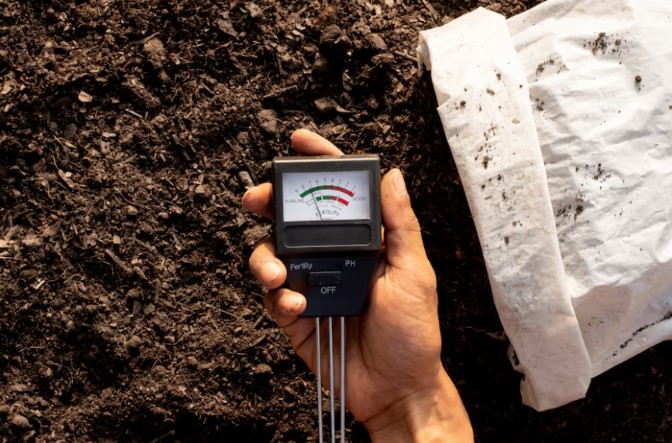
AI-based soil monitoring uses sensors, satellite imagery, machine learning, IoT, and edge computing to analyse soil from several angles at once. Beyond immediate conditions, it provides ongoing insight into nutrient balance, moisture trends, and overall composition. That helps farmers decide on crops, fertilisation strategy, and sustainable land management.
Common use cases:
- Crop rotation planning
- Early detection of soil degradation
- Precision nutrient management
- Erosion control and land conservation
- Decision support for sustainable practices
- Enhanced crop resilience
3. AI-driven crop monitoring
AI-driven crop monitoring transforms agriculture by providing farmers with continuous visibility into field health. The systems identify patterns, detect diseases and pests early, and assess crop growth at parcel-level resolution. That precision allows farmers to make data-driven decisions about irrigation, fertilisation, and pest control, with measurable gains in yield and resource efficiency.
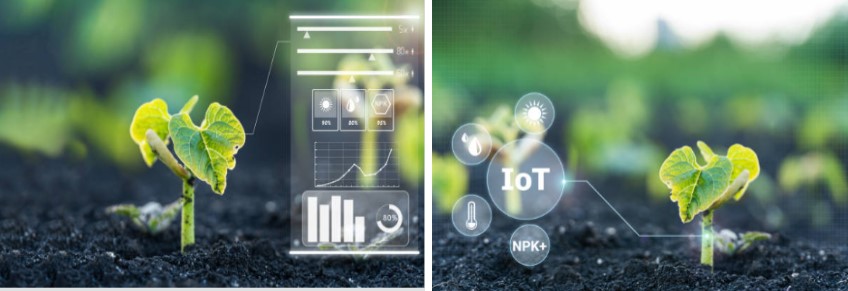
In crop monitoring, edge computing means deploying sensors directly in the field to collect real-time data on soil moisture, temperature, and crop health. The data is processed locally on edge devices — TensorRT-optimised inference on a Jetson-class board is a typical pattern — reducing latency and enabling decisions without a round-trip to the cloud. The result is instant insight, optimised resource use, and precision agriculture that actually works under farm-network conditions.
4. AI for detecting damage, pests, and weeds
AI is proving to be a powerful ally in the crucial task of detecting pests, weeds, and damage. In agriculture, “damage” covers several distinct categories, and each has its own visual and statistical signature.
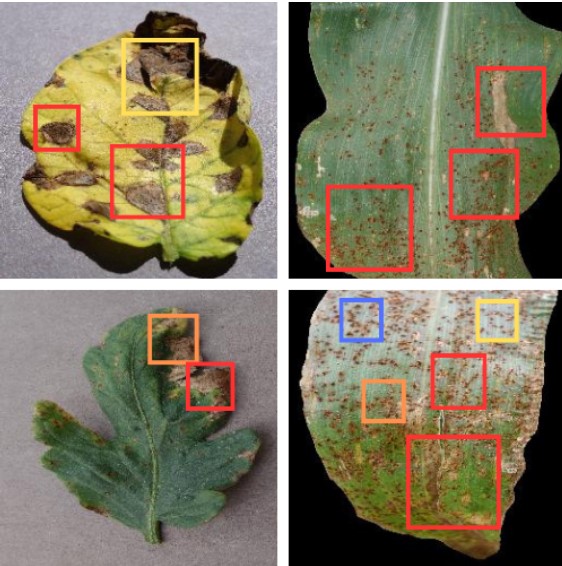
- Disease damage — harm from fungal, bacterial, or viral infections, with symptoms like wilting, discolouration, or abnormal growth.
- Insect damage — crop injury from pests such as aphids, caterpillars, and beetles, affecting leaves, stems, or fruits.
- Weed damage — competition for resources from unwanted plants, hindering growth and reducing yields.
- Environmental damage — adverse effects from extreme weather, drought, flooding, or soil erosion.
- Chemical damage — harm from pesticides, herbicides, or pollutants.
- Mechanical damage — injuries during planting, cultivation, or harvesting, often from inappropriate machinery use.
- Nutrient deficiency or toxicity — symptoms like yellowing, stunted growth, or leaf necrosis from soil imbalance.
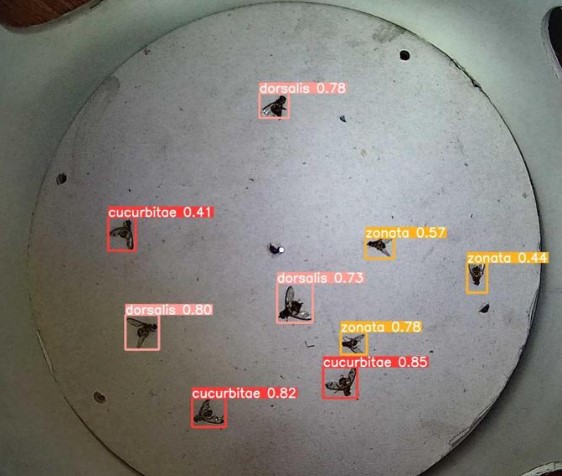
Advanced image recognition and machine learning models — typically convolutional architectures fine-tuned with PyTorch, then deployed via ONNX or TensorRT — can detect subtle hints of damage and infestation in imagery captured by drones, satellites, and field sensors. Farmers can see problems early, intervene promptly, and limit pesticide use to the parcels that actually need treatment. In our experience, this kind of targeted application is where AI shifts from a research demo to a working tool: it reduces input cost while protecting yield.
How does AI actually detect pests early in the field?
The detection pipeline usually combines three signals: high-resolution imagery from drones or fixed cameras, environmental data from edge sensors (humidity, temperature, leaf wetness), and a trained object-detection model that has seen the relevant pest species under the relevant lighting conditions. Cross-referencing the three reduces false positives — a darkened leaf with low humidity is more likely sunburn than fungal infection. The model output drives an alert, not a spray decision; the agronomist remains in the loop.
5. AI for optimisation of pesticide application
Pesticides are chemicals designed to prevent, destroy, repel, or mitigate pests — insects, weeds, fungi, rodents, and other organisms that threaten crops or livestock. They are common in agriculture for a reason, but excessive use harms the field as well as the surrounding ecosystem.
AI changes the economics of pesticide use by leveraging machine learning over historical crop health, pest prevalence, and environmental data. The models predict optimal timing and locations for application, maximising effectiveness while shrinking the treated area. According to a 2021 World Economic Forum report on AI for agriculture innovation, only about 2% of pesticides reach their specific target while 30% cause unintended damage to the field — a structural inefficiency that targeted, AI-guided application directly addresses.
6. Climate control in smart greenhouses and vertical farming
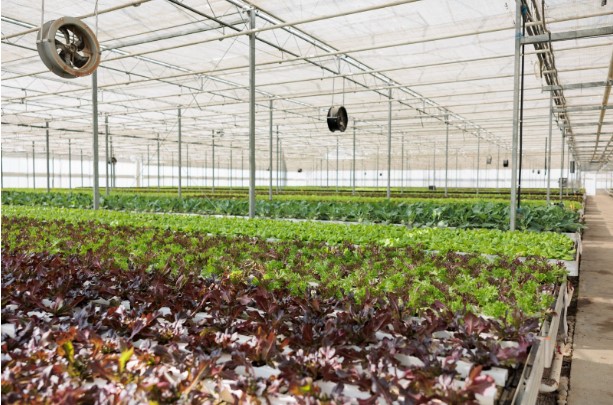
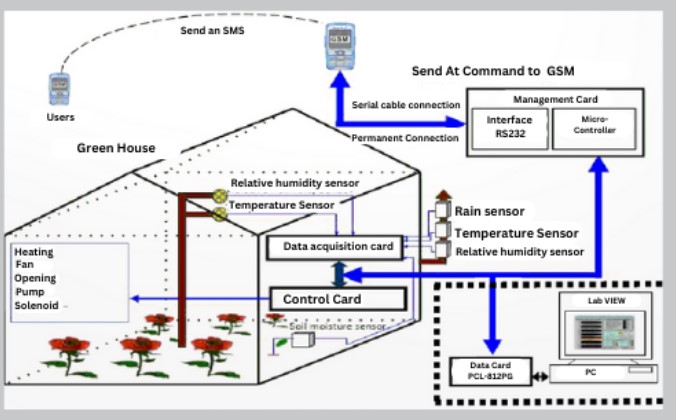
Smart greenhouses and vertical farms are reshaping traditional agriculture, particularly in climate control. These methods use microcontrollers and IoT devices to regulate temperature, humidity, and light with precision that open-field farming cannot match. Automated systems, supported by machine learning, allow real-time adjustment of climatic conditions to optimise plant growth. The result is higher yields per square metre and better resource efficiency.
IoT edge computing is central here. Sensors deployed across the growing environment capture temperature, humidity, and light data continuously, and edge devices run the control loops locally. The combination keeps climate control responsive even when network conditions are poor — an important property for facilities in remote locations.
7. Automatic harvesting and supply chain management
Automatic harvesting and supply chain management are replacing manual methods with vision-driven robotics and optimisation. Computer vision combined with supply chain analytics enables precise harvesting of high-quality produce and faster post-harvest routing.
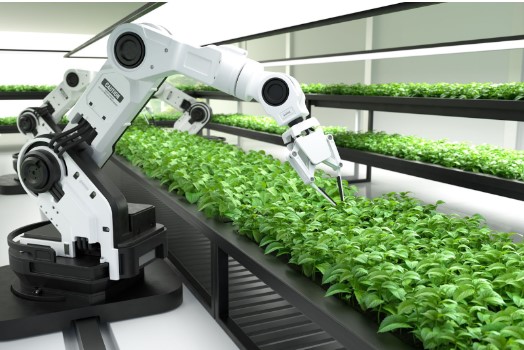
GPU acceleration is what makes this practical. In automated harvesting systems, GPUs process large volumes of visual data in real time, classifying produce by size, colour, and quality as it moves through the line. The same compute backbone supports storage optimisation downstream — sorting produce by ripeness profile so that batches reach distribution centres in the right condition. Without that acceleration, the vision pipeline simply cannot keep up with line speed.
8. AI weather forecasting and its impact on harvest timing and seed breeding
Weather prediction is central to agriculture, guiding decisions from harvest timing to seed breeding. With advanced data analysis and predictive modelling, farmers gain sharper insight into upcoming weather patterns. Harvests can be timed to avoid adverse conditions; seed breeding programmes can be aligned with favourable climate windows for germination and crop development.
In our experience, the value of AI weather forecasting is not raw accuracy — it is the ability to translate forecasts into operational decisions automatically. A decision support system that consumes a forecast and recommends “harvest the south parcel within 48 hours” is what changes outcomes, not the forecast itself.
9. Real-time decision support systems and mobile apps
Modern agriculture depends on information systems that link the field to the office. Real-time decision support lets farmers act on irrigation schedules, harvest timelines, and treatment plans as conditions change. Mobile apps extend that accessibility — remote monitoring, alerts, and control from anywhere with a signal. Paired with edge-based data collection, decision support systems represent a meaningful step toward precision, efficiency, and sustainability in farm management.
Quick reference — AI techniques and where they apply
| Technique | Primary application | Typical deployment |
|---|---|---|
| Computer vision | Crop monitoring, pest detection, harvesting | Drones, fixed cameras, robotic arms |
| Edge computing | Irrigation control, climate control, in-field inference | Jetson-class boards, microcontrollers |
| Machine learning (tabular) | Pesticide optimisation, yield prediction | Cloud + edge hybrid |
| GPU acceleration | Real-time sorting, large-scale image processing | On-site or co-located GPUs |
| IoT sensors | Soil monitoring, greenhouse climate control | Distributed sensor networks |
| Generative AI | Risk simulation, scenario planning | Cloud-hosted models |
Benefits of using AI solutions in agriculture
Remote sensing interprets satellite and aerial imagery to map field variability; machine learning predicts disease outbreaks; autonomous vehicles handle repetitive field operations; sensor fusion integrates soil, weather, and plant data; and generative models simulate scenarios for risk management.es many aspects of farming practice, so farmers can act earlier on better information. The 2021 WEF report notes that only about 2% of pesticides reach their specific target while 30% cause damage to the field; AI-based smart farming systems with early warning and Economic Threshold Limit (ETL) calculation are projected to raise yields by 17% and income by 25% (published-survey, WEF 2021). The net effect on cost — better decision support, automated processes, and tighter resource allocation — makes farming more affordable and more sustainable in parallel.
Reduced injuries and labour hours
AI-driven machinery automates planting, weeding, and harvesting, reducing manual labour and injury risk. Precision farming technologies regulate water, fertilisers, and pesticides at higher resolution than human teams can manage. Farmers shift toward strategic decision-making rather than repetitive field work — a working environment that is both safer and more productive.
Advanced risk management
AI is transforming risk management in agriculture by analysing historical weather patterns and market trends for sharper predictions. Farmers can adapt strategies to weather events or market fluctuations quickly. Real-time monitoring enables proactive interventions before losses materialise. Generative AI simulates a range of scenarios — weather-related and market-related — producing more robust risk models than static historical analysis can support.
Challenges of using AI
AI’s integration in agriculture is not friction-free. It needs extensive farm data, and the cost can be prohibitive for smaller operations. Agricultural systems are variable and complex, so obtaining quality data is itself a challenge. Concerns about data privacy, security, and model interpretability arise — particularly when the underlying models drive treatment decisions. Bridging the gap between advanced solutions and farmers’ digital literacy is a real hurdle. Ensuring ethical use, addressing biases, and providing equitable access all require careful consideration for responsible adoption.
What we offer as a software company
Connectivity gaps in rural areas constrain real-time inference, training data skews toward large monoculture operations, and regulatory frameworks lag behind the technology’s capabilities. Our machine learning engagements deliver tailored solutions that use computer vision for precise visual interpretation of crops, soil, and produce.
Our work in generative AI supports systems that simulate diverse scenarios — useful for risk modelling and planning. We optimise computational efficiency through GPU acceleration, particularly in image recognition and machine learning workloads where throughput matters. In IoT edge computing, we deploy strategically placed sensors and edge inference to enable real-time decision-making at the point of collection. Combined with engagements scoped to your problem, that gives agricultural operators a workable path from prototype to production.
For broader context on how these techniques fit together across the sector, see our overview of AI applications in agriculture.
Conclusion
AI in agriculture is now essential for implementing best practices, using resources efficiently, and optimising the supply chain. Implementing AI is a fraction of the cost of the damages and losses produced by uninformed traditional methods — and the gap is widening as the underlying models, sensors, and compute platforms continue to mature.
Frequently Asked Questions
Which AI technologies are most widely used in agriculture today?
Computer vision, IoT edge computing, machine learning for tabular data, GPU-accelerated image processing, and — increasingly — generative AI for scenario simulation. Each maps to a specific operational problem: vision drives pest detection and harvesting, edge computing drives in-field control, and generative models support risk planning.
Does AI in agriculture require constant internet connectivity?
No. Most field deployments use edge computing precisely so that inference and control loops keep running when network conditions degrade. Sensors and edge devices process data locally; the cloud is used for model updates and aggregate analytics, not for real-time control.
How does AI improve pesticide use specifically?
It narrows the treated area. Machine learning models cross-reference imagery, environmental data, and pest prevalence to predict where and when application is justified. The WEF figure that only about 2% of pesticides reach their target is the structural problem AI-guided application is built to address.
What are the main barriers to adopting AI on a working farm?
Three recur: data quality and quantity, upfront cost for smaller operations, and the digital-literacy gap between advanced tooling and day-to-day field operations. Privacy and model interpretability matter where AI drives treatment decisions, and they need to be designed in from the start rather than retrofitted.
References
- Image by Awaais 2 on Freepik: A plant is surrounded by a smartphone that says ‘smart’ on it.
- Image by k-life on Freepik: Soil quality meter in the hands of a man who is checking the soil for planting.
- Image by user6702303 on Freepik: Smart robotic farmers concept.
- Shahbandeh, M. (2023). Forecast market value of smart farming worldwide in 2021 to 2027. Statista.
- World Economic Forum. (2021). Artificial Intelligence for Agriculture Innovation.
