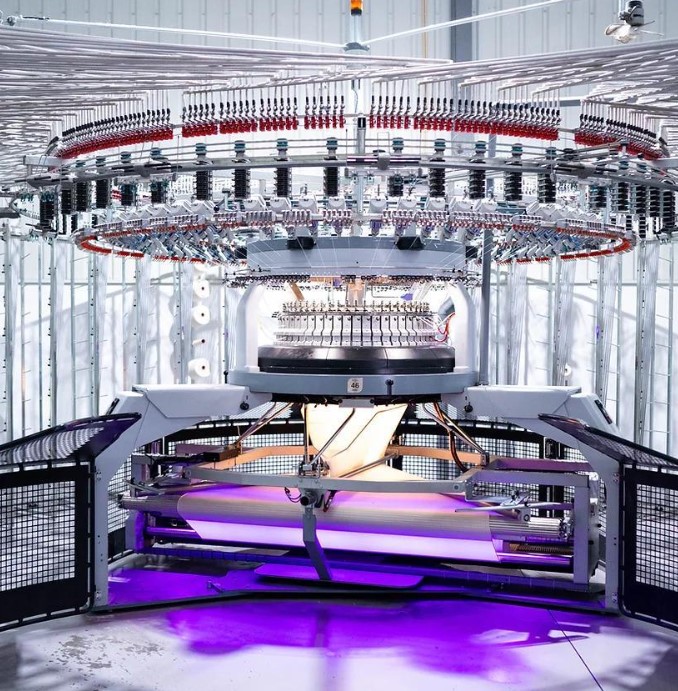
AI for Textile Industry: Transforming Design and Production

Find out how AI is transforming the textile industry by improving design processes and production efficiency and obtaining excellent supervision. Invite AI-driven solutions designed to revolutionise fabric manufacturing for various global companies.

AI for Textile Industry: Transforming Design and Production
Written by TechnoLynx Published on 04 Nov 2024

Introduction

The textile industry stands as one of the oldest sectors, weaving through the fabric of human civilisation. Despite its rich history, the industry faces a myriad of challenges, from labour-intensive processes to the demand for sustainable practices. Textile manufacturers are constantly striving to innovate and adapt. AI is touching every aspect of textile manufacturing, from predicting equipment failures to revolutionising product design and making operations smoother and more sustainable.

According to the World Economic Forum, AI-driven optimisation of manufacturing processes has resulted in a 20% reduction in energy consumption and a 15% decrease in water usage in textile production facilities. In this article, we will demonstrate how AI-driven technologies are reshaping fabric design, production optimisation, trend detection, quality control, and customer engagement, offering new opportunities for innovation and growth.

AI in Textile Industry: Endless Possibilities. Source: Smartex AI

Generative AI in Textile Manufacturing Design

In this intricate world of textile design, creativity knows no bounds. But, achieving truly unique and creative designs has often been a labour-intensive process. Hence, Generative AI creates new patterns, materials, and designs based on input parameters like colour schemes, textures, and design constraints. This allows textile designers to explore new realms of creativity that would have been impractical or even impossible using traditional methods.

Generative AI also optimises dye formulations for more sustainable production processes. By analysing vast datasets of dye and fabric properties, Generative AI algorithms can recommend the most efficient dyeing processes, reducing both costs and environmental impact.

Bio-textile development using Generative AI algorithms

A World Economic Forum states traditional textile production is responsible for 20% of world water pollution and 10% of carbon emissions. Chemical-free “biotextiles” use natural and non-toxic substances like bamboo, hemp, natural cotton or even bacteria and protein. These materials reduce carbon footprint and less reliance on harmful chemicals typically used in traditional textile production.

Generative AI algorithms create textiles with unique patterns, structures, and properties. By analysing data on biomaterial properties and environmental impact factors, these algorithms can generate innovative fabric compositions without compromising on quality. This results in reduced water usage and decreased energy consumption compared to traditional textile methods.

Garbage trucks full of clothes are burned or dumped in a landfill. Source: WeForum

Tech Clothing Design Through AI-Driven Creativity

The global wearable tech market is predicted to reach $87 billion in 2025, driven by rising consumer interest in products like fitness trackers and smartwatches. In tech clothing, AI algorithms personalise clothing recommendations based on individual style preferences, body measurements, and feedback. Researchers at MIT produced a programmable clothing fabric that uses AI for fabric design to control the garment’s texture and appearance in real time, opening up new possibilities for interactive and adaptive clothing designs.

Companies such as Google’s Project Jacquard and Sensoria Fitness are using AI in designing clothing with built-in sensors, which track physiological data and map activities. The AI algorithms embedded in Sensoria’s smart socks interpret the running technique and give immediate feedback to the users during exercise. However, Adidas’ partnership with Carbon uses AI to design 3D-printed midsoles for sneakers for lighter, durable and sustainable footwear.

Sensoria Smart Running System. Source: Senroria Fitness

Generative AI for Automotive Furniture

When you step into a car, have you ever thought about seats and interiors? Well, AI is helping car interior designers create more comfortable, stylish, and innovative automotive furniture. Traditionally, designing automobile furniture requires considerable manual exertions, but with Generative AI, designers can input criteria like ergonomic necessities, material preferences, and space constraints, allowing AI systems to generate numerous design alternatives right away.

Whether you opt for plush cushions or ergonomic support, Generative AI can create seat designs that prioritise your comfort during long drives. It considers factors like weight distribution, passenger comfort, and aesthetic preferences by studying information from past designs, user feedback, and market trends. Ford Motor leveraged Generative AI algorithms to optimise space and enhance comfort in its vehicles, reducing the weight of its car seats by up to 50%, resulting in improved fuel efficiency without compromising on comfort.

How is the Automotive Industry Leveraging AI Solutions? Source: XR Today

Creating Clothing for Outer Space with Generative AI

Space clothing is necessary to ensure astronauts are comfortable, safe, and productive in a very tough outer space environment. Generative AI is employed to design space clothing that is both durable and functional but also customised to the unique challenges of space travel. Generative AI creates clothing designs according to astronauts’ body shapes and preferences by analysing data on astronaut physiology, mission requirements, and fabric properties. It can also incorporate advanced materials and fabrication strategies to ensure astronauts’ safety and comfort during space missions.

Fashion designers create clothes for outer space. Source: NewsWeek

Read more: Exploring Outer Space with the Help of AI Innovations

Computer Vision for Color Matching & Fabric Defect Detection

Did you ever get a piece of clothing delivered online and discover the colour was different in real life than it looked on your screen? Or discovered a flaw in a fabric after it was already made into a garment? In order to achieve high-quality products in the textile industry, it is important to obtain the right colour and ensure the quality of the fabric. However, matching colours manually and finding imperfections in textile fabrics can be time-consuming. By leveraging Computer Vision (CV) technology, manufacturers can ensure consistent colour accuracy and product quality, ultimately enhancing customer experience and driving efficiency in production processes.

Colour-patterned fabric defect detection. Source: QualitasTech

Automating Precise Color Matching

Whether it’s dyeing fabric or printing styles, even minor variations in colours can result in rejected products and upset customers. Computer Vision automates the colour-matching procedure to analyse and compare colours, enabling precise shade matching without human intervention. These systems detect subtle differences in colour that can be imperceptible to the human eye.

The Computer Vision system captures images of fabric samples under controlled lighting conditions. Using AI in dye formulation, the system analyses the images to determine colour values and compare them to the desired standard. If any discrepancies are found, the system automatically adjusts the dye formulation to achieve the desired colour match.

AR/VR/XR for Inspection & Quality Control

On the other hand, human inspectors may miss subtle defects, leading to inconsistencies in product quality. This process causes delays in production and increases costs. That’s where the combination of computer vision with augmented reality (AR), virtual reality (VR), and mixed reality (XR) steps in, transforming the way inspections are conducted and quality is controlled.

Augmented Reality (AR) allows inspectors to visualise defect detection in real-time. Inspectors can quickly identify and address defects without the need for physical samples, reducing errors. With virtual reality (VR), inspectors can examine textiles in 3D, enabling them to view textiles from multiple angles and facilitating thorough quality assessments.

For instance, Airbus used Augmented Reality (AR) for aircraft inspection processes. Inspectors equipped with AR glasses could visualise aircraft components overlaid with digital annotations and defect detection indicators in real-time. Airbus reported a significant reduction in inspection time by up to 30%, leading to increased efficiency and cost savings in aircraft maintenance.

Stepping into the virtual world to enhance aircraft maintenance. Source: BlogBeforeFlight

Edge Computing for Manufacturing Processes

Imagine a huge factory bustling with machines weaving threads together, dyeing fabrics, and printing patterns. With so many moving parts, it’s crucial to keep everything running smoothly. This is where edge computing comes into play, which involves putting smart devices right where the action is—on the machines themselves. These devices collect data about how the machines are running in real-time.

Read more: Computer Vision in Manufacturing

Optimising Production Workflows

Imagine weaving machines churning away, dyeing machines adding colour, and printers creating intricate designs—all happening simultaneously. With edge computing, these machines can send data about their performance, temperature, and other important factors directly to the edge devices. Instead of sending data to a faraway server for analysis, edge computing devices are installed directly on the machines themselves.

For example, if a weaving machine starts to show signs of overheating or if a dyeing machine isn’t working as efficiently as it should, the edge device will pick up on these problems right away. This quick identification of issues allows manufacturers to make decisions on the spot to optimise workflows. They can adjust settings, scheduled maintenance, or even reroute production to other machines if needed—all in real time.

Stepping into the virtual world to enhance aircraft maintenance. Source: Community Connection

Predictive Maintenance in Weaving Machines

In a weaving factory, machines work tirelessly to produce fabrics that are prone to unexpected breakdowns and costly downtime. With edge computing, instead of relying on fixed maintenance schedules, sensors installed in the weaving machines collect real-time data about various factors like temperature and vibrations. This data is then analysed right on the machines, allowing for immediate insights.

But how does it help detect the factory floor? When the weaving machine exhibits a slight increase in vibration, the edge computing system immediately recognises this anomaly. It cross-references this data with historical patterns and predicts that a particular component might fail in the near future if left unchecked. This prediction triggers a proactive maintenance alert, prompting the technicians to inspect and replace the component before it causes any significant disruption.

NLP for Textile Trend Detection

How do businesses recognise which colours, styles, or fabrics could be on call for next season? Trends evolve rapidly, stimulated through social media, movie star endorsements, and worldwide occasions. With fashion detection, you may create merchandise that resonates with customers, boosting sales and staying aggressive. NLP analyses sizable quantities of textual information from resources like social media, style blogs, and industry reports.

NLP algorithms are trained to recognise and examine written text, sentiments, and key phrases related to style and textiles. By scanning through social media posts, blog articles, customer reviews, or even information articles, NLP algorithms can identify rising traits, famous styles, and customer preferences.

A Paris-based fashion tech startup, Heuritech analyses millions of images and textual data from social media, fashion blogs, and e-commerce websites to identify current trends in colours, styles, and fabrics. With NLP, Heuritech can analyse specific patterns, like “millennial pink” or “striped shirts,” and track their popularity over time.

Heuritech’s trend forecasting platform gives valuable insights. Source: Heuritech

What We Can Offer as TechnoLynx

At TechnoLynx, we are recognised for providing tailored AI solutions designed to fulfil the unique technological requirements of various industries. We excel in deploying customisable AI solutions to address diverse challenges according to our client’s requirements. Our AI algorithms models and algorithms can optimise your operations, enhance productivity, and drive competitiveness. We provide complete assistance and optimisation services to ensure the smooth integration of AI into your operations.

From initial setup to ongoing fine-tuning and updates, we are committed to maximising AI’s value for your business. With a proven track record of successful AI implementations across various industries, TechnoLynx brings extensive experience and expertise to every project. Our team has helped numerous companies leverage AI to drive innovation, improve efficiency, and achieve their business objectives.

Final Thoughts

In conclusion, the future of the textile business lies in embracing AI-driven innovation. Whether AI is combined with advanced technologies like Computer Vision, Generative AI, GPU acceleration, IoT side computing, NLP, AR/VR, or XR, there are countless areas where AI-powered technologies can be used. From predicting equipment disasters to revolutionising product design, AI has verified its potential to streamline approaches, enhance satisfaction, and drive sustainability. By staying at the forefront of AI innovation, textile businesses can role themselves as leaders in the industry and drive continued growth and success in the years to come.

Contact us now to start your AI journey!

Continue reading:AI Revolutionising Fashion & Beauty

References:

Cover image: Freepik, Glashier

Cost, Efficiency, and Value Are Not the Same Metric

Cost, Efficiency, and Value Are Not the Same Metric

17/04/2026

Performance per dollar. Tokens per watt. Cost per request. These sound like the same thing said differently, but they measure genuinely different dimensions of AI infrastructure economics. Conflating them leads to infrastructure decisions that optimize for the wrong objective.

Precision Is an Economic Lever in Inference Systems

Precision Is an Economic Lever in Inference Systems

17/04/2026

Precision isn't just a numerical setting — it's an economic one. Choosing FP8 over BF16, or INT8 over FP16, changes throughput, latency, memory footprint, and power draw simultaneously. For inference at scale, these changes compound into significant cost differences.

Precision Choices Are Constrained by Hardware Architecture

Precision Choices Are Constrained by Hardware Architecture

17/04/2026

You can't run FP8 inference on hardware that doesn't have FP8 tensor cores. Precision format decisions are conditional on the accelerator's architecture — its tensor core generation, native format support, and the efficiency penalties for unsupported formats.

Steady-State Performance, Cost, and Capacity Planning

Steady-State Performance, Cost, and Capacity Planning

17/04/2026

Capacity planning built on peak performance numbers over-provisions or under-delivers. Real infrastructure sizing requires steady-state throughput — the predictable, sustained output the system actually delivers over hours and days, not the number it hit in the first five minutes.

How Benchmark Context Gets Lost in Procurement

How Benchmark Context Gets Lost in Procurement

16/04/2026

A benchmark result starts with full context — workload, software stack, measurement conditions. By the time it reaches a procurement deck, all that context is gone. The failure mode is not wrong benchmarks but context loss during propagation.

Building an Audit Trail: Benchmarks as Evidence for Governance and Risk

Building an Audit Trail: Benchmarks as Evidence for Governance and Risk

16/04/2026

High-value AI hardware decisions need traceable evidence, not slide-deck bullet points. When benchmarks are documented with methodology, assumptions, and limitations, they become auditable institutional evidence — defensible under scrutiny and revisitable when conditions change.

The Comparability Protocol: Why Benchmark Methodology Defines What You Can Compare

The Comparability Protocol: Why Benchmark Methodology Defines What You Can Compare

16/04/2026

Two benchmark scores can only be compared if they share a declared methodology — the same workload, precision, measurement protocol, and reporting conditions. Without that contract, the comparison is arithmetic on numbers of unknown provenance.

A Decision Framework for Choosing AI Hardware

A Decision Framework for Choosing AI Hardware

16/04/2026

Hardware selection is a multivariate decision under uncertainty — not a score comparison. This framework walks through the steps: defining the decision, matching evaluation to deployment, measuring what predicts production, preserving tradeoffs, and building a repeatable process.

How Benchmarks Shape Organizations Before Anyone Reads the Score

How Benchmarks Shape Organizations Before Anyone Reads the Score

16/04/2026

Before a benchmark score informs a purchase, it has already shaped what gets optimized, what gets reported, and what the organization considers important. Benchmarks function as decision infrastructure — and that influence deserves more scrutiny than the number itself.

Accuracy Loss from Lower Precision Is Task‑Dependent

Accuracy Loss from Lower Precision Is Task‑Dependent

16/04/2026

Reduced precision does not produce a uniform accuracy penalty. Sensitivity depends on the task, the metric, and the evaluation setup — and accuracy impact cannot be assumed without measurement.

Precision Is a Design Parameter, Not a Quality Compromise

Precision Is a Design Parameter, Not a Quality Compromise

16/04/2026

Numerical precision is an explicit design parameter in AI systems, not a moral downgrade in quality. This article reframes precision as a representation choice with intentional trade-offs, not a concession made reluctantly.

Mixed Precision Works by Exploiting Numerical Tolerance

Mixed Precision Works by Exploiting Numerical Tolerance

16/04/2026

Not every multiplication deserves 32 bits. Mixed precision works because neural network computations have uneven numerical sensitivity — some operations tolerate aggressive precision reduction, others don't — and the performance gains come from telling them apart.

Throughput vs Latency: Choosing the Wrong Optimization Target

16/04/2026

Throughput and latency are different objectives that often compete for the same resources. This article explains the trade-off, why batch size reshapes behavior, and why percentiles matter more than averages in latency-sensitive systems.

Quantization Is Controlled Approximation, Not Model Damage

16/04/2026

When someone says 'quantize the model,' the instinct is to hear 'degrade the model.' That framing is wrong. Quantization is controlled numerical approximation — a deliberate engineering trade-off with bounded, measurable error characteristics — not an act of destruction.

GPU Utilization Is Not Performance

15/04/2026

The utilization percentage in nvidia-smi reports kernel scheduling activity, not efficiency or throughput. This article explains the metric's exact definition, why it routinely misleads in both directions, and what to pair it with for accurate performance reads.

FP8, FP16, and BF16 Represent Different Operating Regimes

15/04/2026

FP8 is not just 'half of FP16.' Each numerical format encodes a different set of assumptions about range, precision, and risk tolerance. Choosing between them means choosing operating regimes — different trade-offs between throughput, numerical stability, and what the hardware can actually accelerate.

Peak Performance vs Steady‑State Performance in AI

15/04/2026

AI systems rarely operate at peak. This article defines the peak vs. steady-state distinction, explains when each regime applies, and shows why evaluations that capture only peak conditions mischaracterize real-world throughput.

The Software Stack Is a First‑Class Performance Component

15/04/2026

Drivers, runtimes, frameworks, and libraries define the execution path that determines GPU throughput. This article traces how each software layer introduces real performance ceilings and why version-level detail must be explicit in any credible comparison.

The Mythology of 100% GPU Utilization

15/04/2026

Is 100% GPU utilization bad? Will it damage the hardware? Should you be worried? For datacenter AI workloads, sustained high utilization is normal — and the anxiety around it usually reflects gaming-era intuitions that don't apply.

Why Benchmarks Fail to Match Real AI Workloads

15/04/2026

The word 'realistic' gets attached to benchmarks freely, but real AI workloads have properties that synthetic benchmarks structurally omit: variable request patterns, queuing dynamics, mixed operations, and workload shapes that change the hardware's operating regime.

Why Identical GPUs Often Perform Differently

15/04/2026

'Same GPU' does not imply the same performance. This article explains why system configuration, software versions, and execution context routinely outweigh nominal hardware identity.

Training and Inference Are Fundamentally Different Workloads

15/04/2026

A GPU that excels at training may disappoint at inference, and vice versa. Training and inference stress different system components, follow different scaling rules, and demand different optimization strategies. Treating them as interchangeable is a design error.

Performance Ownership Spans Hardware and Software Teams

15/04/2026

When an AI workload underperforms, attribution is the first casualty. Hardware blames software. Software blames hardware. The actual problem lives in the gap between them — and no single team owns that gap.

Performance Emerges from the Hardware × Software Stack

15/04/2026

AI performance is an emergent property of hardware, software, and workload operating together. This article explains why outcomes cannot be attributed to hardware alone and why the stack is the true unit of performance.

Power, Thermals, and the Hidden Governors of Performance

14/04/2026

Every GPU has a physical ceiling that sits below its theoretical peak. Power limits, thermal throttling, and transient boost clocks mean that the performance you read on the spec sheet is not the performance the hardware sustains. The physics always wins.

Why AI Performance Changes Over Time

14/04/2026

That impressive throughput number from the first five minutes of a training run? It probably won't hold. AI workload performance shifts over time due to warmup effects, thermal dynamics, scheduling changes, and memory pressure. Understanding why is the first step toward trustworthy measurement.

CUDA, Frameworks, and Ecosystem Lock-In

14/04/2026

Why is it so hard to switch away from CUDA? Because the lock-in isn't in the API — it's in the ecosystem. Libraries, tooling, community knowledge, and years of optimization create switching costs that no hardware swap alone can overcome.

GPUs Are Part of a Larger System

14/04/2026

CPU overhead, memory bandwidth, PCIe topology, and host-side scheduling routinely limit what a GPU can deliver — even when the accelerator itself has headroom. This article maps the non-GPU bottlenecks that determine real AI throughput.

Why AI Performance Must Be Measured Under Representative Workloads

14/04/2026

Spec sheets, leaderboards, and vendor numbers cannot substitute for empirical measurement under your own workload and stack. Defensible performance conclusions require representative execution — not estimates, not extrapolations.

Low GPU Utilization: Where the Real Bottlenecks Hide

14/04/2026

When GPU utilization drops below expectations, the cause usually isn't the GPU itself. This article traces common bottleneck patterns — host-side stalls, memory-bandwidth limits, pipeline bubbles — that create the illusion of idle hardware.

Why GPU Performance Is Not a Single Number

14/04/2026

AI GPU performance is multi-dimensional and workload-dependent. This article explains why scalar rankings collapse incompatible objectives and why 'best GPU' questions are structurally underspecified.

What a GPU Benchmark Actually Measures

14/04/2026

A benchmark result is not a hardware measurement — it is an execution measurement. The GPU, the software stack, and the workload all contribute to the number. Reading it correctly requires knowing which parts of the system shaped the outcome.

Why Spec‑Sheet Benchmarking Fails for AI

14/04/2026

GPU spec sheets describe theoretical limits. This article explains why real AI performance is an execution property shaped by workload, software, and sustained system behavior.

Visual Computing in Life Sciences: Real-Time Insights

6/11/2025

Learn how visual computing transforms life sciences with real-time analysis, improving research, diagnostics, and decision-making for faster, accurate outcomes.

AI-Driven Aseptic Operations: Eliminating Contamination

21/10/2025

Learn how AI-driven aseptic operations help pharmaceutical manufacturers reduce contamination, improve risk assessment, and meet FDA standards for safe, sterile products.

AI Visual Quality Control: Assuring Safe Pharma Packaging

20/10/2025

See how AI-powered visual quality control ensures safe, compliant, and high-quality pharmaceutical packaging across a wide range of products.

AI for Reliable and Efficient Pharmaceutical Manufacturing

15/10/2025

See how AI and generative AI help pharmaceutical companies optimise manufacturing processes, improve product quality, and ensure safety and efficacy.

Barcodes in Pharma: From DSCSA to FMD in Practice

25/09/2025

What the 2‑D barcode and seal on your medicine mean, how pharmacists scan packs, and why these checks stop fake medicines reaching you.

Pharma’s EU AI Act Playbook: GxP‑Ready Steps

24/09/2025

A clear, GxP‑ready guide to the EU AI Act for pharma and medical devices: risk tiers, GPAI, codes of practice, governance, and audit‑ready execution.

Cell Painting: Fixing Batch Effects for Reliable HCS

23/09/2025

Reduce batch effects in Cell Painting. Standardise assays, adopt OME‑Zarr, and apply robust harmonisation to make high‑content screening reproducible.

Explainable Digital Pathology: QC that Scales

22/09/2025

Raise slide quality and trust in AI for digital pathology with robust WSI validation, automated QC, and explainable outputs that fit clinical workflows.

Validation‑Ready AI for GxP Operations in Pharma

19/09/2025

Make AI systems validation‑ready across GxP. GMP, GCP and GLP. Build secure, audit‑ready workflows for data integrity, manufacturing and clinical trials.

Edge Imaging for Reliable Cell and Gene Therapy

17/09/2025

Edge imaging transforms cell & gene therapy manufacturing with real‑time monitoring, risk‑based control and Annex 1 compliance for safer, faster production.

AI in Genetic Variant Interpretation: From Data to Meaning

15/09/2025

AI enhances genetic variant interpretation by analysing DNA sequences, de novo variants, and complex patterns in the human genome for clinical precision.

AI Visual Inspection for Sterile Injectables

11/09/2025

Improve quality and safety in sterile injectable manufacturing with AI‑driven visual inspection, real‑time control and cost‑effective compliance.

Predicting Clinical Trial Risks with AI in Real Time

5/09/2025

AI helps pharma teams predict clinical trial risks, side effects, and deviations in real time, improving decisions and protecting human subjects.

Generative AI in Pharma: Compliance and Innovation

1/09/2025

Generative AI transforms pharma by streamlining compliance, drug discovery, and documentation with AI models, GANs, and synthetic training data for safer innovation.

AI for Pharma Compliance: Smarter Quality, Safer Trials

27/08/2025

AI helps pharma teams improve compliance, reduce risk, and manage quality in clinical trials and manufacturing with real-time insights.

Back See Blogs
arrow icon