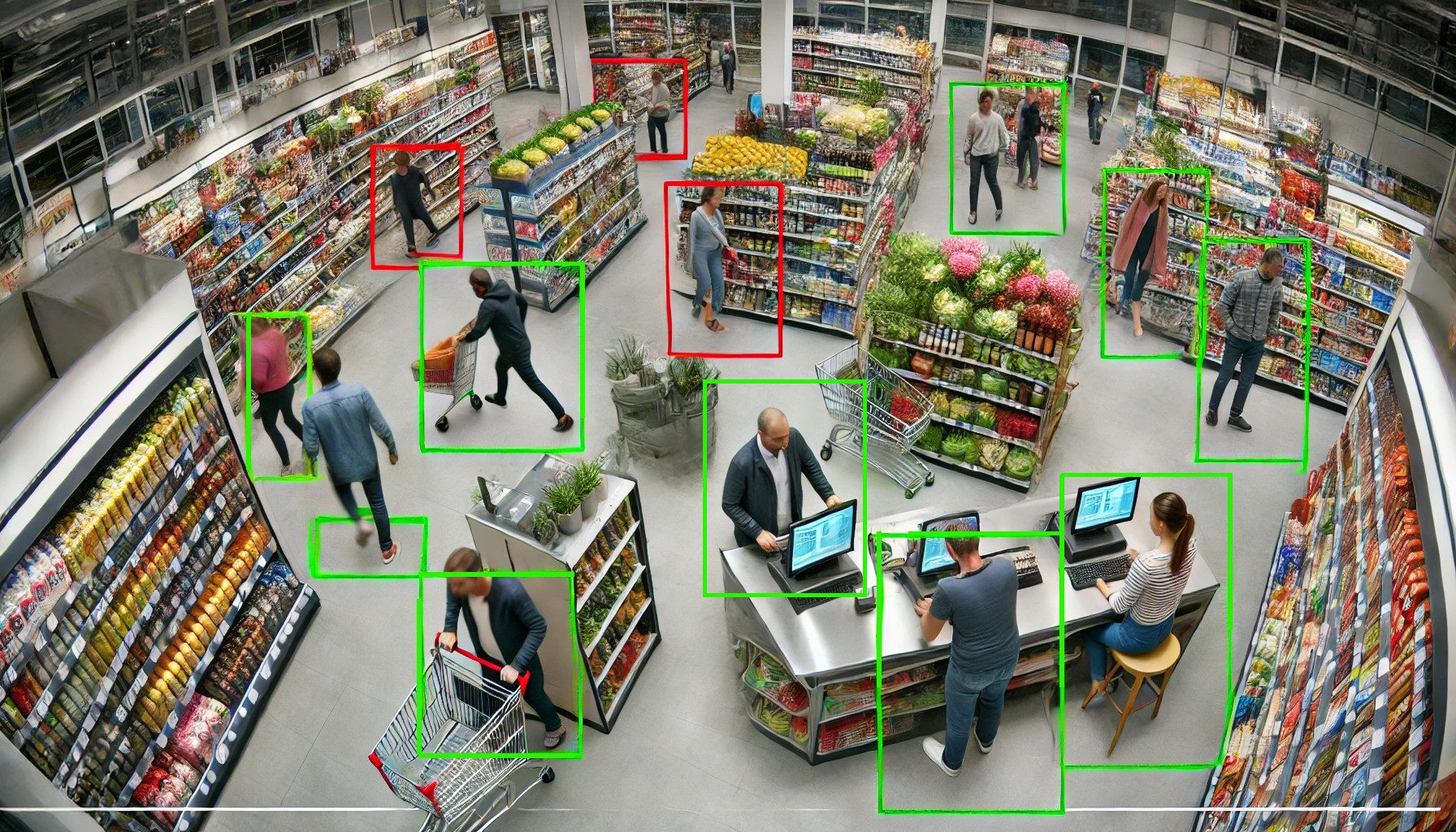
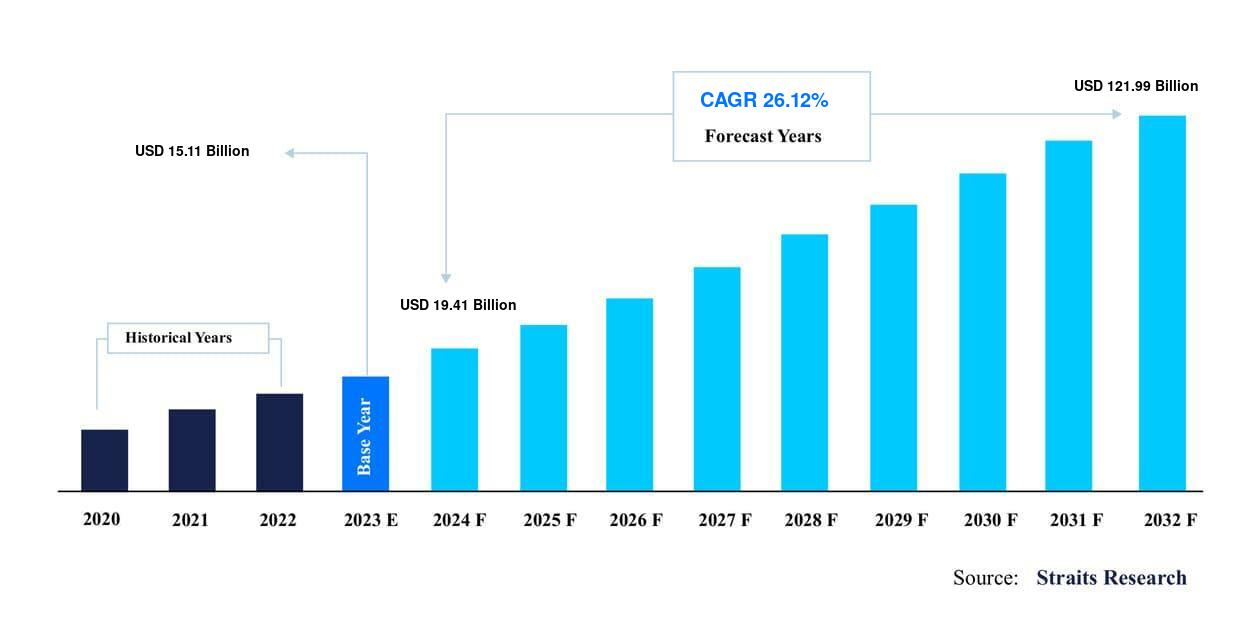
Video sits at the centre of how we entertain, monitor, learn, and sell. Until recently, every stage of the pipeline — capture, edit, encode, distribute, recommend — was a separate craft with its own teams and tools. AI is not replacing those crafts. It is collapsing the seams between them. A single model can now caption a clip, flag a policy violation, and surface it in a personalised feed within seconds of upload. The global AI-in-media market is projected to reach $121.99 billion by 2032, and that figure is a directional industry-scale estimate rather than an operational benchmark — but it captures the direction of travel.
What we want to do here is separate the parts of “AI for video” that have actually shipped into production from the parts that are still demos. We will walk through generation, moderation, surveillance, autonomous perception, and recommendation — and we will be specific about which technologies do the work in each case.
How did we get from CGI to generative video?
Design heritage determines which errors persist decades later. Computer-generated imagery (CGI) entered film in the 1960s as hand-built geometry and shaders. Neural networks in the 1980s introduced the idea that visual patterns could be learned rather than authored, but training data and compute were nowhere near what the architecture demanded.
Two later steps did most of the work. Convolutional neural networks (CNNs) in the 2010s made frame-level understanding tractable — object detection, segmentation, scene classification. Then Generative Adversarial Networks and, more recently, diffusion models made frame-level generation tractable. The current crop of text-to-video systems, including OpenAI’s Sora and the Stable Video family from Stability AI, are descendants of that diffusion lineage. They inherit its strengths (photorealistic textures, smooth motion priors) and its weaknesses (object permanence drift across long shots, hand and text rendering, physics that looks right but isn’t).
Where AI has actually changed the production pipeline
Five places, ordered by how mature the deployment is:
| Stage | Dominant AI technique | What it replaces |
|---|---|---|
| Ingest tagging | CNN-based scene/object classifiers | Manual logging by assistant editors |
| Edit assist | Speech-to-text + shot detection | Transcribing and rough-cut assembly |
| Restoration | Super-resolution and denoising networks | Frame-by-frame colour and grain work |
| Generation | Diffusion video models | Stock footage and second-unit shoots |
| Moderation | Multimodal classifiers | Human review queues |
The first three are observed-pattern claims from working with editorial teams — efficiency improves, but the editor still drives. The fourth and fifth are where the operational shape of the work changes most visibly.
Generation: useful, but not yet a one-shot replacement
Generative tools produce shots, not finished films. The AI video-generator segment is forecast to reach $1.96 billion by 2030 — again a market-direction estimate, not a deployment benchmark. In practice we see them used for previz, background plates, mood reels, and short-form social content. Filmmakers experimenting with diffusion pipelines for animated short films tend to inpaint, composite, and re-time aggressively. A clean prompt-to-final-cut workflow does not exist yet for anything longer than a few seconds.
Moderation: a real-time computer-vision problem
YouTube reportedly receives more than 333,000 hours of video per hour — a figure to treat as platform-reported rather than independently audited, but directionally credible. No human moderation queue scales to that. Multimodal classifiers running on GPU-accelerated inference paths handle the first pass, flagging violence, nudity, hate symbols, and known copyrighted content. Borderline cases route to human reviewers. Sustained throughput under realistic upload load — not peak burst — is the operationally relevant measure for that pipeline, and it is where GPU acceleration earns its keep.
Video analysis outside the media industry
YouTube uploads, perimeter cameras, and vehicle sensor arrays all rely on identical frame-classification primitives underneath. Looking at it from outside the entertainment lens clarifies what the underlying technology is actually doing.
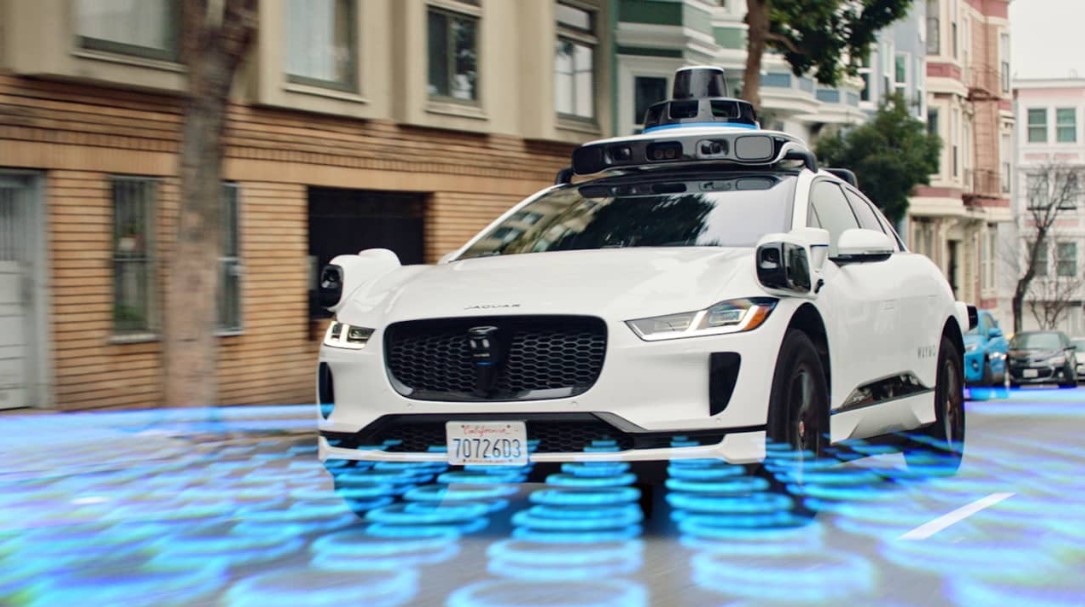
Autonomous vehicles. Tesla and Waymo run vision models that ingest multi-camera feeds and produce bounding boxes, lane geometry, and trajectory predictions at frame rate. Latency budgets are tight enough that cloud inference is not an option — the work runs on on-vehicle accelerators, what we have elsewhere called IoT Edge devices. The interesting design constraint is not accuracy in isolation; it is accuracy under a sub-100ms budget (a directional industry-scale figure representing a typical target) with limited power.
Surveillance. Object detection on surveillance footage identifies people, vehicles, abandoned baggage, loitering patterns, and crowd density. Heathrow Airport reported a 30% decrease in security breaches after deploying AI-assisted video surveillance — a single-deployment figure, not a generalisable benchmark, but a useful anchor for the order of magnitude. The architectural pattern is the same as autonomous driving: edge inference on local accelerators, with only metadata or flagged clips travelling to central storage.
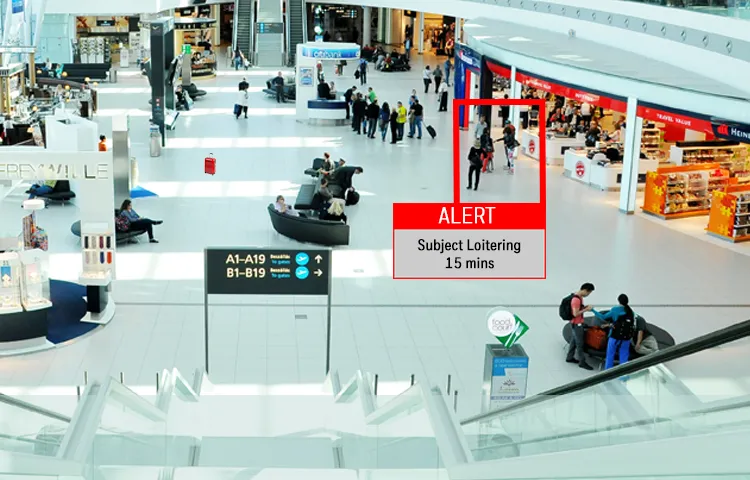
The lesson that carries back to entertainment: the techniques that catch a person crossing a restricted line at an airport are the same techniques that tag a scene as “interior, dialogue, two-shot” for an editor’s asset browser.
Recommendation, captioning, and the role of NLP
Understanding content is only step one; matching it to an audience is step two. That second half of the problem belongs to Natural Language Processing. Recommendation systems on streaming platforms blend collaborative-filtering signals (what similar viewers watched) with content-derived signals (the embeddings of titles, descriptions, transcripts, and review text). Subtitle and transcript generation, dubbing, and translation are NLP tasks layered on top of speech-to-text.
The user-facing payoff is twofold: accessibility for viewers with hearing impairments, and discoverability for content that would otherwise sit in the long tail. Both effects compound — better transcripts produce better embeddings, which produce better recommendations, which surface more long-tail content, which generates more transcript data.

AR/VR/XR devices like Apple Vision Pro extend the consumption end of the pipeline. They use computer vision for hand-tracking and room scanning, then composite video content into the user’s space. The viewing experience for genres that benefit from immersion — documentaries, virtual museum tours, gaming — changes shape rather than just resolution.
Where the seams still show
It is worth naming the failure modes plainly:
- Generative drift. Diffusion video models lose object identity across cuts and long takes. Useful for short shots; not yet useful for narrative continuity.
- Bias in training data. Moderation classifiers under-flag content in under-represented languages and over-flag content from under-represented groups. This is an observed pattern across audits, not a solved problem.
- Privacy and data protection. Surveillance and recommendation systems both depend on personal data. Regulatory frameworks (GDPR, the EU AI Act, sectoral rules) shape what is deployable, especially in Europe.
- Cost shape. Inference cost scales with viewing volume, not with content library size. A streaming platform pays per frame analysed, per recommendation served. Architecting for that — caching, distilled models, edge deployment — is where most of the engineering budget actually goes.
- Skills gap. Editors, colourists, and VFX artists are adapting their workflows around AI assistants. The teams that integrate fastest are the ones that treat the models as collaborators, not replacements.
How TechnoLynx works with video pipelines
We deliver measurable outcomes, not feature roadmaps. Typical shapes:
- Custom computer-vision pipelines for moderation, surveillance, or in-broadcast tagging — including the GPU-acceleration and edge-deployment work that makes them viable at production throughput.
- Generative AI integrations for content workflows, where we treat the model as one stage in a larger pipeline and build the surrounding evaluation, guardrails, and human-review tooling.
- AR/VR/XR perception modules for entertainment and training applications.
We are deliberately specific about what we build because the interesting problems in AI-for-video are almost never the model itself — they are the throughput, the latency, the data pipeline, and the failure handling around it.
What is left to figure out
The frontier question is segmentation: which tasks computers handle end-to-end, which require supervision, and which remain human domains. Generation will probably remain assisted for narrative work and fully automated for derivative formats. Moderation will stay a human-in-the-loop system as long as policy enforcement carries legal weight. Recommendation will keep eating the discovery layer.
The unresolved one is authorship. When a diffusion model produces a shot, an NLP model writes the caption, and a recommender chooses the audience, who is the author of the resulting viewing experience? That is not a technology question, and it is the one the industry has not yet answered.
Frequently Asked Questions
How is AI used in video production today?
In edit suites, AI handles shot detection, transcription, rough-cut assembly, restoration (denoising, super-resolution, colourisation), and increasingly the generation of short background or insert shots via diffusion models. The editor still drives the timeline; the model removes the most repetitive frame-by-frame work.
Can generative video models replace traditional filmmaking?
Not for narrative work, and not yet. Current diffusion video models produce convincing shots of a few seconds but lose object permanence across cuts and struggle with long-form continuity. They are useful for previz, background plates, and short-form social content, and they sit alongside — not in place of — directors, cinematographers, and editors.
Why does AI video moderation need GPU acceleration?
The throughput is the constraint. Platforms ingest tens of thousands of hours per hour, and moderation classifiers have to clear each upload before it becomes broadly visible. GPU-accelerated inference, often pushed to edge nodes near the ingest path, is what makes the latency budget achievable under sustained load — peak burst figures do not capture the operational reality.
Where does AI for video overlap with autonomous vehicles and surveillance?
The perception layer is the same problem in all three: a stream of frames in, structured detections out, under a tight latency budget, on accelerated hardware. A model that classifies action in a security feed and a model that tags scenes for an editorial archive share most of their architecture. What changes is the deployment shape and the cost of getting it wrong.
Why production teams resist automation despite the hype
Brands risk dilution when generation speed replaces editorial control—a viable exchange only at commodity scale. If AI Video is on your roadmap, the next step is to map it onto your own constraints rather than copy a reference architecture.