
Why maintenance is the unglamorous problem AI is best suited to solve
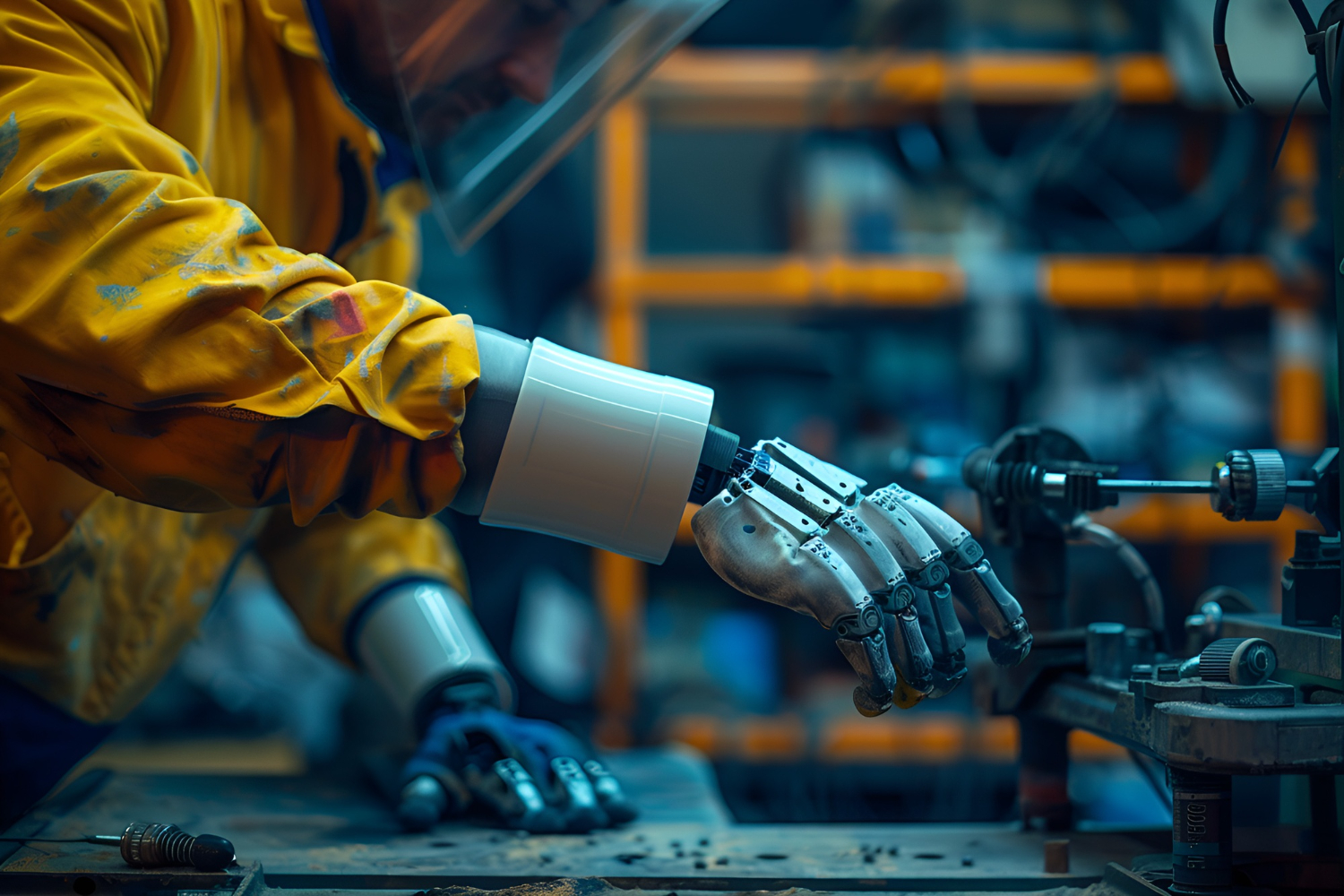
Headlines celebrate disruption; maintenance keeps things working. It is the work that happens before something breaks, the inspection that prevents the recall, the sensor reading that flags a bearing two weeks before it seizes. That is exactly why AI fits here so well. The job is structurally a signal-processing problem: a stream of telemetry, images, and audio that needs to be turned into a short list of things worth a technician’s attention. In our experience, this is where machine learning earns its keep — not by replacing the mechanic, but by narrowing what the mechanic has to look at.
This article walks through where that pattern actually shows up: in vehicles on the road, on rails, and in the air; in buildings and construction sites; and in medical equipment. The technologies are not exotic. Convolutional networks for image-based inspection, gradient-boosted models for tabular sensor data, and increasingly transformer-based encoders for multi-modal fusion. What changes is where the inference runs and how the output is consumed.
How does AI fit into predictive maintenance?
Three components form the predictive-maintenance architecture: sensors that gather telemetry, algorithms that recognize deterioration patterns, and scheduling logic that triggers intervention before failure. The first part is solved hardware — accelerometers, thermal cameras, vibration sensors, on-board diagnostic ports. The second is where ML and deep learning sit. The third is the part most often underestimated; a model that flags a fault at 3 a.m. is only useful if it is wired into a ticketing system that a technician will read at 8 a.m.
A common pattern is to start with a classical anomaly-detection baseline (isolation forests, one-class SVMs) on the tabular sensor stream, then layer a deeper model — usually a 1D CNN or a temporal transformer — once enough labelled failure data accumulates. For image-based inspection, the working stack is typically PyTorch or TensorFlow training on a server, then exported through ONNX to TensorRT for deployment on NVIDIA Jetson hardware at the edge.
Quick comparison: where AI maintenance pays off
| Domain | Primary data source | Typical model class | Where inference runs |
|---|---|---|---|
| Cars (private fleet) | OBD-II telemetry, audio | Gradient boosting + 1D CNN | Cloud or phone app |
| Rail | Onboard cameras, track sensors | 2D CNN, object detection | Onboard edge (Jetson-class) |
| Aviation | Engine telemetry, hull imagery | Multimodal transformer | Ground station |
| Buildings | Drone imagery, thermal | 2D CNN, segmentation | Cloud or operator laptop |
| Medical devices | Equipment logs, IoT telemetry | Anomaly detection, classification | Hospital edge gateway |
Vehicles on the road
Every new vehicle leaves the factory equipped with dozens of embedded sensors. The engine control unit, brake controller, and infotainment stack collectively expose hundreds of signals through the OBD-II interface and proprietary CAN bus extensions. The interesting maintenance question is which of those signals predict failure with enough lead time to matter.
Battery degradation is the canonical example for electric vehicles. The state-of-health of a lithium-ion pack does not decay linearly, and the discharge curve under load carries enough signal for a well-trained model to forecast remaining useful life within a few percent. Tesla has been public about using onboard ML for this; Bosch supplies diagnostic platforms to a large share of the European automotive aftermarket and has published case studies on using ML for fault-code prioritisation. The pattern is the same in both: collect at scale, train centrally, deploy a compact model close to the vehicle.
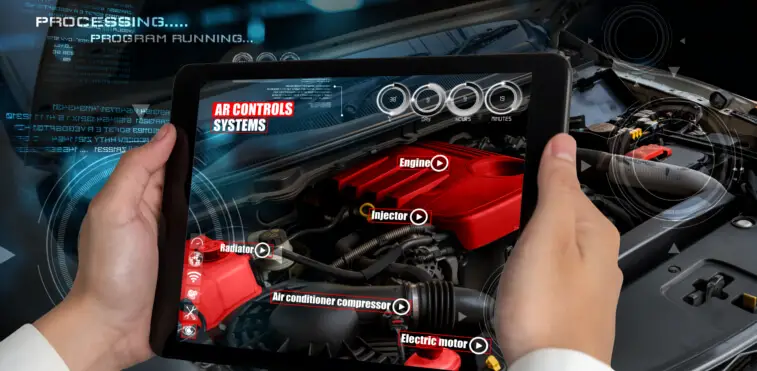
What does not work, and we see this regularly, is treating the car as a generic IoT device. The signal classes are domain-specific. A vibration pattern that means “worn wheel bearing” in one model platform means “loose heat shield” in another. Transfer learning helps, but the labelled-data problem does not disappear.
Why does rail inspection need computer vision more than other transport modes?
Unlike road vehicles, railways face a dual maintenance challenge: both the trains and the track infrastructure beneath them must be monitored. A car with a worn tyre is a problem for one driver; a hairline crack in a high-speed rail at 300 km/h is a problem for every train that passes over it that day. The inspection cadence is therefore much tighter, and the cost of missed defects is much higher.
The traditional approach used dedicated inspection trains running at reduced speed, which is operationally expensive — the network has to be cleared, and the inspection itself displaces revenue service. Computer vision on cameras mounted to in-service trains lets the inspection happen continuously, at line speed, without disrupting the schedule. Object detection models trained on rail-specific datasets can flag rail-head wear, missing fasteners, ballast displacement, and overgrowth, all from a single forward-facing camera feed. Network Rail in the UK has been running this approach across portions of its network since 2022.
The same logic applies to the trains themselves. Pantograph wear, wheel-tread defects, and brake-shoe condition can all be inspected from trackside cameras as the train passes — what the industry calls wayside inspection. The combination of IoT telemetry and edge-based computer vision means that most of the obvious work happens before a human looks at anything.
Aviation: where the regulatory floor changes the calculus
Airworthiness regulations impose strict documentation requirements, creating an unbroken maintenance record from the moment an aircraft enters service. AI does not replace any of that. What it does is sharpen the work that happens between mandatory inspections.
The two areas where this matters most are engine health monitoring and structural inspection. Engine telemetry — exhaust gas temperature, vibration spectrum, oil pressure trends — has been fed into anomaly-detection models for over a decade now, originally by GE and Rolls-Royce on their respective engine families. The recent shift is from single-engine models to fleet-wide models that learn from the entire installed base, then specialise to a tail number. The fleet model catches population-level drift; the tail-specific model catches drift on this specific airframe.
Structural inspection is the newer surface. A walk-around inspection on a wide-body aircraft takes a trained engineer roughly an hour, and the failure mode the engineer is looking for — a hailstone dent, a crack near a fastener, a delamination — is exactly the kind of localised visual pattern that convolutional networks handle well. Airbus, United Airlines, and several MRO providers have piloted drone-based hull inspection that brings the wall-clock time down to under 15 minutes while producing a higher-resolution record than the manual walk-around. The engineer still signs the release-to-service; the drone produces the evidence base.
Buildings, drones, and the construction site
Inspection cadences for building systems mirror vehicle maintenance, stretched across decades rather than months. The failure modes are different — water ingress, structural fatigue, façade detachment — but the data shape is the same. Imagery, sometimes thermal, sometimes RGB, often captured from a drone or a fixed camera, fed into a segmentation model trained to find the specific defect class.
We have seen computer vision deployed on construction sites for two distinct jobs. The first is asset inspection: identifying cracks, rust, and deformation on structures that are hard to reach. The second is worker safety — detecting whether personal protective equipment is being worn, whether someone is in an exclusion zone near a crane, whether a fall arrest harness is clipped in. The second job is harder than it sounds because the false-positive rate has to be low enough that the site supervisor will still respond to alerts on the tenth one of the day.
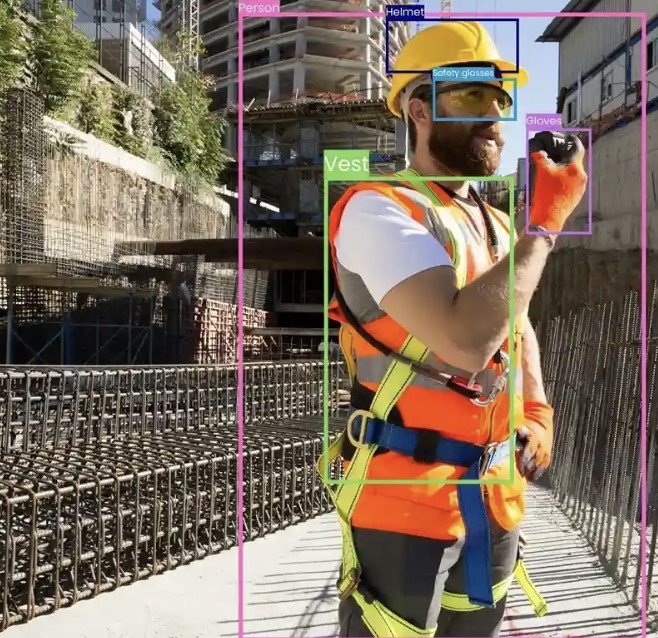
Augmented and extended reality overlap with maintenance in a more specific way than the marketing literature suggests. The genuinely useful case is remote expert assistance: a junior technician on site streams what they see to a specialist elsewhere, who can annotate the live view. That removes the travel cost without removing the expert from the loop. The case that does not work as well — virtual assistants generating maintenance instructions from natural language alone — runs into the same hallucination problems as any other LLM application without strong retrieval grounding.
Medical equipment: where downtime has a different cost function
In healthcare, equipment uptime calculations must account for patient safety risks that industrial settings rarely encounter. An MRI scanner that is offline is not just a revenue problem; it is a patient-care problem. The maintenance schedules are correspondingly conservative, with replacement intervals that often run well short of the equipment’s actual remaining useful life.
This is where predictive maintenance has a clear economic case. If a model can predict, with calibrated uncertainty, that a magnet quench is unlikely in the next six months, the equipment can be scheduled for service in a window that minimises clinical disruption rather than on a fixed calendar. The data shape — equipment logs, helium levels, gradient coil temperatures, RF amplifier telemetry — is structurally the same as industrial telemetry, and the modelling techniques are the same.
The deployment story is different, though. Hospital IT environments are sensitive about data egress for reasons that have nothing to do with maintenance models, and that pushes inference toward edge deployment inside the hospital firewall. A typical architecture is a Jetson-class device in the equipment room, running an ONNX-exported model behind a local API, with only aggregated alerts leaving the hospital network.
What we do at TechnoLynx
Our maintenance architectures treat the predictive model as a first-class component of the operational system. That means our work usually starts with the constraints — where inference has to run, what latency budget is available, what the false-positive cost is — and works backward to the model architecture. We have done this for computer-vision inspection pipelines on NVIDIA Jetson hardware, for edge-based anomaly detection on industrial telemetry, and for hybrid cloud-edge architectures where the heavy training happens in the cloud and the inference happens close to the asset.
The pattern we keep coming back to is that maintenance is a system-integration problem dressed up as a machine-learning problem. The model is necessary, but the value comes from how it is wired into the operational workflow — the ticketing system, the technician’s tablet, the regulatory record. We pay close attention to that wiring because it is where most maintenance-AI projects either succeed or quietly fail.
If you have a maintenance problem where you suspect AI could help but you are not sure where the seams are, get in touch. We are usually able to tell within a first conversation whether the data shape supports the use case.
Frequently Asked Questions
How does AI improve predictive maintenance compared to traditional schedules?
Traditional maintenance schedules are calendar-based or hour-based, which means equipment gets serviced before it needs to be or — occasionally — after a failure has already started. AI-driven predictive maintenance uses telemetry and imagery to estimate the actual condition of the asset, which lets the service interval track the real degradation curve rather than a worst-case assumption. In our experience, the gain is less about labour savings and more about avoiding unplanned downtime.
What kinds of data do AI maintenance systems typically need?
Most production systems use a mix of tabular sensor telemetry (temperature, vibration, pressure, voltage) and imagery (RGB or thermal). The tabular stream supports anomaly detection and remaining-useful-life models; the imagery supports defect detection and segmentation. Both work better when there is at least some labelled failure history to train against, though unsupervised baselines can carry the early phase of a deployment.
Where should AI inference for maintenance run — cloud or edge?
It depends on the latency budget and the data-governance constraints. Real-time safety alerts (a worker in an exclusion zone, a wheel-bearing temperature spike) need to run at the edge because cloud round-trip latency is too long. Periodic condition assessments (monthly hull inspection, quarterly equipment health reports) can run in the cloud because the data volume is small and the cadence is slow. Hybrid architectures with edge inference and cloud retraining are the common middle ground.
Does AI replace human technicians in maintenance work?
No, and we have not seen a credible deployment that tries to. What AI does is narrow the surface that the technician has to inspect — flagging the three rail sections out of a thousand kilometres that need a closer look, or the four engine parameters out of two hundred that are drifting. The technician still makes the call. The economics work because the technician’s time is the bottleneck, not the inspection coverage.
References
- ADS X (no date). Bosch Diagnostics.
- AR & VR (no date). TrustMark.
- Aviation Maintenance Leverages Artificial Intelligence to Make Flying Safer (2023). Aviation Maintenance Magazine.
- Berkmanas, R. (2024). 15 Use Cases Of Computer Vision In Construction Industry 2024. EasyFlow.
- Doctor, T.M. (2020). How Can AI Assist Mechanics in Vehicle Maintenance. The Mechanic Doctor.
- Savoie, L. (2024). The Future of Med Device Repair & Maintenance. Advantage Biomedical Services.
- Sonagra, R. (2023). Using artificial intelligence to create a better railway. Network Rail.