
HubSpot’s 2023 State of Sales report found that 71% of sales teams were investing in AI or automation tools that year, as reported in that survey.
What matters more than the headline number is which parts of the sales motion AI actually changes. Predictive scoring, conversational interfaces, dynamic pricing, and content personalisation each have different cost structures, different failure modes, and different integration requirements. Treating them as a single “AI for sales” category is the first mistake teams make. We see this regularly when companies try to procure an end-to-end solution before understanding which specific step in their pipeline is the bottleneck.

What does AI actually do inside a sales process?
Think in terms of what the system does, not the algorithm behind it. AI augments four distinct activities: routing attention, generating content, setting prices, and forecasting outcomes. The same underlying techniques — supervised learning, large language models, time-series models, computer vision — appear across all four, but the deployment patterns and the people who own them are different.
Routing attention: lead qualification and prioritisation
Manual lead scoring relied on rules that ageded badly. A prospect who downloaded three whitepapers used to be “warm”; today they may just be a researcher. Machine learning models score leads against patterns in your closed-won history, weighting recent behaviour against firmographic fit. Salesforce Einstein and HubSpot’s predictive lead scoring are the two most widely deployed examples in the SMB and mid-market segment.
The honest constraint is that these models need enough closed-won and closed-lost data to learn from. Teams under roughly 500 closed deals per year tend to see scoring that is noisy, biased toward whichever segment dominated the training window, or both. In our experience this is the single most common reason an otherwise promising deployment quietly gets switched off after six months.
Generating content: outreach, replies, and creative
Generative AI changed the economics of personalised outreach. A sequence that used to require a content marketer plus a sales rep can now be drafted by a language model and edited by the rep. Tools like Persado optimise subject lines and body copy against engagement signals; broader assistants compose first drafts that the rep then sharpens.
The risk class here is different from scoring. Generative models hallucinate facts about prospects, misattribute prior conversations, and sometimes produce copy that reads as obviously machine-written. The teams that get value from this are the ones who treat the model output as a first draft, not a finished asset, and who maintain a stylebook the model is prompted against.
Setting prices: dynamic and competitive pricing
Pricing is where AI’s value is easiest to quantify, because the counterfactual — the price you would have set without it — is observable. AI-driven pricing systems analyse competitor prices, demand elasticity, inventory levels, and historical conversion to recommend adjustments. Amazon’s dynamic pricing approach is the canonical reference; specialist vendors like PROS, Zilliant, Prisync, and Competera sell the underlying capability to mid-market businesses.
Dynamic pricing fails in two specific ways. First, when the model reacts to a competitor’s pricing error and amplifies it. Second, when customers detect the volatility and lose trust — a particular risk in B2B where the same buyer sees the same SKU multiple times.
Forecasting outcomes: pipeline and demand
Pipeline forecasting is the activity sales leaders most want AI to fix. The traditional approach — rep-by-rep commit calls rolled up to the VP of Sales — is biased by sandbagging, hope, and end-of-quarter optimism. AI forecasting models learn the gap between what reps say will close and what actually closes, then correct for it.
This is an observed-pattern claim across deployments rather than a benchmarked guarantee: forecasting models tend to outperform rep judgement on the aggregate but rarely on individual deals. The right way to use them is as a check on the rollup, not as a replacement for the rep’s qualitative read.

Where do the underlying techniques fit?
Four activities, four applications—but the underlying ML methods overlap heavily. It helps to know which one is doing the work in any given product.
| Technique | Primary sales use | What it needs |
|---|---|---|
| Supervised ML (gradient boosting, logistic regression) | Lead scoring, churn prediction | Labelled closed-won/lost history; >500 deals/year for stable signal |
| Natural Language Processing | Chatbots, email reply suggestions, sentiment analysis | Conversational logs; intent taxonomy |
| Large language models | Outreach drafting, summarisation, virtual assistants | Prompts, brand voice examples, retrieval over CRM data |
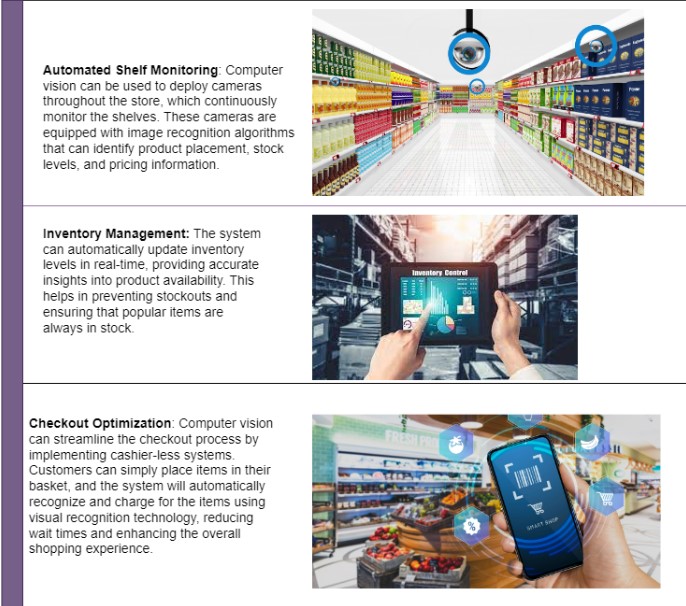
| Computer Vision | In-store analytics, meeting cue analysis | Camera infrastructure; privacy framework |
| Time-series models | Demand forecasting, dynamic pricing | Clean transactional history; seasonality labels |
| GPU acceleration | Training large models; real-time inference at scale | Hardware budget or cloud GPU spend |
GPU acceleration is worth a separate note because it is often invoked as a generic capability. In sales workloads specifically, the case for GPUs is real for training large recommendation or language models — but most production inference for lead scoring or pricing runs comfortably on CPU. Buying GPU capacity for an AI sales project that is actually a logistic regression is a category error we see often.
How does AI change CRM in practice?
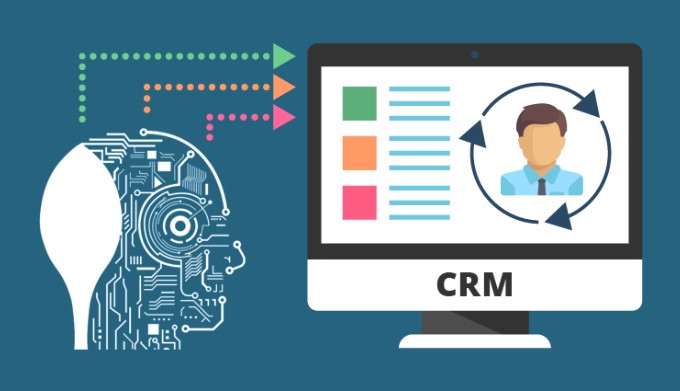
Salesforce, HubSpot, and Microsoft Dynamics have made CRM the default entry point for sales AI, bundling capabilities into enterprise tiers that most teams already use. The visible features are lead scoring, next-best-action suggestions, conversation intelligence, and email composition.
The less visible but more important change is data hygiene. AI-driven CRM features only work when the underlying contact, account, and activity data is clean. When the data is dirty, the models confidently rank the wrong leads and recommend the wrong actions. This is why deployments that look like AI projects are, in practice, data engineering projects.
Predictive analytics in CRM works best when applied to specific, narrow questions: which dormant accounts are most likely to re-engage this quarter, which open opportunities are at risk of slipping, which contacts at a target account have not been touched in 90 days. Asking a model to predict revenue generically is a much harder problem and is where most CRM AI features underdeliver.
What about chatbots and virtual assistants?
Sales chatbots split into two channels: qualifying inbound leads before human contact and supporting reps mid-deal with research or objection handling. Drift’s conversational platform is the reference for the first — a chatbot that engages a website visitor, qualifies intent, books a meeting if the visitor is in-market, and routes them to a rep if not.
In-funnel virtual assistants are a different animal. They sit alongside a rep during a live call or after it, transcribing, summarising, surfacing relevant collateral, and drafting follow-ups. Gong and Chorus pioneered this category; the major CRMs have since added equivalent capabilities natively. The value here is reclaiming the rep’s administrative time, not replacing the rep’s judgement.
Generative AI now lets these assistants produce genuinely tailored content — product descriptions, email drafts, social posts — rather than picking from templates. The quality gap between templated personalisation and generative personalisation is real, but it comes with the hallucination risk noted above. Human review remains non-negotiable for anything sent to a prospect.
What are the real benefits — and how should they be cited?
Evidence of ROI varies widely depending on use case and implementation quality. Some figures circulate widely without traceable methodology; others come from rigorous studies on narrow segments. A few that are reasonably well-sourced:
- LatentView Analytics reports up to a 50% improvement in conversion-related efficiency for enterprises using AI in sales — a published-survey signal, not a guaranteed outcome.
- A study summarised by Notta.ai attributes a sales cycle reduction of up to 30% to AI adoption in specific contexts.
- Accenture survey data indicates 91% of consumers respond positively to personalised offers — again a survey signal about consumer preference, not a direct revenue benchmark.
- PwC’s Global AI Study estimates roughly a 10% profit lift from AI-enabled pricing optimisation at the macro level — a market-direction figure, useful for framing rather than for any specific firm’s business case.
- Chatbot deployments in customer-facing roles have been linked to annual savings of around $8 billion across industries — a market-direction estimate.
The honest read across these numbers: AI in sales delivers meaningful gains in specific, well-instrumented use cases. Headline percentages should be treated as ceilings under favourable conditions, not as expected outcomes.
What are the integration challenges nobody talks about until month three?
Across our client engagements, certain implementation choices predict success far more reliably than model sophistication. The technical pilot succeeds; the rollout stalls. The reasons:
- Data privacy and regulation. GDPR, CCPA, and emerging sector-specific rules constrain what data can be used for training and inference. AI systems that worked in pilot get scaled back in production because the data they relied on cannot legally be processed at scale.
- Sales team resistance. Reps suspect, often correctly, that AI scoring will be used to rank them as well as their leads. The most successful deployments make this transparent and frame AI output as input to the rep, not a verdict on the rep.
- Tool sprawl and integration cost. A CRM, a sales engagement platform, a conversation intelligence tool, a pricing engine, and a forecasting layer rarely share a clean data model. The integration cost — measured in engineering months — often exceeds the licence cost of the AI products themselves.
- Data quality. Models trained on inconsistent CRM data inherit the inconsistency. The fix is data engineering, not more AI.
- Total cost of ownership. Licence fees are the smallest line item. Integration, change management, ongoing tuning, and monitoring dominate the multi-year cost.
These constraints are not arguments against AI in sales. They are arguments for scoping AI projects narrowly, measuring outcomes against a baseline, and resisting the temptation to buy a platform when a workflow change would do.
Frequently Asked Questions
Which AI use case in sales delivers value fastest?
Lead scoring and conversation intelligence tend to show measurable results within a quarter, because they sit on data the team already collects. Dynamic pricing and generative outreach take longer because they require trust calibration with both customers and internal stakeholders.
Do small sales teams benefit from AI?
They can, but the benefit is concentrated in tools that augment a single rep — meeting assistants, draft generation, calendar management — rather than in predictive models that require statistical mass. Teams under 500 closed deals per year typically should not invest in custom-trained scoring models.
How accurate are AI sales forecasts compared to rep commit calls?
In our experience and in published studies, AI forecasts outperform rep rollups on the aggregate but rarely on individual deals. The correct use is as a calibration check, not a replacement for rep judgement.
Is generative AI safe to use for direct customer communication?
Only with human review in the loop. Hallucinated facts about a prospect — wrong title, wrong company, fabricated prior interaction — damage trust faster than a well-crafted template would have. Treat generative output as a first draft.
What is the most common reason an AI-in-sales project stalls?
Data quality. Models inherit the inconsistencies of the CRM they train on. Most projects badged as “AI deployments” are, on closer inspection, data engineering projects in disguise.
How TechnoLynx approaches AI in sales
Every AI sales project at TechnoLynx starts with three non-negotiables: defining the decision the model must inform, measuring current performance before any deployment, and building integration infrastructure ourselves rather than delegating to a data science handoff.
Our work spans the techniques covered above — supervised models for scoring and forecasting, generative AI for content and assistance, GPU-accelerated training where the workload genuinely warrants it, and edge inference where latency requirements demand it. The deciding factor in each engagement is which technique fits the specific decision, not which is most fashionable.
If you are mapping where AI could earn its keep in your sales motion, the right starting point is rarely a platform purchase. It is usually a week of pipeline instrumentation and a hard look at where reps’ time actually goes.