AI in Security: Defence for All!

Is it safe to say that we live securely? If not, what can we do to make things safer? Does this apply only to our homes, or are there things that we can do for ourselves? And what about homeland security? The answer lies inside!

AI in Security: Defence for All!
Written by TechnoLynx Published on 06 Jan 2025

Introduction

We do many things daily. We prepare breakfast, make our bed, go to work, spend time with friends, do our hobbies. There is one thought, however, that rarely crosses our minds. ‘Am I safe?’ Mostly, yes, but can this be improved? Has security maybe been neglected lately? Are the systems that we have enough, or do they need modernisation? Can AI help in their improvement, and how? The answers to all these questions are given in this article!

That’s My Safe Place

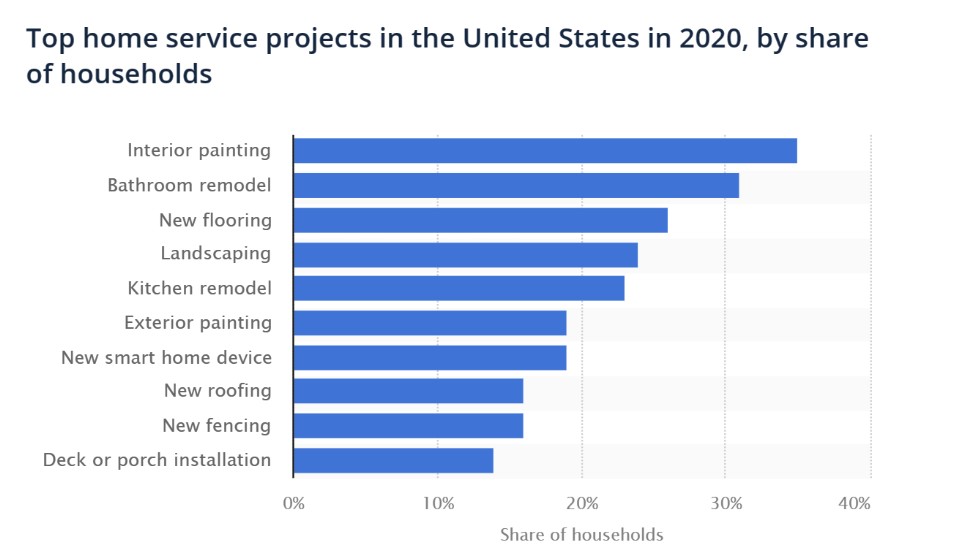
There is no place like home. Even if you are on vacation in the most beautiful place on Earth or you are simply returning from work, home is where you actually relax and rest. We really value our homes. In fact, the market size of the home improvement industry in the United States has jumped from 294.5 billion dollars to 549.2 billion dollars in 2024, with an expected increase to 602.5 billion dollars in 2027. At the same time, in 2020, 35% of DIY projects focused on interior repainting, followed by bathroom remodelling at 31%. The top 3 are complete with new flooring installation at 26% (Statista - The Statistics Portal). Since the beginning of our history, people have always tried to improve their living spaces, either with decorative alterations or with functional ones. Focussing on the latter, there is one category that is often neglected, maybe because we do not keep it in mind, or maybe we have in mind that ‘it’s not going to happen to us’. This is no other than home security. Let’s see!

Figure 1 – Home service projects in the USA, 2020 (Statista, n.d.)

In the old days, people were much more consistent with home security, using drawbridges, guard dogs, or even traps on some occasions. As our civilisation progressed and we started having rules, it was decided that it would be better if we were guarded by dedicated groups of people (aka the police), and these methods of the past became kind of obsolete. Due to different factors, these dedicated groups of people have been shown to be ineffective in some circumstances, mainly due to understaffing or funds being redirected to other needs. Burglars are the ideal candidates to take advantage of this situation, and history has shown that they can become very creative! This is where an advanced home security system can shine. And yes, there are already some ‘advanced’ systems out there, but they are not as capable as they could be. Let us explain.

A home security system usually consists of some sensors placed on door frames and windows that are connected to a central unit placed somewhere inside the house. This unit is connected to a siren on the exterior, which rings when a security breach has been made, and it also notifies the police through a subscription plan if desired. However, due to ineffectiveness, though, there is no guarantee that the police will be able to reach you in time, which, in turn, does not guarantee your safety or the identification of the burglars. Surely enough, there are also systems that are equipped with CCTV, but these cannot guarantee identification in case the burglars are masked. This is where AI and the all-powerful GPU-accelerated Computer Vision (CV) come to aid. One of the advantages of an AI-powered CV system is that it can learn and adapt as it goes; plus, there is no need for anyone to show their face. Identification can include body language, which can be really as unique as a fingerprint at times, walking patterns, or even the tools that are being used. Although a properly trained CV model can guarantee excellent results, these results, of course, will not and can’t be generated from one single instance. Imagine having a network of Internet of Things (IoT) home security systems enhanced by computer vision (CV) and integrated with CCTV cameras, instantly collecting and comparing data of all cases of home theft. Edge Computing can make sure of proper data transfer without losses. They could analyse patterns and behaviours, perform threat analysis, even collect data, and give crucial information about the wider area of the thefts, potentially even forecasting where the burglars will hit next!

Figure 2 – Computer Vision-powered CCTV detecting a burglar in real-time through segmentation in a residential building ( SuperAnnotate, n.d.)

Read more: Understanding Computer Vision and Pattern Recognition

All for One…

Home security systems are surely great to have, but can we really rely on them only? What about ourselves? What happens when we are not at home? There are many ways to counter potential threats. There are different self-defence ‘tools’, of course, but they are not always legal, depending on the country or state where you live. However, one thing is always legal, and that is self-defence training.

Martial arts have been around since forever, and apart from training the body, their goal is also to train the mind. There are approximately 180 different styles of martial arts, with many of them having even substyles, such as Karate and Kung Fu. Most martial arts originate from the East, but plenty of them have been redesigned or even involved in their own thing in the West. Brazilian Jiu-Jitsu, for example, has differentiated itself from traditional Jiu-Jitsu, while boxing is a category on its own. Surely, even though all of them share the same goal, training, the endgame can differ, as some are attack-focused, while others are purely defensive or even solely spiritual, focusing mostly on the health benefits through meditation and gentle exercise, such as Tai Chi.

Although training usually takes place collectively in sports clubs, there are people who, for their own reasons, prefer to train solo. Nothing wrong with that, if you ask us, but the competition is kind of lost in this way, and with competition comes improvement; plus, human interaction is key to martial arts. Keep in mind that there is a reason we bow before starting our training, and that is that we show our respect to our opponent for lending us his body to train with it. To quote the much-loved Mr. Miyagi: ‘Karate? Learn from a book?!’.

Figure 3 – AI-generated photo of a black belt martial artist (Vecteezy, n.d.)

We have seen the revolution Extended Reality (XR) has brought in many different fields. Its subbranches, Augmented Reality (AR) and Virtual Reality (VR) can be beneficial to solo practitioners as well. An XR headset can place you in any virtual environment you want, isolating you from anything that can distract you and really setting you in the mood. Do you want to train your katas? Easy. Do you want to spar with opponents? Say no more! Generative AI can analyse data from thousands of professionals, giving you as many or as few opponents as you want. The level can be adjusted according to your own. Match that with an AI-powered camera (or more) and even a capable smartwatch; you can build your own dojo at home with real-time monitoring of your performance stance; you could even receive hints and advice on how to become better. If you want to take this system even further, turn it into your personal martial arts master. Natural Language Processing (NLP) can literally transform how you interact with a machine. Now, reading information is one thing, but wouldn’t you rather hear it instead? With Generative AI, you can get as close to regular practice or a real-world scenario as possible!

…And One for All

We have seen how AI can enhance security on a personal or even a household level, but what happens when we want to protect something more collective? Let’s say an entire nation! Countries spend a lot of money on their defence programmes. The defence industry is worth billions of dollars. For some, it is an actual duty towards the homeland, but for others, it is just business. Whatever the reason might be, it is beyond the scope of this article. However, it is worth taking a look at roughly how nations manage to defend their territory and check how AI is implemented in their strategy.

Each nation that has a tactical military force usually divides it into 3 major branches: the army, the navy, and the air force, each of which operates in the land, sea, and air, respectively, with some interdisciplinary peculiarities, of course. However, all units in these branches are using some kind of equipment, be it firearms, rifles, or vehicles, all of which can be enhanced using AI. We can have scopes that are able to precisely calculate the distance between the soldier and the target through CV, vehicles that share coordinates among them when making a formation on the field, magazines that are connected to smart helmets with Head-Up Displays (HUDs), demonstrating the vitals and all necessary information a soldier needs on the combat field. Focussing on the latter, have you wondered what the one thing that unites all personnel of all branches is? That’s right, the uniform! Army Combat Uniforms (ACUs) are made to certain standards, but you have to admit that they are General Issue (GI), which means they follow the one-to-fit-all guidelines.

Figure 4 – Exoskeleton-powered ‘super soldier’ opposing a traditional soldier (Here, 2021)

Despite that, some countries have actually spent a lot of money on R&D to revolutionise their ACUs. The US military has been developing the Tactical Assault Light Operator Suit (TALOS), a new form of bulletproof ACU with a powered exoskeleton (Iron Man suit for US military - thanks to Hollywood customers, 2014). There were some rumours that it had adaptive camouflage with CV use, but we are not buying it just yet. Take that and pair it with the AR smart helmet we said before, sensors all over the suit, a CV-enhanced scope on a standard rifle, and you have your ultimate fighter. Unfortunately, the programme was declared non-feasible, and its development stopped in February 2019. Moving to the other side of the Atlantic (or the Pacific, have it your way), the Ratnik program has started in Russia since 2015 (Ellmer, 2022). This programme is mostly soldier-orientated, as its goal is to improve the connectivity and effectiveness of combat personnel. The improvements include modernised body armour with enhanced body heat coverage, special optics, and communications. CV for optics, low heat signal, which combines readings from the entire squad for maximum adaptability, and the possibility of IoT for communications.

As they say, ‘battles are won by men’, and it doesn’t really matter if you are the best soldier or not. Whoever is on the battlefield has needs, and one of the biggest issues is reloading. The ability to constantly refuel soldiers with ammunition can be a game changer, as you understand. Remember the smart magazines we mentioned above? Sending information directly to the HUD is one thing, but imagine that on a larger scale. No need to shout ‘reload’ or send a message to anyone. IoT solutions can make it happen so that the ammunition reaches you before you even say, ‘I’m out!’

Summing Up

In this article, we barely scratched the surface of how AI can be implemented in the field of security, both personal and collective, but we discovered many things! We saw how Computer Vision and the Internet of Things can transform home security, how you can train yourself to be a fighter with the help of Computer Vision and Virtual Reality, and how the defence programmes of nations can transform their effectiveness on the battlefield. There is no doubt that applying AI in security can benefit us, and the options are truly endless!

What We Offer

At TechnoLynx, we know what innovation is. We specialise in finding custom-tailored solutions for all your needs. The benefits of integrating AI into security applications are something we understand and value more than anyone. It is our commitment to provide cutting-edge solutions while ensuring safety in human-machine interactions, managing and analysing large data sets, and addressing ethical considerations.

We provide precise software solutions that empower many fields and industries using AI-driven algorithms. Innovation is our commitment, and we are driven to adapt to the ever-evolving AI landscape. We present solutions designed to increase accuracy, efficiency, and productivity. eel free to contact us, share your ideas or questions, and rest assured that we will make your project fly!

Continue reading: Ensuring Security in Video Conferencing Solutions

List of references

CUDA vs ROCm: Choosing for Modern AI

CUDA vs ROCm: Choosing for Modern AI

20/01/2026

A practical comparison of CUDA vs ROCm for GPU compute in modern AI, covering performance, developer experience, software stack maturity, cost savings, and data‑centre deployment.

Best Practices for Training Deep Learning Models

Best Practices for Training Deep Learning Models

19/01/2026

A clear and practical guide to the best practices for training deep learning models, covering data preparation, architecture choices, optimisation, and strategies to prevent overfitting.

Measuring GPU Benchmarks for AI

Measuring GPU Benchmarks for AI

15/01/2026

A practical guide to GPU benchmarks for AI; what to measure, how to run fair tests, and how to turn results into decisions for real‑world projects.

GPU‑Accelerated Computing for Modern Data Science

GPU‑Accelerated Computing for Modern Data Science

14/01/2026

Learn how GPU‑accelerated computing boosts data science workflows, improves training speed, and supports real‑time AI applications with high‑performance parallel processing.

CUDA vs OpenCL: Picking the Right GPU Path

CUDA vs OpenCL: Picking the Right GPU Path

13/01/2026

A clear, practical guide to cuda vs opencl for GPU programming, covering portability, performance, tooling, ecosystem fit, and how to choose for your team and workload.

Performance Engineering for Scalable Deep Learning Systems

Performance Engineering for Scalable Deep Learning Systems

12/01/2026

Learn how performance engineering optimises deep learning frameworks for large-scale distributed AI workloads using advanced compute architectures and state-of-the-art techniques.

Choosing TPUs or GPUs for Modern AI Workloads

Choosing TPUs or GPUs for Modern AI Workloads

10/01/2026

A clear, practical guide to TPU vs GPU for training and inference, covering architecture, energy efficiency, cost, and deployment at large scale across on‑prem and Google Cloud.

GPU vs TPU vs CPU: Performance and Efficiency Explained

GPU vs TPU vs CPU: Performance and Efficiency Explained

10/01/2026

Understand GPU vs TPU vs CPU for accelerating machine learning workloads—covering architecture, energy efficiency, and performance for large-scale neural networks.

Energy-Efficient GPU for Machine Learning

Energy-Efficient GPU for Machine Learning

9/01/2026

Learn how energy-efficient GPUs optimise AI workloads, reduce power consumption, and deliver cost-effective performance for training and inference in deep learning models.

Accelerating Genomic Analysis with GPU Technology

Accelerating Genomic Analysis with GPU Technology

8/01/2026

Learn how GPU technology accelerates genomic analysis, enabling real-time DNA sequencing, high-throughput workflows, and advanced processing for large-scale genetic studies.

GPU Computing for Faster Drug Discovery

GPU Computing for Faster Drug Discovery

7/01/2026

Learn how GPU computing accelerates drug discovery by boosting computation power, enabling high-throughput analysis, and supporting deep learning for better predictions.

The Role of GPU in Healthcare Applications

The Role of GPU in Healthcare Applications

6/01/2026

GPUs boost parallel processing in healthcare, speeding medical data and medical images analysis for high performance AI in healthcare and better treatment plans.

Data Visualisation in Clinical Research in 2026

5/01/2026

Learn how data visualisation in clinical research turns complex clinical data into actionable insights for informed decision-making and efficient trial processes.

Computer Vision Advancing Modern Clinical Trials

19/12/2025

Computer vision improves clinical trials by automating imaging workflows, speeding document capture with OCR, and guiding teams with real-time insights from images and videos.

Modern Biotech Labs: Automation, AI and Data

18/12/2025

Learn how automation, AI, and data collection are shaping the modern biotech lab, reducing human error and improving efficiency in real time.

AI Computer Vision in Biomedical Applications

17/12/2025

Learn how biomedical AI computer vision applications improve medical imaging, patient care, and surgical precision through advanced image processing and real-time analysis.

AI Transforming the Future of Biotech Research

16/12/2025

Learn how AI is changing biotech research through real world applications, better data use, improved decision-making, and new products and services.

AI and Data Analytics in Pharma Innovation

15/12/2025

AI and data analytics are transforming the pharmaceutical industry. Learn how AI-powered tools improve drug discovery, clinical trial design, and treatment outcomes.

AI in Rare Disease Diagnosis and Treatment

12/12/2025

Artificial intelligence is transforming rare disease diagnosis and treatment. Learn how AI, deep learning, and natural language processing improve decision support and patient care.

Large Language Models in Biotech and Life Sciences

11/12/2025

Learn how large language models and transformer architectures are transforming biotech and life sciences through generative AI, deep learning, and advanced language generation.

Top 10 AI Applications in Biotechnology Today

10/12/2025

Discover the top AI applications in biotechnology that are accelerating drug discovery, improving personalised medicine, and significantly enhancing research efficiency.

Generative AI in Pharma: Advanced Drug Development

9/12/2025

Learn how generative AI is transforming the pharmaceutical industry by accelerating drug discovery, improving clinical trials, and delivering cost savings.

Digital Transformation in Life Sciences: Driving Change

8/12/2025

Learn how digital transformation in life sciences is reshaping research, clinical trials, and patient outcomes through AI, machine learning, and digital health.

AI in Life Sciences Driving Progress

5/12/2025

Learn how AI transforms drug discovery, clinical trials, patient care, and supply chain in the life sciences industry, helping companies innovate faster.

AI Adoption Trends in Biotech and Pharma

4/12/2025

Understand how AI adoption is shaping biotech and the pharmaceutical industry, driving innovation in research, drug development, and modern biotechnology.

AI and R&D in Life Sciences: Smarter Drug Development

3/12/2025

Learn how research and development in life sciences shapes drug discovery, clinical trials, and global health, with strategies to accelerate innovation.

Interactive Visual Aids in Pharma: Driving Engagement

2/12/2025

Learn how interactive visual aids are transforming pharma communication in 2025, improving engagement and clarity for healthcare professionals and patients.

Automated Visual Inspection Systems in Pharma

1/12/2025

Discover how automated visual inspection systems improve quality control, speed, and accuracy in pharmaceutical manufacturing while reducing human error.

Pharma 4.0: Driving Manufacturing Intelligence Forward

28/11/2025

Learn how Pharma 4.0 and manufacturing intelligence improve production, enable real-time visibility, and enhance product quality through smart data-driven processes.

Pharmaceutical Inspections and Compliance Essentials

27/11/2025

Understand how pharmaceutical inspections ensure compliance, protect patient safety, and maintain product quality through robust processes and regulatory standards.

Machine Vision Applications in Pharmaceutical Manufacturing

26/11/2025

Learn how machine vision in pharmaceutical technology improves quality control, ensures regulatory compliance, and reduces errors across production lines.

Cutting-Edge Fill-Finish Solutions for Pharma Manufacturing

25/11/2025

Learn how advanced fill-finish technologies improve aseptic processing, ensure sterility, and optimise pharmaceutical manufacturing for high-quality drug products.

Vision Technology in Medical Manufacturing

24/11/2025

Learn how vision technology in medical manufacturing ensures the highest standards of quality, reduces human error, and improves production line efficiency.

Predictive Analytics Shaping Pharma’s Next Decade

21/11/2025

See how predictive analytics, machine learning, and advanced models help pharma predict future outcomes, cut risk, and improve decisions across business processes.

AI in Pharma Quality Control and Manufacturing

20/11/2025

Learn how AI in pharma quality control labs improves production processes, ensures compliance, and reduces costs for pharmaceutical companies.

Generative AI for Drug Discovery and Pharma Innovation

18/11/2025

Learn how generative AI models transform the pharmaceutical industry through advanced content creation, image generation, and drug discovery powered by machine learning.

Scalable Image Analysis for Biotech and Pharma

18/11/2025

Learn how scalable image analysis supports biotech and pharmaceutical industry research, enabling high-throughput cell imaging and real-time drug discoveries.

Real-Time Vision Systems for High-Performance Computing

17/11/2025

Learn how real-time vision innovations in computer processing improve speed, accuracy, and quality control across industries using advanced vision systems and edge computing.

AI-Driven Drug Discovery: The Future of Biotech

14/11/2025

Learn how AI-driven drug discovery transforms pharmaceutical development with generative AI, machine learning models, and large language models for faster, high-quality results.

AI Vision for Smarter Pharma Manufacturing

13/11/2025

Learn how AI vision and machine learning improve pharmaceutical manufacturing by ensuring product quality, monitoring processes in real time, and optimising drug production.

The Impact of Computer Vision on The Medical Field

12/11/2025

See how computer vision systems strengthen patient care, from medical imaging and image classification to early detection, ICU monitoring, and cancer detection workflows.

High-Throughput Image Analysis in Biotechnology

11/11/2025

Learn how image analysis and machine learning transform biotechnology with high-throughput image data, segmentation, and advanced image processing techniques.

Mimicking Human Vision: Rethinking Computer Vision Systems

10/11/2025

See how computer vision technologies model human vision, from image processing and feature extraction to CNNs, OCR, and object detection in real‑world use.

Pattern Recognition and Bioinformatics at Scale

9/11/2025

See how pattern recognition and bioinformatics use AI, machine learning, and computational algorithms to interpret genomic data from high‑throughput DNA sequencing.

Visual analytic intelligence of neural networks

7/11/2025

Understand visual analytic intelligence in neural networks with real time, interactive visuals that make data analysis clear and data driven across modern AI systems.

Visual Computing in Life Sciences: Real-Time Insights

6/11/2025

Learn how visual computing transforms life sciences with real-time analysis, improving research, diagnostics, and decision-making for faster, accurate outcomes.

AI-Driven Aseptic Operations: Eliminating Contamination

21/10/2025

Learn how AI-driven aseptic operations help pharmaceutical manufacturers reduce contamination, improve risk assessment, and meet FDA standards for safe, sterile products.

AI Visual Quality Control: Assuring Safe Pharma Packaging

20/10/2025

See how AI-powered visual quality control ensures safe, compliant, and high-quality pharmaceutical packaging across a wide range of products.

Back See Blogs
arrow icon