AI’s Role in Clinical Genetics Interpretation

Learn how AI supports clinical genetics by interpreting variants, analysing complex patterns, and improving the diagnosis of genetic disorders in real time.

AI’s Role in Clinical Genetics Interpretation
Written by TechnoLynx Published on 25 Aug 2025

Introduction

Clinical genetics has always faced a central challenge: interpreting the results of genetic studies within the context of a patient’s clinical situation. Sequencing technologies generate vast amounts of information, but the meaning of many variants remains unclear. Doctors need to decide which mutations matter, which are harmless, and which need follow-up testing. That process requires time, knowledge, and interpretation skills that exceed human limits.

This is where artificial intelligence (AI) enters the picture. AI can manage large amounts of data, search for complex patterns, and provide decision support. It does not replace geneticists but enhances their ability to make informed judgments. With advances in machine learning, deep neural networks, and generative AI, clinical genetics is entering a new stage of practice.

Why Clinical Genetics Needs AI

Genetic testing produces information that goes far beyond what a single specialist can process alone. Whole-genome sequencing, exome sequencing, and gene panels create massive data sets. Each sequence may include millions of variants, many of which have unknown effects.

Traditional methods of variant classification rely on manual review, published studies, and expert consensus. These methods are accurate but time consuming. Patients often wait weeks or months for a final report. In conditions where treatment decisions depend on fast diagnosis, delays can harm outcomes.

AI reduces that bottleneck. It processes results in real time, filtering variants based on evidence and predicting likely disease associations. By combining genetic information with clinical records, AI tools generate context-sensitive insights that speed up interpretation.

How AI Works in Genetic Variant Analysis

AI systems for clinical genetics use a wide range of techniques. Large language models (LLMs) read research papers, guidelines, and clinical notes. Natural language processing (NLP) extracts meaning from unstructured text, linking mutations to known genetic disorders.

Neural networks learn from past cases, finding complex patterns in variant behaviour. A deep neural network can identify hidden layer relationships between different variants, genes, and clinical phenotypes. These connections often remain invisible to human experts, but AI can highlight them.

Generative AI even creates hypotheses about variant effects by simulating potential protein changes. It can generate predictions on how a mutation alters structure and function. While not perfect, these models give geneticists a starting point for deeper investigation.

Read more: Top Biotechnology Innovations Driving Industry R&D

Large Amounts of Data and Computer Power

One reason clinical genetics is suited for AI is the volume of information it generates. Genetic testing produces terabytes of digital records every year. Managing such large amounts of data requires advanced computing power.

Graphics processing units (GPUs) make this possible. Originally designed for video rendering and driving cars in autonomous systems, GPUs are now central to AI in healthcare. They allow learning models to process sequences quickly, making real time interpretation a reality.

Without GPUs and high-performance computing, the speed of modern genetic interpretation would stall. With them, AI can test thousands of possible variant effects in seconds.

Clinical Genetics Use Cases

Diagnosing Rare Genetic Disorders


Patients with rare diseases often face a diagnostic journey lasting years. AI can shorten that process by comparing patient data against large databases of known genetic disorders. Neural networks classify variants by their likelihood of causing disease. This narrows the focus for geneticists, saving time and reducing uncertainty.


Pharmacogenomics


AI assists in predicting how patients respond to medication. Genetic variants influence how drugs are metabolised. By analysing patterns across thousands of cases, AI suggests whether a patient will benefit from or risk adverse effects from a specific drug.


Family Screening


Genetic risks do not affect individuals alone. Families may share pathogenic variants. AI tracks inheritance patterns across relatives, offering doctors clear recommendations for who else may need testing.


Cancer Genomics


Tumours carry mutations that guide treatment choices. Deep learning model systems classify somatic variants in cancer cells, supporting precision medicine strategies. Doctors can select therapies that target specific mutations with greater accuracy.

Read more: 3D Models Driving Advances in Modern Biotechnology

The Role of LLMs and NLP

A major challenge in clinical genetics is linking new variants to existing knowledge. Much of that knowledge exists in journals, case reports, and guidelines. Reading through this manually is not possible at scale.

Large language models, trained on wide ranges of medical literature, summarise findings. NLP tools extract relevant sentences from thousands of pages. If a variant appears in a paper connecting it to a genetic disorder, the AI agent flags it.

This ability to understand human languages and extract meaning makes LLMs essential. They provide geneticists with up-to-date summaries, reducing the burden of information overload.

Read more: NLP vs Generative AI: Key Differences and Connections

Computer Vision in Clinical Genetics

While genetics focuses on sequences, computer vision also plays a part. Doctors often use images or video in diagnostic work, such as scans of chromosomes or histology slides. Computer vision algorithms detect anomalies, segment images, and highlight features.

In tissue samples, AI can classify objects such as abnormal cells, linking them with genetic variants. By connecting digital images to molecular data, AI creates a more complete diagnostic picture.

Understanding Complex Patterns

Genetic data rarely shows simple one-to-one connections. A single mutation may have different effects depending on environment, other genes, or patient age. AI finds these complex patterns by analysing millions of cases.

For example, a neural network can link subtle changes across multiple genes to a higher risk of disease. By using hidden layer structures, it recognises relationships too complicated for human reasoning. This improves accuracy in identifying patients at risk.

Read more: AI in Biotechnology: Nature in the Palm of our Hands

Real-Time Decision Support

Real-time analysis is critical in clinical settings. When a newborn shows signs of a genetic disorder, doctors cannot wait weeks for answers. AI provides real time support by screening genetic data instantly.

Decision support systems highlight the most probable causes. They do not give the final answer but point clinicians toward a clear course of action. In emergencies, that speed saves lives.

Generative AI for Hypothesis Building

Generative AI adds another layer to interpretation. Instead of only classifying variants, it creates potential models of how a mutation affects protein folding or cell behaviour.

For instance, if a variant in a gene may disrupt enzyme function, generative AI predicts structural changes. While further testing is required, the generated model directs scientists where to look.

This type of hypothesis building expands the problem solving capacity of clinical genetics. It creates new ideas that specialists can validate in the lab.

Challenges in AI for Clinical Genetics

Despite its benefits, AI in clinical genetics is not free of challenges. Models trained on biased data sets may misclassify variants. If most training data comes from one population, predictions for other groups may be less reliable.

Another issue lies in interpretability. Deep neural networks make decisions through complex hidden layer structures. While results may be accurate, explaining them to patients and doctors is harder. Transparency in model outputs is essential for trust.

There are also legal and ethical questions. Who is responsible if an AI tool suggests a wrong interpretation? Regulators and institutions need frameworks for safe use.

Read more: AI in Biotechnology: A Game Changer for Innovation

The Human Role in an AI-Driven Process

Even with advanced AI tools, geneticists remain central. AI can perform tasks like filtering variants, recognising text, or highlighting risks. But it cannot replace human judgment. Doctors understand the clinical situation, patient history, and family context.

AI supports, but does not decide. The best results come when humans and machines work together, combining human intelligence with computer power.

Integration with Clinical Workflows

AI in clinical genetics must fit seamlessly into established clinical workflows. Doctors cannot spend additional hours adjusting to new interfaces or switching between multiple platforms. Integration ensures that variant analysis results, patient histories, and laboratory findings converge in one dashboard. This centralisation reduces fragmented information handling and supports continuous review.

The effectiveness of AI-driven systems depends on interoperability. Hospitals run diverse software stacks that manage patient records, laboratory outputs, and imaging files. AI solutions need to pull from these sources without disrupting existing operations.

When systems integrate smoothly, clinical teams access a unified view that combines sequencing data with phenotype details and relevant publications. That coherence shortens decision cycles and creates a structured basis for multidisciplinary meetings.

Education and Training for Clinical Teams

AI systems in genetics require informed human oversight. Clinicians, genetic counsellors, and laboratory scientists must understand both the benefits and limits of AI-based recommendations. Continuous education programs provide clarity on how machine learning models function, what assumptions underlie neural networks, and how generative AI outputs should be interpreted.

Training also extends to data handling practices. Large amounts of data flow through these systems, and staff must maintain rigorous standards of privacy and security. Understanding how graphics processing units accelerate model outputs, or how hidden layer structures in deep neural networks shape predictions, equips teams with realistic expectations. Rather than depending blindly on an AI agent, professionals evaluate outputs with clinical judgment.

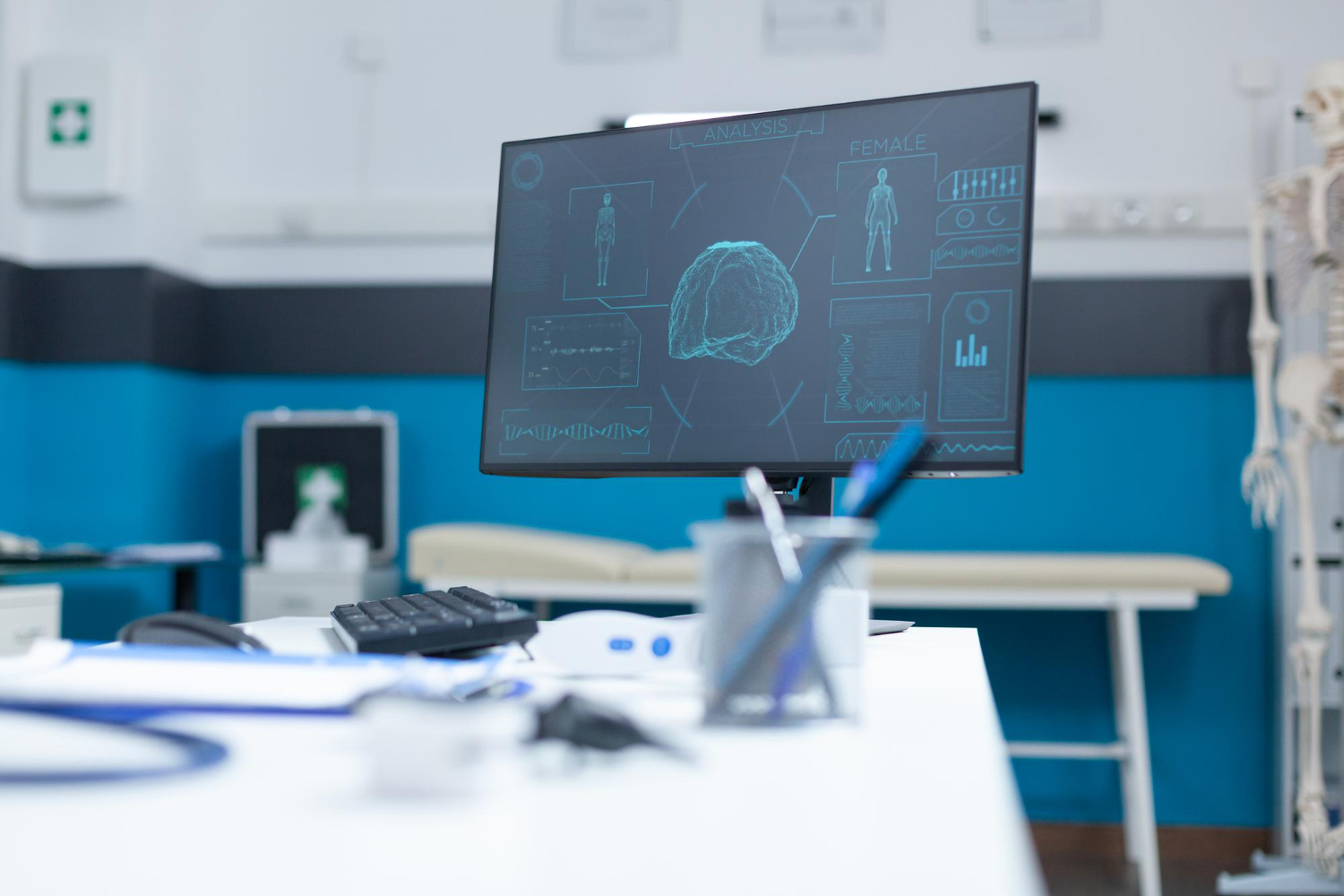
Image by Freepik (Generated by AI)

Ethical and Regulatory Considerations

Genetic interpretation influences life-changing decisions. AI tools must operate within a regulatory framework that protects patients from misclassification and ensures accountability. In the United States, agencies such as the Food and Drug Administration and professional boards define standards for validation. Comparable institutions in Europe and other regions establish their own guidelines.

Ethical oversight matters because AI-driven predictions may not always align with real world outcomes. A misinterpreted variant can lead to unnecessary treatment, or missed diagnosis in genetic disorders. Transparency in model development, validation on diverse populations, and audit trails in decision support systems help reduce risks. These safeguards create trust among patients and clinicians, allowing broader adoption of AI in clinical genetics.

Collaboration Between Research and Clinical Practice

The relationship between research institutions and clinical practice defines how quickly AI tools mature. Basic science advances in neural networks, deep neural network architectures, and large language models flow into clinical settings only when partnerships exist. Hospitals benefit when they participate in ongoing trials that validate new learning models on real patient cases.

Conversely, clinicians provide feedback that guides researchers toward practical improvements. For example, reports must remain concise and clinically actionable rather than flooded with raw statistics. A collaborative loop ensures that AI systems adapt not just to theoretical datasets but to complex patterns found in everyday practice. By closing this gap, clinical genetics gains tools that truly support patient care.

Read more: AI-Enabled Medical Devices for Smarter Healthcare

Long-Term Outlook

The integration of AI into clinical genetics is not a temporary trend but a structural shift. As sequencing becomes cheaper and more patients undergo genetic testing, the demand for rapid interpretation will grow. Only AI-based systems can manage the required scale. Over time, the role of AI will extend beyond genetic disorders into preventive care, risk assessment, and population health strategies.

With improvements in computing power, including new generations of GPUs, AI agents will analyse wider datasets that incorporate environmental exposure, lifestyle factors, and family histories. That broader context allows clinical teams to see beyond isolated mutations and address health outcomes more comprehensively. The long-term outlook points toward a clinical genetics field shaped by continuous collaboration between human expertise and advanced machine learning.

Broader Impacts of AI in Clinical Genetics

The impact of AI in clinical genetics goes beyond variant interpretation. It contributes to better patient counselling, faster treatments, and improved family planning. Hospitals gain efficiency by reducing time consuming manual work. Patients gain by receiving answers faster.

By improving outcomes in genetic disorders, AI reduces long-term healthcare costs. Early diagnosis prevents complications and directs patients to effective treatments sooner.

Looking Ahead: The Future of AI in Genetics

As technology advances, AI’s role in clinical genetics will expand. New learning models will process wider data sets, including epigenetic markers and environmental factors. Integration with electronic health records will make real time interpretation part of everyday care.

Generative AI, LLMs, and NLP will continue to read and summarise the growing literature. Deep learning models will identify even more complex patterns. Computer vision will merge with genetic data for richer diagnostics.

The future will not replace doctors but equip them with powerful ai tools that continuously improve.

How TechnoLynx Can Help

At TechnoLynx, we design advanced solutions that support clinical genetics with AI. Our systems combine neural networks, large language models, and computer vision tools to handle the complexity of genetic data. We integrate deep learning model architectures that identify variants, classify objects, and process large amounts of data in real time.

We work with hospitals, biotechnology firms, and research institutions to tailor solutions for specific needs. From genetic disorders diagnosis to decision support, our technology provides valuable insights that improve patient outcomes.

By partnering with TechnoLynx, organisations gain access to proven AI systems that enhance clinical genetics interpretation while maintaining accuracy, transparency, and trust. Contact us now to start collaborating!

Image credits: DC Studio and Freepik

Cost, Efficiency, and Value Are Not the Same Metric

Cost, Efficiency, and Value Are Not the Same Metric

17/04/2026

Performance per dollar. Tokens per watt. Cost per request. These sound like the same thing said differently, but they measure genuinely different dimensions of AI infrastructure economics. Conflating them leads to infrastructure decisions that optimize for the wrong objective.

Precision Is an Economic Lever in Inference Systems

Precision Is an Economic Lever in Inference Systems

17/04/2026

Precision isn't just a numerical setting — it's an economic one. Choosing FP8 over BF16, or INT8 over FP16, changes throughput, latency, memory footprint, and power draw simultaneously. For inference at scale, these changes compound into significant cost differences.

Precision Choices Are Constrained by Hardware Architecture

Precision Choices Are Constrained by Hardware Architecture

17/04/2026

You can't run FP8 inference on hardware that doesn't have FP8 tensor cores. Precision format decisions are conditional on the accelerator's architecture — its tensor core generation, native format support, and the efficiency penalties for unsupported formats.

Steady-State Performance, Cost, and Capacity Planning

Steady-State Performance, Cost, and Capacity Planning

17/04/2026

Capacity planning built on peak performance numbers over-provisions or under-delivers. Real infrastructure sizing requires steady-state throughput — the predictable, sustained output the system actually delivers over hours and days, not the number it hit in the first five minutes.

How Benchmark Context Gets Lost in Procurement

How Benchmark Context Gets Lost in Procurement

16/04/2026

A benchmark result starts with full context — workload, software stack, measurement conditions. By the time it reaches a procurement deck, all that context is gone. The failure mode is not wrong benchmarks but context loss during propagation.

Building an Audit Trail: Benchmarks as Evidence for Governance and Risk

Building an Audit Trail: Benchmarks as Evidence for Governance and Risk

16/04/2026

High-value AI hardware decisions need traceable evidence, not slide-deck bullet points. When benchmarks are documented with methodology, assumptions, and limitations, they become auditable institutional evidence — defensible under scrutiny and revisitable when conditions change.

The Comparability Protocol: Why Benchmark Methodology Defines What You Can Compare

The Comparability Protocol: Why Benchmark Methodology Defines What You Can Compare

16/04/2026

Two benchmark scores can only be compared if they share a declared methodology — the same workload, precision, measurement protocol, and reporting conditions. Without that contract, the comparison is arithmetic on numbers of unknown provenance.

A Decision Framework for Choosing AI Hardware

A Decision Framework for Choosing AI Hardware

16/04/2026

Hardware selection is a multivariate decision under uncertainty — not a score comparison. This framework walks through the steps: defining the decision, matching evaluation to deployment, measuring what predicts production, preserving tradeoffs, and building a repeatable process.

How Benchmarks Shape Organizations Before Anyone Reads the Score

How Benchmarks Shape Organizations Before Anyone Reads the Score

16/04/2026

Before a benchmark score informs a purchase, it has already shaped what gets optimized, what gets reported, and what the organization considers important. Benchmarks function as decision infrastructure — and that influence deserves more scrutiny than the number itself.

Accuracy Loss from Lower Precision Is Task‑Dependent

Accuracy Loss from Lower Precision Is Task‑Dependent

16/04/2026

Reduced precision does not produce a uniform accuracy penalty. Sensitivity depends on the task, the metric, and the evaluation setup — and accuracy impact cannot be assumed without measurement.

Precision Is a Design Parameter, Not a Quality Compromise

Precision Is a Design Parameter, Not a Quality Compromise

16/04/2026

Numerical precision is an explicit design parameter in AI systems, not a moral downgrade in quality. This article reframes precision as a representation choice with intentional trade-offs, not a concession made reluctantly.

Mixed Precision Works by Exploiting Numerical Tolerance

Mixed Precision Works by Exploiting Numerical Tolerance

16/04/2026

Not every multiplication deserves 32 bits. Mixed precision works because neural network computations have uneven numerical sensitivity — some operations tolerate aggressive precision reduction, others don't — and the performance gains come from telling them apart.

Throughput vs Latency: Choosing the Wrong Optimization Target

16/04/2026

Throughput and latency are different objectives that often compete for the same resources. This article explains the trade-off, why batch size reshapes behavior, and why percentiles matter more than averages in latency-sensitive systems.

Quantization Is Controlled Approximation, Not Model Damage

16/04/2026

When someone says 'quantize the model,' the instinct is to hear 'degrade the model.' That framing is wrong. Quantization is controlled numerical approximation — a deliberate engineering trade-off with bounded, measurable error characteristics — not an act of destruction.

GPU Utilization Is Not Performance

15/04/2026

The utilization percentage in nvidia-smi reports kernel scheduling activity, not efficiency or throughput. This article explains the metric's exact definition, why it routinely misleads in both directions, and what to pair it with for accurate performance reads.

FP8, FP16, and BF16 Represent Different Operating Regimes

15/04/2026

FP8 is not just 'half of FP16.' Each numerical format encodes a different set of assumptions about range, precision, and risk tolerance. Choosing between them means choosing operating regimes — different trade-offs between throughput, numerical stability, and what the hardware can actually accelerate.

Peak Performance vs Steady‑State Performance in AI

15/04/2026

AI systems rarely operate at peak. This article defines the peak vs. steady-state distinction, explains when each regime applies, and shows why evaluations that capture only peak conditions mischaracterize real-world throughput.

The Software Stack Is a First‑Class Performance Component

15/04/2026

Drivers, runtimes, frameworks, and libraries define the execution path that determines GPU throughput. This article traces how each software layer introduces real performance ceilings and why version-level detail must be explicit in any credible comparison.

The Mythology of 100% GPU Utilization

15/04/2026

Is 100% GPU utilization bad? Will it damage the hardware? Should you be worried? For datacenter AI workloads, sustained high utilization is normal — and the anxiety around it usually reflects gaming-era intuitions that don't apply.

Why Benchmarks Fail to Match Real AI Workloads

15/04/2026

The word 'realistic' gets attached to benchmarks freely, but real AI workloads have properties that synthetic benchmarks structurally omit: variable request patterns, queuing dynamics, mixed operations, and workload shapes that change the hardware's operating regime.

Why Identical GPUs Often Perform Differently

15/04/2026

'Same GPU' does not imply the same performance. This article explains why system configuration, software versions, and execution context routinely outweigh nominal hardware identity.

Training and Inference Are Fundamentally Different Workloads

15/04/2026

A GPU that excels at training may disappoint at inference, and vice versa. Training and inference stress different system components, follow different scaling rules, and demand different optimization strategies. Treating them as interchangeable is a design error.

Performance Ownership Spans Hardware and Software Teams

15/04/2026

When an AI workload underperforms, attribution is the first casualty. Hardware blames software. Software blames hardware. The actual problem lives in the gap between them — and no single team owns that gap.

Performance Emerges from the Hardware × Software Stack

15/04/2026

AI performance is an emergent property of hardware, software, and workload operating together. This article explains why outcomes cannot be attributed to hardware alone and why the stack is the true unit of performance.

Power, Thermals, and the Hidden Governors of Performance

14/04/2026

Every GPU has a physical ceiling that sits below its theoretical peak. Power limits, thermal throttling, and transient boost clocks mean that the performance you read on the spec sheet is not the performance the hardware sustains. The physics always wins.

Why AI Performance Changes Over Time

14/04/2026

That impressive throughput number from the first five minutes of a training run? It probably won't hold. AI workload performance shifts over time due to warmup effects, thermal dynamics, scheduling changes, and memory pressure. Understanding why is the first step toward trustworthy measurement.

CUDA, Frameworks, and Ecosystem Lock-In

14/04/2026

Why is it so hard to switch away from CUDA? Because the lock-in isn't in the API — it's in the ecosystem. Libraries, tooling, community knowledge, and years of optimization create switching costs that no hardware swap alone can overcome.

GPUs Are Part of a Larger System

14/04/2026

CPU overhead, memory bandwidth, PCIe topology, and host-side scheduling routinely limit what a GPU can deliver — even when the accelerator itself has headroom. This article maps the non-GPU bottlenecks that determine real AI throughput.

Why AI Performance Must Be Measured Under Representative Workloads

14/04/2026

Spec sheets, leaderboards, and vendor numbers cannot substitute for empirical measurement under your own workload and stack. Defensible performance conclusions require representative execution — not estimates, not extrapolations.

Low GPU Utilization: Where the Real Bottlenecks Hide

14/04/2026

When GPU utilization drops below expectations, the cause usually isn't the GPU itself. This article traces common bottleneck patterns — host-side stalls, memory-bandwidth limits, pipeline bubbles — that create the illusion of idle hardware.

Why GPU Performance Is Not a Single Number

14/04/2026

AI GPU performance is multi-dimensional and workload-dependent. This article explains why scalar rankings collapse incompatible objectives and why 'best GPU' questions are structurally underspecified.

What a GPU Benchmark Actually Measures

14/04/2026

A benchmark result is not a hardware measurement — it is an execution measurement. The GPU, the software stack, and the workload all contribute to the number. Reading it correctly requires knowing which parts of the system shaped the outcome.

Why Spec‑Sheet Benchmarking Fails for AI

14/04/2026

GPU spec sheets describe theoretical limits. This article explains why real AI performance is an execution property shaped by workload, software, and sustained system behavior.

Deep Learning Models for Accurate Object Size Classification

27/01/2026

A clear and practical guide to deep learning models for object size classification, covering feature extraction, model architectures, detection pipelines, and real‑world considerations.

Mimicking Human Vision: Rethinking Computer Vision Systems

10/11/2025

Why computer vision systems trained on benchmarks fail on real inputs, and how attention mechanisms, context modelling, and multi-scale features close the gap.

Visual analytic intelligence of neural networks

7/11/2025

Neural network visualisation: how activation maps, layer inspection, and feature attribution reveal what a model has learned and where it will fail.

Visual Computing in Life Sciences: Real-Time Insights

6/11/2025

Learn how visual computing transforms life sciences with real-time analysis, improving research, diagnostics, and decision-making for faster, accurate outcomes.

AI-Driven Aseptic Operations: Eliminating Contamination

21/10/2025

Learn how AI-driven aseptic operations help pharmaceutical manufacturers reduce contamination, improve risk assessment, and meet FDA standards for safe, sterile products.

AI Visual Quality Control: Assuring Safe Pharma Packaging

20/10/2025

See how AI-powered visual quality control ensures safe, compliant, and high-quality pharmaceutical packaging across a wide range of products.

AI for Reliable and Efficient Pharmaceutical Manufacturing

15/10/2025

See how AI and generative AI help pharmaceutical companies optimise manufacturing processes, improve product quality, and ensure safety and efficacy.

Barcodes in Pharma: From DSCSA to FMD in Practice

25/09/2025

What the 2‑D barcode and seal on your medicine mean, how pharmacists scan packs, and why these checks stop fake medicines reaching you.

Pharma’s EU AI Act Playbook: GxP‑Ready Steps

24/09/2025

A clear, GxP‑ready guide to the EU AI Act for pharma and medical devices: risk tiers, GPAI, codes of practice, governance, and audit‑ready execution.

Cell Painting: Fixing Batch Effects for Reliable HCS

23/09/2025

Reduce batch effects in Cell Painting. Standardise assays, adopt OME‑Zarr, and apply robust harmonisation to make high‑content screening reproducible.

Explainable Digital Pathology: QC that Scales

22/09/2025

Raise slide quality and trust in AI for digital pathology with robust WSI validation, automated QC, and explainable outputs that fit clinical workflows.

Validation‑Ready AI for GxP Operations in Pharma

19/09/2025

Make AI systems validation‑ready across GxP. GMP, GCP and GLP. Build secure, audit‑ready workflows for data integrity, manufacturing and clinical trials.

Edge Imaging for Reliable Cell and Gene Therapy

17/09/2025

Edge imaging transforms cell & gene therapy manufacturing with real‑time monitoring, risk‑based control and Annex 1 compliance for safer, faster production.

AI in Genetic Variant Interpretation: From Data to Meaning

15/09/2025

AI enhances genetic variant interpretation by analysing DNA sequences, de novo variants, and complex patterns in the human genome for clinical precision.

AI Visual Inspection for Sterile Injectables

11/09/2025

Improve quality and safety in sterile injectable manufacturing with AI‑driven visual inspection, real‑time control and cost‑effective compliance.

Back See Blogs
arrow icon