
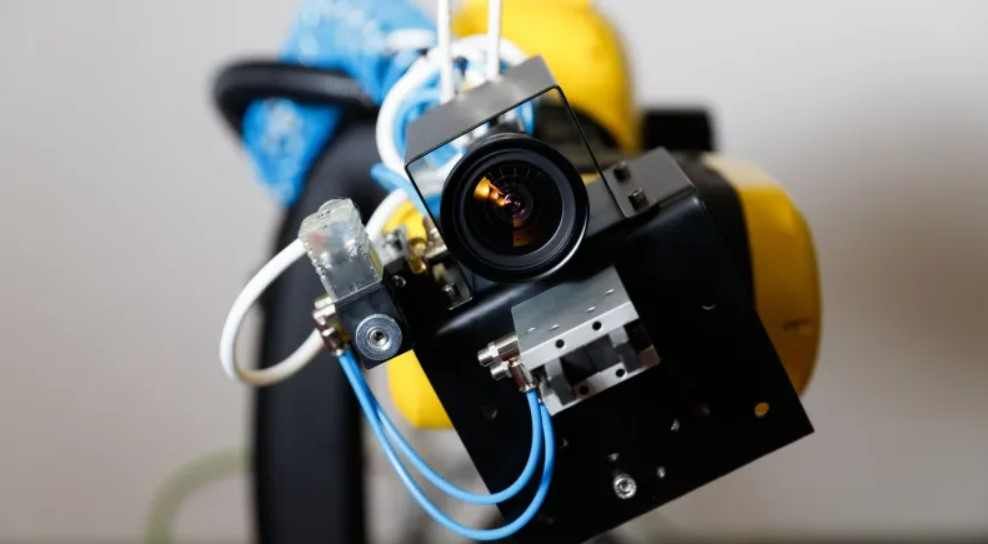
Let’s talk about how artificial intelligence, coupled with computer vision, is reshaping manufacturing processes — and why the framing of that reshaping matters more than the headline.
Computer vision in manufacturing QC is not a single thing. On one side sits traditional machine vision: rule-based, hardware-locked, deterministic, auditable. On the other sits AI-based computer vision: learned from data, adaptive to variation, opaque in its decision boundaries. Both inspect parts. They are not interchangeable, and the productive conversation starts once a team stops treating them as one category.
This short note frames the role; the deeper decision sits in our companion piece, Machine Vision vs Computer Vision: choosing the right inspection approach.
What computer vision actually changes on the line
Marketing promises exceed what current vision systems reliably deliver. Computer vision augments human inspectors on tasks where defect classes are visually distinct but variable in appearance — surface scratches under inconsistent lighting, mis-seated components across slight pose differences, label or assembly checks where rule-based templates would have to be re-tuned every time a supplier changes. In our experience across deployed manufacturing CV systems, this is the territory where learned models earn their keep over a fixed Cognex or Keyence rig.
What it does not do, despite the framing common in trade press: it does not remove the need for production validation, lighting design, or a team that can maintain the model after handover. Those constraints are the same constraints any inspection system inherits.
A compact reading of where each approach fits
| Constraint | Leans machine vision | Leans computer vision |
|---|---|---|
| Defect set stable, parts dimensionally tight | ✓ | |
| High variation in lighting, pose, or supplier | ✓ | |
| Hard auditability / regulated environment | ✓ | |
| Defects defined by appearance rather than geometry | ✓ | |
| Maintenance team has no ML capability | ✓ |
Think of this as engineering guidance, not a vendor comparison grid. It is the first filter — the structured framework, with throughput, cost, and validation paths, is what the linked decision article develops.
What we pay attention to
Two questions anchor every inspection-system recommendation we make. First: what variation does the production environment actually carry, measured rather than assumed? Second: who maintains the system in eighteen months, and what tooling do they have? These are the questions that tend to decide whether a CV deployment survives its first product revision.
For the full decision framework, see Machine Vision vs Computer Vision: choosing the right inspection approach for manufacturing.
Credits: Metrology News