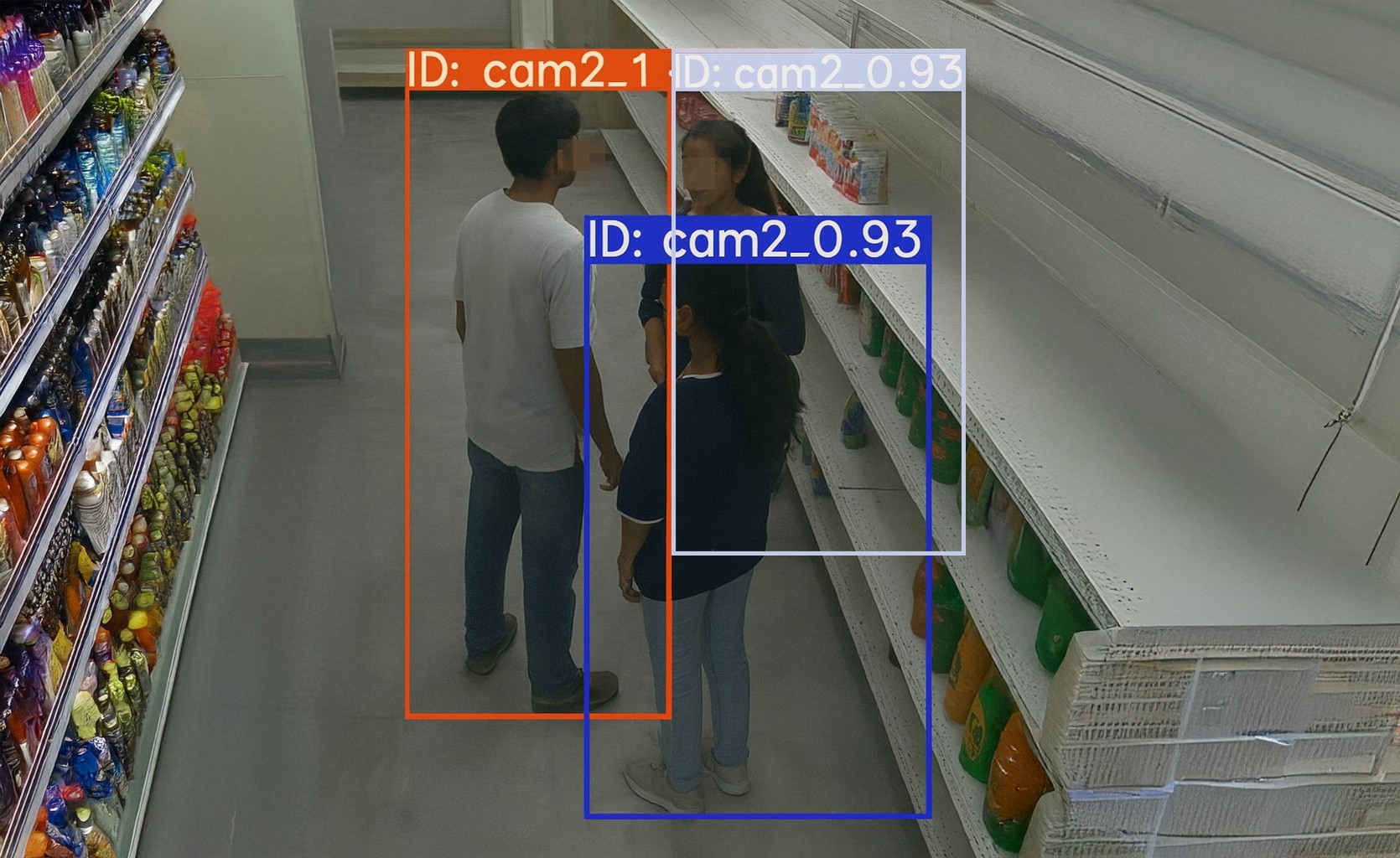

Smart Video Surveillance with Computer Vision
Operators must retain full visibility into system decisions, configuration parameters, and manual override paths—anything less becomes an operational risk rather than infrastructure. That is the framing we use whenever a security-operations team asks us to add computer vision to their CCTV estate. The interesting design question is not which detection model to pick. It is how to decompose the pipeline so that capture, decode, inference, tracking, and alerting are independently testable, independently observable, and independently overridable.
This is a decision-grade problem, and the right answer is structural before it is algorithmic.
From watching to understanding
Earlier generations of video monitoring depended entirely on continuous human attention to live feeds. That work degrades within minutes — attention drops, fatigue accumulates, and the events that matter most are usually the ones a tired operator misses. Modern systems shift the burden: convolutional detectors find candidate objects, trackers stitch those detections into trajectories across cameras, and rule layers decide which trajectories deserve an alert.
The shift from “record and review” to “understand and alert” is largely complete in modern enterprise deployments. What is not complete — and where most projects quietly fail — is the work of making each pipeline stage legible to the people operating the system. A black-box “AI camera” that emits alerts with no confidence score, no trace, and no per-stage override is unmaintainable in practice, however accurate it looks in a demo.
In our experience across security-operations engagements, the gap between a demo-grade pipeline and a production-grade one is observability, not model quality.
What “observable” means for a CCTV pipeline
Decomposing surveillance pipelines into functional stages requires establishing four clear architectural boundaries. Each one is a place to measure, log, and intervene.
| Stage | What it does | What operators need to see |
|---|---|---|
| Capture | Pulls frames from IP cameras over RTSP, ONVIF, or proprietary VMS feeds | Frame-arrival rate, dropped-packet rate, codec errors, camera-side health |
| Decode | Turns H.264 / H.265 streams into tensors on the inference host | Decode latency per stream, GPU decoder utilisation, fallback to CPU |
| Inference | Runs detection (YOLO11, RT-DETR), classification, tracking (ByteTrack, BoT-SORT), and re-identification | Per-class confidence distribution, per-camera detection counts, model version in use |
| Alerting | Applies rules (zones, dwell, abandoned-object) and emits events to the VMS or SOC | Rule fire rate per camera, operator-acknowledged false-positive rate, end-to-end latency |
Each row is its own subsystem with its own SLOs. The capture layer can be healthy while the decode layer is silently falling back to CPU and adding 200 ms of latency. The inference layer can be healthy while a misconfigured rule layer is generating one alert per second per camera. If those stages share a single log line and a single “AI detection” counter, the team cannot tell which one to fix.
Why upstream failures masquerade as model drift
A pattern we see often: a security team reports that “the AI got worse over the weekend.” The investigation almost never finds a model problem. What it finds is an upstream camera issue — a stuck auto-exposure setting after a firmware update, a re-aimed PTZ that now points at a wall, a switch flapping on one VLAN, a corrupt time-sync that breaks multi-camera tracking. Without per-camera capture-layer metrics, those failures present as model-quality regressions, and teams burn weeks tuning thresholds for a problem that lives two stages upstream.
The fix is not exotic. It is a frame-arrival heartbeat per stream, a simple decode-error counter, and an alert when any camera’s contribution to total detections deviates by more than a configured factor from its rolling baseline. None of this requires AI. All of it requires that you treat each pipeline stage as an inspectable component rather than a sealed box.
Designing for operator override
Pipeline design also dictates the points at which human operators can inspect state or inject corrections. Three override points cover most operational needs.
- Per-camera confidence thresholds. A camera pointing at a busy car park needs a different vehicle-detection threshold than one pointing at a controlled loading bay. The system should expose this as a per-zone configuration, not a global model parameter.
- Per-class rule masks. A school site may want person-detection alerts on a perimeter zone but suppress all person detections inside the staff car park during shift change. This is a rule-layer decision, not a model decision.
- Trajectory-level acknowledgement. When a tracker stitches together a multi-camera path, operators need a way to mark a trajectory as acknowledged so duplicate alerts do not flood the SOC as the same person moves across zones.
These overrides are what make the system maintainable across years. They also make the system auditable: when a regulator or an internal review asks why an alert fired or did not fire, the answer is reconstructable from logs of the rule layer’s decisions, not from the inscrutable internals of a model.
We worked through the multi-camera identity problem in depth in our multi-target multi-camera tracking case study — the global/local ID split there is the same pattern that makes operator override tractable at scale.
What an SRE-grade SLO looks like for CCTV
Borrowing from how we run other production ML systems, a defensible SLO set for a CCTV CV pipeline looks roughly like this:
- Capture availability per camera: ≥ 99.5% of expected frames received over a rolling 7-day window. This is an
observed-patternplanning target across our deployment engagements, not a vendor benchmark — your network and codec choices will move it. - End-to-end alert latency (camera glass-to-SOC): 95th percentile under 2 seconds for live rule-based alerts. Forensic search across recorded video is a separate SLO with different bounds.
- False-positive acknowledgement rate: tracked per camera, per rule. The metric matters more than the absolute number because it tells you which zones need tuning.
- Per-stage error budget: capture, decode, inference, and alerting each get their own budget so a noisy alerting layer cannot exhaust the budget the inference team is trying to protect.
The point of stating SLOs at this granularity is that incident response becomes faster. Instead of “the AI is broken,” the on-call engineer sees “capture-layer error budget on cameras 17–24 is exhausted” and knows where to start.
Cloud, edge, and the deployment topology question
Deployment topology—whether components execute on-premises, at the edge, or in cloud environments—remains independent of functional decomposition. Edge inference on NVR / VMS-attached GPUs (NVIDIA Jetson Orin, L4 / L40S) and on-camera NPUs (Hanwha, Axis, Hikvision, Dahua, Bosch) reduces bandwidth and latency for live alerting. Cloud or central-site inference is often the right home for forensic search, vision-language retrieval, and analytics workloads that tolerate higher latency.
The observability rules do not change with topology. An edge-only pipeline still needs a frame-arrival metric, a decoder-health metric, and a per-stage latency trace. A cloud pipeline still needs the same. The transport between stages changes — sometimes a local IPC, sometimes a message bus, sometimes a streaming protocol — but each boundary remains a place to measure.
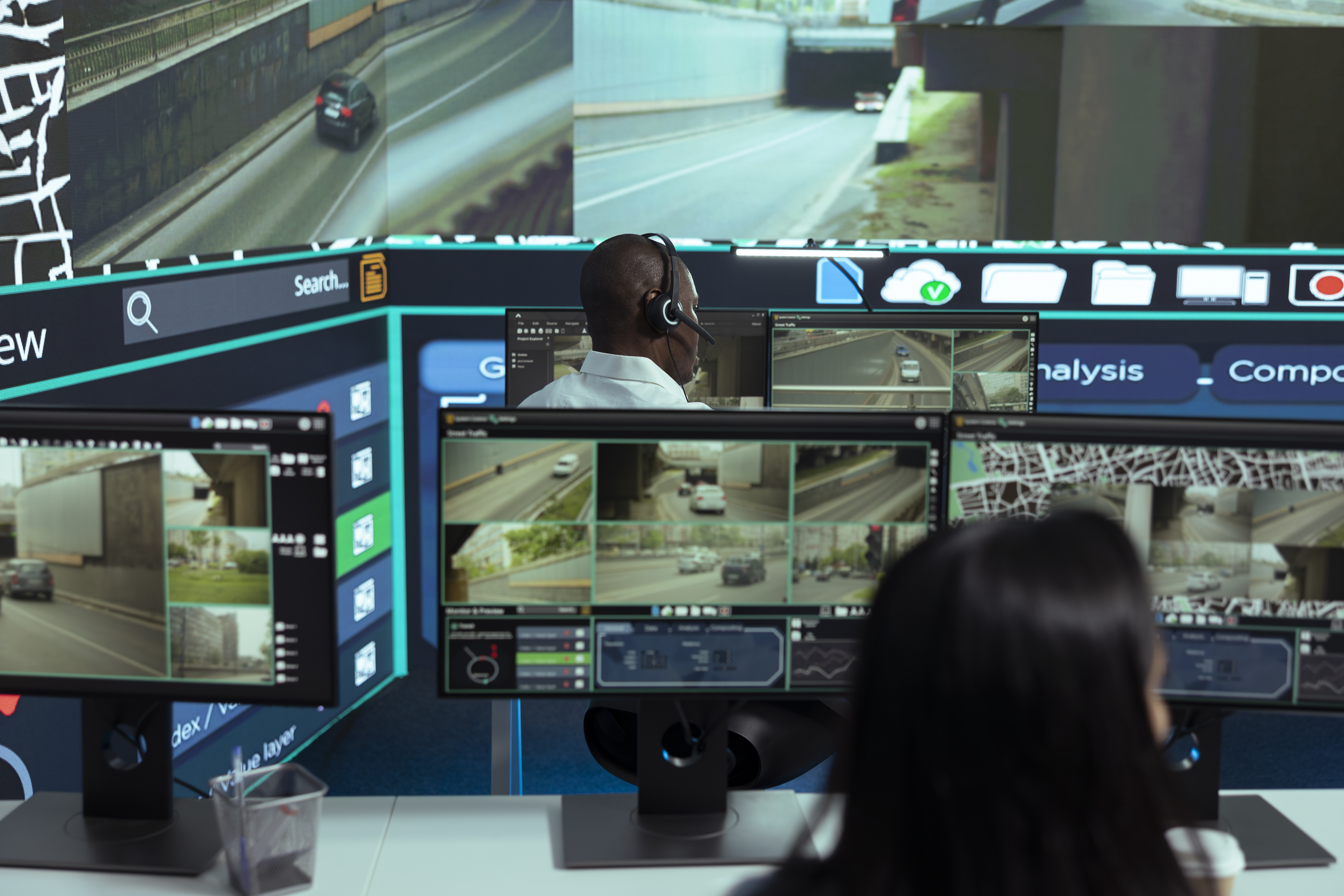
Where this design pays back
Investing in modular, instrumented pipeline architecture delivers three measurable operational advantages.
First, false-positive tuning becomes targeted instead of global. When a single car park camera is flooding the SOC, the team raises its threshold without degrading detection across the rest of the estate.
Second, audit becomes possible. GDPR Article 6 / 9 require lawful basis and a DPIA for video processing involving identifiable individuals; UK ICO guidance and several US state biometric laws (BIPA, CUBI, Washington) add further constraints. A pipeline that logs which rule fired, on which trajectory, against which model version, with what confidence, is one that can answer a regulator. A black-box pipeline cannot.
Third, incident response time drops. We have seen security-operations teams cut their mean-time-to-diagnose for video-analytics issues substantially once each stage has its own dashboard — though the exact factor depends heavily on the team’s existing observability maturity, so we treat it as a directional observed-pattern rather than a benchmarked rate.
The role of TechnoLynx
TechnoLynx builds computer vision surveillance infrastructure with full introspection and configuration transparency as core requirements. That means modular detection, tracking, and alerting layers; per-stage metrics and traces; configurable per-camera and per-zone overrides; and a deployment topology — edge, cloud, or hybrid — that matches the regulatory and operational constraints of the site. We support IP cameras, modern VMS platforms (Genetec, Milestone, Avigilon, Verkada, Eagle Eye), and the NVR-attached and on-camera accelerators commonly used in enterprise deployments. The work we publish on observable CV pipelines for CCTV covers the same framework in deeper detail and is the natural next read for architects designing surveillance systems.
FAQ
How do I design observable CV pipelines for CCTV at scale?
A useful Computer Vision Smart Video clarification is this. Decompose the pipeline along four boundaries — capture, decode, inference, alerting — and make each stage independently testable, measurable, and overridable. Each stage gets its own metrics, its own error budget, and its own configuration surface. Operators tune per-camera thresholds at the inference boundary and per-zone rules at the alerting boundary, without touching model weights.
Which metrics, traces, and logs make a video-analytics pipeline debuggable in production?
Per-stream frame-arrival rate and decode-error counts at capture; decode latency and decoder utilisation; per-class confidence distributions and per-camera detection counts at inference; rule fire rates, operator-acknowledgement rates, and end-to-end glass-to-SOC latency at alerting. Traces should carry a stream ID and a frame timestamp end-to-end so any alert can be reconstructed back to its source frame and model version.
Which modular boundaries (capture, decode, inference, alerting) should be independently observable?
All four. The most common failure mode in unobservable pipelines is that upstream camera or decode issues present as downstream model-quality drops, sending teams to tune the wrong layer. Independent observability per boundary is what prevents that misattribution.
How do I detect upstream camera failures before they show up as model-quality drops?
A frame-arrival heartbeat per stream, a per-camera detection-count baseline with deviation alerts, and a decode-error counter cover most cases. Time-sync drift, PTZ re-aiming, and exposure changes after firmware updates are the failure modes that hurt most; each has a cheap upstream signal if the capture layer is instrumented.
What does an SRE-grade SLO look like for a CCTV CV pipeline?
Per-camera capture availability (observed-pattern planning target around 99.5% over a rolling window), a 95th-percentile end-to-end alert latency under 2 seconds for live rule-based alerts, separately budgeted forensic-search latencies, and per-stage error budgets so a noisy alerting layer cannot exhaust the inference layer’s budget.
How do observability investments change incident response time for a security-operations team?
Substantially, in our experience — the move from a single “AI” status indicator to per-stage dashboards changes the conversation from “the AI is broken” to “capture-layer budget on cameras 17–24 is exhausted.” The exact reduction in mean-time-to-diagnose depends on the team’s baseline maturity, so we treat the gain as an observed pattern across engagements rather than a benchmarked rate.
Surveillance architecture for privacy and performance
Distributing workload between edge and cloud tiers simultaneously shapes privacy guarantees, cross-site correlation capability, and compute costs.