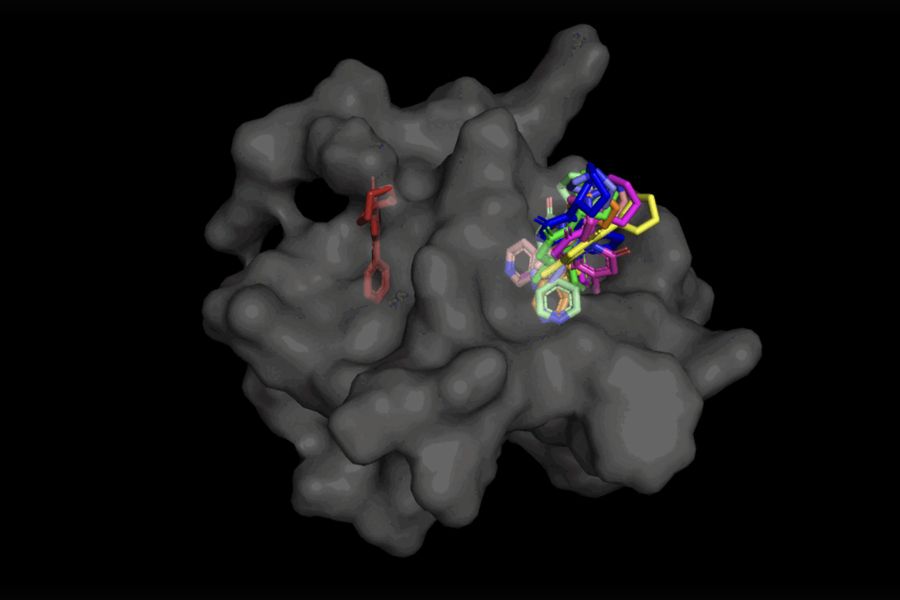
Traditionally, drug discovery is a slow and expensive process driven by trial-and-error experimentation. DiffDock takes a different route: it uses diffusion generative models to predict how a candidate molecule will dock with a protein receptor, scoring binding poses before any wet-lab work begins. That shifts where the funnel narrows — from synthesis-and-assay to in-silico filtering.
The DiffDock team has applied the approach to candidate identification across oncology and neurodegenerative targets, including Alzheimer’s-class proteins. The same generative scaffold is also used to refine known ligands, exploring nearby chemical space to improve binding affinity and reduce off-target interactions. None of this replaces clinical validation. What it changes is the cost and tempo of the early discovery loop.
The structural point is that diffusion models give pharma teams a way to enumerate and rank binding hypotheses at a scale traditional docking software cannot match. For the broader picture of where generative AI ships today in pharma, see Generative AI: pharma’s drug discovery revolution.
At TechnoLynx, we work with engineering teams applying generative methods in biotechnology and life-sciences pipelines, where the gate between promising in-silico results and regulator-ready validation is the part that decides whether a programme ships. See our broader generative AI practice for related work.
Credits: MIT