
Introduction
By 2026, retail AR deployments cluster into three operational categories: virtual try-on systems for appearance-driven purchases (cosmetics, eyewear, apparel, footwear), in-store navigation and wayfinding tools, and product information overlays for physical shopping environments. The largest measurable ROI lives in the first category and within that, in a small number of product types where the buying decision genuinely benefits from previewing the product on the shopper. The CV and runtime engineering required varies by category: cosmetics try-on is a face-CV problem solved on-device; clothing fit is a body-modelling problem with much higher complexity; eyewear sits between the two. See GPU engineering for the broader landing this article serves, and retail for the commerce context.
The honest 2026 picture: production try-on is mature for cosmetics and eyewear, viable but variable for apparel, and still pilot for many other categories.
What this means in practice
- AR shopping at production scale focuses on try-on for appearance-decision categories.
- Per-category CV pipelines differ in complexity, latency, and accuracy requirements.
- Conversion lift is measurable and category-specific; not universal across product types.
- AI-driven generative try-on is shipping for some categories with different latency UX.
What does AR shopping actually mean at production scale — try-on, navigation, or storefront overlay?
Three distinct categories of AR shopping exist at production scale, each demanding radically different engineering approaches and unit economics.
Virtual try-on. The shopper sees the product on themselves through their device camera. The dominant production category and the one with measurable revenue ROI. Sub-categories: cosmetics (lipstick, eye shadow, foundation, hair colour); eyewear (glasses, sunglasses); apparel (clothing fit and appearance); footwear (size and look); accessories (watches, jewellery). Each requires different CV.
In-store AR navigation. The shopper uses an app to navigate the physical store, find products on shelf, get product information overlay. Limited production deployment beyond a few large-format retailers (IKEA, some big-box stores, some grocery chains). The economics are difficult — the AR adds value only where the store is large and complex enough that navigation matters; many shoppers prefer signage to AR. Limited revenue ROI beyond engagement metrics.
Storefront overlay (in-window or in-aisle AR). Branded AR experiences viewed through a phone in front of a physical display. Pilot or marketing use; rare production deployment. Engagement metric rather than revenue metric. Treated as marketing spend rather than commerce infrastructure.
The production-scale category is virtual try-on; the other categories are smaller and more experimental. Retailers who concentrate AR investment in try-on capture the ROI; retailers who spread investment across navigation and storefront overlay capture engagement metrics without proportionate revenue impact.
How do virtual try-on systems handle clothing fit, eyewear, and cosmetics differently in the CV pipeline?
Cosmetics. The CV pipeline is face-centric. Face detection and landmark tracking provide the geometric base. Per-feature segmentation (lips, eyes, eyebrows, skin regions) isolates the areas where the product applies. Material rendering applies the cosmetic with appropriate compositing — alpha blending for sheer products, more complex BRDFs for shimmer and gloss. All on-device, frame-rate, mature.
Eyewear. The CV pipeline combines face landmark tracking with 3D face geometry estimation (depth from monocular CV or device depth sensors). The eyewear 3D model is placed and oriented in 3D relative to the face geometry, accounting for face shape, eye position, and viewing angle. Rendering produces a realistic compositing of the glasses on the face. The challenge is fit realism: glasses must look like they sit correctly on the bridge of the nose, ears, and face proportions. Mature for most major eyewear retailers (Warby Parker, Zenni, EyeBuyDirect).
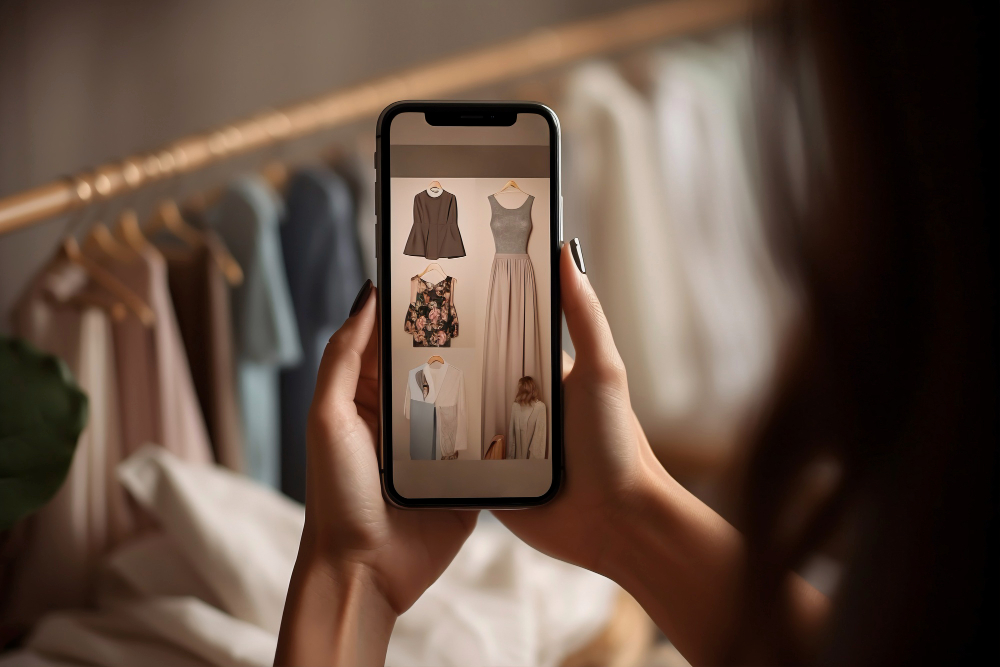
Apparel. The CV pipeline is body-centric and much more complex. Body landmark tracking estimates pose and major body landmarks. Body shape estimation produces a 3D body model that the garment can be draped onto. Garment simulation produces realistic fit, drape, fold, and movement of the clothing. Rendering composites the garment onto the body in the camera view. The challenge is much harder than face: bodies vary across shape, pose, and proportions; clothing physics is complex; the rendering must be realistic enough to support a buying decision. Production apparel try-on exists (Walmart’s Be Your Own Model uses Zeekit technology; Amazon, Target, others have varying capabilities) but quality and accuracy vary significantly.
Footwear. The CV pipeline tracks foot position and orientation through ARKit/ARCore body tracking. The shoe 3D model is placed on the foot in the camera view. Fit and size estimation can incorporate device-measured foot length. Used by Nike, Adidas, others.
The per-category complexity ranking. Cosmetics: lowest CV complexity, most mature production. Eyewear: moderate CV complexity, mature for established retailers. Footwear: moderate complexity, deployed at major footwear brands. Apparel: highest complexity, viable but with quality variation across retailers.
What conversion lift is realistic for retail AR pilots today, and how is it measured?
Conversion lift varies substantially by product category.
Cosmetics try-on. Conversion lift for shoppers who use try-on is typically 30-50% relative to similar shoppers who do not use try-on, as reported in major beauty brands’ multi-year programmes. The lift varies by product category — colour cosmetics (lipstick, eye shadow) see higher lift because the colour-on-skin question is the buying decision; skincare sees lower lift because the buying decision is not appearance-based. Return rates for try-on users are 10-25% lower for shade-dependent products (per the same brand programmes), providing additional financial ROI.
Eyewear try-on. Conversion lift of 25-50% for shoppers who use try-on (as reported in retailer surveys), with significant variation by retailer. Return rates lower for try-on users (the fit decision is high-stakes). Repeat purchase rate higher (the engagement with the brand is deeper).
Apparel try-on. Conversion lift of 10-30% as reported in the best programmes (per industry case studies), but with high variance and category sensitivity. Outerwear, simple-fit clothing (t-shirts, scarves) show higher lift; complex-fit clothing (fitted dresses, structured tailoring) show lower lift because the try-on quality is less sufficient to drive purchase confidence.
Footwear try-on. Conversion lift smaller than other categories because the buying decision often hinges on physical comfort that AR cannot show. Return rates marginally lower for try-on users.
Measurement methodology. A/B testing comparing shoppers in the try-on cohort vs control cohort, controlled for time, category, and shopper segment. Conversion attribution from try-on session to purchase via session-level tracking. Return-rate measurement matching purchases to returns over an appropriate window. Long-term shopper lifetime value comparison over a year or more.
Bad measurement that overstates ROI. Comparing try-on users to all shoppers without controlling for self-selection (try-on users are more engaged generally). Single-purchase attribution without considering longer-term impact. Measuring engagement (try-on starts, completions) and treating it as revenue. The honest measurement programmes produce the numbers above; the marketing claims sometimes exceed them.
Which technology stacks (Google try-on, Amazon, native ARKit) power production virtual try-on apps?
Five technology stacks dominate current production deployments.
Native platform AR (ARKit, ARCore). Built into iOS and Android. Provides face tracking, body tracking, world tracking. Used by retailers building native apps with full AR control. Higher development cost, deeper integration possible.
WebAR (WebXR, model-viewer, Google’s AR features). Browser-based AR; lower friction for shoppers (no app install), broader device support. Used by retailers prioritising reach over deep AR features. Quality is lower than native for complex try-on.
Third-party platforms. Perfect Corp (YouCam Makeup, YouCam Tutorial): dominant in beauty try-on with white-label SDK used by many brands. ModiFace (Acquired by L’Oréal): cosmetics try-on used across L’Oréal portfolio and licensed to others. Banuba: cosmetics and other try-on SDK. Zeekit (acquired by Walmart): apparel try-on used by Walmart and others. Snap AR / Camera Kit: AR runtime that powers brand integrations beyond Snapchat. Vyking: footwear AR. Avataar: 3D and AR commerce platform.
Google Try-On. Google’s AR try-on integrated into Google Shopping and some retailer surfaces. Apparel try-on uses generative AI to render the product on a wide range of body types from a single product image, lowering the per-product content cost.
Amazon. Amazon’s AR features within the mobile app for selected categories.
The choice. Large retailers with engineering depth typically build native apps using ARKit/ARCore with their own CV models or licensed SDKs. Mid-tier retailers usually adopt third-party platforms for cosmetics or eyewear. Web-first retailers use WebAR with simpler experiences. The patterns are stable as of 2026; the consolidation toward a few dominant SDKs in each category is largely complete.
Where do AR retail pilots break down — model accuracy, latency, content pipeline, or merchandising integration?
Model accuracy forms the first breakdown criterion. Try-on that does not look right — wrong skin tone for cosmetics, wrong fit for eyewear, wrong drape for apparel — erodes shopper trust and does not convert. Accuracy issues are most acute for shoppers outside the demographic range the model was trained on; brands serving global markets must validate accuracy across populations.
Breakdown source 2: Latency. Cold-start latency for the AR experience to first render — if it takes more than a few seconds, shoppers abandon. Frame-rate latency during use — if the try-on lags or stutters, the experience feels broken. Both must hit aggressive budgets across device types.
Breakdown source 3: Content pipeline. The try-on system requires 3D models or per-product calibration for each product in the catalogue. For a beauty brand with hundreds of shades, this is manageable; for a fashion retailer with tens of thousands of SKUs and seasonal turnover, this is a content-pipeline problem at scale. Brands that solved the content pipeline (often via standardised photography and automated 3D-asset generation, sometimes using generative AI) deploy try-on broadly; brands that did not stall with try-on on a small subset of the catalogue.
Breakdown source 4: Merchandising integration. Try-on launched from PDP, products correctly mapped to try-on assets, attribution from try-on session to add-to-cart event. Integration with the e-commerce platform’s product catalogue, image management, and analytics. Broken integration produces try-on experiences that do not connect to the buying journey.
The pattern. Pilots breakdown at different points depending on category and retailer maturity. The pilots that succeed have addressed all four sources before launch; the pilots that fail typically have one strong area (often the AR rendering looks great) and underinvestment in the others.
How does AI-driven virtual try-on differ from classical AR overlays in deployment cost and result quality?
Classical AR overlay try-on. Pre-built 3D model of the product; AR runtime places and renders the model in the camera view. Engineering: known and mature. Content: 3D model per product; standardised photography for some categories; cost per SKU in the range of tens to hundreds of dollars depending on complexity. Quality: high for products that are well-suited to 3D modelling (eyewear, footwear, accessories, cosmetics with shader rendering). Limited for products where 3D modelling alone does not produce realistic results (clothing on diverse bodies).
AI-driven (generative) try-on. Diffusion or similar generative models render the product on the shopper from a product image and a shopper image (or live camera). No per-product 3D model required. Engineering: more complex (model serving, latency management). Content: per-product photograph rather than 3D model; content cost lower. Quality: very good for clothing on diverse body types; latency higher (seconds rather than frame-rate); cost per inference higher than classical AR runtime.
The trade-off. Classical AR is real-time, low per-inference cost, but content-pipeline expensive at scale. Generative AI try-on is higher per-inference cost, but content-pipeline cheaper and quality often higher for difficult categories (apparel). The right choice depends on category and scale.
Production deployments. Beauty and eyewear: classical AR remains dominant because real-time mirror UX is what shoppers expect and the rendering quality is high. Apparel: generative AI try-on is gaining share because the quality and content-pipeline advantages outweigh the latency disadvantage. The UX shifts from real-time mirror to take-a-photo-or-pose-and-render, which is acceptable for apparel where the shopper would not typically use real-time try-on anyway. Hybrid deployments: some retailers offer both — classical AR for products where it works, generative AI for products where it does not. The 2026 picture is convergence on category-appropriate technology rather than one approach winning across the board.
Limitations that remained
Demographic and body-type diversity pose ongoing challenges for try-on accuracy; global brands must validate performance across diverse populations, driving content costs upward. Content pipeline cost for fashion at scale remains the binding constraint for many retailers; the SKU volume and seasonal turnover overwhelm 3D-model production. Latency for generative AI try-on remains seconds rather than frame-rate, limiting UX patterns. Privacy concerns around shopper imagery (especially full-body for apparel) create friction in some markets and with some shopper segments. Standards for try-on assets and accuracy measurement remain immature; cross-retailer comparison is difficult. These constraints shape what scales; they do not change the established ROI in cosmetics and eyewear or the emerging value in apparel.
Carrying AR AI Redefine Virtual forward
Here, AR and AI converge to reshape how virtual try-on handles personalization at scale. If your team is building or scaling AR try-on for an e-commerce business, contact us.
Image credits: Freepik