Computer science underpins artificial intelligence and machine learning. At its core, it studies how computing programs can perform tasks that historically belonged to humans — perception, language, decision-making — and how to do so reliably enough that the results can be trusted. That last clause is where the field actually lives. The interesting part of modern AI is not that a model can score well on a benchmark; it is whether the same model behaves predictably the day after it is deployed, under lighting, traffic, and inputs that no benchmark anticipated.
This article walks through the engineering territory that connects classical computer science to modern AI: the mathematical foundations, the systems work, and the places where the textbook story diverges from what we see in production. We pay close attention to that divergence, because it is where most AI projects either earn their keep or quietly fail.
The Roots of Artificial Intelligence
Turing’s 1950 question—can machines think?—opened the field. His 1950 paper introduced the idea of the Turing Test and framed a question that the field has been refining for seventy-five years. The original question — can a machine convincingly imitate a human in conversation — has aged less well than the methodology behind it: define an observable behaviour, instrument it, and judge the system by what it does, not by what it claims to be.
That instinct still drives serious AI engineering. A modern object detector or language model is not interesting because of its architecture; it is interesting because of the conditions under which it continues to work. Read more: Alan Turing: The Father of Artificial Intelligence.
Machine learning and deep learning
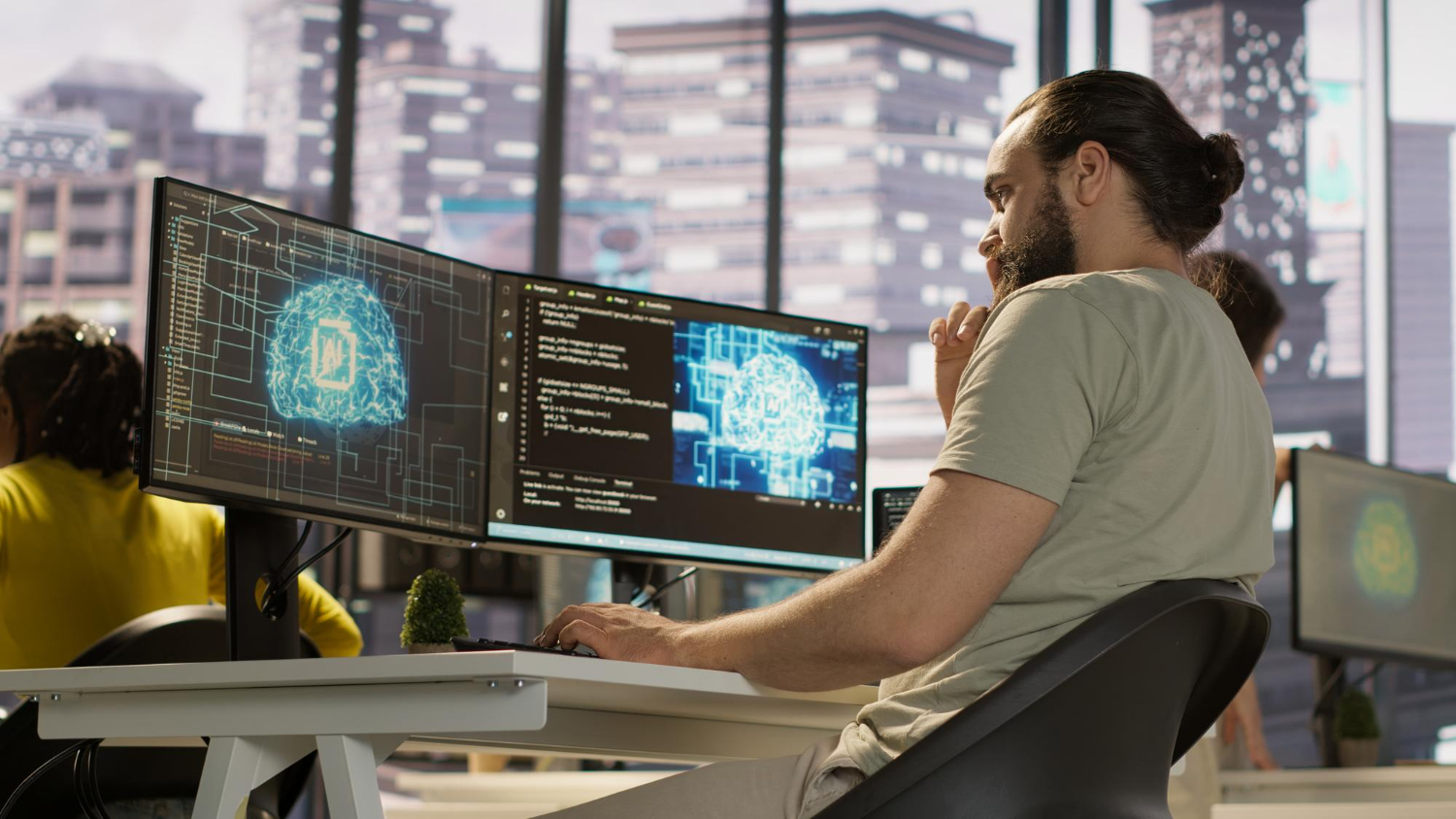
Programs learn patterns from data rather than following hand-coded rules. Deep learning uses neural networks with many layers to extract structure from raw input — pixels, audio, tokens — without hand-engineered features. This is the shift from rule-based code to data-driven models, and it is the single largest change to applied computer science in the last two decades.
It also introduced a new failure surface. A traditional program fails in ways a debugger can locate. A deep model fails in ways that look statistically reasonable on aggregate metrics and catastrophically wrong on individual cases. In our experience across vision and NLP engagements, the gap between a model’s reported accuracy and its operational behaviour is the single most expensive misunderstanding a team can carry into production. This is an observed pattern across our deployments, not a benchmarked rate — but it shows up reliably enough that we now design around it from the first sprint.
Natural language processing
Computers now parse, generate, and reason over human language at industrial scale through NLP. Modern systems translate, summarise, answer questions, and generate fluent prose. Under the hood, transformer architectures running on PyTorch or JAX, served through ONNX Runtime or TensorRT-LLM, map tokens to dense representations and decode them back into text.
The engineering question is rarely whether a model can generate plausible language — current models can. The harder question is whether its outputs are correct, attributable, and safe in a given domain. That is a systems problem (retrieval, grounding, evaluation harnesses) as much as a model problem.
Computer vision in action
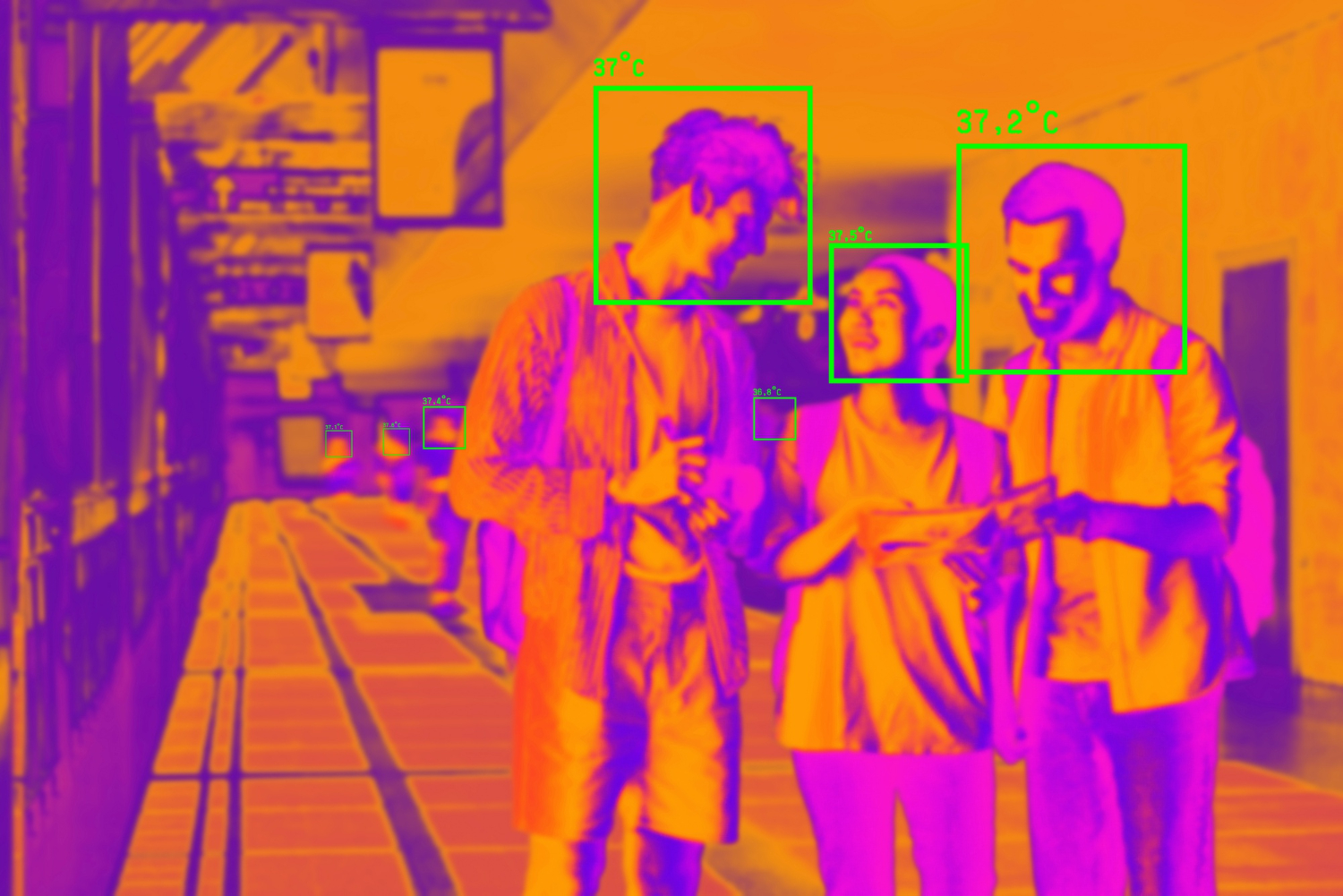
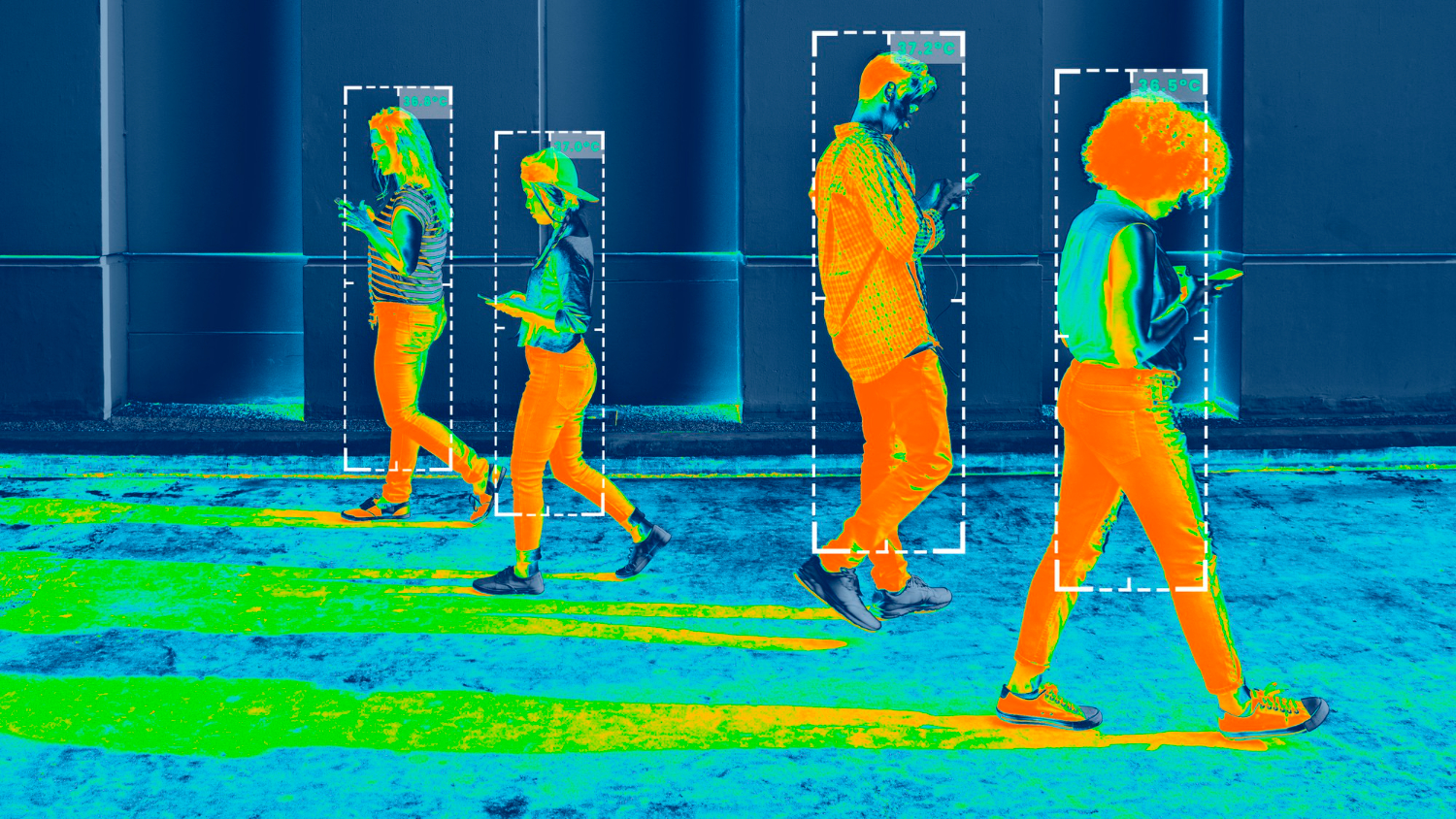
Images and video become machine-readable inputs via computer vision. It drives medical imaging, industrial inspection, retail analytics, and autonomous navigation. Vision systems built on PyTorch, CUDA kernels, and frameworks like OpenCV and MMDetection learn from labelled data to detect objects, segment scenes, and classify what they see.
This is also where the gap between benchmark and reality is widest. Off-the-shelf object detectors — YOLO variants, Faster R-CNN, DETR derivatives — report strong accuracy on COCO or Open Images. They degrade systematically the moment they meet variable lighting, partial occlusion, unusual viewpoints, or class distributions that differ from the training set. The failure is not edge-case rarity; it is structural. We explore the mechanism in depth in Why Off-the-Shelf Computer Vision Models Fail in Production.
Read more: The Importance of Computer Vision in AI.
Why benchmark accuracy is not deployment readiness
High benchmark scores do not guarantee production readiness—correcting that belief saves more projects than any other intervention. It does not. A benchmark is a fixed dataset under fixed evaluation conditions; a production environment is a moving target with its own distribution, its own latency budget, and its own tolerance for error.
| What benchmarks measure | What production demands |
|---|---|
| Accuracy on a curated test set | Accuracy on the data your sensors actually capture |
| Inference latency on reference hardware | Sustained throughput on your deployment hardware under realistic load |
| Class balance close to training distribution | Long-tail classes that may dominate cost |
| Single-frame correctness | Temporal consistency, false-alarm rate, recovery from errors |
| Researcher judgement of failure cases | Operational cost of each false positive and false negative |
This is the gap a Production CV Readiness Assessment is built to close: characterise failure modes per environment, set expected-performance contracts, and only then commit to deployment. Sustained throughput under realistic load — not peak burst on a vendor slide — is the operationally relevant measure for any GPU-accelerated inference system.
Vast data and computing systems
Training and inference at scale demand large datasets and purpose-built silicon. Cloud platforms provide on-demand GPUs (NVIDIA H100, A100, L40S) and the orchestration to keep them busy — Kubernetes, NCCL for multi-GPU communication, Ray or Slurm for scheduling. Edge devices then run slimmed-down models in real time, typically through TensorRT, ONNX Runtime, or quantised exports.
The split between cloud and device is not stylistic; it is a hard engineering decision about where latency, bandwidth, privacy, and power budgets sit. A model that trains comfortably on eight H100s may need aggressive pruning, distillation, and INT8 quantisation before it fits on a Jetson Orin at 30 frames per second.
Programming languages and frameworks
Python orchestrates training loops, C++ handles inference hotpaths, and Rust increasingly claims systems components where memory safety without garbage collection matters. PyTorch dominates research; TensorFlow remains common in established production stacks; JAX is the language of choice for several large-model groups.
Software engineering discipline matters more here than the framework choice. The teams whose AI systems survive contact with production are the teams who treat model code with the same rigour as the rest of their codebase: typed interfaces, reproducible builds, versioned datasets, CI that runs evaluation suites on every change. Without that scaffolding, the model becomes a black box no one is willing to touch.
From research to real-world deployment
Research prototypes reach production through iteration, not a single handoff. A model that works in a Jupyter notebook needs to survive containerisation, monitoring, drift detection, A/B comparison against the incumbent, and the operational cost of being wrong. In healthcare, AI now reads radiology images alongside clinicians. In retail, vision systems track inventory across thousands of SKUs and lighting conditions. In each case, the deployment that succeeds is the one that was validated against representative data before it shipped — not the one with the highest paper-reported accuracy.
Read more: AI Datasets for Space-Based Computer Vision Research.
Human and machine intelligence
Sorting millions of records, detecting faint statistical drift, holding thousands of documents in context—machines excel here and humans do not. It still lacks common sense, causal reasoning, and the kind of judgement that draws on lived experience. The systems that work best in production tend to be hybrid — the model proposes, a human disposes, and the interface between them is designed deliberately rather than left to chance.
Programmes where AI now sits in the workflow
Deployment in machine learning AI modern begins with these fundamentals. Recommendation engines adapt over time as the learner progresses. Read more: AI Smartening the Education Industry.
In finance, models flag unusual transactions for human review, robo-advisors rebalance portfolios against stated goals, and credit scoring systems learn from repayment histories. The standard of care is not whether the model is accurate on average — it is whether the model’s errors are auditable and whether the error distribution matches the regulatory and ethical commitments of the business.
In human–computer interaction, voice assistants use NLP to understand spoken commands, and gesture-recognition systems read hand movements in factory and surgical settings. The interesting engineering question is robustness — how the system behaves when the input is ambiguous, accented, or partial.
Ethics, governance, and auditability
Governance structures scale in importance as deployment footprints grow. Companies set up ethics review boards to interrogate data sources, evaluation methods, and harms. Regulators require transparency in automated decision-making — the EU AI Act and similar frameworks now treat opaque decision systems as a compliance risk in their own right. Models need decision logs that allow an expert to audit why a loan was denied or an image was flagged.
Privacy remains foundational. AI systems must store personal data securely, limit access, and respect data-subject rights. We pay close attention to this at the architecture stage rather than retrofitting it later. Read more: The Future of Governance: Explainable AI for Public Trust & Transparency.
Skills for the next decade of computer science
Demand for interpretability and operations expertise is rising faster than demand for novel architectures. Strong mathematical foundations and fluent Python remain table stakes. To them, working engineers now need familiarity with distributed training, model evaluation methodology, MLOps tooling (MLflow, Weights & Biases, Kubeflow), and the systems work that makes inference economical at scale.
Soft skills earn their place too. The engineers we trust most in client engagements are the ones who can explain a model’s failure modes to a non-specialist stakeholder without either overselling the capability or hiding behind jargon.
Open challenges
Bias, control boundaries, and automation limits are engineering constraints, not afterthoughts. Models trained on flawed data misidentify people or underperform in specific contexts. The discipline is auditing data, testing under realistic conditions, and following ethical guidelines that limit how a system is deployed. None of this is exotic — it is normal engineering practice applied to a class of system that, until recently, did not exist.
The direction the field is moving
Here is where machine learning AI modern separates successful deployments from stalled pilots. Quantum computing remains a longer-term bet. Modular, tool-using agents are an active research frontier — promising, but not yet at the reliability bar that production engineering demands.
The throughline across all of this is unchanged: the systems that work are the ones that were measured under the conditions they will actually face. That is what computer science contributes to AI — not just the algorithms, but the discipline of evaluation.
FAQ
Why do off-the-shelf computer vision models fail in production?
Production environments expose models to lighting variations, occlusions, viewpoint shifts, and class distributions that curated benchmark datasets—evaluated under fixed conditions—rarely capture. The failure is structural, not edge-case rarity; teams that deploy demo-validated models accept a false-positive and miss rate they never measured under real conditions.
What kinds of edge cases break public detection and classification models in real deployments?
Variable lighting, partial occlusion, motion blur, unusual viewpoints, and class distributions that diverge from training data. Throughput requirements that benchmarks never test are a parallel failure axis — a model that is accurate at one frame per second may be unusable at thirty.
How do I test a CV model against production data before shipping it?
Run a Production CV Readiness Assessment: collect representative data from the deployment environment, characterise failure modes per condition, and define expected-performance contracts rather than benchmark-accuracy claims. The goal is to make the false-positive and miss cost known before deployment, not after.
What does it cost to discover an off-the-shelf model is wrong only after deployment?
The visible cost is rework — relabelling, retraining, re-validating. The hidden and usually larger cost is the operational damage during the window the model was trusted: misrouted inventory, missed defects, regulatory exposure. The point of pre-deployment validation is to convert that hidden cost into a known engineering expense.
When is fine-tuning enough versus replacing the model entirely?
Fine-tuning is sufficient when the failure modes trace to distribution shift the base model can still represent — new lighting, new camera angles, additional classes within the original taxonomy. Replacement is warranted when the model class itself is mismatched to the problem (for example, a single-frame detector deployed where temporal consistency is the actual requirement).
Which object-detection problems are inherent to the model class versus solvable with more data?
Problems tied to the architecture — limited temporal reasoning in single-frame detectors, fixed input resolution, anchor-based assumptions — do not dissolve with more data. Problems tied to distribution coverage usually do. Distinguishing the two is the first job of a readiness assessment.
For a deeper architectural walkthrough on this engineering thread, see Why Off-the-Shelf Computer Vision Models Fail in Production. For broader programme context across our engagements, explore our Computer Vision R&D practice.
A Production CV Readiness Assessment identifies these failure modes before deployment — so the false-positive cost is known, not discovered.
Why most implementations still fail
Projects collapse when the contract is verbal: write down the performance threshold, build the measurement harness, document the rollback trigger. Everything else is detail. Image credits: Freepik