Introduction
Natural language processing surfaces most visibly in automated phone systems that parse your complaint and direct the call, often better than you expect. That routing is not sorcery, and it is not a keyword lookup either. It is a layered chain of analyses that turns spoken or typed sentences into something a machine can act on. We work with these systems often enough to know where they shine and where they quietly fall apart, and the gap between the two is more interesting than the marketing usually suggests.
The honest framing: NLP and Natural Language Understanding (NLU) are powerful for narrow customer-service tasks, useful when paired with sentiment signals, and still brittle in long open-ended dialogue. The rest of this article walks through the mechanism, the practical surfaces, and the places where the technology earns its place.
What is NLP, and why does it matter for customer service?
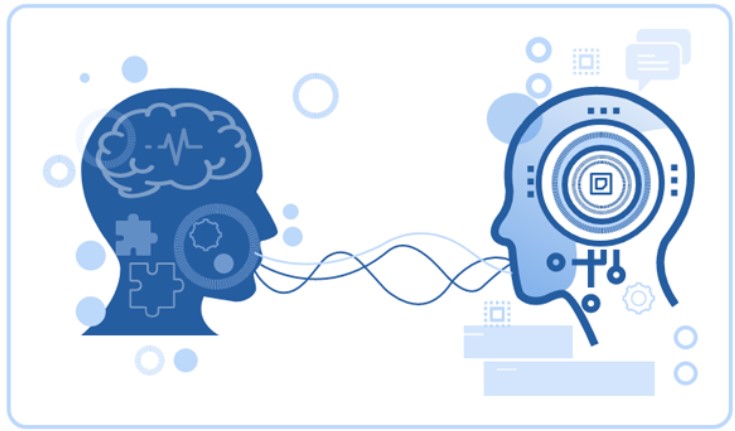
NLP is a branch of machine learning concerned with letting a system read, parse, and respond to human language. NLU is the subset that handles meaning — going from “the word is unimaginable” to “the speaker is expressing disbelief about a specific situation”. In production, the two are usually fused inside the same model, especially since the rise of transformer architectures running on PyTorch or TensorFlow and deployed through ONNX or TensorRT for inference.
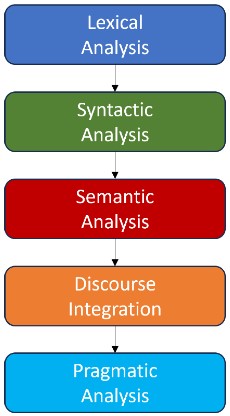
The classical pipeline is described in five stages, and they remain useful as a mental model even when a modern transformer collapses them into a single forward pass:
- Lexical analysis — break the input into tokens. The word unimaginable decomposes into un-, imagine, -able.
- Syntactic analysis — check that the tokens form a grammatical structure.
- Semantic analysis — assign meaning, distinguishing literal from figurative use.
- Discourse integration — track who is speaking and what the prior turns established.
- Pragmatic analysis — resolve the speaker’s intent given the surrounding context.
This staged view is an observed pattern from how NLP was taught and built for two decades; today’s large language models compress these stages internally, but the failure modes still map cleanly onto them. When a chatbot misroutes a call, the failure is almost always at stage three or stage five — semantic ambiguity or missed pragmatic intent.
The mechanism, in human terms
The procedure does not differ much from what humans do when reading a sentence. We are simply so practised at it that the stages blur together. Anyone who has started learning a new language has felt the lexical-and-syntactic stages explicitly — searching for word boundaries, checking whether a clause is well-formed before attempting to extract meaning. NLP systems live in that state permanently.
This is why companies have moved away from rigid recorded menus toward conversational interfaces. The interface can absorb phrasing variation that a button-driven IVR could not. It is also why the failure modes look so human: an NLP system that mis-segments a sentence makes the same kind of mistake a tired listener does. The technology is not replacing customer-service teams; it is removing the friction at the front door so that human agents see fewer trivial tickets and more of the cases that actually need judgement.
Sentiment and the signals that matter
Routing and classification are the surface layer. The more useful capability is sentiment analysis — picking up on the affective state behind the words. Tone of voice in spoken interactions, typing speed and accuracy in chat, punctuation patterns, the ratio of uppercase to lowercase, the density of typos: all of these are features an NLU model can ingest.
There is published evidence that stress shows up in interaction telemetry. A small Swiss study of 90 office workers, reported in 2023, found that stressed employees moved their cursors more erratically and made more typing errors than their relaxed colleagues. That is a survey-grade observation, not a deployable benchmark — the sample is small and the office context is specific — but it points at signals that a well-instrumented chat interface can pick up at scale.
Quick-answer: what signals can an NLU-driven chatbot read?
| Signal | What it suggests | How a chatbot can use it |
|---|---|---|
| Typing speed (variance) | Stress, hesitation, or distraction | Slow down, offer a summary, escalate to a human |
| Typo density | Cognitive load or frustration | Acknowledge, simplify the next question |
| Punctuation and casing | Emotional intensity | Adjust tone toward calmer phrasing |
| Message length trend | Engagement direction | Surface a clearer choice or hand off |
| Mouse movement (web chat) | Confidence in navigation | Trigger a contextual prompt at the right moment |
The point is not that any single signal is decisive. It is that an NLU model can fuse several weak signals into a more reliable read on the conversational state than a rule-based bot ever could.
How NLP-powered chatbots actually help
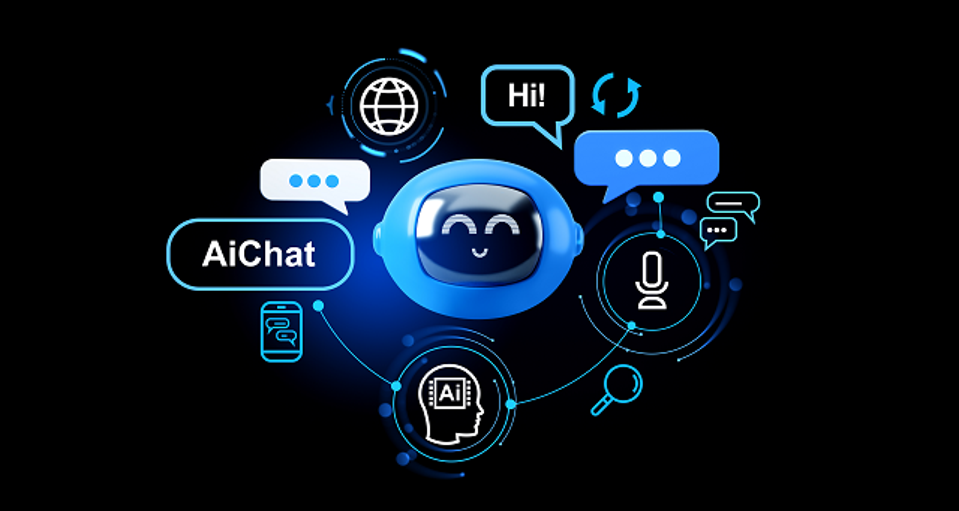
Take a familiar scenario: a customer lands on a product page, opens three tabs, and lingers without converting. A chatbot with access to clickstream context can choose its moment to appear, and an NLU layer can shape the opening message to match the apparent intent. Done well, it removes friction; done badly, it is the digital equivalent of being followed around a shop.
The asymmetry between in-store and online shopping behaviour is striking and worth holding in mind. Surveys cited in trade press suggest that around 95% of in-store shoppers prefer to be left alone, while more than a third of online shoppers say they need help to complete a purchase. Both figures are market-direction estimates — useful for orientation, not for deciding when a specific bot should pop up. The deployable version of that insight is to instrument the site, measure conversion against intervention timing, and let the data shape the policy.
When the conversation does happen, three capabilities matter:
- Intent classification. Map the user’s message to a small set of next actions (browse, compare, configure, escalate).
- Slot filling. Extract the specific parameters the system needs (product, size, region, urgency) without forcing the user through a form.
- Sentiment-aware response. Adjust the tone of the reply, and the threshold for human handoff, based on the affective signals above.
The last of these is where NLU stops being a parser and starts being a useful collaborator. We pay close attention to it in any deployment that touches a paying customer, because a misread frustration signal at the wrong moment is more expensive than any routing error.
Where this connects to the rest of the stack
NLP rarely ships alone. In modern customer-service deployments it sits next to several adjacent systems, and the interesting engineering work is usually at the seams:
- Computer Vision (CV). A chat avatar with facial expressions, or a video-channel agent, depends on CV running alongside the language model. Our computer vision practice covers the perception side of that pairing.
- Generative AI. The response-generation step in a modern chatbot is increasingly a small or mid-sized generative model. The same techniques used in our generative AI work — prompt design, retrieval augmentation, guardrails — apply directly to customer-service bots.
- GPU inference. The latency budget for a real-time chat reply is tight. NLU plus generation often runs on the same accelerator pool we discuss in our work on GPU and XR systems.
- Adjacent NLP applications. The post on NLP in computer vision covers cross-modal use cases that build on the same language understanding stack.
None of these are bolted on after the fact. The integration shape — which signals flow where, which model owns which decision, where the human-in-the-loop sits — is the actual deliverable.
Where NLP genuinely earns its place
The honest answer is: in well-bounded, high-volume customer interactions where the cost of a wrong action is moderate and recoverable. Triage, FAQ deflection, lead qualification, returns processing, appointment scheduling — these are the domains where NLP and NLU consistently pay back the engineering investment, in our experience across deployment engagements.
The harder cases — open-ended advisory conversations, anything involving regulated advice, anything where a confident wrong answer is dangerous — still need humans, and they will for a while yet. A chatbot that knows when to escalate is more valuable than one that tries to handle everything. That is a design choice, not a model-capability question.
What we offer
At TechnoLynx we design and deliver NLP-driven customer-service systems with the integration realities above baked in from day one. Our work covers intent and sentiment models, retrieval-augmented response generation, latency-budgeted GPU inference, and the human-handoff logic that decides when the model should step back. We treat each engagement as a scoped problem with an outcome we own, not a generic platform sale. If you have a customer-service surface where the language layer is the bottleneck, get in touch and we will walk through what a workable deployment looks like for your stack.
Read more: Case-Study: NLP Applications for Stock Market Prediction
Continue reading: How NLP Solutions Are Improving Chatbots in Customer Service?
Frequently Asked Questions
What is the difference between NLP and NLU?
NLP is the broader discipline of processing human language — tokenisation, parsing, generation. NLU is the subset that focuses specifically on extracting meaning and intent. In modern transformer-based systems the two are usually implemented inside the same model, but the distinction still matters when you are debugging where a chatbot went wrong.
Can an NLP chatbot really detect customer emotion?
It can read signals correlated with emotional state — typing speed, typo density, punctuation patterns, message length — and combine them into a useful read. It cannot read minds, and any single signal is weak. The value comes from fusing several signals and acting on the aggregate with appropriate caution.
Where does NLP fail in customer service?
The common failure modes are semantic ambiguity (the model picks the wrong meaning), missed pragmatic intent (it answers the literal question instead of the underlying one), and over-confident handling of edge cases that should have been escalated. Good deployments design the escalation path as carefully as the model itself.
Do I need a large language model for customer-service NLP?
Not always. Intent classification and slot filling often run perfectly well on smaller fine-tuned models with much lower inference cost. A larger generative model is useful for the response-generation step, but the routing and understanding layers can be lean. The right architecture depends on volume, latency budget, and the breadth of intents you need to handle.
List of references
- Per cited industry stats, 83% of online shoppers need support to complete a purchase as reported in stats (no date).
- Drenik, G. (no date) How AI Is Revolutionizing Customer Service With Human-Like Responses, Forbes.
- Leatham, X. (2023) People who are under stress at work are more likely to make typos, Mail Online (Accessed: 31 May 2024).
- The 5 Steps in Natural Language Processing (NLP) (no date) Twilio.
- Top Leaders in Natural Language Processing - DEFTeam (no date) DEFTeam Solutions Pvt Ltd.
- Turner, M.L. (no date) Retailers, 95% Of Shoppers Want To Be Left Alone In-Store (per cited survey), Forbes (Accessed: 1 June 2024).