
Energy systems still lean heavily on fossil fuels, and demand keeps climbing. AI does not solve that on its own, but it changes what operators can see, predict, and decide — and that is where the real efficiency gains live. This article walks through where AI is actually moving the needle in energy management: generation forecasting for renewables, continuous monitoring of power plants, and the harder problem of finding and characterising subsurface resources.
The IEA’s Net Zero by 2050 report projects a global population of 9.7 billion by mid-century and a roughly 25% increase in energy demand. Against that backdrop, McKinsey’s analyst estimate suggests AI applied to energy efficiency could reduce global energy consumption by up to 10% by 2040 — a directional industry-scale figure, not an operational benchmark, but enough to make the question worth taking seriously. In our experience working across industrial AI deployments, the gap between that headline and the deployed reality lives in three places: forecast quality, real-time visibility into assets, and the throughput of the data pipelines underneath both.

Generation forecasting for renewables
Intermittency defines solar and wind more than any other characteristic. Grid operators cannot dispatch the sun. What they can do is forecast generation accurately enough that conventional reserves, storage, and demand response stay in balance. That is the operational job AI takes on in renewable power.
What predictive models actually do
Generation forecasting models ingest historical output, numerical weather prediction outputs, satellite imagery, and asset-level telemetry, and produce probabilistic forecasts at horizons from minutes to days. The useful output is rarely a single number — it is a distribution that grid operators can plan against.
The California Independent System Operator (CAISO) operates one of the largest renewable-heavy grids in North America. Improved short-horizon forecasting lets operators adjust dispatch schedules in closer to real time, which reduces the conventional reserve margin needed to absorb forecast error. This is an observed pattern across grid operators, not a single benchmark — but the direction is consistent.
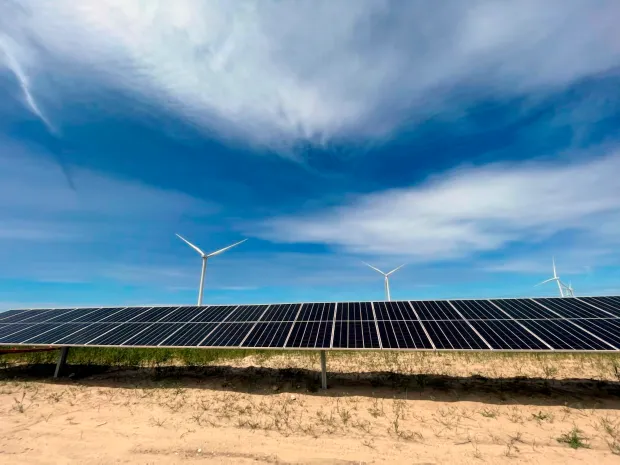
How is solar panel efficiency monitored in real time?
Panel output drifts. Dust accumulates, microcracks propagate, shading from new construction or vegetation changes the loss profile. Periodic manual inspection misses most of this between visits.
A common pattern is to pair fixed cameras with computer vision models trained to flag soiling, hotspots, and misalignment from continuous video feeds. SolarEdge has deployed inspection systems of this kind across solar installations, and operators using similar configurations report double-digit reductions in maintenance cost and meaningful gains in energy yield from earlier intervention. Treat the specific percentages as vendor-reported observed-pattern figures, not as audited benchmarks — the structural story is consistent across deployments we have seen.
Synthetic data where history is thin
Forecast models need data. Some regions have decades of well-instrumented weather records; others do not. The National Renewable Energy Laboratory (NREL) has explored generative adversarial networks to synthesise wind speed samples for regions where the historical record is sparse, conditioning on nearby instrumented sites with similar topography. NREL reports materially better forecasting accuracy in data-thin regions after training augmentation of this kind. This is published-survey-grade evidence from a national lab, not a reproducible benchmark — but it is the right shape of result.
This is one of the places where generative AI earns its keep operationally rather than rhetorically. The output is not synthetic text; it is synthetic environmental data that conditions a downstream forecaster.
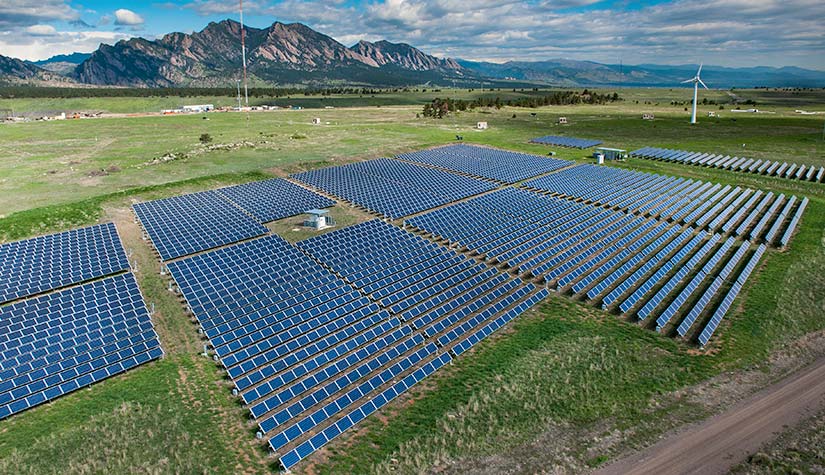
Why GPU acceleration matters here
Forecasting at the timescales grid operators actually need — sub-hour, refreshed every few minutes, across thousands of nodes — is a throughput problem before it is a model-quality problem. GPU acceleration is what makes the difference between a forecast that arrives in time to be acted on and one that arrives as a postmortem. The National Energy Research Scientific Computing Center (NERSC) runs renewable-data workloads on GPU clusters precisely because the alternative is CPU pipelines that take days where minutes are needed.
Power plant monitoring
Heavy instrumentation covers generating assets across thermal, nuclear, hydro, and increasingly hybrid configurations. The question is not whether the data exists. It is whether anything useful happens to it before something breaks.
Continuous monitoring with edge inference
Traditional condition monitoring is sample-based: technicians walk routes, take readings, file reports. The interval between observations is where failure modes hide. Pushing inference to the edge — small models running close to the sensor on temperature, vibration, and acoustic signals — narrows that interval to seconds.
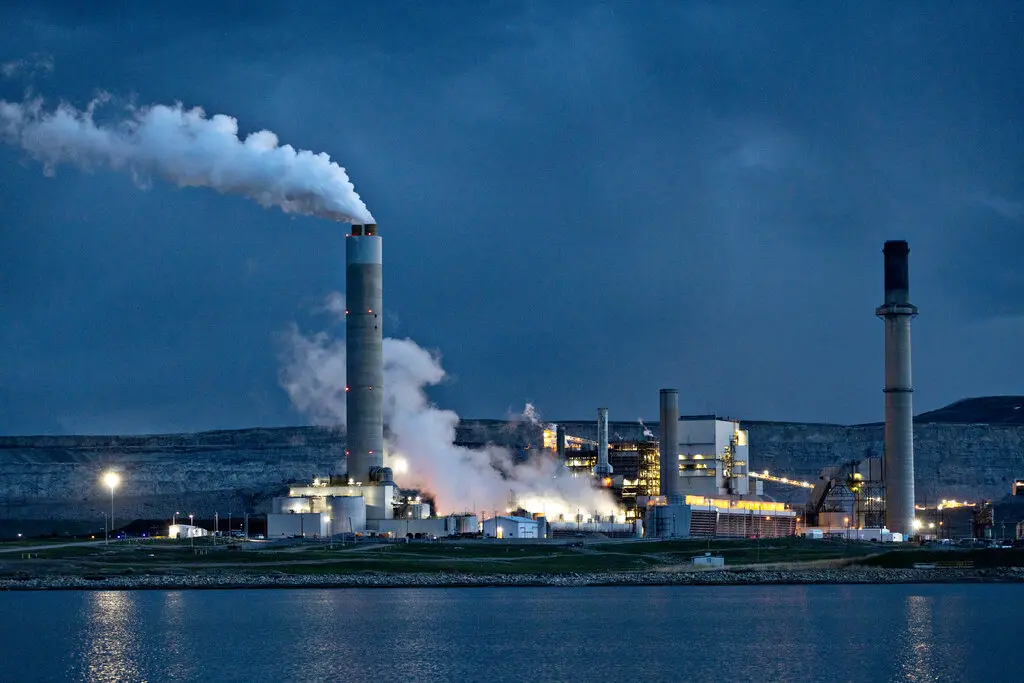
We typically see this layered: a fast anomaly detector at the edge, a heavier diagnostic model in a regional cluster, and a maintenance-planning model centrally. The edge layer catches the immediate “this bearing is about to fail” signal; the central layer figures out whether to schedule a planned outage. Operators at thermal plants running this pattern have reported roughly 25% reductions in unplanned downtime in the first year — an observed-pattern figure from one operator, not a universal benchmark, but representative of what well-instrumented sites achieve.
How does NLP help with maintenance reporting?
Power plants generate large volumes of free-text maintenance reports — shift logs, work orders, incident notes. Most of that text is never read again. Structured extraction with NLP turns it into a queryable record: which components fail together, which interventions actually resolved the root cause, which symptoms preceded a forced outage.
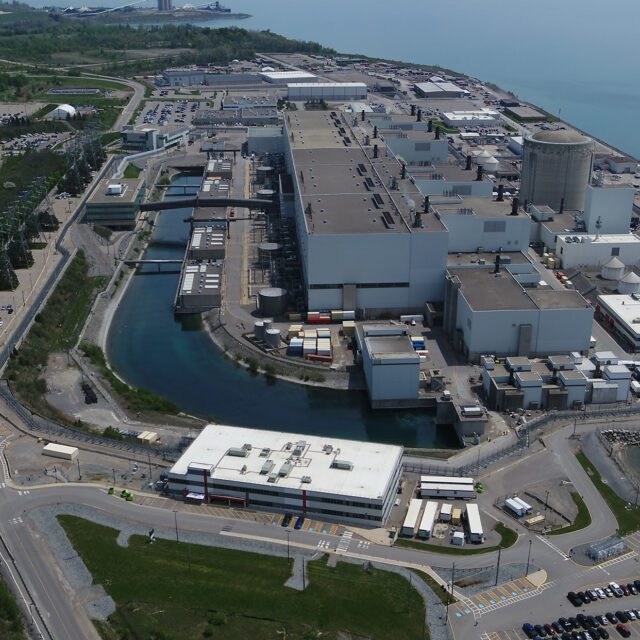
Ontario Power Generation (OPG) operates a diverse generation fleet across Canada and has documented work on automating maintenance-report analysis. The useful output is not a fancy dashboard — it is a prioritised list of components whose failure language is escalating across reports. That list is what changes maintenance scheduling.
For the underlying model patterns, the discussion in our generative AI primer covers the relevant tradeoffs around extraction-style use cases.
Remote troubleshooting and training
A separate and underrated thread is XR-assisted maintenance: AR overlays on real equipment, VR training environments that replicate plant layouts. GE Power has built tooling in this category for technician training and remote-expert collaboration. The operational value is most visible for rarely-performed procedures and for sites where flying in a specialist is expensive or slow. The underlying compute story — rendering, real-time streaming, on-device inference — is again a GPU acceleration problem.

Subsurface exploration
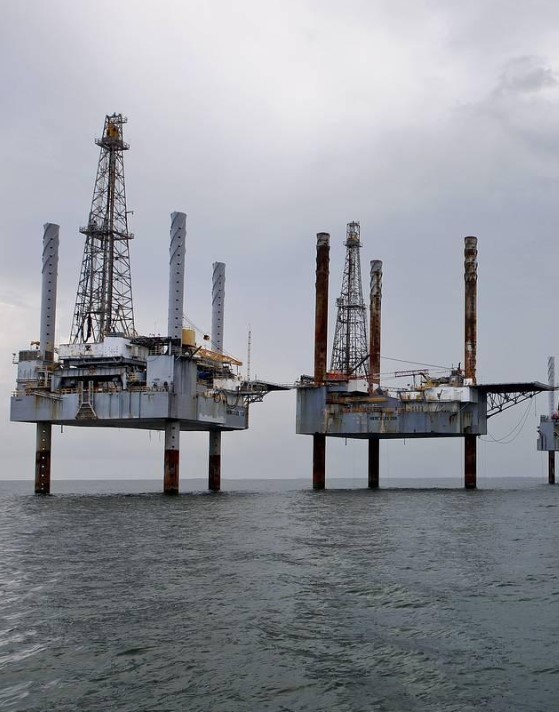
Exploration for oil and gas will continue throughout the timeline that matters here. While the energy mix shifts, the question of how to find resources with less drilling, less dry-well waste, and less environmental disturbance remains operationally relevant. AI changes the economics of that question.
Computer vision on seismic data
Seismic survey interpretation has historically been a labour-intensive expert task — geophysicists annotating reflection patterns by hand. Computer vision models trained on labelled seismic volumes now do much of the initial pattern detection: identifying salt bodies, faults, and stratigraphic features that hint at hydrocarbon traps. The expert stays in the loop for judgment calls; the model handles the first pass at scale.
Chevron and other majors have automated significant portions of their Gulf of Mexico seismic workflows along these lines. The decision-grade output is not “drill here” — it is a shorter, better-justified shortlist of prospects, which is what reduces dry-well rates.
Generative models for subsurface simulation
GANs and variational autoencoders trained on well logs, seismic surveys, and existing geological models can generate plausible subsurface realisations — not predictions of where oil is, but a population of geologically consistent scenarios that uncertainty quantification can be run against. The output feeds reservoir simulators and drilling-decision models. Combined with GPU acceleration, the analysis cycle that used to take weeks per scenario compresses into hours, which is what makes ensemble-based decision-making actually tractable.
Where this lands
| Domain | Primary AI capability | Operational gain |
|---|---|---|
| Renewable forecasting | Time-series + generative models | Tighter reserve margins, less curtailment |
| Solar plant ops | Computer vision on fixed feeds | Earlier soiling/damage detection, better yield |
| Power plant monitoring | Edge anomaly detection + NLP on reports | Lower unplanned downtime, prioritised maintenance |
| Exploration | CV on seismic + generative subsurface models | Fewer dry wells, faster decision cycles |
Every row exhibits the same pattern. AI does not replace the operator, the geophysicist, or the grid dispatcher. It changes the latency and granularity of the information they work with, which changes what decisions they can make in time.
How we work with energy operators
At TechnoLynx we build the inference, edge-deployment, and acceleration pipelines that make this category of system run in production rather than on a slide. Our practice covers computer vision, generative AI, and GPU-accelerated data pipelines, with the bias toward problems where the model is the easy part and getting the data, latency, and integration right is what determines whether the system survives contact with operations.
We approach energy work the same way we approach other industrial domains: figure out what decision the model is supposed to change, instrument that decision honestly, then build the smallest system that moves it. If you are working through a forecasting, monitoring, or exploration problem and want a technical conversation rather than a sales one, our contact form is the right starting point.
Frequently Asked Questions
Where does AI most clearly improve renewable energy operations today?
Generation forecasting at sub-hour horizons, and computer-vision-based monitoring of solar assets. Both have direct operational consequences — narrower reserve margins on the forecasting side, earlier fault detection on the monitoring side — and both have been deployed at scale by grid operators and asset owners.
Is AI for energy efficiency actually saving 10% of global consumption?
The 10% figure is a McKinsey analyst projection through 2040 — a market-direction estimate, not an operational benchmark. Individual deployments report meaningful but more modest gains: low-double-digit improvements in solar yield, 20–25% reductions in unplanned downtime at well-instrumented thermal plants. Treat the macro number as framing, not a target.
Why is GPU acceleration mentioned alongside the AI models themselves?
Because in energy applications the throughput problem is usually as hard as the modelling problem. Forecasts that arrive after the dispatch decision are useless. Seismic interpretation that takes weeks per scenario blocks ensemble methods. GPU acceleration is what makes the deployed systems run on operational timescales rather than research ones.
What does AI add to oil and gas exploration beyond traditional methods?
Two things: faster, more consistent first-pass interpretation of seismic data via computer vision, and ensemble-based subsurface uncertainty quantification via generative models. Neither replaces the geophysicist. Both shrink the cost of evaluating a prospect and reduce the rate at which dry wells get drilled.
ROI emerges from energy savings, not wishful thinking
Start by calculating your current baseline consumption, then model whether smart infrastructure cuts costs enough to justify the transition expense. If Smart Solutions Sustainable Tomorrow is on your roadmap, the next step is to map it onto your own constraints rather than copy a reference architecture.