Augmented Reality (AR) is now a routine feature of mainstream apps and a credible — if narrower than 2021 hype suggested — headset category. The interesting engineering question in 2026 is no longer “will AR happen?” but rather: which workloads belong on the headset GPU, which belong on a tethered or cloud renderer, and how do you keep the compositor inside its motion-to-photon budget when the content gets heavy? That framing matters because AR’s near-term future is shaped less by visionary demos and more by the rendering, thermal, and authoring constraints that decide whether an experience ships or stays in the lab.
Augmented Reality Today
Augmented reality adds digital layers to physical surroundings; virtual reality substitutes them entirely. The distinction sounds clean, but the GPU workload is anything but: an AR pipeline has to render synthetic geometry, composite it against a live camera or see-through optical path, track the user’s head and (increasingly) eyes, and do all of that inside roughly a 20 ms motion-to-photon window — observed pattern across the standalone and tethered XR work we see.
AR apps and devices
Mobile AR remains the dominant surface. Snapchat lenses, Instagram filters, Google Maps Live View, IKEA-style furniture try-on, and Pokémon Go’s long tail all run on the phone’s GPU and ISP, where the rendering budget is generous compared to a headset but the camera-to-screen latency is the visible constraint. Dedicated devices — Microsoft HoloLens, Magic Leap 2, and the newer wave of optical see-through glasses — sit at the other end of the spectrum: smaller thermal envelopes, tighter latency targets, and an optical compositor the renderer has to schedule against.
Mixed reality, briefly
Mixed reality (MR) — Vision Pro, Quest 3 and 3S — uses passthrough cameras to composite the real world into a fully rendered frame. From a GPU perspective this is closer to VR than to optical AR: every pixel is synthetic, including the “real” ones. That changes the budget calculus, which is why we keep MR and optical AR separated in the discussion below.
What the next five years actually look like
A realistic five-year forecast splits into three parallel development tracks, not a single roadmap. Smartphones remain the dominant AR surface for the foreseeable future. Smart glasses (Meta Ray-Ban, Xreal, the Android XR partners, an eventual Apple entry) become a real consumer category used for specific tasks alongside the phone, not as a replacement for it. Dedicated MR headsets remain a focused-session device for productivity, training, and entertainment. The “all-day-wearable AR glasses replace phones” future continues to be deferred — observed pattern across the optics, battery, and thermal roadmaps the industry has published.
This matters for anyone planning an AR product today. Building for a hypothetical 2030 wearable means missing the audience that exists now on phones and on the first credible glasses-form-factor devices. The companies that benefit most are the ones treating AR as a feature inside their existing apps rather than betting on a standalone AR platform.
Where AR transforms work first
Industrial training and remote assistance
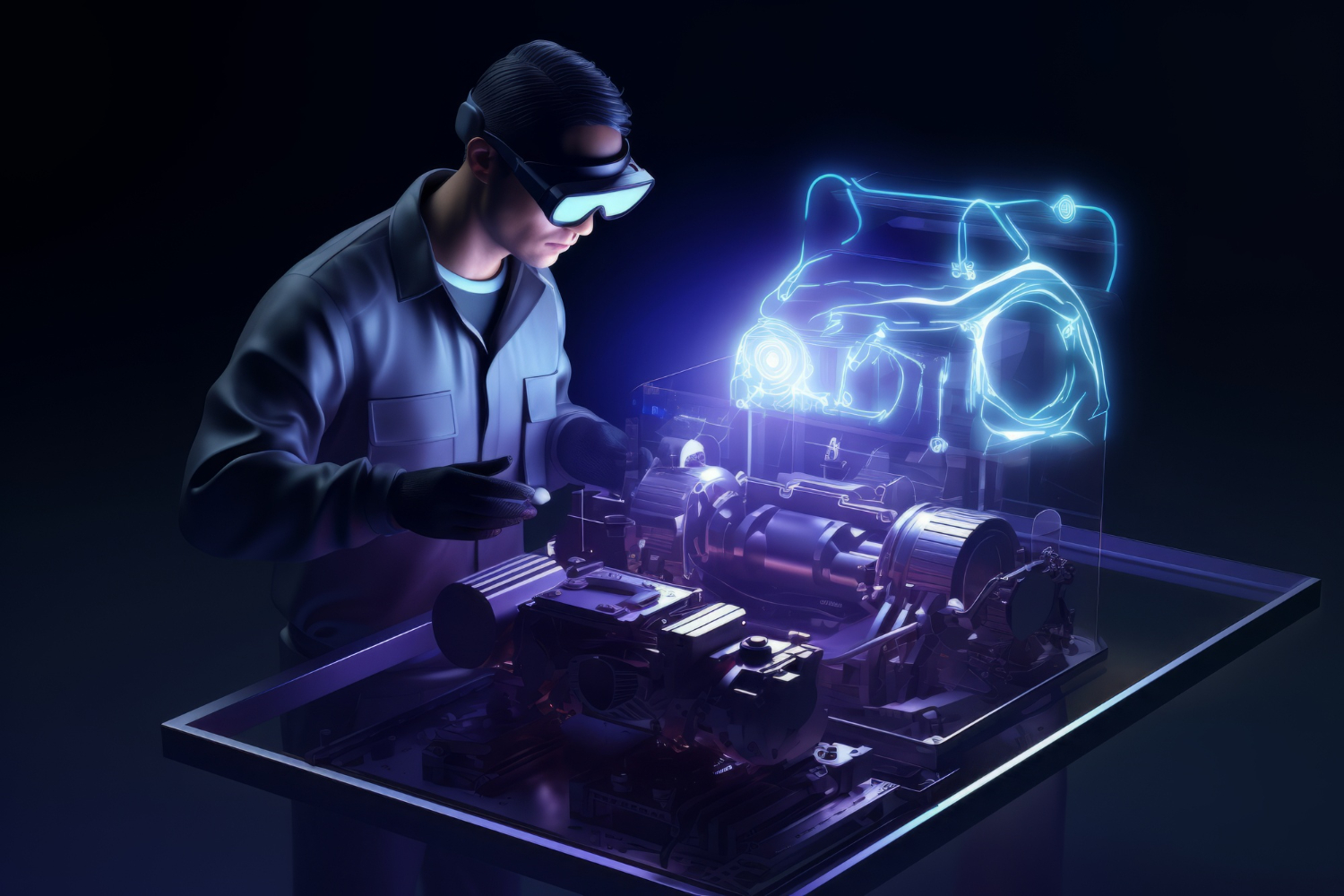
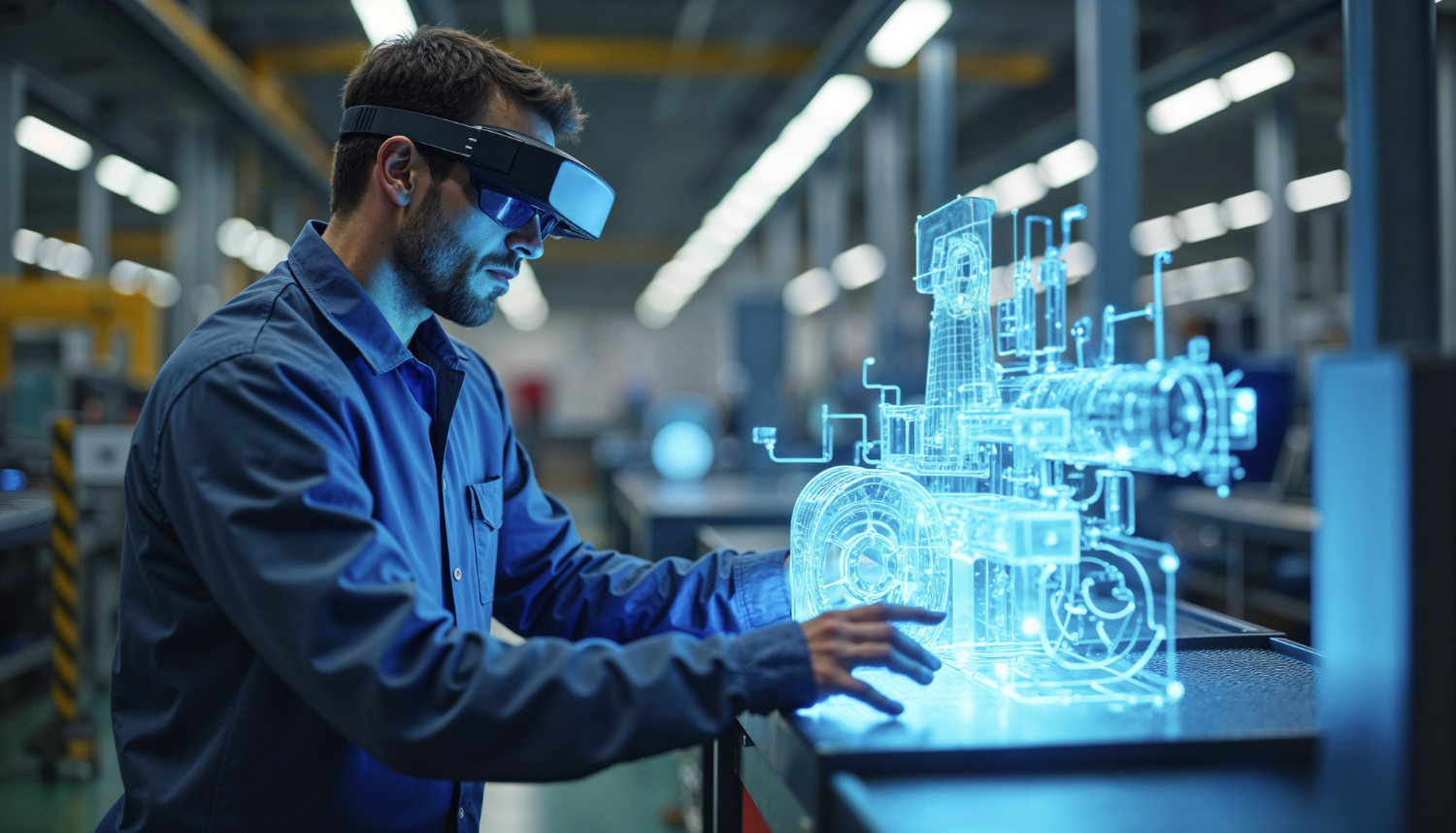
Maintenance technicians wearing AR glasses to view live schematics overlaid on machinery represent the most compelling enterprise use case today. A field technician with AR glasses sees the schematic overlaid on the equipment, gets a remote expert annotating directly into their view, and resolves a fault without flying a specialist in. The GPU load here is modest — line work, text, and a few anchored 3D models — so it fits inside the standalone headset budget without exotic tricks.
Healthcare
In surgery, AR overlays vein structure, tumour margins, or instrument trajectories onto the surgical field. The accuracy bar is far higher than in consumer AR — registration error has to stay sub-millimetre — so these systems lean on calibrated stereo cameras and external tracking rather than the headset’s onboard sensors. The same precision discipline that we apply to inference latency in our broader GPU optimisation work carries over here.
THE SYNERGY OF AI: SCREENING & DIAGNOSTICS ON STEROIDS.
Retail and e-commerce
Try-before-you-buy is now a routine feature of large retailer apps. The rendering challenge is less about polygon count and more about photometric realism — the virtual object has to sit convincingly in the user’s actual lighting, which means real-time environment estimation and PBR shading that runs cheaply on a phone GPU.
Gaming, sports, and entertainment
Future AR games will lean on shared-anchor multiplayer and persistent world geometry rather than another Pokémon Go clone. Sports overlays — real-time stats, tactical replays, interactive camera angles — are a steady on-ramp because the underlying broadcast pipeline already exists.
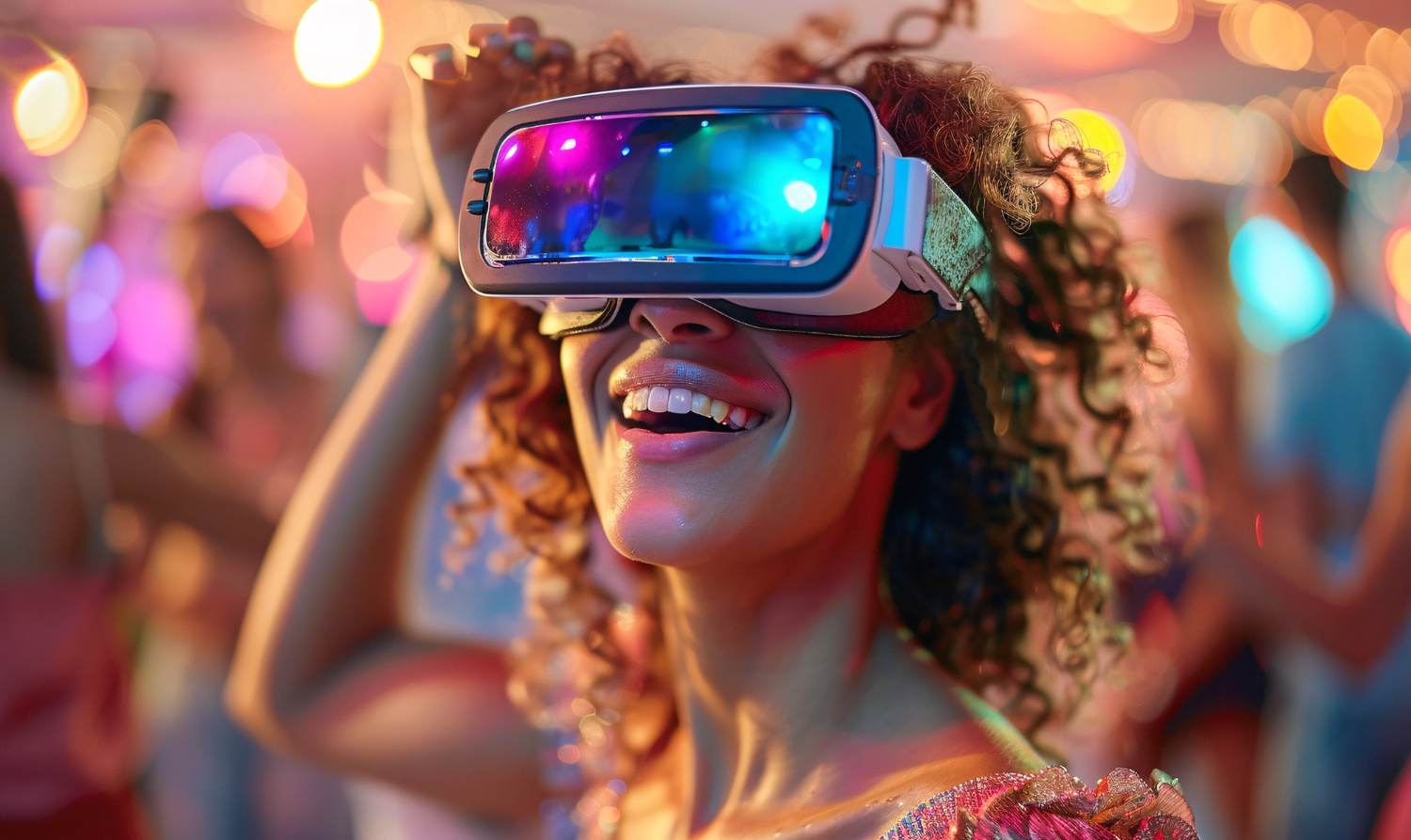
How AR works in games: LEVEL UP YOUR GAMING EXPERIENCE WITH AI AND AR/VR.
Real estate, architecture, and construction
Architects use AR to walk through BIM models at full scale on site, catching clashes before they become change orders. Estate agents use it for virtual furniture placement during viewings. Both are sessional, headset-friendly workloads.
Navigation and tourism
AR navigation overlays directions on the real street rather than on a 2D map. Google Maps Live View is the proof point; the next step is glasses-form-factor delivery so the phone stops being the bottleneck.
See more on EXPLORING VIRTUAL MUSEUMS AND THE DIGITAL PAST WITH AI AND AR VR.
How the AR rendering pipeline actually behaves
Most speculative AR articles halt here; real deployment work begins at exactly this point. A modern XR renderer composes several layered techniques inside one frame:
| Technique | What it does | Where it pays off |
|---|---|---|
| Foveated rendering | Shades full resolution only inside the eye-tracked fovea region | Standalone headsets where fragment shading dominates |
| Variable rate shading (VRS) | Drops shading rate in low-attention screen regions | Tethered PCVR with mid-tier GPUs |
| Asynchronous timewarp / spacewarp (ATW/ASW) | Reprojects the last rendered frame against the latest head pose | Hides occasional missed frames; saves the experience under transient load |
| Compositor layers | Renders UI and text in a separate, high-resolution layer | Keeps readable text without paying full-scene cost |
| Depth-aware compositing | Uses the depth buffer to occlude virtual objects with real geometry | Optical AR and passthrough MR |
These compose. Foveated rendering reduces fragment cost on the periphery; VRS sharpens that further inside the foveated region; ATW absorbs the occasional dropped frame; compositor layers protect UI legibility. On Quest 3 and similar standalone hardware, foveated rendering can reshape the per-eye shading load substantially — observed pattern in field reports rather than a benchmarked rate, since the gain depends heavily on content. On tethered PCVR the same techniques exist but the bottleneck shifts: GPU memory bandwidth and the link compression budget often matter more than raw shading throughput.
The non-negotiable is the motion-to-photon budget. Below roughly 20 ms from head movement to corresponding photon, the experience feels coupled to the user. Above it, the brain starts to register the lag, and comfort degrades fast — observed pattern across the headset compositor specifications and our own XR debugging work.
Key AR technologies, briefly
Fiducial markers—QR codes, ArUco tags, printed images—provide the most reliable anchors for digital content in marker-based AR systems. Cheap, reliable, and still the right choice for industrial workflows where you can put a marker on the equipment.
Markerless AR uses SLAM — simultaneous localisation and mapping — built on the device’s camera, IMU, and increasingly LiDAR or structured-light depth. ARKit and ARCore are the consumer-facing examples; the underlying techniques (visual-inertial odometry, plane detection, semantic segmentation) are where most of the engineering investment has gone since 2020.
Heads-up displays (HUDs) present information directly in the user’s line of sight without occluding their forward view. Automotive HUDs, fighter aircraft HUDs, and the simpler optical AR glasses all share this lineage.
AR glasses and headsets — HoloLens 2, Magic Leap 2, the optical see-through wave, and the passthrough-MR family — project digital content into the user’s field of view with onboard tracking and rendering.
Challenges, honestly named
Technical limitations
Field of view, battery endurance, and thermal dissipation remain the binding constraints on every shipping AR device in 2026. The optics curve is improving steadily — better waveguide efficiency, brighter outdoor performance — but it’s a hardware story that moves on hardware timescales. We pay close attention to where renderer-side tricks (foveation, reprojection, lower-resolution compositor layers) buy back some of what the optics still cost.
User experience and motion sickness
Comfort is mostly a latency problem. Get motion-to-photon below the threshold, hold it there under realistic content load, and most users stop noticing the headset. Lose it intermittently — through a thermal throttle, an over-budget frame, a missed reprojection — and the experience falls apart in minutes.
Privacy and security
AR devices ingest continuous environmental data: rooms, faces, documents, pricing on shelves. The privacy story is more important than the hype narrative usually admits, and enterprise rollouts in particular need explicit policies on what’s captured, where it’s processed, and how long it’s retained.
Integration with AI and 5G
On-device AI (scene understanding, semantic segmentation, gesture recognition) is increasingly part of the AR pipeline, sharing the same SoC and the same thermal budget as the renderer. That’s a scheduling problem more than a capability problem. 5G and edge networks matter for split rendering — running the heavy parts of the scene on a nearby edge GPU and streaming the result to the headset — but the latency budget there is unforgiving and the technique only works inside a controlled network.
What would actually accelerate AR adoption
Outdoor-bright optics in an all-day form factor, multi-hour battery life on glasses-weight devices, and no-code authoring tools would each independently transform enterprise adoption curves. The hardware curve is improving steadily; the authoring and integration story is the larger drag on enterprise adoption today.
Frequently asked questions
What motion-to-photon latency is achievable with foveated rendering and eye tracking on current XR hardware, and what frame budget does it leave for content?
Modern standalone headsets target an end-to-end motion-to-photon window of roughly 20 ms, with the compositor reserving a few milliseconds for reprojection and display scan-out. That leaves the application renderer somewhere in the 10-14 ms range per frame at 72-90 fps, less at higher refresh rates. Foveated rendering with eye tracking buys headroom by dropping peripheral shading cost; how much depends on content and tracking quality, but the practical effect is more thermal margin and more frames inside budget rather than a dramatic resolution jump — observed pattern in field reports.
How does foveated rendering reshape GPU shading load on standalone headsets versus tethered PCVR?
On standalone hardware, fragment shading is usually the dominant cost and foveation directly attacks it — peripheral pixels are shaded at lower rates, fovea pixels at native. The gain is large because the device was bottlenecked there. On tethered PCVR, the GPU is typically far less constrained on fragments but more constrained on link bandwidth and CPU-side scene preparation; foveation helps less per-pixel but composes well with VRS and compositor layers.
Which AR/VR rendering pipelines actually ship in production today, and where do they break under sustained load?
Production pipelines in 2026 layer foveated rendering, asynchronous timewarp or spacewarp, variable rate shading, and a separate high-resolution compositor layer for UI. They break in three predictable places: a thermal throttle that drops the GPU clock partway through a session, a content-driven fragment spike (particle systems, complex shaders) that overruns the per-eye budget, and a head-pose discontinuity (rapid turn) that pushes reprojection beyond what spacewarp can hide. The A1 GPU audit pattern we apply here is to measure under sustained, content-realistic load — not the cold-device best case.
What thermal and power constraints cap throughput on mobile XR SoCs, and how are they mitigated in 2026 devices?
Standalone headsets dissipate roughly 5-8 W of total board power before user-perceptible heat and throttling kick in, with the SoC share commonly capped in the 3-5 W range — observed pattern across the published thermal specifications. Mitigations are mostly architectural: foveation to cut shading work, fixed-foveated rendering where eye tracking isn’t available, aggressive compositor reprojection to hide missed frames, and explicit content budgets per scene. The 2026 device generation has improved on every axis but the envelope is still small.
How do foveation, ASW/reprojection, and variable rate shading compose inside a real frame pipeline?
They stack at different points. Foveated rendering decides shading rate per screen region before the fragment work starts. VRS refines shading rate further inside those regions based on attention or content. The compositor renders UI and text into a separate high-resolution layer that’s immune to the foveation map. After the application renders, async timewarp or spacewarp reprojects against the latest head pose to absorb a missed frame. Each layer handles a different failure mode, which is why production renderers use all of them rather than picking one.
What does the next 18-24 months of XR hardware change for rendering architecture decisions made today?
Better passthrough cameras and on-device depth will make MR-style composition more attractive than pure optical AR for many use cases. Eye tracking becomes assumed rather than premium, which makes dynamic foveated rendering the default. SoC headroom grows but the thermal envelope doesn’t move much, so renderer-side budgets stay tight. The architectural decision that ages best is one that treats the compositor budget as the hard constraint and the engine choice as secondary — not the other way around.
Where this connects in the GPU thread
Measure power budget constraints first, select rendering techniques second, validate under production load—this sequence mirrors our approach to inference latency described in our broader GPU optimisation work. The failure mode is the same too: a system that demos well on a cold device and falls apart under sustained content variance is failing the only test that matters.
If your team is hitting thermal or latency walls in an XR programme, the place to start is an instrumented frame budget against the actual compositor, not another engine evaluation. That’s the rendering-budget framework AR/VR programmes need to ship inside the comfort threshold — and it’s the lens we bring to engagements scoped to your problem rather than to a fixed feature list.