Understanding the Tech Stack for Edge Computing

Walk through the core components of a tech stack for edge computing. Learn about distributed computing models and how TechnoLynx can help implement effective edge computing solutions.

Understanding the Tech Stack for Edge Computing
Written by TechnoLynx Published on 08 Jul 2024

Introduction

Edge computing is changing how we handle data by processing it closer to where it’s created. By doing so, edge computing reduces delays and saves bandwidth compared to traditional cloud computing. In cloud computing, data is processed in centralised data centres and can cause delays when quick responses are needed. Edge computing processes data locally on edge devices or nearby servers. It is ideal for applications requiring real-time data processing, such as autonomous vehicles, smart cities, and industrial automation.

Edge devices are key in this setup. They include IoT sensors, cameras, and edge servers that collect and process data at the network’s edge. For example, an edge server can analyse video feeds from a factory floor to monitor equipment performance as operations occur. It eliminates the need to send large amounts of data to the cloud.

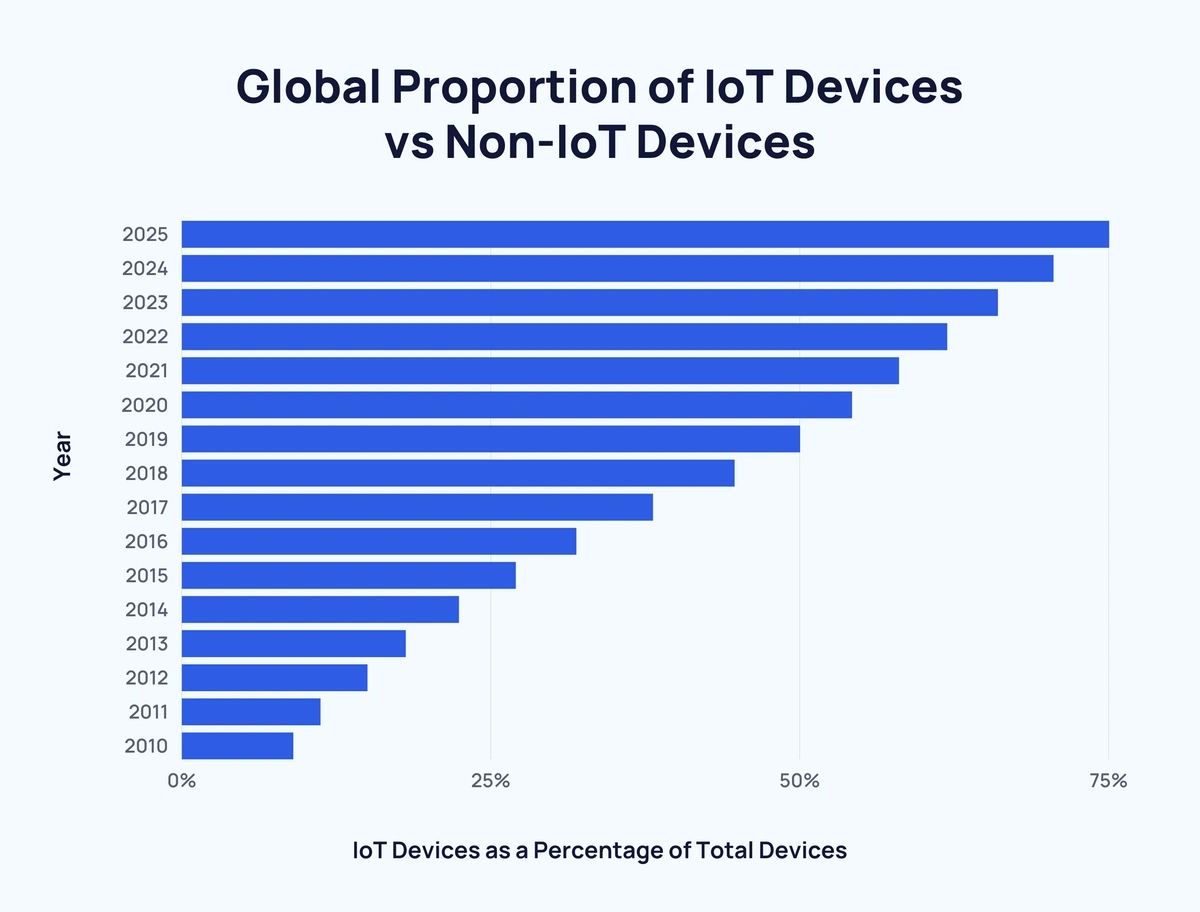
The use of edge computing is rapidly growing. Gartner predicts that by 2025, 75% of enterprise data will be created and processed outside of traditional data centres and the cloud. This growth is driven by the need for faster data processing and the rising number of connected IoT devices, which is now more than 17 billion.

Understanding the components of a tech stack for edge computing can help businesses combine edge computing with cloud infrastructure. Companies can balance the advantages of both technologies to create advanced solutions. In this article, we’ll focus on the key elements and applications of an edge computing tech stack.

Key Components of a Tech Stack for Edge Computing

Edge computing relies on three main components: hardware, software, and networking. They each play a role in the tech stack for edge computing. Hardware includes edge devices, sensors, and servers that process data locally to reduce latency and bandwidth use. Software consists of edge operating systems, middleware, and platforms such as OpenStack and VMware Edge Compute Stack. These tools handle the development, deployment, and management of edge applications. Networking supports reliable communication between edge devices and central systems. Let’s look at each component in detail.

An Overview of Edge Computing | Source: Cisco

Types of Edge Devices: Sensors, IoT Devices, and Edge Servers

Edge computing is dependent on specialised hardware to process and analyse data close to the source. Key types of edge devices include sensors, IoT devices, and edge servers. Sensors can monitor various physical conditions such as temperature, pressure, motion, and environmental factors. They collect data in real time and are used in industries like manufacturing and healthcare. For instance, temperature sensors in factories can detect overheating and prevent equipment failure.

Different Types of Sensors | Source: LinkedIn

IoT devices include smart appliances, industrial sensors, and wearable technology. IoT devices are equipped with sensors and connectivity to collect and transmit data. Examples are smart thermostats in home automation and health monitors in healthcare. Edge servers are powerful computers located close to the data source. They handle substantial processing tasks that require more computational power than smaller edge devices can provide. Edge servers support applications like real-time video processing in smart cameras or AI-driven analytics in industrial settings.

How do you choose the right device for your application? Choosing the right hardware depends on the specific needs of the application. For instance, real-time applications like computer vision in autonomous vehicles or robotics require edge servers with high computational capabilities and low latency. In contrast, simpler applications like environmental monitoring might only need basic sensors and IoT devices. These devices can collect and process data locally to trigger immediate actions or send summarised data to central systems for further analysis.

Building the Software Foundation

Edge computing also requires sophisticated software to manage and process data efficiently. The main software components are edge operating systems, middleware, and edge computing platforms. Edge operating systems (OS) and middleware form the foundational software layer. Edge OS is designed to manage the hardware resources of edge devices. Middleware facilitates communication between the OS and applications. It provides services like data management, security, and connectivity.

Why Edge Operating Systems Matter | Source: WELOTEC

Some popular edge operating systems are EdgeX Foundry and BalenaOS. EdgeX Foundry is an open-source project hosted by the Linux Foundation that provides a common framework for industrial IoT edge computing. BalenaOS is designed for IoT devices and offers robust support for containerised applications. It makes deploying and managing edge applications easier.

There are also several platforms with tools for deploying and managing edge computing applications. For example, OpenStack is a cloud computing platform that also supports edge computing. So, users can deploy and manage edge applications alongside their cloud infrastructure. Another example is VMware Edge Compute Stack. It integrates edge computing with VMware’s broader cloud and virtualisation solutions.

Another interesting concept is edge-optimised runtime environments and orchestration platforms like K3s and Azure IoT Edge. These tools help deploy, monitor, and scale applications across distributed edge devices. By using these software tools, you can build a robust, scalable edge computing infrastructure capable of handling complex workloads efficiently.

The Role of Good Network Bandwidth and Connection

The most important aspects of an edge computing application are network bandwidth and connection quality. High bandwidth means that data can be transmitted quickly between edge devices and central systems. Strong, reliable network connections minimise latency and increase the speed of data processing. One way to ensure a strong network connection is to implement software-defined networking (SDN). SDN allows for more flexible and efficient network management by dynamically adjusting the routing of data based on current network conditions.

Connection Between Edge Devices and Central Systems | Source: Cables-Solutions

For example, an edge computing solution for autonomous vehicles can use SDN to manage how data travels through the network. SDN can adjust data routes on the fly to ensure that important information is processed quickly and efficiently. This could be sensor data needed to avoid obstacles. The vehicle can make real-time decisions, like stopping for a pedestrian or rerouting to avoid traffic, more reliably and faster because the network is constantly optimising for the best performance. The benefits of SDN are why the SDN Market is projected to grow from $9356.46 million in 2024 to $23584.42 million by 2032.

Data Processing in Edge Computing

Data can be processed on the edge in different ways. Here are some major methods of data processing in edge computing: data transformation and validation, real-time processing, and local decision-making. Edge nodes can pre-process and validate data to reduce the burden on backend servers. Real-time processing is useful for responding quickly to data changes. It is used for applications like inventory updates.

Local decision-making makes it possible for edge devices to autonomously manage tasks using predefined rules or machine learning models. Additionally, edge analytics offers real-time insights, and offline operation ensures continuity during network disruptions. Containerisation and Infrastructure as Code (IaC) increase scalability, portability, and efficient resource management in complex edge environments​.

Several frameworks can help you process data on the edge. Let’s look at some examples.

Apache Kafka is a distributed streaming platform used to build real-time data pipelines and applications. TensorFlow Lite, a lightweight version of TensorFlow, allows machine learning models to run locally on edge devices. NVIDIA Jetson is a series of embedded computing boards supporting AI and machine learning applications that enable real-time processing on the edge.

The Connection Between Distributed Computing Models and Edge Computing

Distributed computing models can seamlessly distribute data and computation across multiple devices or nodes to increase performance, reliability, and scalability. Tasks are divided among multiple computers that communicate and coordinate their actions by passing messages to one another. In the context of distributed computing, edge computing can function alongside fog and cloud computing to create a seamless and efficient data processing environment.

For instance, edge devices can handle immediate, latency-sensitive tasks, while more complex data analysis can be offloaded to fog or cloud servers. A layered approach makes sure that critical data is processed quickly at the edge, while less urgent data can be handled by higher-layer systems.

Edge Computing and Cloud Computing Go Hand in Hand | Source: Medium

Let’s consider a smart city application. Traffic lights and surveillance cameras (edge devices) can process real-time data to manage traffic flow and enhance public safety instantly. The immediate adjustments needed for traffic management are handled locally to reduce latency. Meanwhile, the broader analysis of traffic patterns over weeks or months that require more computing power can be sent to fog or cloud servers for processing.

Industrial Applications of Edge Computing

Edge computing can also be very handy in industrial settings, especially with respect to AI in manufacturing. On a factory floor, many operations can be closely monitored using sensors and IoT devices. Edge computing allows for immediate data processing so that swift adjustments can be made to boost factory production efficiency.

It’s particularly useful when it comes to advanced robotics and predictive maintenance. These applications rely on rapid data analysis to prevent equipment failures and maintain continuous operation. Similarly, the process of handling quality control on production lines can be improved using edge computing. A real-time feedback mechanism allows for immediate corrective actions, maintaining high-quality output and minimising waste.

A Smart Industrial Production Line | Source: Manufacturing Industries

Healthcare Applications of Edge Computing

In healthcare, edge computing is improving patient care and operational efficiency. Real-time health monitoring can be done through wearable devices and medical sensors connected by edge computing. By monitoring a patient’s health so closely, it allows for immediate medical responses that can be life-saving. Most importantly, this application isn’t just for hospitals. Remote patient monitoring is gaining traction, thanks to edge computing.

Edge Computing Vs. Cloud Computing in Healthcare | Source: CIO Influence

Edge computing also makes this process safer by maintaining data privacy and security by processing information locally. It supports compliance with stringent healthcare regulations. Furthermore, edge computing improves operational efficiency in hospitals by managing IoT-enabled medical equipment.

Implementing edge computing also comes with various challenges. Addressing the following challenges is essential for the successful deployment of edge computing solutions:

  • Data Management: Efficiently storing and processing the large volume of data generated by edge devices.

  • Network Reliability: Ensuring a dependable network connection and adequate bandwidth for smooth data transmission.

  • Data Security and Privacy: Implementing robust measures to protect sensitive data processed locally.

  • Integration with Cloud Models: Balancing the benefits of local processing with the scalability and flexibility of cloud resources.

Given these complexities, it is a good idea to involve specialists or AI consultants. Their expertise can help you navigate the intricacies of edge computing and build robust and efficient implementations tailored to your specific needs. That is exactly what we offer at TechnoLynx.

What We Can Offer as TechnoLynx?

At TechnoLynx, we pride ourselves on custom software development that meets the specific demands of incorporating edge computing into various sectors. Our team’s expertise can help ensure that your operations run smoothly and that large data sets are managed efficiently at the edge.

With our skills in edge computing, IoT, computer vision, generative AI, GPU acceleration, natural language processing, and AR/VR/XR, we can help you explore new possibilities for your business. We are dedicated to advancing innovation while maintaining strict safety and ethical protocols. If you are looking to transform your business with innovative edge computing solutions and need an AI consultant, contact us today, and let’s explore the future together!

Conclusion

Edge computing is changing how we process and manage data by bringing computation closer to the source. The shift from cloud computing to edge computing allows for faster and more efficient operations. Understanding the key components of a tech stack for edge computing, like hardware, software, networking, and data processing, enables businesses to fully take advantage of its power. Overcoming challenges and integrating edge computing with existing systems can boost performance and drive innovation. At TechnoLynx, we’re here to help you navigate these complexities and implement tailored edge computing solutions. Get in touch with us today to start your journey toward a smarter, more efficient future.

Sources for the images:

  • CIO Influence Staff Writer, 2023. Best Practices for Integrating Edge Computing in Healthcare. CIO Influence, 4 December.

  • Cisco Systems, Inc., 2024. What Is Edge Computing?

  • Copperpod IP, 2022. Edge Computing: A Distributed Computing Architecture. Copperpod IP

  • Dassault Systèmes, 2024. Edge Computing: The Drive for Smart Manufacturing.

  • Duarte, F., 2024. Number of IoT Devices (2024). Exploding Topics

  • Rakesh, R., 2018. IoT: Different Types of Sensors. LinkedIn

  • Wang, C., 2023. Fiber Optic Cabling Solutions. Cables-Solutions.

  • Welotec GmbH, 2022. Edge computing applications: Maximize performance by choosing an appropriate operating system. Welotec

References:

  • Duarte, F., 2024. Number of IoT Devices (2024). Exploding Topics.

  • Market Research Future, 2024. Software Defined Networking (SDN) Market Research Report – Global Forecast 2032.

  • Radiant Digital, 2024. The Evolution And Benefits Of IoT, SDN And Edge Computing. Radiant Digital.

  • Stackpole, B., 2022. The promise of edge computing comes down to data. MIT Sloan.

Cost, Efficiency, and Value Are Not the Same Metric

Cost, Efficiency, and Value Are Not the Same Metric

17/04/2026

Performance per dollar. Tokens per watt. Cost per request. These sound like the same thing said differently, but they measure genuinely different dimensions of AI infrastructure economics. Conflating them leads to infrastructure decisions that optimize for the wrong objective.

Precision Is an Economic Lever in Inference Systems

Precision Is an Economic Lever in Inference Systems

17/04/2026

Precision isn't just a numerical setting — it's an economic one. Choosing FP8 over BF16, or INT8 over FP16, changes throughput, latency, memory footprint, and power draw simultaneously. For inference at scale, these changes compound into significant cost differences.

Precision Choices Are Constrained by Hardware Architecture

Precision Choices Are Constrained by Hardware Architecture

17/04/2026

You can't run FP8 inference on hardware that doesn't have FP8 tensor cores. Precision format decisions are conditional on the accelerator's architecture — its tensor core generation, native format support, and the efficiency penalties for unsupported formats.

Steady-State Performance, Cost, and Capacity Planning

Steady-State Performance, Cost, and Capacity Planning

17/04/2026

Capacity planning built on peak performance numbers over-provisions or under-delivers. Real infrastructure sizing requires steady-state throughput — the predictable, sustained output the system actually delivers over hours and days, not the number it hit in the first five minutes.

How Benchmark Context Gets Lost in Procurement

How Benchmark Context Gets Lost in Procurement

16/04/2026

A benchmark result starts with full context — workload, software stack, measurement conditions. By the time it reaches a procurement deck, all that context is gone. The failure mode is not wrong benchmarks but context loss during propagation.

Building an Audit Trail: Benchmarks as Evidence for Governance and Risk

Building an Audit Trail: Benchmarks as Evidence for Governance and Risk

16/04/2026

High-value AI hardware decisions need traceable evidence, not slide-deck bullet points. When benchmarks are documented with methodology, assumptions, and limitations, they become auditable institutional evidence — defensible under scrutiny and revisitable when conditions change.

The Comparability Protocol: Why Benchmark Methodology Defines What You Can Compare

The Comparability Protocol: Why Benchmark Methodology Defines What You Can Compare

16/04/2026

Two benchmark scores can only be compared if they share a declared methodology — the same workload, precision, measurement protocol, and reporting conditions. Without that contract, the comparison is arithmetic on numbers of unknown provenance.

A Decision Framework for Choosing AI Hardware

A Decision Framework for Choosing AI Hardware

16/04/2026

Hardware selection is a multivariate decision under uncertainty — not a score comparison. This framework walks through the steps: defining the decision, matching evaluation to deployment, measuring what predicts production, preserving tradeoffs, and building a repeatable process.

How Benchmarks Shape Organizations Before Anyone Reads the Score

How Benchmarks Shape Organizations Before Anyone Reads the Score

16/04/2026

Before a benchmark score informs a purchase, it has already shaped what gets optimized, what gets reported, and what the organization considers important. Benchmarks function as decision infrastructure — and that influence deserves more scrutiny than the number itself.

Accuracy Loss from Lower Precision Is Task‑Dependent

Accuracy Loss from Lower Precision Is Task‑Dependent

16/04/2026

Reduced precision does not produce a uniform accuracy penalty. Sensitivity depends on the task, the metric, and the evaluation setup — and accuracy impact cannot be assumed without measurement.

Precision Is a Design Parameter, Not a Quality Compromise

Precision Is a Design Parameter, Not a Quality Compromise

16/04/2026

Numerical precision is an explicit design parameter in AI systems, not a moral downgrade in quality. This article reframes precision as a representation choice with intentional trade-offs, not a concession made reluctantly.

Mixed Precision Works by Exploiting Numerical Tolerance

Mixed Precision Works by Exploiting Numerical Tolerance

16/04/2026

Not every multiplication deserves 32 bits. Mixed precision works because neural network computations have uneven numerical sensitivity — some operations tolerate aggressive precision reduction, others don't — and the performance gains come from telling them apart.

Throughput vs Latency: Choosing the Wrong Optimization Target

16/04/2026

Throughput and latency are different objectives that often compete for the same resources. This article explains the trade-off, why batch size reshapes behavior, and why percentiles matter more than averages in latency-sensitive systems.

Quantization Is Controlled Approximation, Not Model Damage

16/04/2026

When someone says 'quantize the model,' the instinct is to hear 'degrade the model.' That framing is wrong. Quantization is controlled numerical approximation — a deliberate engineering trade-off with bounded, measurable error characteristics — not an act of destruction.

GPU Utilization Is Not Performance

15/04/2026

The utilization percentage in nvidia-smi reports kernel scheduling activity, not efficiency or throughput. This article explains the metric's exact definition, why it routinely misleads in both directions, and what to pair it with for accurate performance reads.

FP8, FP16, and BF16 Represent Different Operating Regimes

15/04/2026

FP8 is not just 'half of FP16.' Each numerical format encodes a different set of assumptions about range, precision, and risk tolerance. Choosing between them means choosing operating regimes — different trade-offs between throughput, numerical stability, and what the hardware can actually accelerate.

Peak Performance vs Steady‑State Performance in AI

15/04/2026

AI systems rarely operate at peak. This article defines the peak vs. steady-state distinction, explains when each regime applies, and shows why evaluations that capture only peak conditions mischaracterize real-world throughput.

The Software Stack Is a First‑Class Performance Component

15/04/2026

Drivers, runtimes, frameworks, and libraries define the execution path that determines GPU throughput. This article traces how each software layer introduces real performance ceilings and why version-level detail must be explicit in any credible comparison.

The Mythology of 100% GPU Utilization

15/04/2026

Is 100% GPU utilization bad? Will it damage the hardware? Should you be worried? For datacenter AI workloads, sustained high utilization is normal — and the anxiety around it usually reflects gaming-era intuitions that don't apply.

Why Benchmarks Fail to Match Real AI Workloads

15/04/2026

The word 'realistic' gets attached to benchmarks freely, but real AI workloads have properties that synthetic benchmarks structurally omit: variable request patterns, queuing dynamics, mixed operations, and workload shapes that change the hardware's operating regime.

Why Identical GPUs Often Perform Differently

15/04/2026

'Same GPU' does not imply the same performance. This article explains why system configuration, software versions, and execution context routinely outweigh nominal hardware identity.

Training and Inference Are Fundamentally Different Workloads

15/04/2026

A GPU that excels at training may disappoint at inference, and vice versa. Training and inference stress different system components, follow different scaling rules, and demand different optimization strategies. Treating them as interchangeable is a design error.

Performance Ownership Spans Hardware and Software Teams

15/04/2026

When an AI workload underperforms, attribution is the first casualty. Hardware blames software. Software blames hardware. The actual problem lives in the gap between them — and no single team owns that gap.

Performance Emerges from the Hardware × Software Stack

15/04/2026

AI performance is an emergent property of hardware, software, and workload operating together. This article explains why outcomes cannot be attributed to hardware alone and why the stack is the true unit of performance.

Power, Thermals, and the Hidden Governors of Performance

14/04/2026

Every GPU has a physical ceiling that sits below its theoretical peak. Power limits, thermal throttling, and transient boost clocks mean that the performance you read on the spec sheet is not the performance the hardware sustains. The physics always wins.

Why AI Performance Changes Over Time

14/04/2026

That impressive throughput number from the first five minutes of a training run? It probably won't hold. AI workload performance shifts over time due to warmup effects, thermal dynamics, scheduling changes, and memory pressure. Understanding why is the first step toward trustworthy measurement.

CUDA, Frameworks, and Ecosystem Lock-In

14/04/2026

Why is it so hard to switch away from CUDA? Because the lock-in isn't in the API — it's in the ecosystem. Libraries, tooling, community knowledge, and years of optimization create switching costs that no hardware swap alone can overcome.

GPUs Are Part of a Larger System

14/04/2026

CPU overhead, memory bandwidth, PCIe topology, and host-side scheduling routinely limit what a GPU can deliver — even when the accelerator itself has headroom. This article maps the non-GPU bottlenecks that determine real AI throughput.

Why AI Performance Must Be Measured Under Representative Workloads

14/04/2026

Spec sheets, leaderboards, and vendor numbers cannot substitute for empirical measurement under your own workload and stack. Defensible performance conclusions require representative execution — not estimates, not extrapolations.

Low GPU Utilization: Where the Real Bottlenecks Hide

14/04/2026

When GPU utilization drops below expectations, the cause usually isn't the GPU itself. This article traces common bottleneck patterns — host-side stalls, memory-bandwidth limits, pipeline bubbles — that create the illusion of idle hardware.

Why GPU Performance Is Not a Single Number

14/04/2026

AI GPU performance is multi-dimensional and workload-dependent. This article explains why scalar rankings collapse incompatible objectives and why 'best GPU' questions are structurally underspecified.

What a GPU Benchmark Actually Measures

14/04/2026

A benchmark result is not a hardware measurement — it is an execution measurement. The GPU, the software stack, and the workload all contribute to the number. Reading it correctly requires knowing which parts of the system shaped the outcome.

Why Spec‑Sheet Benchmarking Fails for AI

14/04/2026

GPU spec sheets describe theoretical limits. This article explains why real AI performance is an execution property shaped by workload, software, and sustained system behavior.

Visual Computing in Life Sciences: Real-Time Insights

6/11/2025

Learn how visual computing transforms life sciences with real-time analysis, improving research, diagnostics, and decision-making for faster, accurate outcomes.

AI-Driven Aseptic Operations: Eliminating Contamination

21/10/2025

Learn how AI-driven aseptic operations help pharmaceutical manufacturers reduce contamination, improve risk assessment, and meet FDA standards for safe, sterile products.

AI Visual Quality Control: Assuring Safe Pharma Packaging

20/10/2025

See how AI-powered visual quality control ensures safe, compliant, and high-quality pharmaceutical packaging across a wide range of products.

AI for Reliable and Efficient Pharmaceutical Manufacturing

15/10/2025

See how AI and generative AI help pharmaceutical companies optimise manufacturing processes, improve product quality, and ensure safety and efficacy.

Barcodes in Pharma: From DSCSA to FMD in Practice

25/09/2025

What the 2‑D barcode and seal on your medicine mean, how pharmacists scan packs, and why these checks stop fake medicines reaching you.

Pharma’s EU AI Act Playbook: GxP‑Ready Steps

24/09/2025

A clear, GxP‑ready guide to the EU AI Act for pharma and medical devices: risk tiers, GPAI, codes of practice, governance, and audit‑ready execution.

Cell Painting: Fixing Batch Effects for Reliable HCS

23/09/2025

Reduce batch effects in Cell Painting. Standardise assays, adopt OME‑Zarr, and apply robust harmonisation to make high‑content screening reproducible.

Explainable Digital Pathology: QC that Scales

22/09/2025

Raise slide quality and trust in AI for digital pathology with robust WSI validation, automated QC, and explainable outputs that fit clinical workflows.

Validation‑Ready AI for GxP Operations in Pharma

19/09/2025

Make AI systems validation‑ready across GxP. GMP, GCP and GLP. Build secure, audit‑ready workflows for data integrity, manufacturing and clinical trials.

Edge Imaging for Reliable Cell and Gene Therapy

17/09/2025

Edge imaging transforms cell & gene therapy manufacturing with real‑time monitoring, risk‑based control and Annex 1 compliance for safer, faster production.

AI in Genetic Variant Interpretation: From Data to Meaning

15/09/2025

AI enhances genetic variant interpretation by analysing DNA sequences, de novo variants, and complex patterns in the human genome for clinical precision.

AI Visual Inspection for Sterile Injectables

11/09/2025

Improve quality and safety in sterile injectable manufacturing with AI‑driven visual inspection, real‑time control and cost‑effective compliance.

Predicting Clinical Trial Risks with AI in Real Time

5/09/2025

AI helps pharma teams predict clinical trial risks, side effects, and deviations in real time, improving decisions and protecting human subjects.

Generative AI in Pharma: Compliance and Innovation

1/09/2025

Generative AI transforms pharma by streamlining compliance, drug discovery, and documentation with AI models, GANs, and synthetic training data for safer innovation.

AI for Pharma Compliance: Smarter Quality, Safer Trials

27/08/2025

AI helps pharma teams improve compliance, reduce risk, and manage quality in clinical trials and manufacturing with real-time insights.

Back See Blogs
arrow icon