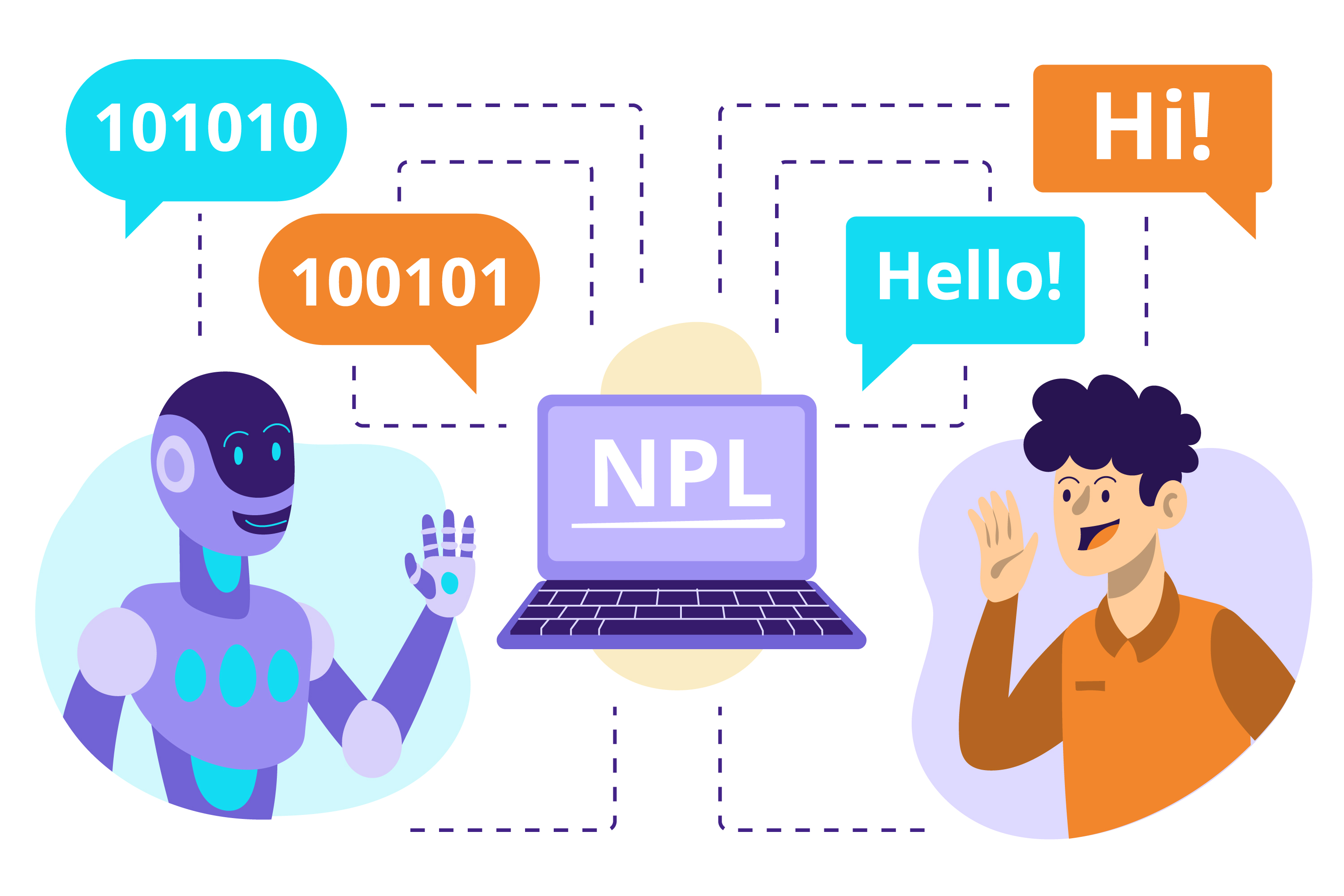
AI Analytics Tackling Telecom Data Overload

Learn how AI-powered analytics helps telecoms manage data overload, improve real-time insights, and transform big data into value for long-term growth.

AI Analytics Tackling Telecom Data Overload
Written by TechnoLynx Published on 29 Aug 2025

Introduction

Telecom companies handle one of the most demanding information loads in modern society. Every second, phone calls, app messages, social media streams, and wireless communication signals pass through their systems. The result is an overload that keeps increasing as more people and devices connect.

Traditional tools cannot keep pace with this rising tide. Operators struggle to filter, organise, and act on what matters. Costs grow, services weaken, and customer expectations rise faster than systems can manage.

Artificial intelligence (AI) changes this equation. By applying advanced analytics, telecom providers turn complexity into clarity.

The Scale of Telecom Overload

The scale of information in telecom is hard to imagine. Millions of interactions occur at once, covering text, voice, and video. Big data from connected devices adds further pressure. Historical records accumulate year after year, creating an additional challenge for storage and analysis.

This overload strains every part of operations. Network monitoring slows down. Fraud patterns become harder to see.

Customer support lacks timely insight. Without stronger tools, providers risk falling behind in service reliability.

AI as a Practical Tool

AI handles overload in ways conventional systems cannot. Machine learning (ML) and deep learning allow systems to recognise patterns, adapt to new conditions, and respond in real time.

AI tools sort through different types of data sets, removing noise while highlighting key signals. They connect information from wireless communication channels, customer platforms, and social media posts to build a high-quality picture of what is happening. This context supports faster decision-making and prevents issues from spreading.

Read more: AR and VR in Telecom: Practical Use Cases

Machine Learning Models in Telecom

Machine learning models form the base of many telecom AI applications. A machine learning algorithm can use both live and historical records to support problem-solving.

Supervised ML models help classify customer complaints or service requests. Unsupervised approaches group unusual behaviours, which may indicate fraud or system faults. Reinforcement methods fine-tune allocation of network resources.

As more information flows into these models, accuracy improves. Telecoms gain long term resilience against overload by continuously retraining and adapting.

The Contribution of Deep Learning

Deep learning strengthens AI analytics by adding complexity through deep neural networks. With many hidden layers, these networks detect subtle shifts in signals.

Telecoms benefit by predicting network failures, classifying faults, and analysing image or video feeds for infrastructure checks. Deep learning models handle information that was once too complex or unstructured for traditional tools.

Combined with GPUs from computer science, these models process large volumes faster than ever. This reduces delays and ensures operators can act quickly.

Natural Language Processing for Communication

Much of telecom overload comes from human languages. Messages, calls, and social media posts flood in at high speed. Natural language processing (NLP) interprets this flow.

NLP helps detect sentiment in customer feedback. It powers chatbots that give real-time responses. It identifies themes in thousands of messages, turning chaos into structure.

Over time, these systems fine-tune their understanding, offering more accurate support. This improves customer service while reducing the workload for team members.

Big Data in the 21st Century

The 21st century has seen an explosion of big data. From IoT devices to streaming platforms, telecom companies stand at the centre of this growth. The overload shows no signs of slowing.

AI makes this challenge manageable. It breaks down massive flows into workable parts. It matches current activity with historical patterns. It provides higher-level insights that guide planning and investment.

By controlling overload, telecom operators maintain consistent, high-quality service in an increasingly connected world.

Read more: Computer Vision Applications in Modern Telecommunications

Real-Time Insight

The most valuable benefit of AI analytics is real-time awareness. When networks face sudden spikes, AI models predict demand and adjust routing. If unusual signals suggest a breach, alerts go out immediately.

Real-time monitoring reduces the risk of outages and delays. Customers experience smoother service, while operators gain confidence in their organisation’s security posture.

This immediacy also applies to customer interactions. AI tools flag complaints early and suggest solutions before issues escalate.

Managing Different Types of Data

Telecoms must process many types of data. Structured records include call logs and billing information. Semi-structured logs record device and system activity. Unstructured content covers messages, emails, and social media posts.

AI systems bring all these sources together. They classify, sort, and highlight what is relevant. By linking across categories, they create a complete picture of the telecom environment.

This integration strengthens both technical operations and business planning.

Data Collection and Historical Records

Constant data collection forms the base of telecom services. Billions of interactions produce continuous streams of information. On top of this, years of historical records sit in storage.

AI makes sense of both. Live monitoring spots changes in the moment. Historical analysis trains machine learning models, building a foundation for predictions.

This combination allows operators to see both present and long-term trends. The ability to compare current activity with past behaviour improves accuracy and efficiency.

Read more: Telecom Supply Chain Software for Smarter Operations

Computer Science at the Core

None of these advances would be possible without progress in computer science. GPUs allow the processing of massive information sets with speed. New architectures support storage and transmission at scale.

Research into algorithms produces better models for machine learning and deep learning. These foundations keep telecom AI solutions advancing year after year.

Social Media Analysis

Social media represents one of the fastest-growing sources of telecom overload. Millions of posts and messages act as signals of public sentiment.

AI systems use NLP to analyse these posts in real time. A sudden rise in complaints can show an outage before technical systems report it. Positive trends help measure brand impact.

By merging social media with other telecom records, providers achieve a broader view of customer experience.

Delivering High-Quality Service

The goal of all telecom analysis is service quality. AI delivers by reducing overload and focusing on the most important signals.

If visual inspections detect faults in infrastructure, AI highlights them for repair. If voice analysis shows call quality dropping, the system recommends adjustments. Every step supports high-quality delivery to customers.

This consistency is essential in a competitive market where customer loyalty depends on reliable service.

AI and Predictive Network Management

Telecom providers work in an environment where overload can trigger outages without warning. Predictive network management offers a way forward. AI monitors live traffic while comparing it with historical data. This blend allows systems to predict overload before it creates failures.

Machine learning models study behaviour patterns from both structured and unstructured records. When real time traffic exceeds expected ranges, the model signals that network strain may follow. This early view gives operators the chance to reallocate resources or redirect flows.

Deep learning adds more accuracy by recognising complex patterns across different types of data. Signals from wireless communication, customer reports, and infrastructure logs connect together. The outcome is a precise view of where problems may occur.

This approach supports long term stability. It reduces downtime, saves costs, and improves customer experience. The overload does not vanish, but it becomes manageable with foresight rather than emergency action.

Read more: AI-Driven Opportunities for Smarter Problem Solving

AI and Customer Behaviour

Telecom overload is not only technical. It includes vast amounts of interaction records. Social media, call logs, and service requests contribute to this pressure. AI helps interpret these streams to understand customer behaviour.

Natural language processing (NLP) reads human languages in posts, emails, and transcripts. It highlights themes such as billing issues or coverage complaints. Large language models (LLMs) interpret tone and sentiment, giving providers a sense of customer mood in real time.

Machine learning algorithms fine tune recommendations based on these findings. If customers in one region complain about call quality, the system connects it with network strain detected in the same area. By joining technical and behavioural records, telecoms improve both service and support.

Over the long term, this analysis helps guide investment. Historical data shows where demand has grown most. Combined with big data from wireless communication, providers gain a clear view of where to build next.

AI and Fraud Detection

Fraud detection is another area where overload causes serious risk. Telecom operators must deal with vast volumes of transactions every second. Detecting unusual behaviour within this noise requires more than manual monitoring.

AI-powered systems use machine learning models to flag patterns that suggest fraud. Deep neural networks identify links between unusual calls, repeated messages, or location mismatches. These hidden layers make sense of complex patterns that human oversight might miss.

By processing large amounts of data in real time, AI enables detection at the moment of activity. Fraudulent use can be stopped before it spreads. This improves organisation security posture and protects both the provider and the consumer.

Historical data supports long term fraud prevention. By studying previous cases, models learn what to look for in future events. This continuous training ensures protection remains strong as threats change.

Read more: Generative AI Security Risks and Best Practice Measures

AI for Workforce Support

Telecom overload also affects team members working within the organisation. They face huge flows of information that can slow decision-making. AI reduces this burden by filtering and prioritising what matters.

Decision support systems help staff focus on key signals. For example, if an outage is likely, the system highlights affected regions and suggests a course of action. This reduces wasted time and allows faster response.

AI-powered assistants also improve daily tasks. NLP tools summarise reports, while ML models highlight anomalies worth investigating. The result is a higher level of efficiency across the security operations centre (SOC) and other units.

By giving staff clearer information, AI reduces stress linked with overload. Team members feel more capable and focused, improving long term performance.

The Role of Computer Vision

Though many think of telecom overload as numerical, visual records also matter. Drones and sensors capture images or video of towers, cables, and infrastructure. AI interprets these through computer vision, reducing manual inspection needs.

Convolutional neural networks (CNNs) identify specific objects, such as damaged cables or misaligned antennas. Image segmentation separates components for closer review. Object tracking follows changes across inspections.

By connecting visual information with other types of data, AI creates a full picture of network health. This saves costs, reduces errors, and ensures that problems are addressed before they affect customers.

Read more: Computer Vision and the Future of Safety and Security

Overload is not only about live conditions. Telecom providers must also study historical data to plan future strategy. AI systems analyse years of stored information to detect patterns.

Deep learning models compare past and present behaviour to forecast growth. Machine learning algorithms suggest which infrastructure upgrades will produce the most benefit. LLMs generate summaries to support executive decisions.

This process strengthens long term planning. Rather than reacting to overload in the moment, companies can align investment with expected demand. This prepares them for future challenges in the 21st century digital landscape.

Integration with Managed Security Services

Managed security services also benefit from AI analytics. These services rely on accurate monitoring to reduce the risk of breach. With overload, traditional systems may miss signals.

AI filters streams of information and directs attention to the most critical issues. Neural networks analyse connections between system alerts to decide which deserve immediate action.

For organisations outsourcing security, this means higher quality service. For providers, it ensures that the SOC is responsible for effective outcomes.

By integrating AI, managed services reduce false positives and highlight genuine risks. This improves customer trust and strengthens compliance with data protection regulation.

Read more: Cutting SOC Noise with AI-Powered Alerting

AI, GPUs, and Computer Power

Handling overload at telecom scale requires enormous computer power. Graphics processing units (GPUs) drive this performance. They allow deep learning models and ML algorithms to process complex records at speed.

With GPUs, AI can run tasks in real time that once took hours. This enables instant response to overload conditions. Combined with cloud platforms, computing power scales as demand grows.

This infrastructure ensures that AI remains a practical tool, not just a research subject. Telecom providers gain confidence that their systems can support the demands of the 21st century.

Long-Term Impact

AI in telecom is not only a short-term fix for overload. Its real strength lies in long-term improvement.

Continuous learning ensures systems adapt as new technologies emerge. Historical comparisons guide investment in infrastructure. Customer interactions provide feedback for future planning.

By investing in AI analytics now, telecom operators secure their position for decades ahead.

Future Directions

As wireless communication expands with 5G and beyond, telecom overload will increase further. AI will remain the main tool for keeping systems under control.

Future platforms will combine machine learning models, NLP, and deep learning into integrated solutions. These systems will manage streams from billions of devices, producing insights at a higher level than ever before.

Telecom operators who adapt early will stay competitive in the 21st-century digital economy.

Read more: How AI Transforms Communication: Key Benefits in Action

How TechnoLynx Can Help

TechnoLynx builds AI-powered analytics designed for telecom operators facing overload. Our systems combine ML, NLP, and deep learning to handle real-time and historical records.

We support high-quality performance by fine-tuning models for different types of data sets, including wireless communication logs and social media streams. Our approach blends computer science expertise with practical telecom knowledge.

By working with TechnoLynx, telecom providers gain solutions that manage overload effectively and position them for long-term growth. Contact us today to learn more!

Image credits: Freepik

Cost, Efficiency, and Value Are Not the Same Metric

Cost, Efficiency, and Value Are Not the Same Metric

17/04/2026

Performance per dollar. Tokens per watt. Cost per request. These sound like the same thing said differently, but they measure genuinely different dimensions of AI infrastructure economics. Conflating them leads to infrastructure decisions that optimize for the wrong objective.

Precision Is an Economic Lever in Inference Systems

Precision Is an Economic Lever in Inference Systems

17/04/2026

Precision isn't just a numerical setting — it's an economic one. Choosing FP8 over BF16, or INT8 over FP16, changes throughput, latency, memory footprint, and power draw simultaneously. For inference at scale, these changes compound into significant cost differences.

Precision Choices Are Constrained by Hardware Architecture

Precision Choices Are Constrained by Hardware Architecture

17/04/2026

You can't run FP8 inference on hardware that doesn't have FP8 tensor cores. Precision format decisions are conditional on the accelerator's architecture — its tensor core generation, native format support, and the efficiency penalties for unsupported formats.

Steady-State Performance, Cost, and Capacity Planning

Steady-State Performance, Cost, and Capacity Planning

17/04/2026

Capacity planning built on peak performance numbers over-provisions or under-delivers. Real infrastructure sizing requires steady-state throughput — the predictable, sustained output the system actually delivers over hours and days, not the number it hit in the first five minutes.

How Benchmark Context Gets Lost in Procurement

How Benchmark Context Gets Lost in Procurement

16/04/2026

A benchmark result starts with full context — workload, software stack, measurement conditions. By the time it reaches a procurement deck, all that context is gone. The failure mode is not wrong benchmarks but context loss during propagation.

Building an Audit Trail: Benchmarks as Evidence for Governance and Risk

Building an Audit Trail: Benchmarks as Evidence for Governance and Risk

16/04/2026

High-value AI hardware decisions need traceable evidence, not slide-deck bullet points. When benchmarks are documented with methodology, assumptions, and limitations, they become auditable institutional evidence — defensible under scrutiny and revisitable when conditions change.

The Comparability Protocol: Why Benchmark Methodology Defines What You Can Compare

The Comparability Protocol: Why Benchmark Methodology Defines What You Can Compare

16/04/2026

Two benchmark scores can only be compared if they share a declared methodology — the same workload, precision, measurement protocol, and reporting conditions. Without that contract, the comparison is arithmetic on numbers of unknown provenance.

A Decision Framework for Choosing AI Hardware

A Decision Framework for Choosing AI Hardware

16/04/2026

Hardware selection is a multivariate decision under uncertainty — not a score comparison. This framework walks through the steps: defining the decision, matching evaluation to deployment, measuring what predicts production, preserving tradeoffs, and building a repeatable process.

How Benchmarks Shape Organizations Before Anyone Reads the Score

How Benchmarks Shape Organizations Before Anyone Reads the Score

16/04/2026

Before a benchmark score informs a purchase, it has already shaped what gets optimized, what gets reported, and what the organization considers important. Benchmarks function as decision infrastructure — and that influence deserves more scrutiny than the number itself.

Accuracy Loss from Lower Precision Is Task‑Dependent

Accuracy Loss from Lower Precision Is Task‑Dependent

16/04/2026

Reduced precision does not produce a uniform accuracy penalty. Sensitivity depends on the task, the metric, and the evaluation setup — and accuracy impact cannot be assumed without measurement.

Precision Is a Design Parameter, Not a Quality Compromise

Precision Is a Design Parameter, Not a Quality Compromise

16/04/2026

Numerical precision is an explicit design parameter in AI systems, not a moral downgrade in quality. This article reframes precision as a representation choice with intentional trade-offs, not a concession made reluctantly.

Mixed Precision Works by Exploiting Numerical Tolerance

Mixed Precision Works by Exploiting Numerical Tolerance

16/04/2026

Not every multiplication deserves 32 bits. Mixed precision works because neural network computations have uneven numerical sensitivity — some operations tolerate aggressive precision reduction, others don't — and the performance gains come from telling them apart.

Throughput vs Latency: Choosing the Wrong Optimization Target

16/04/2026

Throughput and latency are different objectives that often compete for the same resources. This article explains the trade-off, why batch size reshapes behavior, and why percentiles matter more than averages in latency-sensitive systems.

Quantization Is Controlled Approximation, Not Model Damage

16/04/2026

When someone says 'quantize the model,' the instinct is to hear 'degrade the model.' That framing is wrong. Quantization is controlled numerical approximation — a deliberate engineering trade-off with bounded, measurable error characteristics — not an act of destruction.

GPU Utilization Is Not Performance

15/04/2026

The utilization percentage in nvidia-smi reports kernel scheduling activity, not efficiency or throughput. This article explains the metric's exact definition, why it routinely misleads in both directions, and what to pair it with for accurate performance reads.

FP8, FP16, and BF16 Represent Different Operating Regimes

15/04/2026

FP8 is not just 'half of FP16.' Each numerical format encodes a different set of assumptions about range, precision, and risk tolerance. Choosing between them means choosing operating regimes — different trade-offs between throughput, numerical stability, and what the hardware can actually accelerate.

Peak Performance vs Steady‑State Performance in AI

15/04/2026

AI systems rarely operate at peak. This article defines the peak vs. steady-state distinction, explains when each regime applies, and shows why evaluations that capture only peak conditions mischaracterize real-world throughput.

The Software Stack Is a First‑Class Performance Component

15/04/2026

Drivers, runtimes, frameworks, and libraries define the execution path that determines GPU throughput. This article traces how each software layer introduces real performance ceilings and why version-level detail must be explicit in any credible comparison.

The Mythology of 100% GPU Utilization

15/04/2026

Is 100% GPU utilization bad? Will it damage the hardware? Should you be worried? For datacenter AI workloads, sustained high utilization is normal — and the anxiety around it usually reflects gaming-era intuitions that don't apply.

Why Benchmarks Fail to Match Real AI Workloads

15/04/2026

The word 'realistic' gets attached to benchmarks freely, but real AI workloads have properties that synthetic benchmarks structurally omit: variable request patterns, queuing dynamics, mixed operations, and workload shapes that change the hardware's operating regime.

Why Identical GPUs Often Perform Differently

15/04/2026

'Same GPU' does not imply the same performance. This article explains why system configuration, software versions, and execution context routinely outweigh nominal hardware identity.

Training and Inference Are Fundamentally Different Workloads

15/04/2026

A GPU that excels at training may disappoint at inference, and vice versa. Training and inference stress different system components, follow different scaling rules, and demand different optimization strategies. Treating them as interchangeable is a design error.

Performance Ownership Spans Hardware and Software Teams

15/04/2026

When an AI workload underperforms, attribution is the first casualty. Hardware blames software. Software blames hardware. The actual problem lives in the gap between them — and no single team owns that gap.

Performance Emerges from the Hardware × Software Stack

15/04/2026

AI performance is an emergent property of hardware, software, and workload operating together. This article explains why outcomes cannot be attributed to hardware alone and why the stack is the true unit of performance.

Power, Thermals, and the Hidden Governors of Performance

14/04/2026

Every GPU has a physical ceiling that sits below its theoretical peak. Power limits, thermal throttling, and transient boost clocks mean that the performance you read on the spec sheet is not the performance the hardware sustains. The physics always wins.

Why AI Performance Changes Over Time

14/04/2026

That impressive throughput number from the first five minutes of a training run? It probably won't hold. AI workload performance shifts over time due to warmup effects, thermal dynamics, scheduling changes, and memory pressure. Understanding why is the first step toward trustworthy measurement.

CUDA, Frameworks, and Ecosystem Lock-In

14/04/2026

Why is it so hard to switch away from CUDA? Because the lock-in isn't in the API — it's in the ecosystem. Libraries, tooling, community knowledge, and years of optimization create switching costs that no hardware swap alone can overcome.

GPUs Are Part of a Larger System

14/04/2026

CPU overhead, memory bandwidth, PCIe topology, and host-side scheduling routinely limit what a GPU can deliver — even when the accelerator itself has headroom. This article maps the non-GPU bottlenecks that determine real AI throughput.

Why AI Performance Must Be Measured Under Representative Workloads

14/04/2026

Spec sheets, leaderboards, and vendor numbers cannot substitute for empirical measurement under your own workload and stack. Defensible performance conclusions require representative execution — not estimates, not extrapolations.

Low GPU Utilization: Where the Real Bottlenecks Hide

14/04/2026

When GPU utilization drops below expectations, the cause usually isn't the GPU itself. This article traces common bottleneck patterns — host-side stalls, memory-bandwidth limits, pipeline bubbles — that create the illusion of idle hardware.

Why GPU Performance Is Not a Single Number

14/04/2026

AI GPU performance is multi-dimensional and workload-dependent. This article explains why scalar rankings collapse incompatible objectives and why 'best GPU' questions are structurally underspecified.

What a GPU Benchmark Actually Measures

14/04/2026

A benchmark result is not a hardware measurement — it is an execution measurement. The GPU, the software stack, and the workload all contribute to the number. Reading it correctly requires knowing which parts of the system shaped the outcome.

Why Spec‑Sheet Benchmarking Fails for AI

14/04/2026

GPU spec sheets describe theoretical limits. This article explains why real AI performance is an execution property shaped by workload, software, and sustained system behavior.

Deep Learning Models for Accurate Object Size Classification

27/01/2026

A clear and practical guide to deep learning models for object size classification, covering feature extraction, model architectures, detection pipelines, and real‑world considerations.

Mimicking Human Vision: Rethinking Computer Vision Systems

10/11/2025

Why computer vision systems trained on benchmarks fail on real inputs, and how attention mechanisms, context modelling, and multi-scale features close the gap.

Visual analytic intelligence of neural networks

7/11/2025

Neural network visualisation: how activation maps, layer inspection, and feature attribution reveal what a model has learned and where it will fail.

Visual Computing in Life Sciences: Real-Time Insights

6/11/2025

Learn how visual computing transforms life sciences with real-time analysis, improving research, diagnostics, and decision-making for faster, accurate outcomes.

AI-Driven Aseptic Operations: Eliminating Contamination

21/10/2025

Learn how AI-driven aseptic operations help pharmaceutical manufacturers reduce contamination, improve risk assessment, and meet FDA standards for safe, sterile products.

AI Visual Quality Control: Assuring Safe Pharma Packaging

20/10/2025

See how AI-powered visual quality control ensures safe, compliant, and high-quality pharmaceutical packaging across a wide range of products.

AI for Reliable and Efficient Pharmaceutical Manufacturing

15/10/2025

See how AI and generative AI help pharmaceutical companies optimise manufacturing processes, improve product quality, and ensure safety and efficacy.

Barcodes in Pharma: From DSCSA to FMD in Practice

25/09/2025

What the 2‑D barcode and seal on your medicine mean, how pharmacists scan packs, and why these checks stop fake medicines reaching you.

Pharma’s EU AI Act Playbook: GxP‑Ready Steps

24/09/2025

A clear, GxP‑ready guide to the EU AI Act for pharma and medical devices: risk tiers, GPAI, codes of practice, governance, and audit‑ready execution.

Cell Painting: Fixing Batch Effects for Reliable HCS

23/09/2025

Reduce batch effects in Cell Painting. Standardise assays, adopt OME‑Zarr, and apply robust harmonisation to make high‑content screening reproducible.

Explainable Digital Pathology: QC that Scales

22/09/2025

Raise slide quality and trust in AI for digital pathology with robust WSI validation, automated QC, and explainable outputs that fit clinical workflows.

Validation‑Ready AI for GxP Operations in Pharma

19/09/2025

Make AI systems validation‑ready across GxP. GMP, GCP and GLP. Build secure, audit‑ready workflows for data integrity, manufacturing and clinical trials.

Edge Imaging for Reliable Cell and Gene Therapy

17/09/2025

Edge imaging transforms cell & gene therapy manufacturing with real‑time monitoring, risk‑based control and Annex 1 compliance for safer, faster production.

AI in Genetic Variant Interpretation: From Data to Meaning

15/09/2025

AI enhances genetic variant interpretation by analysing DNA sequences, de novo variants, and complex patterns in the human genome for clinical precision.

AI Visual Inspection for Sterile Injectables

11/09/2025

Improve quality and safety in sterile injectable manufacturing with AI‑driven visual inspection, real‑time control and cost‑effective compliance.

Back See Blogs
arrow icon