AI in Biotechnology: Nature in the Palm of our Hands

When you think of nature, most likely, what comes to mind are tropical forests, sandy beaches, and steep rocky mountains, blessed with all kinds of species that interact in their habitats. On the other hand, when you think of biotechnology, you most likely think of test tubes, laboratories, and crazy nature-defying experiments. The truth is that biotechnology isn’t necessarily that. If you want to find out what wonderful results biotechnology can bring to the environment, this article is for you!

AI in Biotechnology: Nature in the Palm of our Hands
Written by TechnoLynx Published on 28 Oct 2024

Introduction

The ocean covers about 70% of the surface of our majestic planet. It might be hard to imagine, but only 5% of our oceans have been discovered. It is no secret that most of the underwater species are yet to be discovered, which is sure to bring us in front of some surprises (hopefully pleasant). In any case, whatever new species are discovered will be fascinating; however, who said that the species we already know aren’t fascinating enough? What if we told you that there are species that have physical properties that could save the oceans from human pollution? You don’t believe us? Keep reading to see how the tiniest creatures of the sea can have mind-blowing properties, how we can inspire from them and repurpose them for our needs in an ethical way, how we can protect and rebuild our forests, shape agriculture, and even synthesise polymers.

Endless Blue

You have heard of ‘algae’. You know that green, often slimy crust that you sometimes see at sea level. You might not be a huge fan of it, as it disturbs the water clarity, but would you change your mind if we told you that we can have this organism work for us? In our cosmetics article, we have stressed how animal cruelty can be avoided when developing and testing new products. Don’t worry; we didn’t have a change of heart. Algae are not considered to be an animal or a plant. In fact, it belongs to a family of organisms called protists, with approximately 27.000 different species or types of algae (algae - Kids, Britannica Kids, Homework Help)! But what is so interesting about it? Well, apart from being part of the food chain of blennies and tangs, some snails, crabs, and sea urchins, as well as a great food source for us humans due to the fact that it is rich in Omega-3 fats, algae does something else, something unexpected…

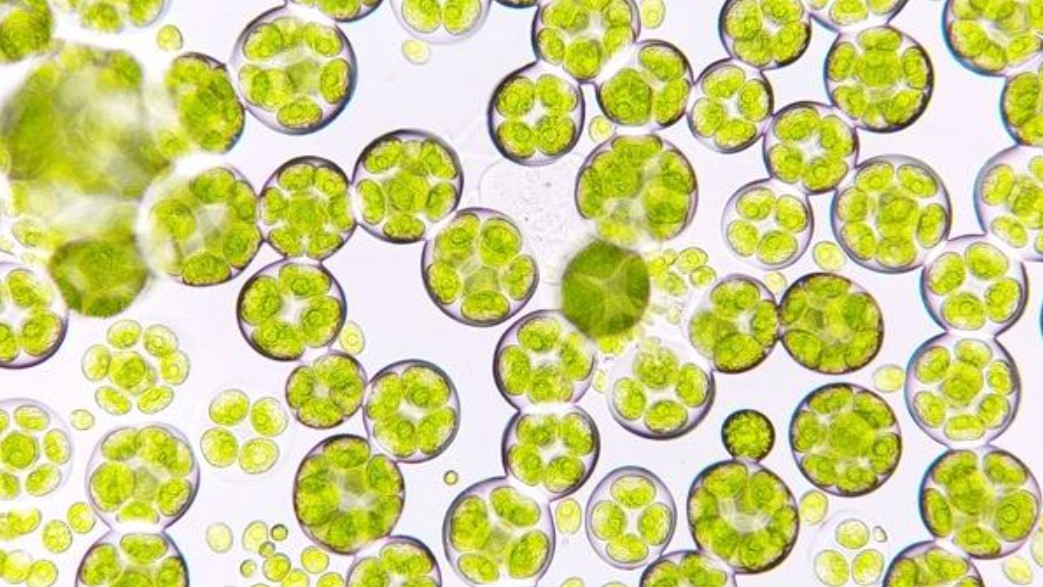
Figure 1 – Still image of the freshwater microalgae blooming under a microscope (Freshwater Microalgae Blooming Under Microscope Species Stock Photo 2401137651).

Tastes Good!

In 2001, a group of Japanese scientists made a discovery in a dumpster. They noticed that a bacteria was snacking on some plastics (Yoshida et al., 2016). While breaking down the trash, the bacteria used the carbon in the plastic itself for energy, which they used to move around, grow, and reproduce into more plastic-eating bacteria, the name of which is ‘Ideonella sakaiensis’ Fast forward to 2024, more than 2,5 billion tonnes of plastic have been produced, with approximately 450 million tonnes each year (OECD, 2022). In 2022, the EU funded several groups to develop a solution to transform plastic into fully biodegradable materials using bacteria and enzymes. A group of Germans actually managed to engineer the ‘Ideonella sakaiensis PETase’, the enzyme that breaks down carbon into marine algae, potentially ending the problem of ocean pollution due to microplastics (Buranyi, 2023)! You see where we are getting at?

Figure 2 - Still image of Ideonella sakaiensis in false colour Scanning Electron Microscopy (Prostak, 2016).

You can probably guess how many hours of work and brain juice such a task would require. We aren’t sure if these engineers used AI, but let’s see how they could use it to speed things up. We have already talked about how Computer Vision (CV), a GPU-accelerated form of AI, can change the way we design pharmaceutical products in this article, however, not many things need to be reconfigured when working with living organisms. Through Virtual Reality (VR) and Augmented Reality (AR), we can take a look at the microworld in three dimensions without the need for a microscope, which can be both eye- and neck-straining. The application of modifications to existing organisms is already known by biologists, so why not just give them an extra hand and make their lives easier with the fascinating applications of Extended Reality (XR)?

Apart from that, imagine how many more uses we could find for these amazing creatures! Plastics are one thing, but what is equally, if not even more, scary? Oil leakage! Maritime companies have developed different solutions to prevent the hulls from piercing, but accidents can still occur. Now, it is just an idea, but wouldn’t it be lifesaving (literally) if we could design types of algae that feed on anything bad for the planet? Imagine a good number of modified algae being released close to an oil leak, eliminating it within a few days. Or, how many reefs are being damaged annually due to sunscreen residues? Now, too many. Within a few years, potentially none!

So Green!

Of course, not only the seas are what should interest us concerning nature. Shade under a tree can be the best thing ever on a hot summer day, yet air pollution and human activity have been destroying our forests for decades. Scientists have warned of irreparable consequences, but not everyone is concerned. Thankfully, some are, and the result is really a wonder!

The largest hot desert on Earth is the Sahara, with a jaw-dropping area of 9.2 trillion square metres. Does this area, however, remain the same, or does it grow? Unfortunately, it has been steadily increasing, threatening the sub-Saharan countries more and more. The front-man of the fight against this natural disaster is no other than the United Nations Convention to Combat Desertification, and it is more than just an initiative; it is a symbol of hope. 22 African countries participate in the ‘Great Green Wall’, planning to stop the expansion of the desert to the south by strategically planting trees and horizontally terraforming the soil in Africa, from Senegal to Djibouti. This project not only contributes to climate stability but also ensures fertile soil that will feed thousands of people annually (Great Green Wall Initiative).

Figure 3 – Map of the Great Green Wall project (Great Green Wall, Action Against Desertification, Food and Agriculture Organization of the United Nations)

More than 8 billion dollars have been raised for this 8.000 km long project, and chances are that humans will not be able to fulfil it by themselves. Can AI help them? Yes, it can! Such an area would require continuous monitoring due to the harsh environment that surrounds the land that is being reformed. However, how many people could realistically be involved in this project? The solution lies in CV and Edge Computing Internet of Things (IoT). Real-time CV could be integrated into localised cameras strategically placed on the land to monitor the external characteristics of the biotechnologically reinforced plants being grown. In addition to that, smart soil monitoring probes could send information on humidity, pH, texture, saturation, and percentages of nitrogen, phosphorus, and potassium to computer stations in the area. A properly trained AI taking advantage of Edge Computing could forecast the microclimate and inform experts monitoring everything, potentially even making adjustments to the dosage of nutrients that need to be delivered in the soil automatically.

Read more: What is IoT Edge Computing and Its Benefits?

Let it Grow

Now, this is potentially not big news, but it is definitely worth mentioning. One of the many applications of AI is to provide farmers with the tools they need to make production cheaper and more manageable without sacrificing quality over quantity. This can be done on a small scale using Edge Computing, drones, cameras, and probes, but it can also be done in a lab.

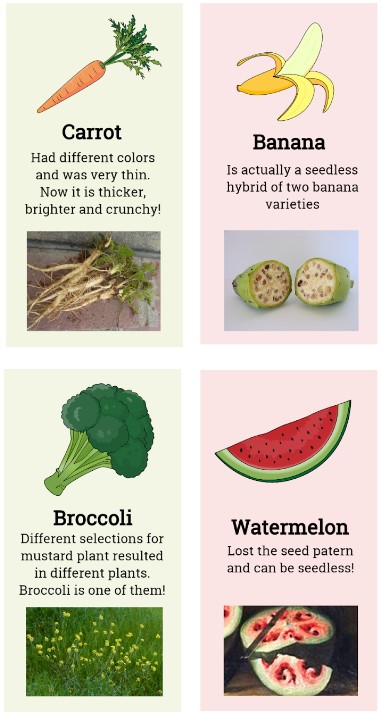
That’s right! A lab! And before you judge, we are not talking about genetically altering a species of fruit or vegetable. Crossbreeding has been done for a long time, with the first properly recorded application being in the mid-17th century by ‘the father of genetics’, the biologist, meteorologist, mathematician, Augustinian friar Gregor Mendel, with his world-famous experiment on peas. Mendel’s practices have literally transformed the way crops have changed, as new breeds of the best characteristics have been developed with the exact same method.

Figure 4 – Examples of domestication of fruits and vegetables (Pamplona, 2018).

Of course, these characteristics can vary according to the climate and species, not to mention that cross-breeding plants can take a lot of time, potentially years until you find the combination that gives the best results. Thankfully, we can speed things up by eliminating the trial-and-error cross-breeding practices of the past to the bare minimum.

Using algorithms that can run virtual trials, we can eliminate attempts that would not be fruitful before even making them. And with generative AI, we can get a virtual glimpse of the crops we want to make. In addition, CV can monitor these plants in real time and make adjustments in the algorithm itself, just like a self-autocorrect that learns from its own mistakes.

Bio-what?

Biopolymers! First time you’ve heard of them? Let us enrich your knowledge, then. Biopolymers are natural polymers produced by cells in all living organisms. They are divided into three main classes, according to the monomers used for their formation and structure: polypeptides, polysaccharides, and polynucleotides; they are essential for tasks like wound healing, while they also act as catalysis of bioactivity and nontoxicity. Biopolymers are also characterised by their biodegrading characteristics, as well as their excellent biocompatibility. One could say that they are a multitool on their own, so are there really limits to what they can do?

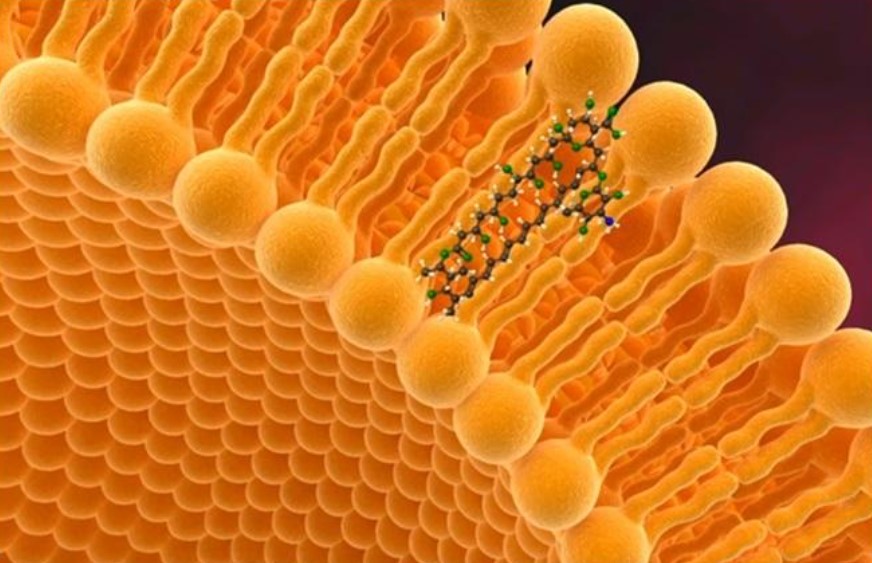
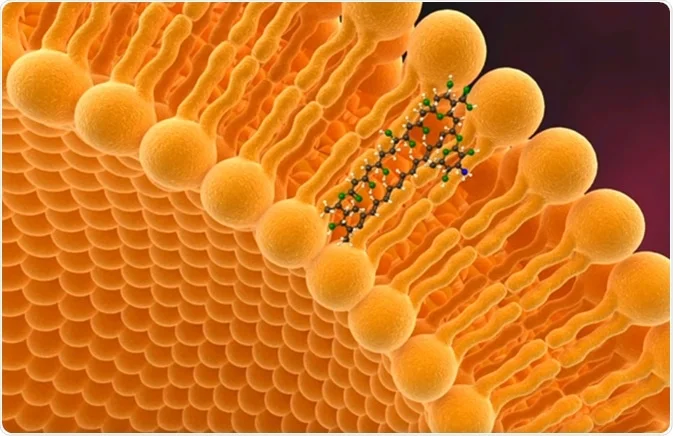
Figure 5 – Image of a liposome carrying a lipophilic cargo used in drug delivery (M.Sc, 2010).

The answer is ‘only in our imagination’. Taking advantage of the physical properties of biopolymers, we can modify them using AI to serve different tasks. Synthetic biopolymers are not a new concept, but the extent to which R&D has been applied is in a whole different league. However, tweaking biopolymers is no joke, and it requires great expertise. Using CV, deep learning, and generative AI, we could rearrange the structure of existing polymers on a peptide, saccharide, or nucleotide level, even designing our own hybrid ones per field of application. Examples range from drug delivery and tissue engineering and regeneration to biosensing and immunotherapy!

Summing Up

Biotechnology is a fascinating area with many applications, not only in a lab environment but in everyday applications as well, no matter how big or small they are. There is no doubt that implementing AI in biotechnology will give us a great advantage with applications that will make the world a better place. We can reduce or potentially even eliminate water pollution, save forests, and reform healthcare.

What We Offer

At TechnoLynx, we are characterised by our innovative nature. We specialise in delivering tech solutions custom-tailored to your needs. We do not need to be convinced that AI can be beneficial because we already understand this better than anyone. We are committed to providing cutting-edge AI solutions in the field of biotechnology while ensuring safety in human-machine interactions. Our team is great at managing and analysing large data sets while addressing ethical considerations.

Our software solutions are precise, empowering many fields and industries using AI-driven algorithms. We like to innovate, and we are driven to adapt to the ever-changing AI landscape. The solutions we present are designed to increase accuracy, efficiency, and productivity. Don’t hesitate to contact us to share your ideas or questions. We will be more than happy to make your project fly!

Continue reading: AI in Biotechnology: A Game Changer for Innovation

List of references

  • algae - Kids, Britannica Kids. Homework Help (no date). (Accessed: 9 April 2024).

  • Buranyi, S. (2023) ‘“We are just getting started”: the plastic-eating bacteria that could change the world’, The Guardian, 28 September. (Accessed: 9 April 2024).

  • Freshwater Microalgae Blooming Under Microscope Species Stock Photo 2401137651 (no date) Shutterstock (Accessed: 9 April 2024).

  • Great Green Wall. Action Against Desertification. Food and Agriculture Organization of the United Nations.

  • Great Green Wall Initiative (no date) UNCCD. (Accessed: 9 April 2024).

  • M.Sc, B.C. (2010) What is a Liposome?, News-Medical. (Accessed: 9 April 2024).

  • OECD (2022) Global Plastics Outlook: Economic Drivers, Environmental Impacts and Policy Options. OECD.

  • Pamplona, F. (2018) ‘Infographics: Domesticated fruits and vegetables’, Mind the Graph Blog, 9 August. (Accessed: 9 April 2024).

  • Prostak, S. (2016) Ideonella sakaiensis: Newly-Discovered Bacterium Can Break Down, Metabolize Plastic. Biology. Sci-News.com, Sci.News: Breaking Science News. (Accessed: 9 April 2024).

  • Yoshida, S. et al. (2016) ‘A bacterium that degrades and assimilates poly(ethylene terephthalate)’, Science, 351(6278), pp. 1196–1199.


Cost, Efficiency, and Value Are Not the Same Metric

Cost, Efficiency, and Value Are Not the Same Metric

17/04/2026

Performance per dollar. Tokens per watt. Cost per request. These sound like the same thing said differently, but they measure genuinely different dimensions of AI infrastructure economics. Conflating them leads to infrastructure decisions that optimize for the wrong objective.

Precision Is an Economic Lever in Inference Systems

Precision Is an Economic Lever in Inference Systems

17/04/2026

Precision isn't just a numerical setting — it's an economic one. Choosing FP8 over BF16, or INT8 over FP16, changes throughput, latency, memory footprint, and power draw simultaneously. For inference at scale, these changes compound into significant cost differences.

Precision Choices Are Constrained by Hardware Architecture

Precision Choices Are Constrained by Hardware Architecture

17/04/2026

You can't run FP8 inference on hardware that doesn't have FP8 tensor cores. Precision format decisions are conditional on the accelerator's architecture — its tensor core generation, native format support, and the efficiency penalties for unsupported formats.

Steady-State Performance, Cost, and Capacity Planning

Steady-State Performance, Cost, and Capacity Planning

17/04/2026

Capacity planning built on peak performance numbers over-provisions or under-delivers. Real infrastructure sizing requires steady-state throughput — the predictable, sustained output the system actually delivers over hours and days, not the number it hit in the first five minutes.

How Benchmark Context Gets Lost in Procurement

How Benchmark Context Gets Lost in Procurement

16/04/2026

A benchmark result starts with full context — workload, software stack, measurement conditions. By the time it reaches a procurement deck, all that context is gone. The failure mode is not wrong benchmarks but context loss during propagation.

Building an Audit Trail: Benchmarks as Evidence for Governance and Risk

Building an Audit Trail: Benchmarks as Evidence for Governance and Risk

16/04/2026

High-value AI hardware decisions need traceable evidence, not slide-deck bullet points. When benchmarks are documented with methodology, assumptions, and limitations, they become auditable institutional evidence — defensible under scrutiny and revisitable when conditions change.

The Comparability Protocol: Why Benchmark Methodology Defines What You Can Compare

The Comparability Protocol: Why Benchmark Methodology Defines What You Can Compare

16/04/2026

Two benchmark scores can only be compared if they share a declared methodology — the same workload, precision, measurement protocol, and reporting conditions. Without that contract, the comparison is arithmetic on numbers of unknown provenance.

A Decision Framework for Choosing AI Hardware

A Decision Framework for Choosing AI Hardware

16/04/2026

Hardware selection is a multivariate decision under uncertainty — not a score comparison. This framework walks through the steps: defining the decision, matching evaluation to deployment, measuring what predicts production, preserving tradeoffs, and building a repeatable process.

How Benchmarks Shape Organizations Before Anyone Reads the Score

How Benchmarks Shape Organizations Before Anyone Reads the Score

16/04/2026

Before a benchmark score informs a purchase, it has already shaped what gets optimized, what gets reported, and what the organization considers important. Benchmarks function as decision infrastructure — and that influence deserves more scrutiny than the number itself.

Accuracy Loss from Lower Precision Is Task‑Dependent

Accuracy Loss from Lower Precision Is Task‑Dependent

16/04/2026

Reduced precision does not produce a uniform accuracy penalty. Sensitivity depends on the task, the metric, and the evaluation setup — and accuracy impact cannot be assumed without measurement.

Precision Is a Design Parameter, Not a Quality Compromise

Precision Is a Design Parameter, Not a Quality Compromise

16/04/2026

Numerical precision is an explicit design parameter in AI systems, not a moral downgrade in quality. This article reframes precision as a representation choice with intentional trade-offs, not a concession made reluctantly.

Mixed Precision Works by Exploiting Numerical Tolerance

Mixed Precision Works by Exploiting Numerical Tolerance

16/04/2026

Not every multiplication deserves 32 bits. Mixed precision works because neural network computations have uneven numerical sensitivity — some operations tolerate aggressive precision reduction, others don't — and the performance gains come from telling them apart.

Throughput vs Latency: Choosing the Wrong Optimization Target

16/04/2026

Throughput and latency are different objectives that often compete for the same resources. This article explains the trade-off, why batch size reshapes behavior, and why percentiles matter more than averages in latency-sensitive systems.

Quantization Is Controlled Approximation, Not Model Damage

16/04/2026

When someone says 'quantize the model,' the instinct is to hear 'degrade the model.' That framing is wrong. Quantization is controlled numerical approximation — a deliberate engineering trade-off with bounded, measurable error characteristics — not an act of destruction.

GPU Utilization Is Not Performance

15/04/2026

The utilization percentage in nvidia-smi reports kernel scheduling activity, not efficiency or throughput. This article explains the metric's exact definition, why it routinely misleads in both directions, and what to pair it with for accurate performance reads.

FP8, FP16, and BF16 Represent Different Operating Regimes

15/04/2026

FP8 is not just 'half of FP16.' Each numerical format encodes a different set of assumptions about range, precision, and risk tolerance. Choosing between them means choosing operating regimes — different trade-offs between throughput, numerical stability, and what the hardware can actually accelerate.

Peak Performance vs Steady‑State Performance in AI

15/04/2026

AI systems rarely operate at peak. This article defines the peak vs. steady-state distinction, explains when each regime applies, and shows why evaluations that capture only peak conditions mischaracterize real-world throughput.

The Software Stack Is a First‑Class Performance Component

15/04/2026

Drivers, runtimes, frameworks, and libraries define the execution path that determines GPU throughput. This article traces how each software layer introduces real performance ceilings and why version-level detail must be explicit in any credible comparison.

The Mythology of 100% GPU Utilization

15/04/2026

Is 100% GPU utilization bad? Will it damage the hardware? Should you be worried? For datacenter AI workloads, sustained high utilization is normal — and the anxiety around it usually reflects gaming-era intuitions that don't apply.

Why Benchmarks Fail to Match Real AI Workloads

15/04/2026

The word 'realistic' gets attached to benchmarks freely, but real AI workloads have properties that synthetic benchmarks structurally omit: variable request patterns, queuing dynamics, mixed operations, and workload shapes that change the hardware's operating regime.

Why Identical GPUs Often Perform Differently

15/04/2026

'Same GPU' does not imply the same performance. This article explains why system configuration, software versions, and execution context routinely outweigh nominal hardware identity.

Training and Inference Are Fundamentally Different Workloads

15/04/2026

A GPU that excels at training may disappoint at inference, and vice versa. Training and inference stress different system components, follow different scaling rules, and demand different optimization strategies. Treating them as interchangeable is a design error.

Performance Ownership Spans Hardware and Software Teams

15/04/2026

When an AI workload underperforms, attribution is the first casualty. Hardware blames software. Software blames hardware. The actual problem lives in the gap between them — and no single team owns that gap.

Performance Emerges from the Hardware × Software Stack

15/04/2026

AI performance is an emergent property of hardware, software, and workload operating together. This article explains why outcomes cannot be attributed to hardware alone and why the stack is the true unit of performance.

Power, Thermals, and the Hidden Governors of Performance

14/04/2026

Every GPU has a physical ceiling that sits below its theoretical peak. Power limits, thermal throttling, and transient boost clocks mean that the performance you read on the spec sheet is not the performance the hardware sustains. The physics always wins.

Why AI Performance Changes Over Time

14/04/2026

That impressive throughput number from the first five minutes of a training run? It probably won't hold. AI workload performance shifts over time due to warmup effects, thermal dynamics, scheduling changes, and memory pressure. Understanding why is the first step toward trustworthy measurement.

CUDA, Frameworks, and Ecosystem Lock-In

14/04/2026

Why is it so hard to switch away from CUDA? Because the lock-in isn't in the API — it's in the ecosystem. Libraries, tooling, community knowledge, and years of optimization create switching costs that no hardware swap alone can overcome.

GPUs Are Part of a Larger System

14/04/2026

CPU overhead, memory bandwidth, PCIe topology, and host-side scheduling routinely limit what a GPU can deliver — even when the accelerator itself has headroom. This article maps the non-GPU bottlenecks that determine real AI throughput.

Why AI Performance Must Be Measured Under Representative Workloads

14/04/2026

Spec sheets, leaderboards, and vendor numbers cannot substitute for empirical measurement under your own workload and stack. Defensible performance conclusions require representative execution — not estimates, not extrapolations.

Low GPU Utilization: Where the Real Bottlenecks Hide

14/04/2026

When GPU utilization drops below expectations, the cause usually isn't the GPU itself. This article traces common bottleneck patterns — host-side stalls, memory-bandwidth limits, pipeline bubbles — that create the illusion of idle hardware.

Why GPU Performance Is Not a Single Number

14/04/2026

AI GPU performance is multi-dimensional and workload-dependent. This article explains why scalar rankings collapse incompatible objectives and why 'best GPU' questions are structurally underspecified.

What a GPU Benchmark Actually Measures

14/04/2026

A benchmark result is not a hardware measurement — it is an execution measurement. The GPU, the software stack, and the workload all contribute to the number. Reading it correctly requires knowing which parts of the system shaped the outcome.

Why Spec‑Sheet Benchmarking Fails for AI

14/04/2026

GPU spec sheets describe theoretical limits. This article explains why real AI performance is an execution property shaped by workload, software, and sustained system behavior.

Visual Computing in Life Sciences: Real-Time Insights

6/11/2025

Learn how visual computing transforms life sciences with real-time analysis, improving research, diagnostics, and decision-making for faster, accurate outcomes.

AI-Driven Aseptic Operations: Eliminating Contamination

21/10/2025

Learn how AI-driven aseptic operations help pharmaceutical manufacturers reduce contamination, improve risk assessment, and meet FDA standards for safe, sterile products.

AI Visual Quality Control: Assuring Safe Pharma Packaging

20/10/2025

See how AI-powered visual quality control ensures safe, compliant, and high-quality pharmaceutical packaging across a wide range of products.

AI for Reliable and Efficient Pharmaceutical Manufacturing

15/10/2025

See how AI and generative AI help pharmaceutical companies optimise manufacturing processes, improve product quality, and ensure safety and efficacy.

Barcodes in Pharma: From DSCSA to FMD in Practice

25/09/2025

What the 2‑D barcode and seal on your medicine mean, how pharmacists scan packs, and why these checks stop fake medicines reaching you.

Pharma’s EU AI Act Playbook: GxP‑Ready Steps

24/09/2025

A clear, GxP‑ready guide to the EU AI Act for pharma and medical devices: risk tiers, GPAI, codes of practice, governance, and audit‑ready execution.

Cell Painting: Fixing Batch Effects for Reliable HCS

23/09/2025

Reduce batch effects in Cell Painting. Standardise assays, adopt OME‑Zarr, and apply robust harmonisation to make high‑content screening reproducible.

Explainable Digital Pathology: QC that Scales

22/09/2025

Raise slide quality and trust in AI for digital pathology with robust WSI validation, automated QC, and explainable outputs that fit clinical workflows.

Validation‑Ready AI for GxP Operations in Pharma

19/09/2025

Make AI systems validation‑ready across GxP. GMP, GCP and GLP. Build secure, audit‑ready workflows for data integrity, manufacturing and clinical trials.

Edge Imaging for Reliable Cell and Gene Therapy

17/09/2025

Edge imaging transforms cell & gene therapy manufacturing with real‑time monitoring, risk‑based control and Annex 1 compliance for safer, faster production.

AI in Genetic Variant Interpretation: From Data to Meaning

15/09/2025

AI enhances genetic variant interpretation by analysing DNA sequences, de novo variants, and complex patterns in the human genome for clinical precision.

AI Visual Inspection for Sterile Injectables

11/09/2025

Improve quality and safety in sterile injectable manufacturing with AI‑driven visual inspection, real‑time control and cost‑effective compliance.

Predicting Clinical Trial Risks with AI in Real Time

5/09/2025

AI helps pharma teams predict clinical trial risks, side effects, and deviations in real time, improving decisions and protecting human subjects.

Generative AI in Pharma: Compliance and Innovation

1/09/2025

Generative AI transforms pharma by streamlining compliance, drug discovery, and documentation with AI models, GANs, and synthetic training data for safer innovation.

AI for Pharma Compliance: Smarter Quality, Safer Trials

27/08/2025

AI helps pharma teams improve compliance, reduce risk, and manage quality in clinical trials and manufacturing with real-time insights.

Back See Blogs
arrow icon