
Biotech research moves on two clocks. There is the long clock of discovery — proteins, genomes, mechanisms — and the short clock of manufacturing and lab operations, where every day of delay shows up in batch records and trial timelines. AI now lives on both clocks, but the operationally relevant work, the part with measurable return, sits closer to the short one. That is the frame worth holding while reading about what AI actually does in biotech today.
The headline narrative leans heavily on drug discovery. It is the dominant story because the upside is enormous and the cycle times are long enough to make a press release. The quieter story — process control on a fill-finish line, anomaly detection in a bioreactor, vision-based inspection of vials — gets less attention but has shorter feedback loops and clearer ROI. We see this gap regularly: teams chasing discovery-grade AI while the manufacturing floor still relies on rule-based SCADA logic from a decade ago.
What “AI in biotech” actually covers
Biotech research uses AI across four broad layers, and conflating them is the most common source of confused expectations:
| Layer | Typical AI techniques | Maturity in production |
|---|---|---|
| Molecular / structural | Transformer-based protein folding (AlphaFold-class), graph neural networks for chemistry | Mature for prediction; integration into pipelines still uneven |
| Genomic | Sequence models, variant-effect predictors, multi-omics integration | Mature for analysis, regulatory frame still evolving |
| Laboratory automation | Computer vision (OpenCV, deep learning), robotic scheduling, anomaly detection | Deployable now in most labs |
| Manufacturing & QA | Predictive maintenance, deviation classification, vision-based inspection (PyTorch / TensorRT inference at the edge) | Proven in production; underused relative to its ROI |
The first two layers are where the science happens. The bottom two are where most of the measurable operational gain sits today. An observed pattern across our life-sciences engagements: the highest-return AI project for a biotech or pharma client is almost never the most scientifically interesting one — it is the one that prevents the most costly failure on the manufacturing line.
How does AI accelerate biotech research in practice?
“Acceleration” across the pipeline is uneven. AI compresses some steps by orders of magnitude and barely touches others.
Protein structure prediction is the clearest case. Models in the AlphaFold family produced near-experimental accuracy on a wide swath of single-chain structures, collapsing what used to be a months-long crystallography effort into a tractable in-silico step. That is a structural change in how early discovery is planned. It does not, however, replace wet-lab validation — it reorders it.
Compound screening is the next clearest. Graph neural networks and learned molecular representations let teams prioritise candidates before any plate is touched. In our experience, this works best when the screening model is trained on the lab’s own historical assay data rather than purely on public benchmarks. Generic models give generic rankings; the operational lift comes from coupling the model to the lab’s actual measurement noise.
Genomic analysis is more nuanced. Variant calling and effect prediction are now routine, but the harder problem — connecting a genotype to a clinical phenotype with enough confidence to act — remains a research-grade question, not a production one. AI helps prioritise hypotheses; it does not close them.
Lab automation and operational throughput
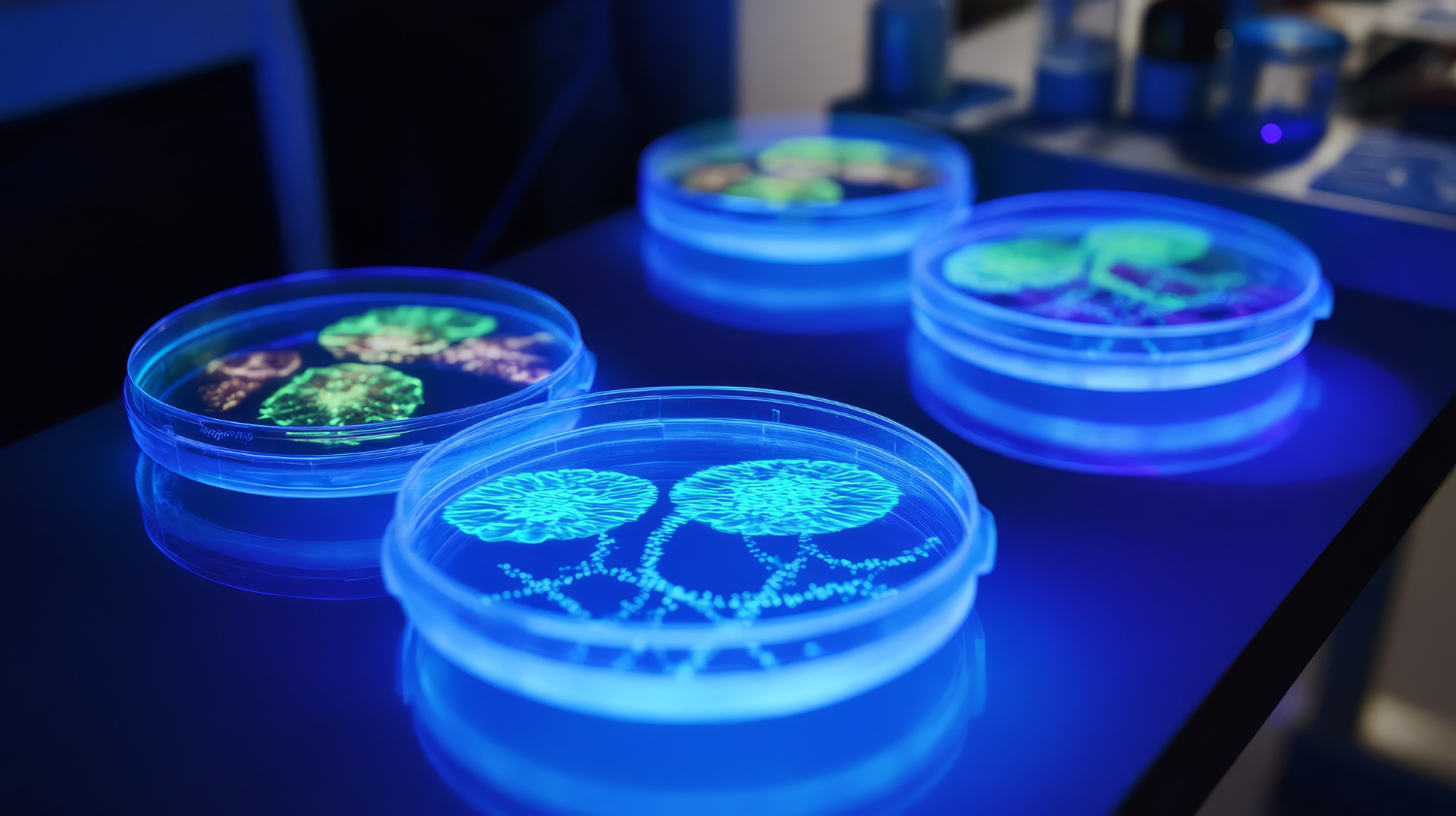
Lab automation — the least glamorous application — proves most reliably useful. Vision systems detect colony growth, classify cell morphology, and flag contamination earlier than a technician scanning plates manually. Robotic schedulers, paired with simple reinforcement-learning policies, keep liquid-handling instruments busier overnight. None of this is novel. All of it works.
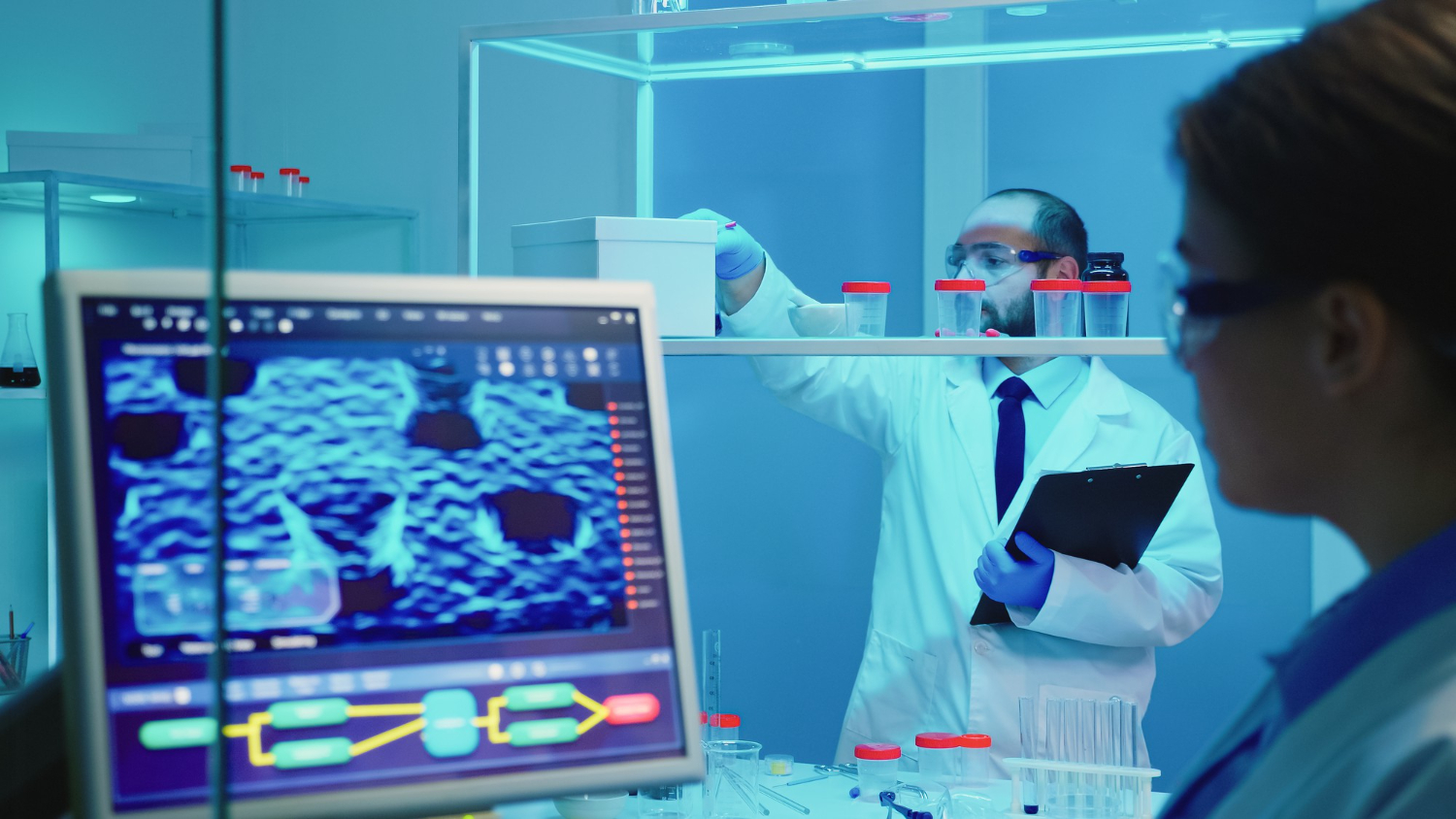
The thing to watch is integration. A vision model running on a workstation next to a microscope is a demo. A vision model running on a TensorRT-optimised inference engine at the edge, writing structured results into an electronic lab notebook (ELN) with traceable provenance, is a deployment. The gap between those two states is where most biotech AI projects stall.
Where on the manufacturing line does AI deliver measurable ROI?
Pharma and biotech operations leaders ask this question, and it has a relatively clean answer. Four manufacturing stages currently host the proven, deployable applications:
- Predictive maintenance on critical equipment. Bioreactors, centrifuges, lyophilisers, HVAC for cleanrooms. AI models trained on vibration, temperature, and process signals predict failures days to weeks in advance. The measurable outcome is reduction in unplanned downtime — a metric every plant manager already tracks.
- Deviation triage in process control. Continuous and semi-continuous processes generate streams of parameters. AI classifies which deviations are nuisance excursions and which warrant investigation, reducing the queue of low-value quality-by-investigation work.
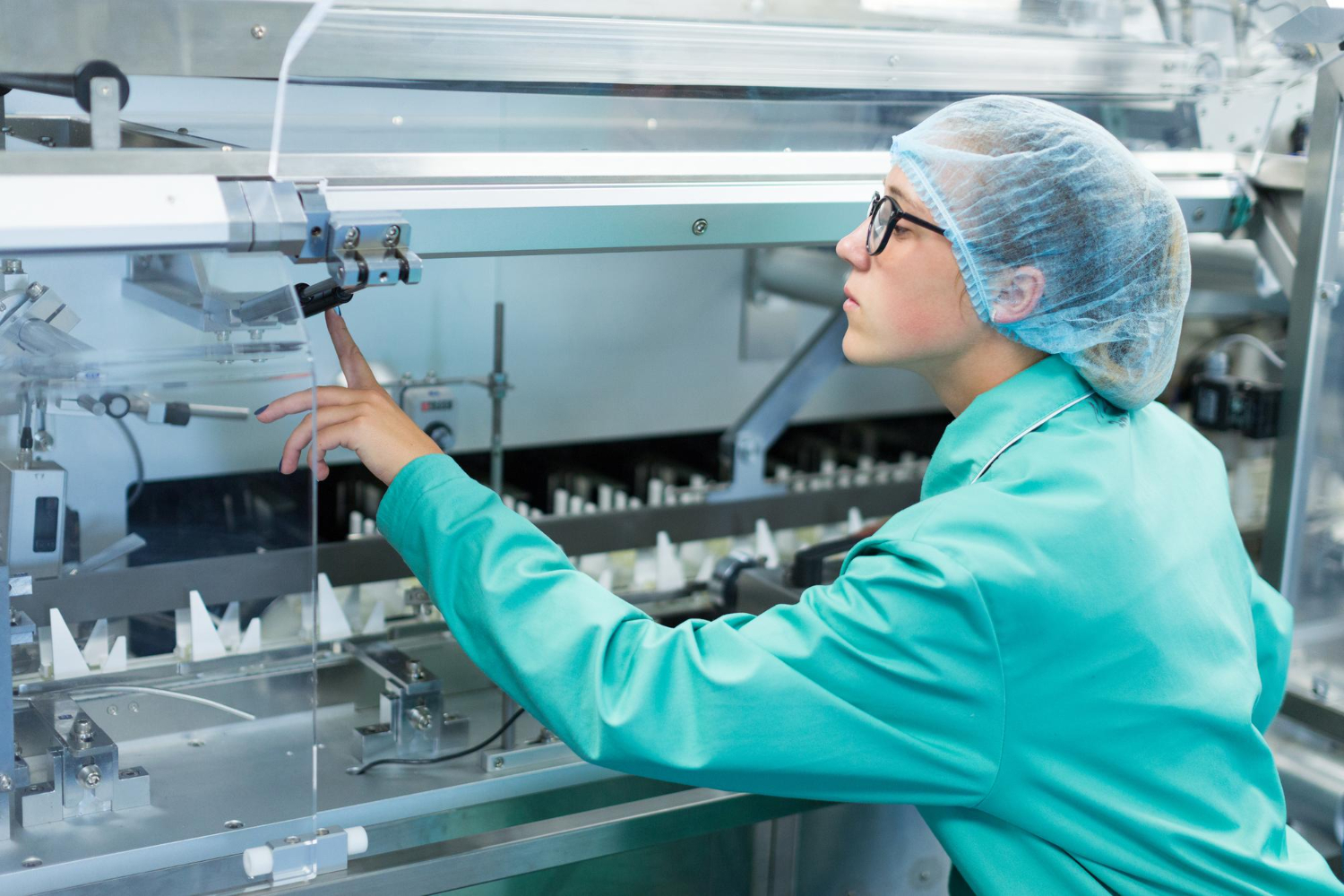
- Vision-based inspection. Vial inspection, blister-pack QA, labelling verification. Deep-learning vision systems now beat rule-based machine vision on subtle defect classes, with TensorRT or ONNX-deployed models running at line speed.
- Batch release support. AI summarises batch records, flags out-of-trend parameters, and accelerates the documentation that gates release. It does not replace QA judgement; it removes the manual scaffolding around it.
These are the applications with clear before/after numbers. Compare that to the still-experimental list — generative design of bioprocess parameters, fully autonomous campaign scheduling, AI-driven CMC submissions — where the technology is plausible but the validation path under GMP is not yet a paved road.
What separates proven from experimental?
Model architecture rarely determines the dividing line. It is the regulatory and validation surface around the model. A proven AI use case is one where:
- The failure mode is well understood and bounded — a missed defect, a delayed maintenance call, a misclassified deviation. The downside is recoverable.
- The model output is advisory or gated by a human or a deterministic check. The AI does not unilaterally release a batch or approve a clinical decision.
- The validation artefact fits into existing GxP frameworks. Computer System Validation, change control, audit trails — these were designed for deterministic software, and pragmatic teams extend them rather than replace them.
Experimental use cases tend to fail one of those three tests. Often it is the third — the technology works, but the validation story is not written yet, and that is what keeps the project off the production floor.
Genomics, social signals, and the edges of the data stack
Two adjacent areas appear in nearly every biotech conversation and are routinely misunderstood.
Genomic AI is real and useful, but its outputs are probabilistic distributions over hypotheses, not diagnostic decisions. Treating a variant-effect predictor as a clinical oracle is a category error. Treating it as a fast hypothesis generator that compresses a researcher’s search space is correct.
Social-listening data — patient-reported outcomes scraped from forums, social platforms, and patient communities — is genuinely useful for early signal detection on tolerability and real-world use patterns. It is not a substitute for pharmacovigilance, and it is not regulatory-grade evidence. Used as a hypothesis generator that feeds a more rigorous study, it earns its place. Used as a primary endpoint, it does not.
A credible 12-month roadmap
A realistic 12-month AI roadmap for a biotech or pharma site usually looks like this:
- Months 0–3: Assess the manufacturing line and the lab. Identify the single use case with the clearest before/after metric and the cleanest validation surface. Usually predictive maintenance on a critical asset or vision-based inspection on a defect class with known false-reject rates.
- Months 3–6: Build the data pipeline before the model. Most biotech AI projects fail at data availability, not modelling. Instrument the asset, store the time-series, version the labels.
- Months 6–9: Train, validate, and run the model in shadow mode alongside the existing control logic. Compare outputs against the current process. No production decisions yet.
- Months 9–12: Move from shadow to advisory, with human-in-the-loop. Document the validation artefact. Plan the next use case from what you learned.
This is unglamorous, and it works. The teams that chase three discovery-grade AI projects in parallel rarely have anything in production at month twelve. The teams that ship one boring, well-validated manufacturing use case usually have a second one queued up by then.
A note on ethics and data discipline
Regulated environments constrain biotech AI for good reasons. Patient data carries consent constraints. Manufacturing data carries integrity requirements. Social-platform data carries terms-of-use and ethical-use questions. Models that look fine on a development laptop need a clear story about provenance, drift monitoring, and rollback before they touch a regulated workflow. We pay close attention to this because the most common reason a credible technical project fails to land is that the governance scaffolding was treated as an afterthought.
How TechnoLynx works on this
We support life-sciences teams at the operationally tractable end: the manufacturing, QA, and lab-automation layer where AI produces measurable outcomes and follows a defensible validation path. Our engagements scope to a specific problem the team already knows is costly, build the data pipeline first, and ship a model that integrates with existing GxP controls rather than fighting them. For biotech research more broadly, the same discipline applies: start where the failure mode is bounded and the metric already exists. That same discipline underpins the rest of our life-sciences AI practice.
FAQ
Which AI use cases in pharmaceutical manufacturing are already proven in production today? Predictive maintenance on critical equipment, deviation triage in process control, vision-based inspection of vials and packaging, and AI-assisted batch-release documentation are all deployed in production today with measurable operational outcomes.
Where on the manufacturing line does AI deliver measurable ROI — inspection, deviation triage, predictive maintenance, batch release? All four host proven applications, but the highest first-deployment ROI usually comes from predictive maintenance on a critical asset or vision-based inspection on a defect class where the current false-reject rate is known and costly.
What separates the proven use cases from the still-experimental ones? The dividing line is whether the failure mode is bounded, the model output is advisory or gated, and the validation artefact fits existing GxP frameworks. Experimental cases usually fail the last test — the technology works, but the validation path is not yet paved.
How are existing pharma AI deployments structured to satisfy GMP and GxP requirements? Deployments treat AI as software under Computer System Validation, with documented training data, versioned models, change control, audit trails, and human-in-the-loop gating for any decision that affects product quality.
Which use cases are pharma companies abandoning, and why? Fully autonomous bioprocess control and generative CMC documentation are the most common retreats — not because the technology fails, but because the validation surface is too large for the current ROI to justify.
What does a credible AI roadmap for a pharma plant look like over the next 12 months? Assess and pick one use case, build the data pipeline before the model, run in shadow mode for a quarter, then move to advisory with human-in-the-loop and document the validation artefact. One shipped use case beats three stalled ones.
References
- Ching, T., et al. (2018). Opportunities in machine learning for biomedical research. Nature, 559, 203–211.
- Lee, C. and Yoon, S. (2021). Applications of AI in biotech. Trends in Biotechnology, 39(3), 204–217.
- Topol, E. (2019). Deep Medicine. Basic Books.
Image credits: Freepik