Introduction
Molecule generation, target identification, and other headline-friendly discovery work dominate how pharma AI is discussed. That coverage is so heavy that it crowds out a less glamorous but more deployable picture: AI inside the R&D-to-manufacturing handoff, where decisions about compounds, trials, batches, and supply chains have to be made daily under cost and compliance pressure.
We work on the manufacturing-adjacent side of that picture. The most useful framing for pharma teams is not “what could AI do for drug discovery in five years” but “which decisions in R&D and the manufacturing line can AI improve this quarter, and which ones need full GxP validation before they move.” The answer is more concrete than the marketing suggests, and the sequencing matters more than the model choice.
Where AI Actually Helps in Pharma R&D
Structured as a sequence of bets, R&D demands testable assumptions at every stage. Scientists pick targets, screen compounds, design preclinical work, then clinical trials, then submit to the United States Food and Drug Administration, the European Medicines Agency, or equivalent. Each bet narrows the funnel. Each bad bet survives further than it should because the data was read late, or because the next stage absorbed the cost before the failure signal was clear.
Three classes of AI applications are now routine enough to be treated as engineering, not research:
- Pattern surfacing in early data. Genomics, proteomics, and imaging pipelines produce more data than any human team can read in time to act. Models running in PyTorch or JAX, often with NVIDIA CUDA acceleration on a managed cluster, compress that reading time from weeks to hours. The output is not a decision — it is a ranked shortlist that a scientist still owns.
- Trial design support. Past trial data, when properly curated, predicts which arms are likely to fail recruitment, which endpoints drift, and which sites underperform. This is observed pattern, not a published benchmark — it depends on how clean the sponsor’s historical data actually is — but it shifts trial design from intuition to evidence.
- Real-time monitoring during execution. Patient response data, adverse event flags, and protocol deviations stream in. AI does not replace the medical monitor; it filters the noise so the monitor sees the signal sooner.
These are the proven cases. They have measurable outcomes — recruitment cycle time, deviation rate, screen-fail rate — and they do not require regulators to bless an autonomous decision. The human stays in the loop. That property is what makes them deployable now.
Where AI Delivers Measurable ROI on the Line
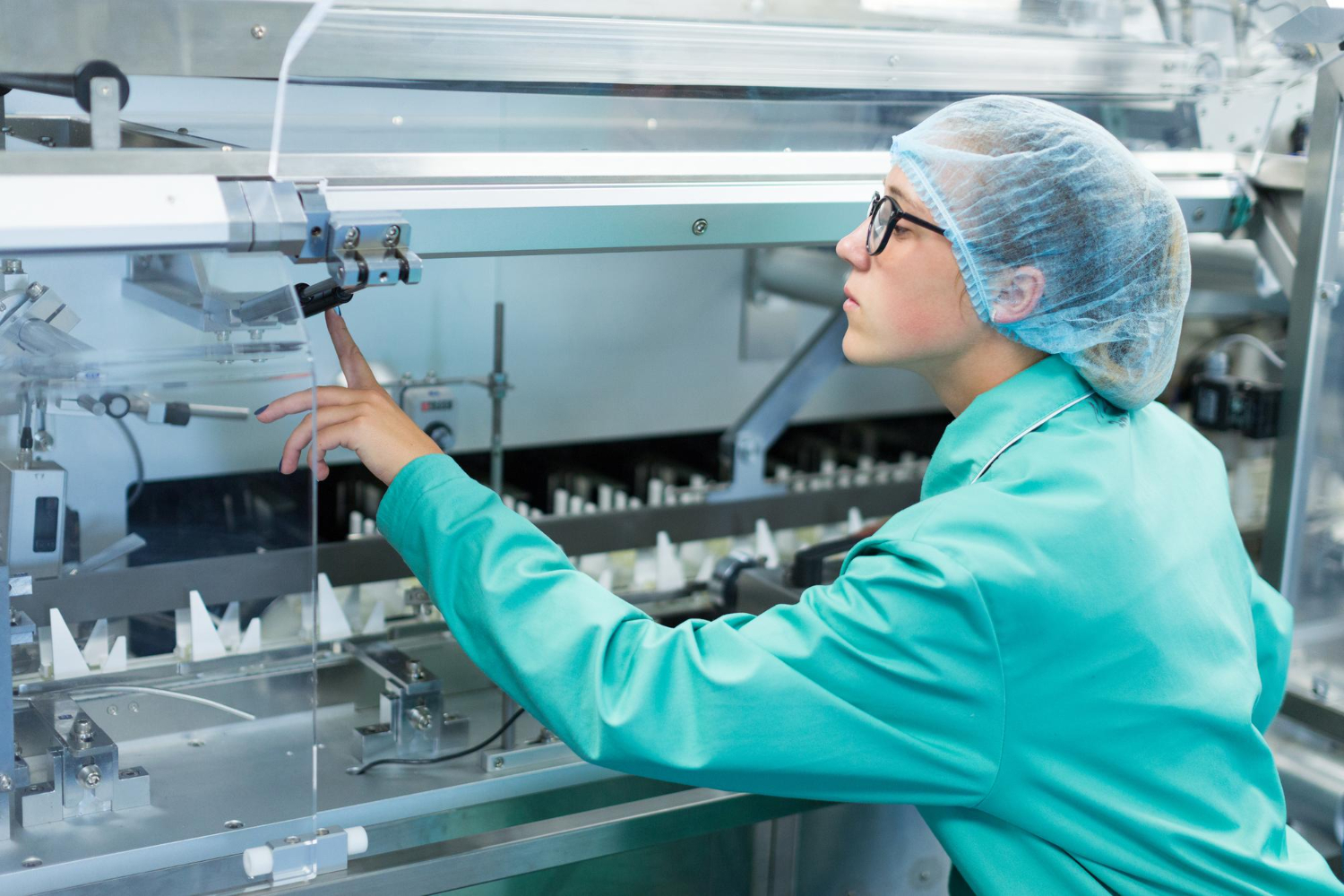
Manufacturing lines present an R&D challenge in slow motion, yet the conversation routinely overlooks this. Process control, predictive maintenance, and quality assurance automation are the manufacturing AI use cases with the clearest ROI today, and they sit inside cGMP-governed environments where the validation cost is real but bounded.
| Application | Target outcome | Primary risk it reduces |
|---|---|---|
| Predictive maintenance on critical equipment | Reduce unplanned downtime on bioreactors, fillers, lyophilisers | Batch loss from equipment failure mid-run |
| In-line process control (PAT-adjacent) | Reduce deviation rates and batch rejections | Out-of-specification (OOS) events |
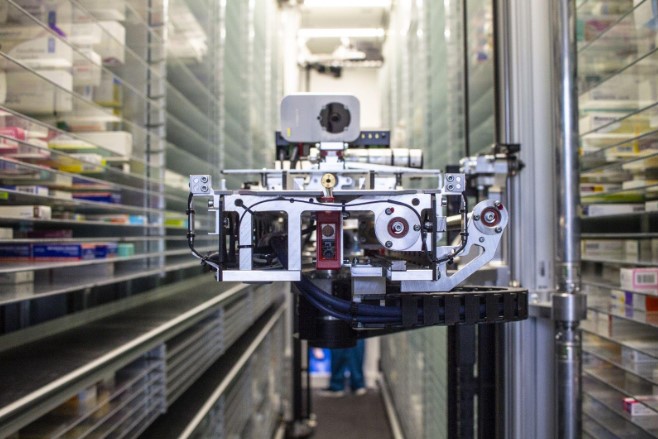
| Vision-based inspection of vials, blisters, labels | Catch cosmetic and integrity defects earlier in the line | Recall risk from defects reaching distribution |
| Deviation triage and root-cause analysis | Shorten investigation cycle time | Investigation backlog blocking batch release |
| Demand forecasting on the supply side | Reduce stockouts and write-offs | Working capital tied up in over-production |
The pattern across these rows is the same: AI sits inside a feedback loop the plant already runs, and it changes the cycle time or the error rate of that loop. It does not introduce a new regulated decision. That is why these applications can move first, while autonomous batch release — the same technology family applied to a regulated decision — still needs validation work, audit-trail discipline, and an explicit position on explainability before it can deploy.
For the broader frame on which use cases are showing real production traction across pharma manufacturing, the hub view in proven AI use cases in pharmaceutical manufacturing treats this as the primary question rather than an aside.
What separates proven from experimental
A use case is proven, in our usage of the word, when three conditions hold. First, the measurable outcome is named in operational terms — downtime hours avoided, deviation rate delta, throughput change — not in macro estimates of “industry value.” Second, the regulatory posture is settled: either the application is non-GxP, or its GxP scope has been analysed and the validation path is known. Third, the integration touches an existing workflow rather than asking the plant to invent a new one.
Use cases that fail any of those conditions are not necessarily wrong; they are early. Autonomous batch release, closed-loop process optimisation that changes setpoints without human sign-off, and generative design of formulations are interesting and increasingly real, but the validation work and the regulator dialogue around them are still active. Teams that confuse “interesting” with “deployable” lose six to twelve months on the wrong project.
Which use cases get abandoned
The use cases pharma teams quietly drop tend to share two traits. They were chosen because they were technically interesting rather than because they prevented the most costly failure on the line. And they assumed the data was cleaner than it was. A predictive maintenance project on a piece of equipment that fails once a year cannot earn its keep regardless of how good the model is. A vision system trained on a sensor that drifts weekly will fail acceptance testing no matter how strong the architecture. The methodology question — which manufacturing stage prevents the most costly failure — is upstream of any model choice.
Working Inside GxP
Whether the system that contains AI can satisfy GxP—not whether AI can perform the task—is the serious question, splitting into validation scope, audit trail, and explainability. Validation scope, audit trails, and explainability determine the answer. Answer that by defining validation boundaries, audit-trail architecture, and explainability standards.
We treat it as three concrete obligations:
- Validation scope. If the AI output influences a
GxPdecision — release, deviation classification, in-process control limit — the system is in scope forCSV(Computer System Validation) under the relevantGAMP 5category. If the output is advisory and a qualified human owns the decision, the scope narrows. The distinction is not cosmetic; it changes the cost of deployment by an order of magnitude. - Audit trail. Every model input, version, and output that affects a regulated decision must be reconstructible years later. This is not solved by logging more; it is solved by treating the model artefact, the input data slice, and the inference output as a single immutable record. MLflow, DVC, and similar tooling get the engineering done; the policy work is harder than the tooling.
- Explainability. For batch-release-adjacent decisions, “the model said so” is not an answer a regulator accepts. SHAP-style or simpler rule-overlay explanations need to be reproducible and stable. Where they are not, the decision stays with the human.
A credible plant AI roadmap over the next twelve months is structured around these obligations. It usually looks like: deploy two non-GxP use cases (often predictive maintenance and a deviation-triage assistant) to build the operating muscle; in parallel, draft the validation package for one GxP-scoped use case (often vision inspection); use the operational data from year one to justify the validation cost in year two. A roadmap that puts a fully autonomous, GxP-scoped use case in the first six months is a roadmap that will slip.
The Decision Discipline This Asks For
In pharma R&D engagements, we keep returning to the same pattern: technology choice is the easy part. PyTorch versus JAX, ONNX export, TensorRT for inference acceleration, Docker images pinned for reproducibility, audit logs in an immutable store — all of that is engineering with known answers. The harder choice is which decision in the pipeline you are willing to let a model influence, and on what evidence.
We see this regularly. A team will arrive with a model that works and an unclear answer to “what decision does this change, and who owns that decision after the model is wrong.” That second question is what separates a demo from a deployment. In our experience across pharma manufacturing engagements, the use cases that survive contact with QA, regulatory affairs, and the operations team are the ones where the decision owner was named on day one and the model’s role in their decision was explicit and bounded.
That is also why the manufacturing-AI conversation is structurally different from the drug-discovery-AI conversation. Drug discovery operates over years; the bet is that a model accelerates a stage in a long pipeline. Manufacturing AI operates over shifts and batches; the bet is that a model tightens a feedback loop that is already running. Both are real. They demand different sequencing, different validation, and different ROI accounting.
Closing
Sceptics underestimate and marketers overstate the proven use cases in pharma R&D and manufacturing. Pattern surfacing in early data, trial design support, real-time monitoring, predictive maintenance, vision inspection, deviation triage, and demand forecasting are deployable now. Autonomous, GxP-scoped decisions are coming, but they need validation work first. A roadmap that respects that ordering ships value in the first quarter and earns the right to attempt the harder cases by the end of the first year.
For teams thinking about where to start, the question worth answering before any model is selected is the methodology question: which stage of your line, today, would prevent the most costly failure if a model tightened its feedback loop by one cycle. The answer is usually not the most technically interesting stage. It is almost always the right one. That same discipline — naming the decision before choosing the model — anchors the rest of our life-sciences AI practice.
FAQ
Which AI use cases in pharmaceutical manufacturing are already proven in production today?
Predictive maintenance on critical equipment, in-line process control adjacent to PAT, vision-based inspection of vials and packaging, deviation triage with root-cause assistance, and demand forecasting on the supply side. Each has a named measurable outcome and a settled regulatory posture.
Where on the manufacturing line does AI deliver measurable ROI — inspection, deviation triage, predictive maintenance, batch release?
Inspection, deviation triage, and predictive maintenance deliver measurable ROI now because they tighten feedback loops the plant already runs. Batch release is in scope for AI support but the autonomous version still requires validation work; today the model is advisory, the qualified person is accountable.
What separates the proven use cases from the still-experimental ones?
Three conditions: the measurable outcome is named in operational terms (not macro estimates), the GxP scope is settled, and the use case integrates with an existing workflow rather than inventing a new one. Anything missing one of the three is early, not wrong.
How are existing pharma AI deployments structured to satisfy GMP and GxP requirements?
By treating validation scope, audit trail, and explainability as three concrete obligations. Advisory systems with a qualified human decision-owner narrow the validation scope. Model artefacts, input data slices, and outputs are stored as immutable linked records. Explanations are reproducible and stable where the decision is regulated.
Which use cases are pharma companies abandoning, and why?
Use cases chosen because they were technically interesting rather than because they prevented the most costly failure, and use cases built on data that turned out to be dirtier or more drift-prone than assumed. Both fail the operational test long before they fail the model test.
What does a credible AI roadmap for a pharma plant look like over the next 12 months?
Two non-GxP use cases deployed early to build operational muscle (typically predictive maintenance and a deviation-triage assistant). One GxP-scoped use case with its validation package drafted in parallel (typically vision inspection). Year-one operational data used to justify year-two validation cost. Anything more aggressive than that tends to slip.
Where AI Pharma R D goes from here
Identifying which failure modes you can tolerate is harder than implementing AI Pharma R D. That answer is workload-specific, and it is worth writing down before you build.