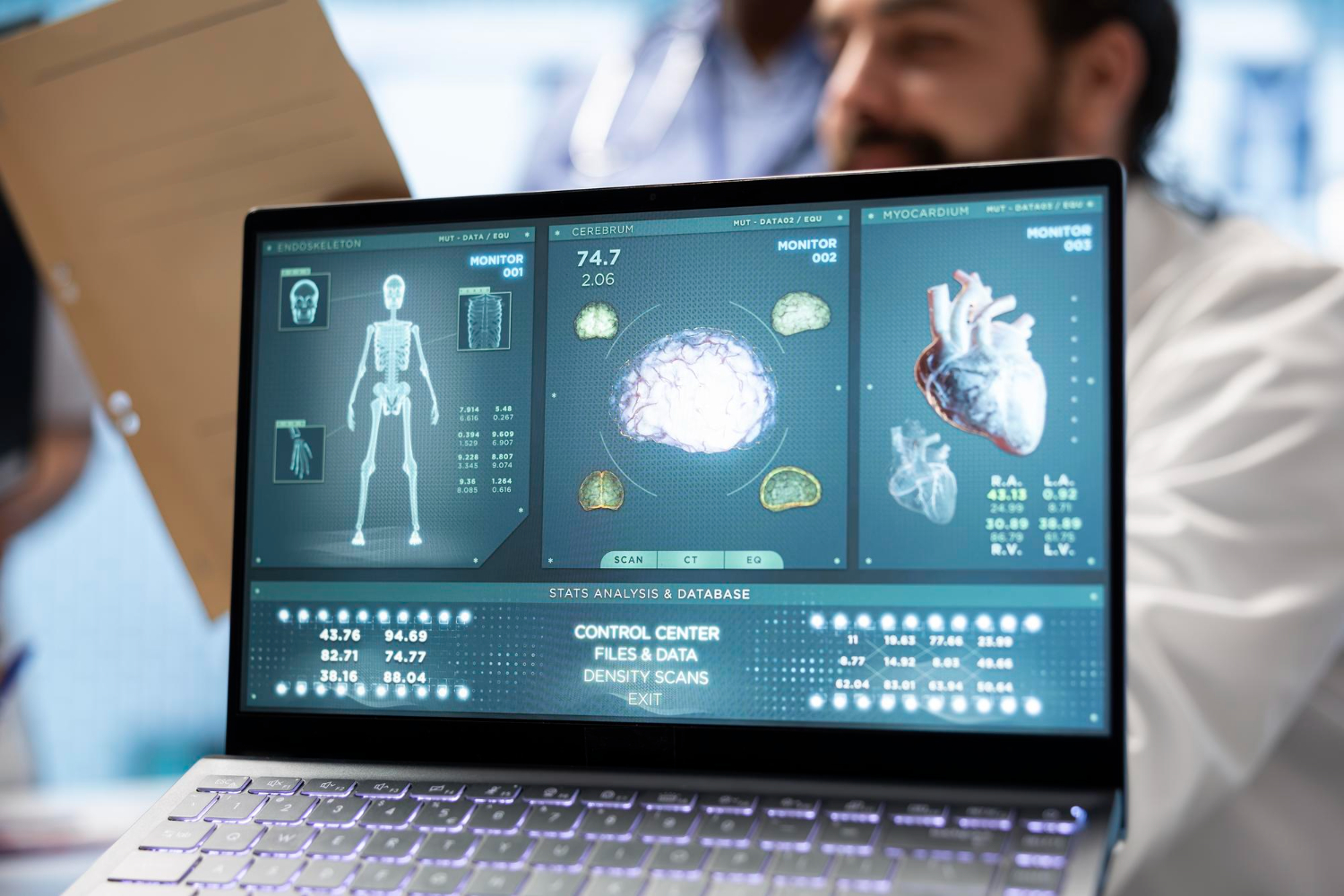
Rare diseases sit at the hardest end of the data-availability spectrum in clinical AI. The defining constraint is structural: roughly 7,000 distinct conditions, each affecting small patient cohorts, each producing too few labelled examples to train a deep network from scratch. Every architecture, training procedure, and validation protocol used in this space has to answer that constraint first. Generic deep learning recipes built on ImageNet-scale datasets do not transfer cleanly. The interesting engineering question is not whether AI helps with rare disease diagnosis — it does — but how the small-data regime reshapes the choices a practitioner has to make.
Why the small-data regime changes everything
Dataset size dominates architecture choice when training models for prevalent conditions. In rare disease cases that order is reversed. A condition that affects a few thousand people globally may have a few hundred imaging studies in any single institution, sometimes fewer. With that little signal, a randomly initialised convolutional network or transformer will memorise noise long before it learns the underlying clinical pattern.
The practical consequence is that almost every credible system in this space leans on one of three strategies: transfer learning from a related common-disease model, multi-task learning that shares representations across several rare conditions, or self-supervised pretraining on large unlabelled medical corpora followed by fine-tuning on the rare cohort. Each strategy has its own failure modes, and choosing between them is the first real design decision.
How do AI models learn from such limited rare disease data?
Production systems overwhelmingly adopt a two-stage architecture. Stage one pretrains a foundation model — often a vision transformer for imaging or a clinical language model for notes — on a broad, abundant dataset. Stage two fine-tunes on the rare cohort with heavy regularisation, augmentation, and early stopping. Frameworks like PyTorch and TensorFlow handle the mechanics, but the discipline is in the validation: a model that scores well on a 40-patient internal split has not been validated in any meaningful clinical sense.
Federated learning has become a serious option here. Hospitals hold genuinely tiny cohorts individually, but pooling them legally is hard because of HIPAA in the United States and GDPR in Europe. Federated training using frameworks such as NVIDIA FLARE or OpenFL lets institutions train a shared model without exporting raw patient data. This is observed-pattern evidence rather than a benchmarked outcome — federation works when participating sites share consistent labelling protocols, and produces poor models when they do not.
Where the diagnostic value actually sits
Rare disease AI tools function primarily as decision support rather than diagnostic replacement. They are narrowing the search space. A neurologist seeing a patient with an unusual movement disorder may need to consider hundreds of possible conditions. A well-trained model can rank the top candidates given symptoms, genetic markers, and imaging findings, reducing the differential to something a human can actually work through.
Three concrete capabilities matter:
- Phenotype matching against curated databases like Orphanet and OMIM, using language models to align free-text clinical notes with structured disease descriptions.
- Variant interpretation in whole-exome and whole-genome sequencing, where tools such as DeepVariant and Exomiser score the pathogenicity of mutations against known disease genes.
- Image-based pattern recognition for conditions with characteristic radiological or facial features, where CNNs trained with transfer learning can match specialist-level recognition on the conditions they have seen.
None of these tools produce a diagnosis on their own. They produce a ranked, evidence-tagged shortlist that a clinician evaluates. That distinction matters for regulatory approval and for liability.
AI in treatment planning and drug repurposing
Diagnosis often proves simpler than the therapeutic challenge that follows. Many rare diseases have no approved therapy. This is where graph neural networks and knowledge-graph methods have started to produce useful candidates by predicting which existing drugs might address the underlying biology of a newly characterised condition. The Every Cure project and similar drug-repurposing initiatives use exactly this approach: model the relationship between drugs, targets, pathways, and diseases as a graph and ask the model to propose unexpected links.
For conditions where therapy exists but dosing is tricky — many metabolic and genetic disorders fall here — reinforcement-learning approaches to personalised dosing have shown promise in research settings. They are not yet standard of care, and the validation requirements are substantial.
What does clinical validation look like for rare disease AI?
Deployment readiness hinges on this distinction more than any other factor. Standard FDA and EMA pathways assume you can run a prospective trial with statistical power. For a condition affecting 200 patients globally, that assumption breaks. Regulators have started to accept synthetic control arms, external validation against historical cohorts, and real-world evidence collected post-deployment under controlled conditions.
A pragmatic validation protocol for a rare disease model looks something like this:
| Stage | What gets tested | Acceptable evidence |
|---|---|---|
| Internal validation | Model performance on held-out cohort | Cross-validation on every available split |
| External validation | Generalisation to other institutions | Federated or multi-site evaluation |
| Clinical utility | Does the model change decisions? | Prospective observational study |
| Post-market surveillance | Drift, edge cases, harm | Continuous monitoring with human review |
Skipping the third stage is the most common mistake. A model that achieves high AUROC on retrospective data but does not change a clinician’s decisions has not earned its place in the workflow.
The remaining hard problems
Every credible deployment conversation circles back to three persistent technical challenges.
Bias is structural, not incidental. Rare disease datasets skew toward patients who reached specialist centres, which skews toward wealthier countries and well-connected health systems. A model trained on those cohorts may underperform badly on patients who present through community clinics. There is no clean fix; the mitigation is explicit reporting of training-cohort demographics and conservative claims about generalisation.
Explainability is a clinical requirement, not a nice-to-have. Clinicians treating a rare condition need to understand why a model has suggested a particular diagnosis or therapy, because the cost of acting on a wrong recommendation can be severe. Attention maps, SHAP values, and counterfactual explanations help, but none of them produce a clean causal story. The honest position is that current explainability methods describe model behaviour, not biological mechanism.
Sustainability matters because rare disease AI is not commercially attractive on its own. The patient populations are too small to support the same business models as oncology or cardiology AI. Most of the credible work in this space depends on academic partnerships, patient advocacy groups, and platforms shared across many conditions rather than per-disease products.
How TechnoLynx works on this
We build pipelines designed for small cohorts, apply regularisation appropriate to foundation model fine-tuning, and maintain validation infrastructure that meets regulatory evidentiary standards. We have built deep-learning pipelines in PyTorch and JAX, integrated federated training stacks, and developed clinical NLP systems on top of models like BioBERT and Clinical-T5. The hardest part of these projects is rarely the model — it is the data plumbing, the consent architecture, and the validation protocol that determine whether the system earns clinical trust. That plumbing-and-validation focus is the throughline of our broader life-sciences AI practice.
Frequently Asked Questions
How does AI help diagnose rare diseases when training data is so limited?
The dominant pattern is transfer learning from foundation models pretrained on large medical corpora, followed by careful fine-tuning on the small rare-disease cohort. Self-supervised pretraining, multi-task learning across related conditions, and federated training across institutions are the three techniques that consistently move the needle. None of them eliminate the small-data problem; they make it tractable.
Can AI actually replace a specialist for rare disease diagnosis?
No, and most credible systems do not try. The realistic role is narrowing a differential diagnosis from hundreds of candidate conditions to a ranked shortlist the clinician can evaluate. The clinician still makes the diagnosis, orders confirmatory tests, and bears the responsibility. Models that frame themselves as replacing specialist judgment tend not to pass validation and rarely earn clinical trust.
What regulatory standards apply to AI tools used in rare disease care?
The FDA in the United States and EMA in Europe both have software-as-a-medical-device frameworks that apply, but standard prospective trials are usually impossible for small patient populations. Regulators have been accepting external validation against historical cohorts, synthetic control arms, and structured real-world evidence collection. Post-market surveillance is non-negotiable — drift monitoring and continuous human review are expected.
What are the biggest risks of using AI in rare disease treatment?
Three matter most. Bias in training cohorts toward specialist-centre populations limits generalisation to underserved patients. Explainability methods describe model behaviour but do not guarantee biological correctness, so acting on AI recommendations without clinical reasoning is dangerous. And privacy obligations under HIPAA and GDPR are strict — federated approaches and proper consent architectures are necessary rather than optional.
When AI Rare Disease Diagnosis is worth it
Frame rare disease AI as an engineering challenge with quantifiable success metrics rather than a strategic positioning exercise. The teams that do tend to ship the boring, correct version first.