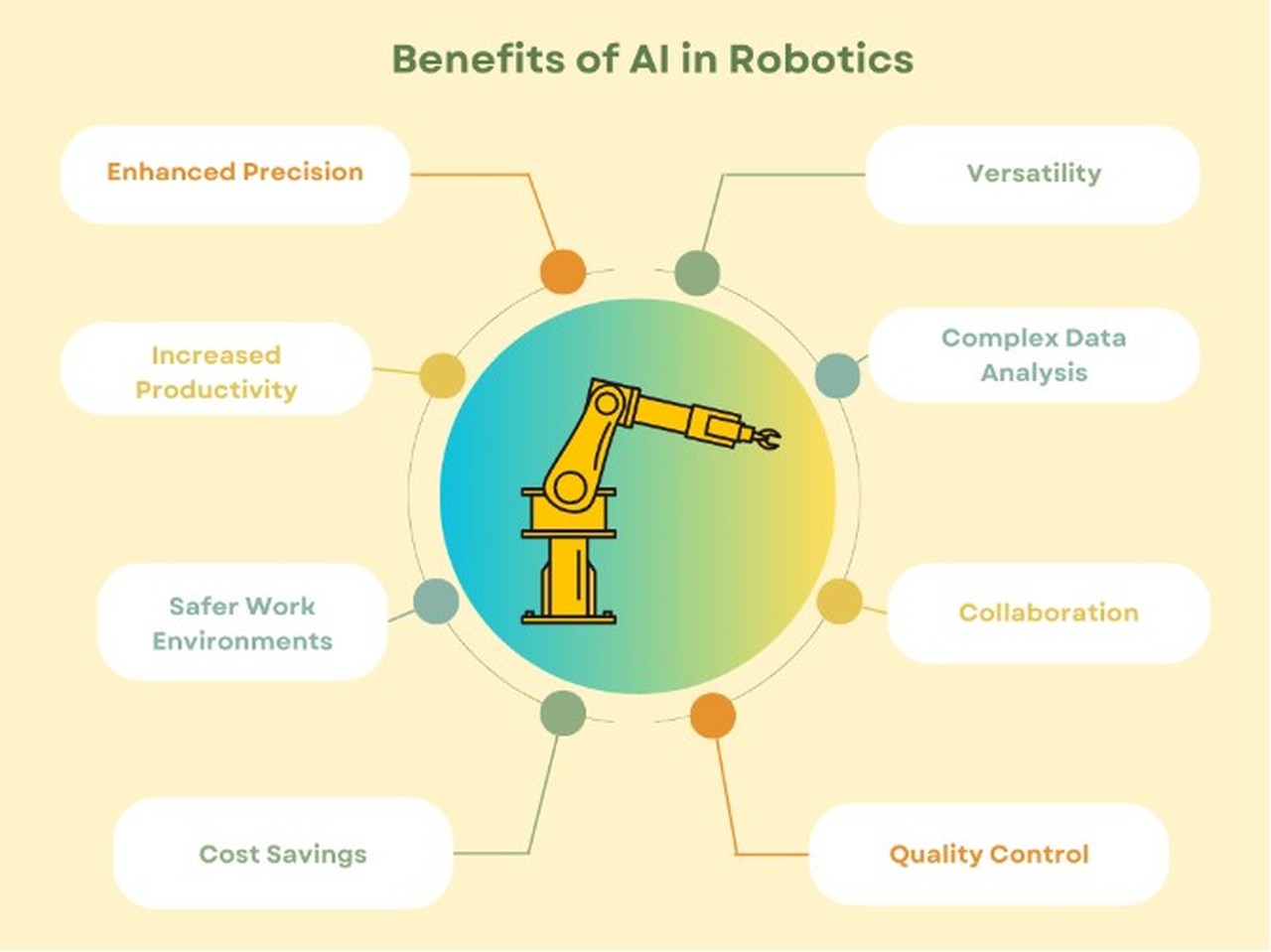
What “AI in robotics” actually means in 2026
Generative AI in robotics now centers on LLM-driven planning and multi-modal embodied agents: systems that parse natural-language instructions, decompose them into executable steps, and act in the real world. The deployable subset of that story today is narrower than the demos suggest: it is LLM-as-planner over a constrained, vetted skill library, not free-form general embodied AI. The planner picks from a finite set of pre-validated motion primitives, perception routines, and grasp strategies; the LLM contributes flexible task decomposition and a natural-language interface, while the underlying skills are still classically engineered and tested.
Teams that ship this configuration close real automation gaps in pick-and-place, inspection, and guided manipulation. Teams that pursue free-form embodied agents stall at integration with the physical world — the simulation-to-reality gap, the safety-certification boundary, and the cost of recovering from a single mistake on hardware. We have seen this split play out across enough robotics-plus-LLM conversations that we now treat the distinction as the first design question, not a footnote.
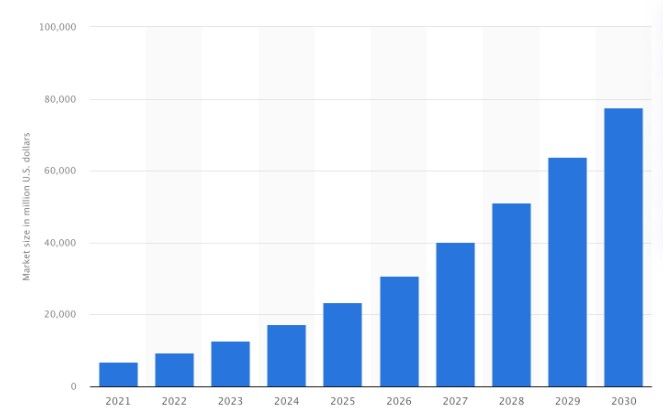
The deployable subset is also where the public benchmarks live. Google DeepMind’s RT-2 and Gemini Robotics, and the broader vision-language-action (VLA) line of work, ship measurable capability in bounded manipulation tasks under structured supervision — not in the open-ended household-robot framing that dominates the press cycle. The gap between the two is the gap this article is about.
What is the difference between embodied AI and AI in robotics as an engineering practice?
These terms blur together in vendor pitches, yet the implementation work diverges sharply.
AI in robotics is the broader, older discipline. It covers perception (computer vision, sensor fusion), planning (motion planning, trajectory optimisation), control (RL, MPC, classical control), and the integration of all three into a robot that performs a task. The AI components are tools inside a robotics system that is still designed around explicit safety envelopes, named primitives, and certified subsystems.
Embodied AI is a research framing. It treats the agent — usually an LLM or a VLA model — as the primary locus of intelligence, with the robot body as one I/O channel among several. The ambition is that a single learned policy generalises across tasks, environments, and embodiments. That ambition is real and is producing publishable results, but it is not yet the basis of a production deployment in any safety-relevant setting we have seen.
A practical way to read a robotics product: if the team can name the skill primitives the system is allowed to invoke, you are looking at AI in robotics. If the team gestures at “the agent figures it out”, you are looking at an embodied AI research demo, and the deployment risk is correspondingly higher.
Can LLMs actually handle robotic AI tasks at production reliability?
High-level task decomposition proves viable when you pair it with a curated skill library and reserve human judgment for unfamiliar scenarios—caveats included. Yes, under specific conditions. Yes, but only under specific constraints. Production deployments of this kind are running in warehouse picking, lab automation, and guided assembly. The LLM converts a goal into a sequence of skill calls; the skills themselves are deterministic and tested; the human approves novel sequences.
For closed-loop motion control: no. LLM inference latency (typically 100s of ms to a few seconds for a non-trivial plan, even with optimised serving) is incompatible with the tens of milliseconds a control loop needs. The architectural fix is clear: LLM at the planning layer, classical or RL control at the actuation layer, and a clear protocol between them. This separation is non-negotiable and is the load-bearing design decision in every working robotics-plus-LLM system we have looked at closely.
For safety-critical recovery: not yet. When something unexpected happens — an object slips, a sensor degrades, a person enters the workspace — the system should not be reasoning its way out through an LLM. It should be hitting a deterministic safe state and surfacing the situation to a human. This is the second non-negotiable.
Boundary conditions for a serious deployment
| Dimension | Where LLM planning belongs | Where it does not |
|---|---|---|
| Latency | High-level task decomposition (seconds tolerable) | Inside control loop (ms-scale) |
| Determinism | Plan generation with human review for novel plans | Safety-critical motion execution |
| Skill scope | Choosing from a vetted skill library | Inventing new motion primitives at runtime |
| Failure handling | Flagging low-confidence states to a human | Autonomous recovery from physical anomalies |
| Coverage | Workflows with bounded variability | Open-world general-purpose manipulation |
The table is the structural answer to “is robotics-plus-LLM real”. The deployable subset is the left column. The free-form embodied-agent narrative lives in the right column, and that is where projects stall.
How are LLM planners integrated with low-level robot control without breaking safety?
Making this integration work hinges on three architectural decisions.
A layered architecture with a hard interface. The LLM emits a structured plan — a sequence of skill calls with parameters — into a queue. A deterministic executor picks plan items off the queue, validates them against the skill library’s preconditions, and dispatches them to the control stack. The LLM never speaks to actuators directly. The interface is typically a JSON or protobuf schema with a fixed vocabulary; the LLM is constrained to that vocabulary via grammar-constrained decoding or by validation-then-reject loops.
A pre-validated skill library. Each skill — pick(object_id), place(target_pose), inspect(region), move_to(waypoint) — is classically engineered, individually tested, and individually safety-reviewed. The library is curated per robot platform and per workcell; it is not a generic capability the LLM brings with it. This is the single largest hidden cost of robotics-plus-LLM systems and the one most often understated in early estimates.
A novel-situation arbitration path. When the LLM’s confidence in a plan drops below a threshold, or when the executor rejects a plan, the system routes to a human operator rather than retrying autonomously. The human-in-the-loop role does not disappear with LLM planning — it shifts from continuous teleoperation to exception handling. This is a productivity multiplier, not an admission of failure.
For the perception layer feeding the planner, the typical stack is CUDA-accelerated inference of a CV backbone (often ONNX-exported, served via TensorRT) producing scene graphs the LLM can read; for the control layer, ROS 2 with real-time-tuned nodes remains the workhorse. PyTorch handles the training side; nothing in the runtime path runs through a non-deterministic component above the planner.
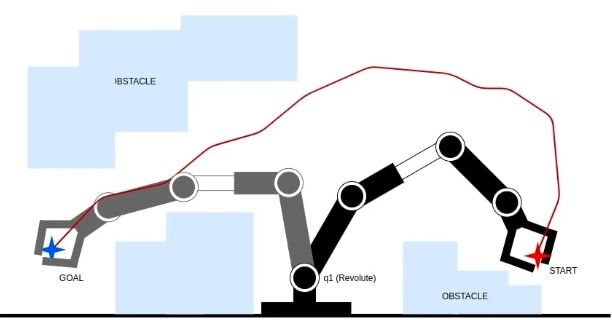
Where do large language models for robotics ship measurable capability?
Surviving real workcell conditions requires adherence to three battle-tested deployment patterns.
Pick-and-place with variable inventory. Warehouse and lab settings where the set of objects is open but the action set is closed. The LLM interprets “pack one of each item from the staging tray into kit B” against a known inventory taxonomy; the skills are conventional pick-and-place primitives. The value is in the natural-language interface and the flexible re-tasking, not in any new physical capability.
Visual inspection with natural-language defect descriptions. A maintainer can say “flag anything that looks like the cracks we saw last week”, and the system grounds that against retrieval over a defect-image database plus a VLA classifier. The robot’s motion is a fixed inspection routine; the LLM handles the description-to-class mapping that previously required a custom-trained classifier per defect type.
Guided manipulation under teleoperation supervision. The LLM proposes the next step; a human approves or edits; the robot executes. This is the pattern that bridges to autonomy gradually — the audit trail of approved-vs-edited plans is also the training signal for tightening the autonomy loop later.
What does not yet ship reliably: general household manipulation, unstructured outdoor navigation with manipulation, and any task that requires inferring new physical strategies at runtime. The demos are real; the deployments are not.
How does an embodied-AI architecture compose perception, planning, and control?
The system is layered, each tier cycling at a distinct cadence.
- Perception (CV) runs continuously, at sensor rate. Object detection, pose estimation, scene segmentation. The output is a structured scene representation the planner can read. This layer is dominated by CNN and transformer backbones, GPU-accelerated, with strict latency budgets.
- Planning (LLM or symbolic planner) runs episodically, triggered by a goal or by a perception event. It produces a sequence of skill calls. This is where the LLM contributes, and where the seconds-scale latency lives.
- Control (RL/MPC/classical) runs continuously at the actuation rate of the platform — milliseconds. It executes the current skill against the live sensor stream. This layer never calls back up to the LLM.
The composition only works when each layer’s failure modes are contained. Perception failures should degrade the planner’s confidence (and trigger arbitration), not corrupt the plan. Planner failures should be caught by the executor’s validation step. Control failures should trigger the safety stop, not a re-plan request.
We covered the perception side of this architecture from the computer-vision angle in how generative AI and robotics collaborate for innovation, and the longer-horizon agent question in would AGI make its own body. The current article is the practical middle: what ships, what does not, and what the integration costs look like.
What are the leading failure modes in LLM-for-robotics deployments?
Plan for three patterns that emerge consistently in practice.
Skill-library under-investment. Teams budget for the LLM integration and underestimate the per-platform cost of curating, testing, and maintaining the skill library. The library is the load-bearing component; the LLM is the interface. Projects that invert this priority ship demos and stall on deployment.
Latency leakage into the control path. A subtle architectural drift where the LLM is “just consulted” for a control decision, then “just briefly”, then becomes a soft dependency of the control loop. Once the control loop’s worst-case latency depends on LLM serving, the safety story is broken. The fix is architectural enforcement, not discipline.
Over-reliance on autonomous recovery. The system tries to reason its way out of a novel situation instead of arbitrating to a human. This produces dramatic failures — a robot confidently doing the wrong thing — that erode operator trust faster than honest exception requests ever would.
The practical posture for a robotics-plus-LLM integration today is to scope tightly to a workflow with bounded variability, ship the LLM-planner-over-vetted-skills configuration with a human-in-the-loop for novel situations, and treat skill-library expansion as a continuous engineering investment. That posture automates measurable workflows now while leaving the architecture open to widen the skill library — and to lean further on the planner — as the agent layer matures. It is also the posture we recommend coming out of a generative-AI feasibility audit for any robotics-adjacent client.
FAQ
Can LLMs actually handle robotic AI tasks (planning, reasoning) at production reliability?
For high-level task decomposition over a vetted skill library, with a human-in-the-loop for novel situations: yes, in production today. For closed-loop control or autonomous recovery from physical anomalies: not yet. The architectural commitment that makes the first case work is a hard interface between the LLM planner and a deterministic executor that validates every plan item against the skill library before dispatch.
What is the difference between embodied AI and AI in robotics as an engineering practice?
AI in robotics is the broader discipline — perception, planning, control integrated around explicit safety envelopes and named primitives, with AI components as tools inside that system. Embodied AI is a research framing where a single learned agent is the primary locus of intelligence and the robot body is one I/O channel. Production deployments today are AI-in-robotics systems; embodied-AI systems are mostly research demos.
How are LLM planners integrated with low-level robot control loops without breaking safety?
Three commitments: a layered architecture with a hard interface (the LLM emits structured plans into a validated queue, never speaks to actuators); a pre-validated skill library curated per robot platform; and a novel-situation arbitration path that routes low-confidence states to a human operator rather than retrying autonomously.
Where do large language models for robotics (Gemini Robotics, RT-2) ship measurable capability?
In bounded manipulation tasks under structured supervision: pick-and-place with variable inventory, visual inspection with natural-language defect descriptions, and guided manipulation under teleoperation supervision. The natural-language interface and flexible re-tasking are the deployed value; new physical capability is not.
What are the leading opportunities and the leading failure modes in LLM-for-robotics deployments?
Opportunities: warehouse and lab automation with variable task mixes, inspection workflows that previously needed bespoke classifiers, and assisted-autonomy patterns that produce training data for future tightening. Failure modes: under-investing in the skill library, allowing LLM latency to leak into the control path, and over-relying on autonomous recovery instead of human arbitration.
How does an embodied-AI architecture compose perception (CV), planning (LLM), and control (RL/MPC)?
Hierarchically and at different timescales. Perception runs continuously at sensor rate, producing structured scene representations. Planning runs episodically and produces skill-call sequences. Control runs continuously at actuation rate and never calls back up to the LLM. The composition only works when each layer’s failure modes are contained at that layer.
Why This Matters Now
LLM-powered robots have graduated from lab demonstrations to field-ready platforms, redefining the terms of the discussion. The interesting question is how fast the skill library grows relative to the planner’s appetite, and whether the safety-certification path keeps up. Both are engineering investments, not research questions, and both are where serious robotics-plus-LLM work happens for the next several years.