What image recognition actually is
Teaching machines to parse digital images—identifying objects, faces, text, or defects—forms the technical foundation of image recognition. The textbook definition stops there. The production reality does not.
A working image recognition system is rarely one model. It is a pipeline: input handling, preprocessing, a feature extractor (typically a convolutional or transformer backbone), one or more task heads (classification, detection, segmentation), a post-processing layer that turns raw scores into decisions, and a monitoring loop that catches drift before it becomes a customer-visible failure. Each stage has its own failure mode, and treating the whole thing as a single black box is the most common reason image recognition projects underdeliver.
This article walks the pipeline at the level a buyer or engineer needs to ask the right questions. It is a sibling explainer to our deeper walkthrough of the facial recognition pipeline — facial recognition is one specialisation of image recognition, and the four-stage breakdown there (detect → align → embed → match) is one concrete instance of the general pattern below.
How does image recognition differ from image classification and object detection?
Interchangeable use of image recognition, computer vision, and machine vision in marketing materials creates the majority of project mis-scopes. The distinction is structural, not semantic.
| Task | What the model outputs | Typical use |
|---|---|---|
| Image classification | One (or several) labels per whole image | Tagging, content moderation, coarse triage |
| Object detection | Labels plus bounding box coordinates per detected instance | Inventory scans, traffic-sign reading, retail-shelf audits |
| Image segmentation | A label per pixel (or per pixel-group) | Medical imaging, autonomous driving, defect localisation |
| Recognition (in the strict sense) | Identity, not just category — “this specific face / product / part” | Facial recognition, brand-asset search, part-number lookup |
In production conversations the word “recognition” is used loosely to cover all four; in research papers and procurement contracts the distinction matters. If a vendor says “our model does image recognition”, the right next question is which row of that table are you actually buying? That single question filters out a surprising number of mismatched proposals.
Key algorithms, and which ones still earn their keep
Hand-coded feature descriptors gave way to convolutional architectures, then to attention mechanisms and transformers. Hand-crafted descriptors like SIFT and HOG, paired with classifiers such as support vector machines, dominated the 2000s. They are mostly obsolete for general recognition today, though SIFT-style keypoints still show up in narrow problems — visual SLAM, document matching, image stitching — where the geometry of the descriptors is the actual asset.
The dominant family from 2012 onward has been convolutional neural networks (CNNs). A CNN stacks convolutional layers that extract local patterns (edges, textures, shapes), pooling layers that reduce spatial dimension while preserving signal, and fully-connected or task-specific heads at the top. The classical lineage runs AlexNet → VGG → ResNet → EfficientNet → ConvNeXt. ResNet’s residual connections in particular made very deep networks trainable without vanishing-gradient collapse, and they remain a sensible default backbone for many tasks.
The newer family is vision transformers (ViT and its descendants — DINOv2, SigLIP, EVA-02). They replace convolutions with self-attention over image patches and, given enough pretraining data, generally match or beat convolutional backbones on the standard benchmarks. For most production teams in 2026 the practical choice is one of three:
- A modern convolutional backbone (ConvNeXt-V2, EfficientNetV2) when latency and small batch sizes matter and the deployment target is constrained hardware.
- A pretrained ViT or DINOv2 backbone when transfer learning from a large self-supervised model is more valuable than raw FLOPs.
- A CLIP-style or SigLIP embedding model when the task is open-vocabulary or retrieval-shaped (search by example, zero-shot tagging, large catalogues).
Eigenfaces and other linear-subspace methods from the 1990s are of historical interest only — they survive in lectures, not in shipped systems. Modern facial recognition, covered in detail in our pipeline walkthrough, uses deep embeddings from a ConvNet or transformer backbone trained with metric-learning objectives such as ArcFace or CosFace.
A pattern observed across our engineering engagements: the gain from switching backbones (CNN to ViT, say) is usually smaller than the gain from cleaning the training set and rethinking the evaluation protocol. This is an observed-pattern across our engagements, not a published benchmark — but it is consistent enough to govern where we put effort first.
Training data: less than you think, more carefully than you think
Pre-trained models and few-shot learning have collapsed the data requirements that once demanded five-figure sample counts per category. With a pretrained vision transformer or CLIP-style backbone, the practical floors have dropped substantially:
- A few hundred labelled examples per class, combined with linear-probe or LoRA fine-tuning, often gets to usable accuracy for narrow domains.
- A few thousand per class hits production quality for most general-purpose tasks.
- For very long-tail classes, embedding-and-retrieval architectures sidestep the per-class data requirement entirely — you only need a few reference images at inference time, not at training time.
The numbers above are practitioner observed-patterns, not benchmark guarantees; the right floor for your task depends on intra-class variance, deployment lighting and camera conditions, and the cost of a misidentification.
What has not changed is that data quality dominates data quantity. Label noise, class imbalance, and dataset shift between training and deployment environments are still the three failure modes that quietly degrade production accuracy. A model trained on lab-quality images and deployed on real-world video almost always disappoints — not because the model is weak, but because the input distribution is different. The mitigation is targeted data collection from the actual deployment environment, not a bigger backbone.
What is the recognition pipeline, end to end?
Each of the six stages in an image recognition pipeline exhibits different sensitivity to data quality, latency, and resource constraints.
- Input handling. Image decoding, colour-space normalisation, resolution clamping. Failures here look like silent EXIF rotation errors, channel-order bugs, or unexpected HDR images that wreck downstream normalisation.
- Preprocessing. Resize, crop, normalise, sometimes detect-and-align (the canonical example being face alignment before embedding). Failures here look like out-of-distribution geometry that the model was never trained to handle.
- Feature extraction. The backbone — CNN or transformer — produces a dense representation of the image. Failures here are usually pretraining-domain mismatch (a model pretrained on natural images applied to X-rays without domain-adaptive fine-tuning).
- Task head. Classification, detection, segmentation, or embedding output. Failures here are usually class-imbalance artefacts or a head that was undertrained relative to a frozen backbone.
- Post-processing. Non-maximum suppression for detection, threshold selection for classification, gallery matching for identification. Failures here look like good model behaviour wrecked by a badly chosen operating threshold.
- Monitoring and retraining loop. Drift detection, low-confidence routing, periodic re-labelling. Failures here are operational rather than algorithmic — and they are the failures that take down systems that worked fine for six months.
The reason facial recognition projects fail more visibly than other image recognition projects is not that the algorithms are different. It is that the matching stage (step 4 plus step 5) is exposed to legal and ethical scrutiny that, say, a shelf-inventory system never sees.
Where image recognition is genuinely useful
While use cases proliferate, they reduce to a finite set of architectural templates with known performance envelopes.
- Identity matching — facial recognition for device unlock, access control, and (controversially) surveillance. The structural pattern is detect → align → embed → compare against a gallery.
- Anomaly localisation — medical imaging (CT, MRI, X-ray) where the model flags candidate regions for a human radiologist to confirm. The structural pattern is segmentation or detection plus a confidence threshold tuned for sensitivity over precision.
- Object detection in motion — autonomous vehicles, traffic monitoring, sports analytics. The structural pattern is detection plus tracking plus motion prediction, often fused with non-visual sensors (lidar, radar) for redundancy.
- Catalogue search — retail visual search, brand-asset retrieval, parts identification. The structural pattern is embedding-and-retrieval against a large gallery, with the embedding model doing the heavy lifting.
- Document and text recognition (OCR) — turning printed or handwritten text in images into machine-readable strings. The structural pattern is detection of text regions plus a sequence model that decodes them.
- Inventory and shelf audits — retail loss prevention, warehouse stock counts. The structural pattern is detection plus class counting, usually with a human review path for low-confidence frames.
What unifies all six is that the recognition model is never the entire product. It is one component in an application that also handles input plumbing, business rules, audit logging, and a fallback path for when the model is uncertain. We cover the operational side of this for the retail case in the unknown-object loop and the logistics case in optimising logistics with computer vision.
What goes wrong in production
When image recognition systems break, they tend to break in predictable, diagnosable ways. The list below is the observed-pattern across our engagements, ordered roughly by how often it shows up rather than by severity.
- Distribution shift. Lab data does not match deployment data. Lighting, camera model, image compression, and capture angle all drift.
- Long-tail classes. The model is fine on the common classes and quietly terrible on the rare ones, which are often the ones that matter most.
- Operating-threshold drift. A threshold tuned at evaluation time slowly stops being optimal as the input distribution shifts, and nobody re-tunes it.
- Adversarial or degraded inputs. Low resolution, occlusion, motion blur, intentionally adversarial patterns. The mitigation is robust pretraining plus a human-in-the-loop path for low-confidence predictions.
- Bias from skewed training data. Facial recognition is the most-discussed instance, but it shows up wherever the training distribution under-represents real-world variation. Mitigation is targeted data collection plus disaggregated evaluation by subgroup, not a bigger model.
- Latency surprises at the integration layer. The model runs fast on a benchmark and slow in the application because input plumbing, batching, and post-processing were not measured end-to-end.
The mitigation pattern is the same across most of these: measure end-to-end in the deployment environment, not just the model on a benchmark. Sustained throughput under realistic load and operating-threshold behaviour under realistic input distribution are the operationally relevant measures.
How does deployment differ across cloud, on-device, and edge?
Hardware platform selection—whether server GPU, edge accelerator, or mobile SoC—dictates preprocessing, model architecture, and post-processing strategy.
| Target | Typical model | Latency budget | Operational concerns |
|---|---|---|---|
| Cloud API | Large transformer or ensemble | 100–500 ms per image | Throughput, cost per image, data-residency rules |
| Server-side GPU | Mid-size CNN or ViT | 10–50 ms per image | Batch size tuning, GPU utilisation, queue depth |
| On-device (mobile) | Quantised mobile-class network | 30–100 ms per frame | Memory footprint, thermal throttling, battery |
| Edge accelerator | Pruned / distilled model | 5–30 ms per frame | Power envelope, model update mechanism, offline failure |
The trade-off table above is descriptive, not prescriptive — every column has caveats — but it captures the structural shape of the decision. A model designed for a cloud API is rarely the right model for an edge accelerator, even after quantisation, because the input plumbing and failure handling around it are different.
Where this engineering thread continues
Segmentation, object detection, facial recognition, and visual search are specializations; image recognition is the unifying discipline. The four-stage facial recognition pipeline — detect, align, embed, match — is the most-discussed instance and the one with the most legal exposure. We walk it end-to-end in our facial recognition explainer, including which embedding models earn their keep in 2026 and which questions to ask a vendor before signing.
For broader programme context across our engagements, see our Computer Vision R&D practice.
Frequently asked questions
How does the facial recognition pipeline decompose — detection, alignment, embedding, matching?
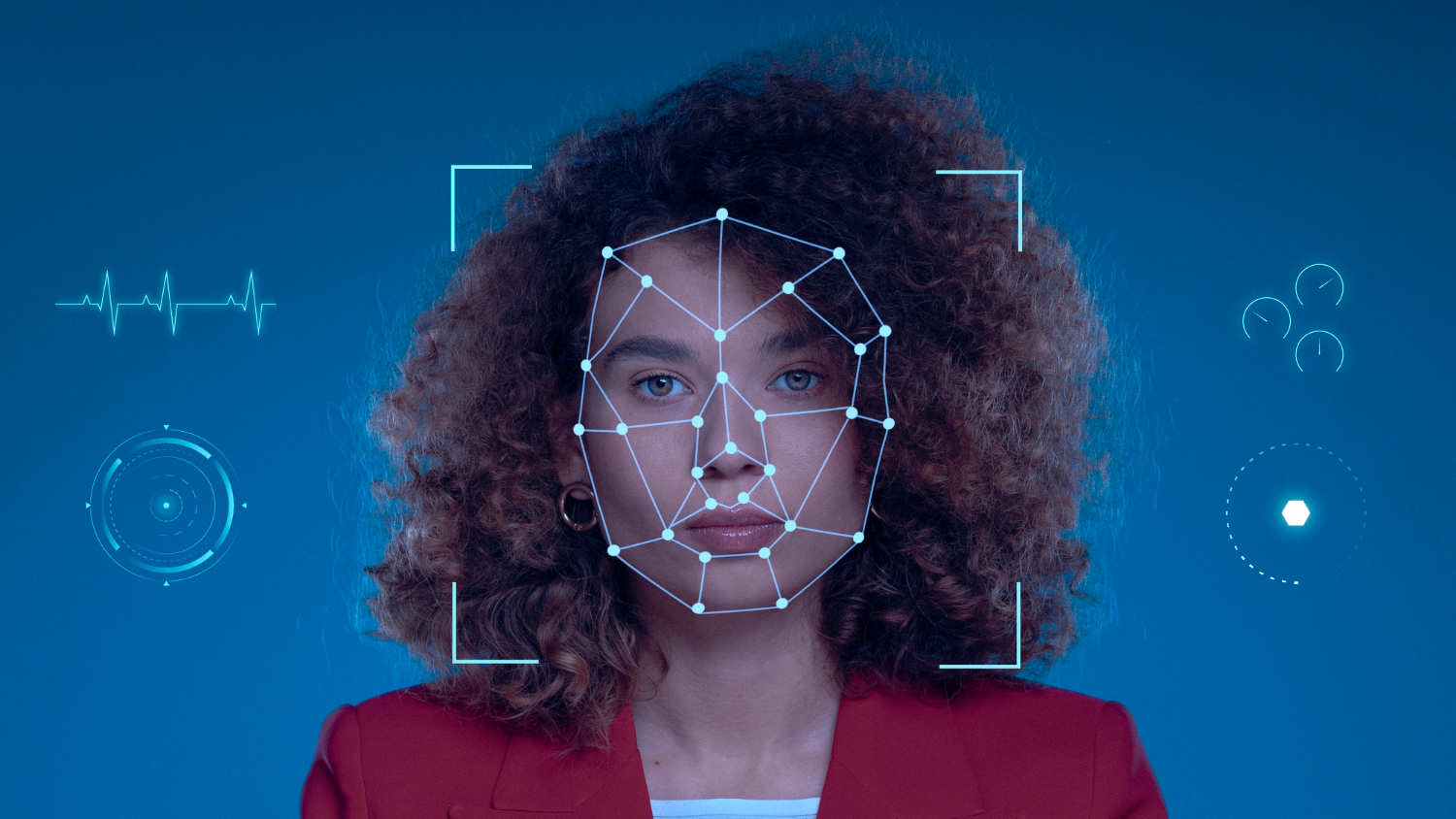
The Image Recognition question comes up often. Four stages. Detection finds face regions in an image. Alignment warps each face to a canonical pose so the embedding model sees a consistent input. Embedding maps each aligned face to a high-dimensional vector. Matching compares that vector against a gallery and returns an identity (or “no match”) based on a distance threshold. Each stage has its own failure mode, and the matching stage carries most of the legal exposure.
Why is MTCNN typically preferred over Haar cascades in modern face detection, and where does that trade-off flip?
MTCNN (a small cascade of CNNs) handles pose variation, occlusion, and lighting changes far better than Haar cascades, which were tuned for frontal, well-lit faces. The trade-off flips when you are running on extremely constrained hardware with a strictly frontal-pose use case — kiosk check-in, controlled-lighting access control — where Haar’s speed advantage matters and its accuracy ceiling is acceptable. In 2026 most teams use a modern detector (RetinaFace, SCRFD, or a YOLO-derived face head) rather than either of those.
Where does facial recognition sit in the broader CV pipeline (image recognition, pattern recognition, deep learning)?
Facial recognition is one specialisation of image recognition, which is itself one branch of computer vision, which uses pattern recognition methods, most of which are now implemented with deep learning. The hierarchy is: deep learning provides the methods, pattern recognition provides the problem framing, computer vision applies it to images, image recognition is the task of identifying content in those images, and facial recognition is the special case where the content is human faces and the output is identity.
What are the realistic accuracy and bias limits of production facial recognition in 2026 deployments?
Production facial recognition can be very accurate under controlled enrolment and matching conditions, but accuracy is not uniform across demographic subgroups, lighting, or pose. Disaggregated evaluation — measuring false-match and false-non-match rates by subgroup — is the only honest way to characterise a deployed system. Reported aggregate accuracy numbers without that breakdown should be treated as marketing, not engineering data.
Which CV algorithms (eigenfaces, deep embeddings, transformers) are still relevant for face recognition, and which are obsolete?
Eigenfaces and other linear-subspace methods are obsolete for production face recognition. Deep embeddings trained with metric-learning objectives (ArcFace, CosFace, AdaFace) on convolutional backbones remain the workhorse. Transformer-based face encoders (ViT-Face, DINOv2-based variants) have caught up and in some benchmarks lead; the practical choice usually comes down to hardware and the available pretrained checkpoints.
How does facial recognition deployment differ across cloud, on-device, and edge inference settings?
Cloud deployment maximises model size and feature richness at the cost of latency, data-residency complexity, and per-call cost. On-device deployment (phones, laptops for device unlock) constrains the model to mobile-class footprints and runs entirely offline, which sidesteps data-residency concerns. Edge accelerator deployment (smart cameras, access-control terminals) requires aggressive quantisation or distillation and a careful update mechanism for the gallery and the model. The pipeline stages are the same; the engineering trade-offs at each stage are different.
Making Image Recognition work in your environment
Establish ground truth early: profile accuracy on images sampled from your production environment, benchmark inference speed on your deployment hardware, and audit whether your labeling infrastructure can sustain the update cycle your accuracy SLA requires. Revisit it when your workload shifts.