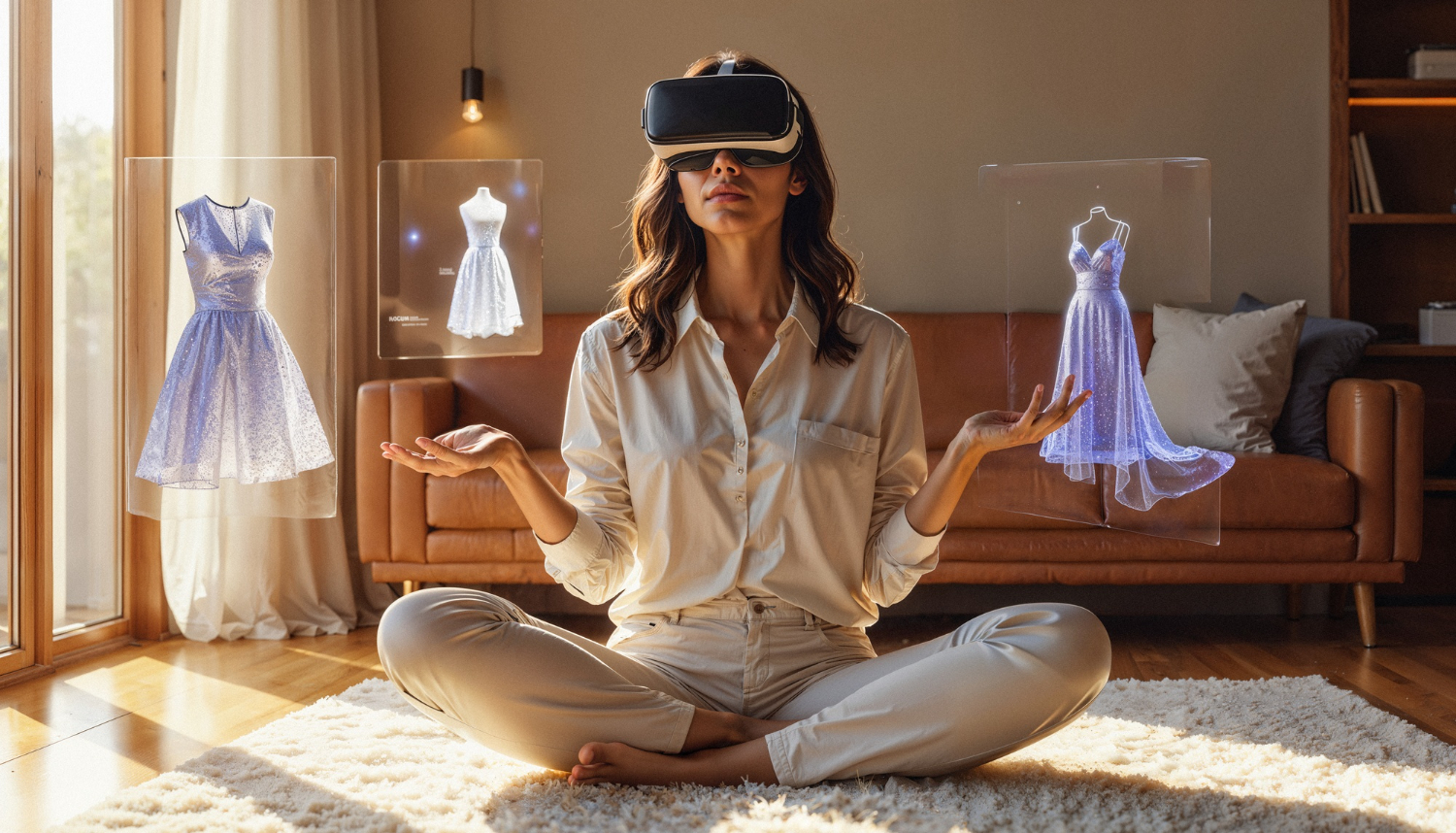
Extended Reality (XR) is changing how businesses interact with customers. This technology combines virtual and real-world elements to create immersive experiences. Companies now use XR to improve customer engagement and build stronger brand loyalty — but the version of XR that actually moves business metrics looks different from the keynote-demo version. In our work on production GPU and edge-inference pipelines, the cases that earn their budget are the boring-looking ones: an AR try-on that holds a sub-200 ms response on a mid-tier Android (a rule of thumb for acceptable latency), a VR configurator that loads under the patience window, an AR-assisted service overlay that cuts a support call from ten minutes to three.
Most of the writing on “immersive XR” treats it as a marketing surface. We treat it as a CV/AR pipeline with measurable inputs and outputs, deployed across a heterogeneous device base. That framing changes which decisions matter.
What XR actually means at production scale
Extended Reality encompasses three technologies: Virtual Reality (VR), Augmented Reality (AR), and Mixed Reality (MR). At the level of marketing taxonomy, these are three flavours of the same idea. At the level of deployment, they are three very different cost structures.
- AR on smartphones carries the bulk of real customer engagement today. ARKit on iOS and ARCore on Android give you camera-plane tracking and lighting estimation for free; the work sits in the rendering pipeline and the model inference on top.
- VR on dedicated headsets (Quest, Vision Pro, PSVR2) is high-fidelity but tiny in installed base. It earns its place in showroom and training contexts, not in mass customer engagement.
- MR / passthrough AR is the bridge case — Vision Pro, Quest 3 — currently more useful for B2B configurators than for direct-to-consumer reach.
For most “XR customer engagement” projects, the deployment target is smartphone AR, with a long tail of VR experiences for specific high-value touchpoints. Designing as if every customer had a headset is the fastest way to burn the budget without moving the metric.
For the deeper structural argument on this, see our companion piece How AR and AI Redefine Virtual Try-On in E-Commerce — it covers the device-tier rendering decision in detail.
How does immersive XR improve customer engagement?
Three specific deployment patterns exist, each with documented performance metrics.
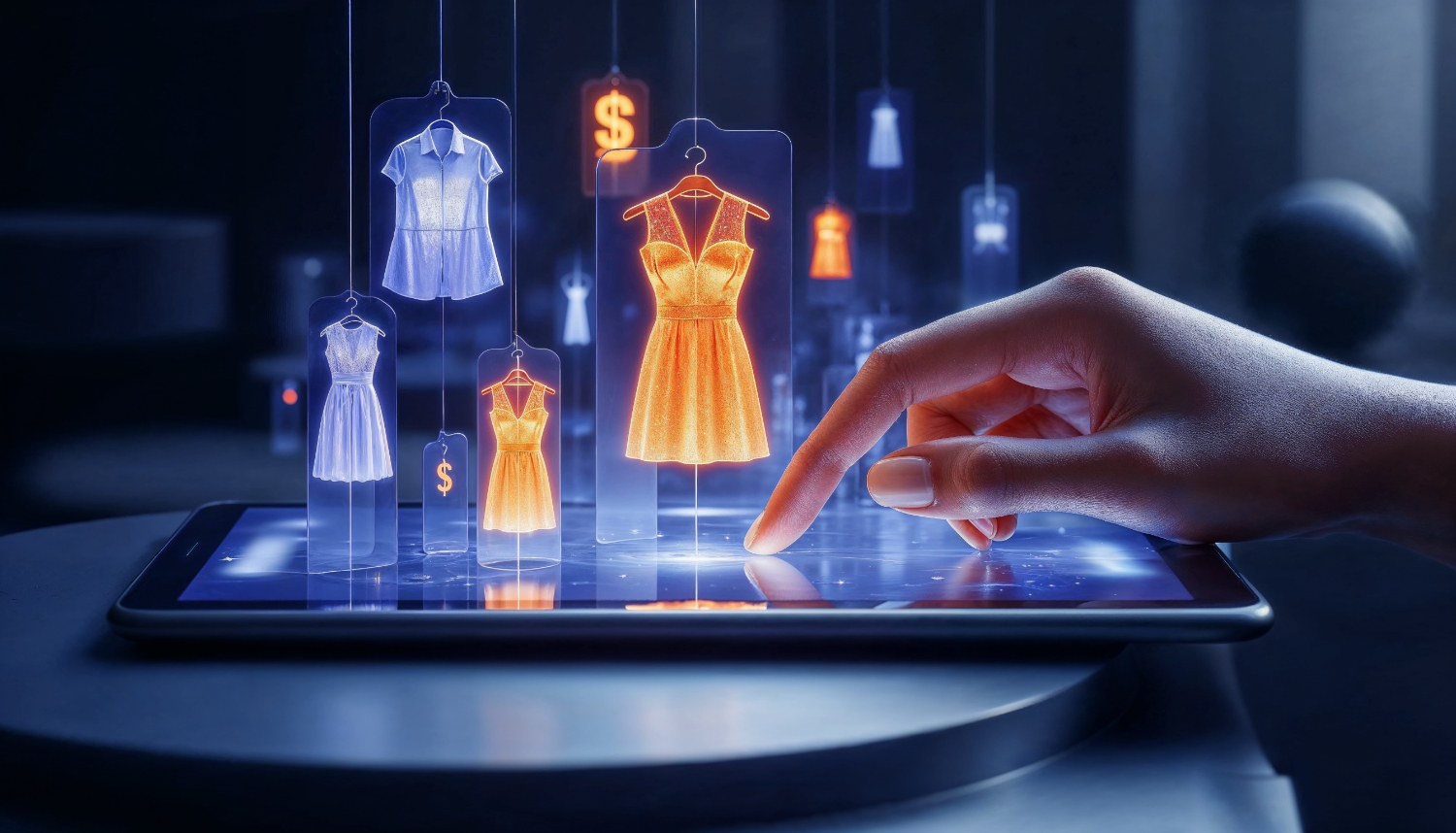
- Virtual product try-on and configuration. Apparel, cosmetics, eyewear, footwear, furniture, vehicles. The mechanism is straightforward — let the customer see the product in their context (face, room, driveway) before committing — and the outcome is measurable in return rates and conversion.
- Immersive brand experiences. Snap AR lenses, branded VR worlds, in-store interactive AR. The mechanism is dwell time and shareable content; the outcome is harder to attribute to revenue but cheaper to instrument.
- AR-assisted customer service. Overlaying instructions and diagnostics on the customer’s device — typically smartphone camera — to walk them through a setup or repair. The mechanism is reducing the cognitive cost of following text or video instructions; the outcome is fewer support calls and faster resolution.
The economics are clearest where return rates are high (apparel, furniture) or service costs are material (consumer electronics, appliances). Vague “brand engagement” metrics are weaker justification for continued investment, and we say so plainly to clients who ask whether to build the third kind of experience.
What ROI is realistic, and where does it come from?
Procurement teams prioritize this question above all others. Published case-study numbers (published-survey class — vendor and analyst reports, not our internal measurements) cluster around:
| Lever | Reported range | Where it lands |
|---|---|---|
| Return-rate reduction (try-on SKUs) | 20–40% | Apparel, eyewear, footwear |
| Dwell time on AR-enabled PDPs | 2–4× | Versus flat product pages |
| Conversion uplift (enabled categories) | 5–25% | Furniture, cosmetics, apparel |
| Support-call reduction (AR-assisted) | 30–60% | Setup, troubleshooting |
These are external numbers, not our benchmarks — most are published by the brands or their AR platform vendors. Treat them as published-survey class evidence: directional, environment-specific, useful as a planning anchor but not a guaranteed outcome. In our experience across retail and consumer-electronics engagements, the conversion-lift number is the noisiest of the four; return-rate reduction on try-on-enabled SKUs is the most reliable.
The reason for that gap is structural: return-rate reduction is a near-term, attributable outcome (the same shopper either keeps the product or doesn’t), while conversion uplift gets confounded by everything else happening on the page.
Which technology stacks power production virtual try-on?
Stack selection follows established patterns; dominant platforms rarely compete on equal footing.
- Google’s try-on (Shopping integration) uses a diffusion-based generative model server-side to render apparel on real model photos. Cloud render, network-bound, high-quality output.
- Snap AR (Lens Studio / Camera Kit) runs on-device, optimised for the AR filter use case, integrated with Snapchat distribution. Lower-fidelity, higher-reach.
- Apple ARKit + RealityKit / Reality Composer Pro is the default for iOS-native experiences (IKEA Place, Warby Parker try-on). On-device rendering, tight integration with iOS sensors.
- ARCore + Sceneform / Unity AR Foundation for Android; cross-platform via Unity for both.
- WebAR (8th Wall, Zappar, Niantic Lightship VPS) for the no-app-install path — lower fidelity, dramatically higher reach.
The deployment decision usually pivots on one question: can the experience run inside an existing app or website, or does it justify a native install? For most retailers, WebAR or in-platform (Snap, Instagram) wins on reach; native AR wins on fidelity for high-AOV categories where the conversion economics support an app install.
How does AI-driven try-on differ from classical AR overlays?
Known 3D assets rendered onto tracked surfaces define classical AR overlay architecture. The model exists, the placement is geometric, the rendering is deterministic. Cost scales with asset production (modelling each SKU) and content pipeline maintenance.
AI-driven try-on — diffusion or GAN-based generation of the product on the customer — skips the per-SKU 3D modelling step but introduces a new failure mode: the model can hallucinate fit, drape, or colour in ways a 3D overlay cannot. For eyewear and cosmetics, the geometric approach still wins on accuracy. For apparel, where drape and fit on a specific body matter more than millimetre-accurate placement, the generative approach is closing the gap.
The deployment cost profile is different too: classical AR is content-heavy and inference-light; AI-driven try-on is content-light and inference-heavy. Which one a retailer should pick depends on catalogue size, refresh rate, and whether they have the infrastructure to run inference at the latency the experience demands.
XR in customer service: the underrated case
Try-on experiences, virtual showrooms, and branded AR lenses dominate marketing narratives. The use case that pays for itself most reliably is AR-assisted customer service.
The mechanism: a support agent (or a guided flow) overlays instructions on the customer’s camera view of their own device, appliance, or installation. “Press this button. Now point at the back panel. The cable goes here.” Compared to reading a manual or watching a video, the customer’s cognitive load drops sharply, and so does the support-call duration.
We’ve seen this work best in three contexts: consumer-electronics setup (router installs, smart-home onboarding), appliance troubleshooting (which error code means what), and field-service for B2B installations. The economics are simple — cost-per-call goes down, first-call resolution goes up — and the technical bar is lower than try-on, since accuracy requirements are forgiving (the customer just needs to see the right area highlighted).
XR and social media: distribution without the app
AR capabilities now ship as first-class features within social platforms. Instagram and Snapchat AR filters are now a primary distribution surface for brand AR, and the audience is already there. For brands that don’t have the volume to justify a native app, Snap Camera Kit and Meta Spark let them ship an AR experience inside platforms customers already use.
The trade-off is fidelity and control. A Snap lens runs inside Snap’s rendering constraints; a branded native app does what it wants. For top-of-funnel awareness, the platform path wins on reach; for deep-funnel conversion, the native path wins on integration with checkout and product data.
For a related cluster on entertainment-driven XR, see our take on AR/VR in Sports and Broadcast — the same dwell-time mechanics apply, but the production economics are different.
Where AR retail pilots break down
We see five recurring failure modes when XR projects don’t earn their budget:
- Device-tier mismatch. Built and demoed on a flagship phone; deployed to a customer base where 60% of devices are mid-tier or older—a sizing estimate that is directionally useful. Latency and battery problems show up in week one.
- Content-pipeline cost. Underestimating the cost of producing AR-ready 3D assets for the full catalogue, then quietly cutting the rollout to “hero SKUs only.”
- Measurement gap. No instrumentation to attribute conversion or return-rate improvements to the XR touchpoint specifically; brand teams can’t defend the budget at renewal.
- Standalone-app trap. Building XR as a separate app rather than integrating into the existing shopping flow. Install rates kill the funnel.
- Privacy under-reading. Camera and on-device sensor data falls under privacy regimes (GDPR, CCPA) that the marketing team didn’t pre-clear with legal.
The shortest path to a XR programme that survives its first renewal cycle is: integrate into the existing channel, measure a return-rate or service-cost lever rather than “engagement”, and design for the device tier you actually serve, not the one the demo runs on.
Measuring XR’s impact properly
To understand whether XR moves the needle on customer loyalty, the metrics that actually matter are the conventional ones — applied to XR-exposed cohorts versus unexposed cohorts:
- Repeat-purchase rate for customers who used the XR feature versus those who didn’t, controlled for category.
- Return rate for SKUs purchased after an AR try-on session versus the same SKU without.
- Time-to-resolution for support tickets resolved via AR-assisted versus phone-only.
- NPS and CSAT on XR-exposed touchpoints, sampled the same way as non-XR touchpoints.
We caution clients against the inverse: making up XR-native vanity metrics (“time spent in AR experience”, “filter share count”) and using them to justify continued spend. Those metrics are easy to optimise and rarely correlate with revenue. Treat XR as another channel, instrument it the way you instrument other channels, and let the numbers settle the case.
Limits and what to plan for
Three structural limits remain:
- Headset adoption is a small fraction of the customer base. VR experiences reach a niche; AR on smartphones reaches the mainstream. Plan the budget split accordingly.
- Content production cost per AR or VR experience is still high relative to flat-media equivalents. Reuse 3D assets across surfaces (product page, social, in-app) to amortise.
- Measurement frameworks are still maturing. Procurement caution is justified; the brands that win are the ones that pre-commit to specific cohort comparisons, not the ones that promise a transformation.
Brands that succeed with XR treat it as one channel among many rather than betting on it as the future of all customer engagement. The technology is good enough to move specific metrics; it is not good enough to replace the rest of the marketing and service stack.
How TechnoLynx can help
Production XR pipelines succeed when engineering discipline outweighs demonstration appeal. Our work focuses on the parts that determine whether the programme survives renewal: device-tier rendering decisions, on-device versus cloud inference trade-offs, integration with existing commerce and service stacks, and instrumentation that attributes outcomes to the XR touchpoint. Much of that programme work sits inside our retail computer-vision practice, where try-on, in-store AR, and service overlays get scoped against a specific store fleet.
If you’re scoping an AR try-on, a VR configurator, or an AR-assisted service flow and want a build partner with engagements scoped to your problem rather than a packaged solution, reach out. We are happy to walk through the failure modes before they cost you a campaign.
FAQ
How does immersive XR improve customer engagement?
Three patterns with measured outcomes: (1) virtual product try-on and configuration (apparel, cosmetics, eyewear, footwear, furniture, vehicles) — reducing returns and lifting conversion in published case studies; (2) immersive brand experiences (Snap AR lenses, branded VR worlds, in-store interactive AR) generating shareable content and dwell time; (3) AR-assisted customer service overlaying instructions and diagnostics on customer devices. The strongest economics are in categories with high return rates or high-touch service costs.
Which brands are using immersive XR for customer engagement at scale?
Retail: Warby Parker, Sephora, L’Oréal, Nike, Adidas, IKEA. Automotive: BMW, Audi, Mercedes-Benz with virtual showrooms and configurators. Luxury: Gucci, Burberry, Balenciaga with branded AR and VR experiences. Hospitality: Marriott and others with virtual property tours. The pattern is consistent: integrate XR into the existing customer journey rather than building it as a standalone experience.
What measurable ROI does immersive XR deliver in customer engagement?
Reported numbers from public case studies: 20–40% reduction in return rates for try-on-enabled SKUs; 2–4× dwell time on AR-enabled product pages; 5–25% conversion uplift on enabled product categories; 30–60% reduction in customer-service calls for AR-assisted setup and troubleshooting (all figures as reported in the cited case studies). The economics are clearest where return rates are high or service costs are material; vague ‘brand engagement’ metrics are weaker justification for continued investment.
What are the limits of immersive XR for customer engagement?
Three limits to plan for: (1) headset adoption remains a small fraction of the customer base, so most engagement happens on smartphones; (2) content production cost per AR / VR experience remains high relative to flat-media equivalents; (3) measurement frameworks are still maturing, making procurement cautious. Brands that succeed treat XR as one channel among many rather than betting on it as the future of all customer engagement.
Three hardware bottlenecks to test before launch
Isolate foveated rendering, haptic synchronization, and lens distortion correction for device-specific stress testing. If Immersive XR is on your roadmap, the next step is to map it onto your own constraints rather than copy a reference architecture.
Image credits: Freepik.