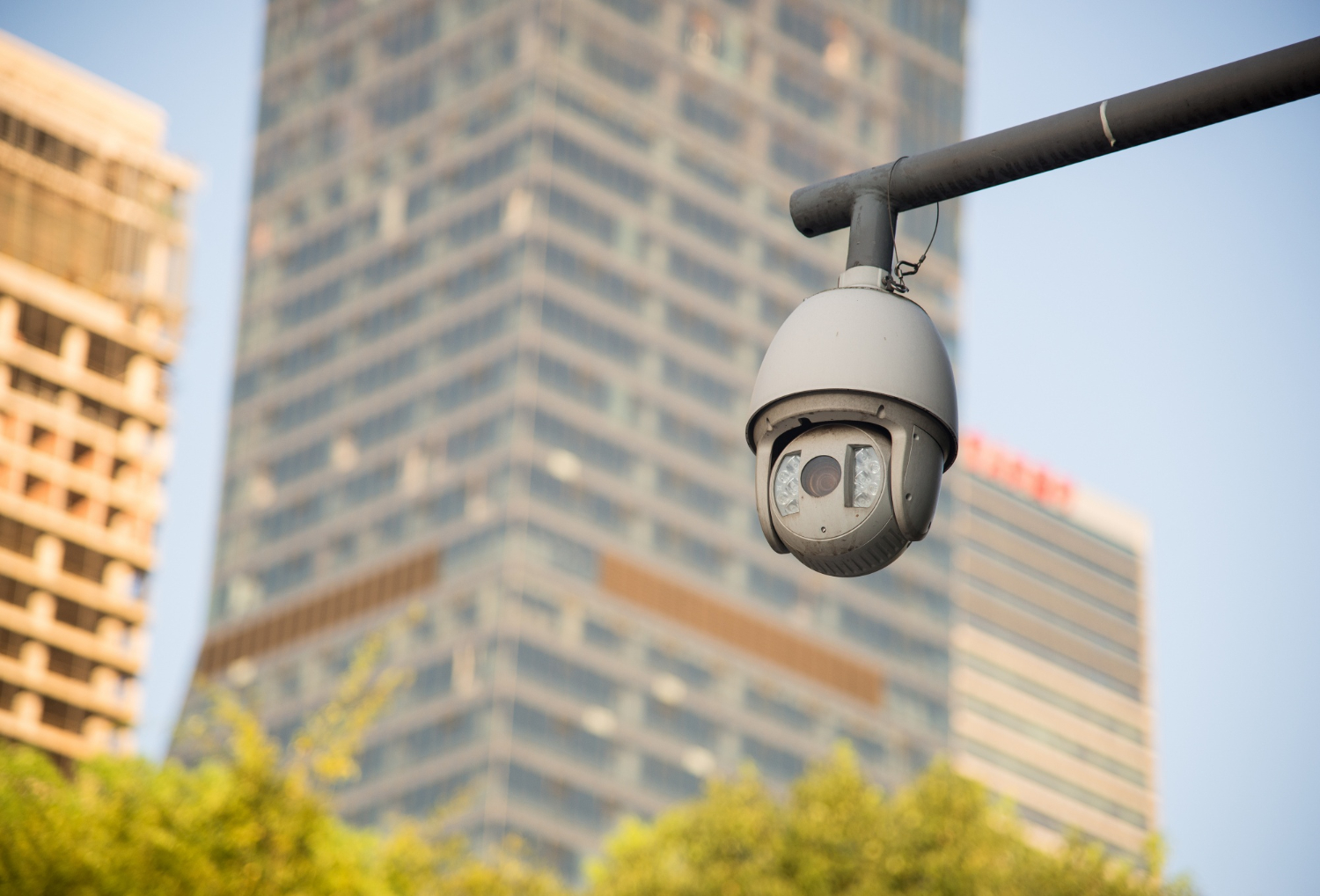

Introduction
Broadcast, surveillance, and industrial analytics share a foundational challenge: the frames that matter most appear too infrequently to train robust supervised detectors. Labelled training data for the supervised approach simply does not exist at sufficient scale, and waiting for it to accumulate is operationally unacceptable. Generative models — trained on normal frames and scoring deviations at inference time — sidestep the labelled-anomaly bottleneck. Whether they work in production depends on architectural decisions that the demo never tests: latent-space dimensionality, reconstruction-threshold calibration, and the edge-versus-cloud processing split. This article walks the production reality. See computer vision for the broader practice.
The naive read is that a working anomaly detector on a benchmark dataset is a working detector. The expert read is that benchmark anomaly rates (often 10%+ as a representative figure) do not resemble production rates (often under 0.1%, a directional industry-scale figure for operational systems), so the precision and false-alarm behaviour that look fine in the paper drown operators in noise in the field.
What this means in practice
- Choose the deployment pattern (on-camera, edge gateway, cloud) before the model architecture — latency and bandwidth drive everything downstream.
- Calibrate the anomaly threshold against production-rate base rates, not benchmark rates.
- Plan for drift from day one: production video distributions shift seasonally, environmentally, and with equipment changes.
- Treat operator alert fatigue as a first-class design constraint, not an after-the-fact tuning problem.
How do I build production video anomaly detection that doesn’t drown operators in noise?
Base-rate imbalance drives the operator-noise dynamic. A detector with 99% accuracy (illustrative) that fires on 0.1% of frames produces hundreds of false positives per hour at broadcast frame rates. The fixes are three in combination: calibrate the decision threshold against the actual production base rate (not the benchmark one), aggregate per-frame scores into per-event scores with temporal smoothing so transient noise does not trigger alerts, and tier the alert severity so operators see only what warrants attention.
A useful target is alerts-per-shift bounded by what the operator can review without fatigue — typically tens, not hundreds. Designing backward from that target sets the precision-recall trade-off honestly and avoids the trap of optimising raw accuracy on a benchmark that does not match operational rates.
When does a generative approach to video anomaly detection beat a classifier-based one?
When labelled anomalies number in the dozens—or zero—generative methods outperform classifiers trained on sparse positive examples. The model learns the distribution of normal frames (via an autoencoder, a VAE, a normalising flow, or a diffusion model) and scores anomalies by how poorly the model reconstructs or how unlikely the model assigns the observation. The training set is the normal data you already have.
Classifier approaches win when anomalies are well-defined and labelled examples exist — known defect types in manufacturing inspection, specific object classes in security applications, signature patterns in protocol monitoring. The two approaches stack: a generative anomaly detector flags candidates, a downstream classifier (where labels exist) refines the classification. The choice between them is a function of the labelled-data availability, not a technology preference.
What is real-time video analytics, and what latency and accuracy targets should I hold it to?
A decision is real-time if it arrives before the subsequent frame renders it irrelevant. For broadcast at 25 or 30 fps, that is roughly 33–40 ms per frame end-to-end including ingest, inference, and downstream action. For surveillance with operator review, the target relaxes to seconds. For industrial process control where the analytics feed a control loop, the target tightens to single-digit milliseconds.
Accuracy targets need to be expressed against the production base rate, not the test set. A useful framing: false-positive rate budgeted to keep alerts-per-shift inside operator capacity, false-negative rate set against the cost of a missed event in the operational context. Single accuracy numbers in the abstract are not useful — the F1 score on a benchmark with 50% anomalies tells you nothing about behaviour on a stream with 0.01% anomalies.
How do I evaluate a video-analytics system on real-world anomaly rates rather than curated benchmarks?
Evaluation datasets must mirror production distributions, including lighting shifts, camera jitter, and codec artifacts. The pragmatic approach: collect a representative window of production frames (covering daily, weekly, and seasonal variation), have domain experts review and label them for the events of interest, and use this labelled production set as the evaluation baseline. The labelling effort is non-trivial — that is the point. Benchmark datasets exist because labelling is expensive, and the cost of using them instead of production data is poor calibration to operational behaviour.
Shadow deployment — running the candidate model on production traffic without acting on its outputs and comparing the outputs against the existing system or human review — produces the most honest evaluation. Shadow runs of two to four weeks surface the temporal patterns that single-pass benchmarks miss.
Which deployment patterns (on-camera, edge gateway, cloud) fit which video-anomaly use cases?
Low-bandwidth scenarios—remote installations, mobile units, dense camera arrays sharing constrained uplinks—demand inference at the edge rather than cloud round-trips. The constraint is the camera’s compute envelope, which limits model complexity. Edge gateway inference (a local server aggregating multiple camera feeds) fits installations with reliable local infrastructure and moderate bandwidth constraints; it lets you run more capable models at the cost of needing to maintain edge hardware.
Cloud inference fits installations where bandwidth is cheap and centralised model management is valuable — typically broadcast and managed-services use cases where the model needs frequent updates and the customer’s IT environment is not the right place to maintain inference infrastructure. The pattern decision drives the model architecture: on-camera demands tiny, distilled models; cloud allows full-precision large models.
How do I keep a generative anomaly model from drifting once it goes live?
Three distinct mechanisms cause video anomaly models to drift over deployment lifetimes. Environmental drift (lighting, weather, seasonal changes) shifts the input distribution gradually. Equipment drift (camera ageing, lens degradation, sensor recalibration) shifts the input distribution stepwise. Operational drift (new normal behaviours that did not exist at training time — new traffic patterns, new equipment installations, new operating procedures) shifts what counts as normal.
The mitigation has three components. Continuous monitoring of input-distribution statistics surfaces drift before it degrades detection performance. Periodic retraining on rolling windows of recent normal data adapts the model to gradual changes. An explicit human-in-the-loop review of anomalies that the model flags ensures that newly normal patterns get incorporated rather than continuing to fire false alarms forever.
Limitations that remained
Generative detectors excel in rare-event regimes yet transfer rather than solve the false-positive challenge, shifting calibration from feature engineering to reconstruction-threshold tuning. Detection latency at broadcast frame rates remains tight enough that the trade-off between model capacity and inference speed is real and constrains which architectures are deployable. Drift handling is necessary infrastructure, not optional; deployments that skip it degrade over months in ways that look like model failure but are actually distribution shift. Cross-camera generalisation is weak — a model trained on one camera installation typically needs re-tuning when deployed to another even when the apparent task is the same.
Three immediate wins from pipeline efficiency
Begin with an encoding audit; initial profiling typically uncovers compression inefficiencies worth four-tenths of your bandwidth budget. Broadcast and media-telecom clients make up a large share of that work, which is also why we run a dedicated media and telecom practice. If your video pipeline needs anomaly detection or you have a research-grade detector that does not behave in production, contact us for a production-readiness review.
Image credits: Freepik