Unlocking the Future of Music: AI in Singing

Learn about the latest advancements, benefits, and implications of AI-generated vocals. Stay ahead in the evolving landscape of music technology.

Unlocking the Future of Music: AI in Singing
Written by TechnoLynx Published on 21 May 2024

Artificial intelligence (AI) is changing how music is played, created and consumed! The latest report shows that AI in the music business is skyrocketing, with a market size set to reach $6.80 billion by 2026. In singing, AI-powered vocal enhancement tools enable real-time pitch correction during live performances. In composing & songwriting, advanced algorithms analyse existing music data and generate new compositions that align with the artist’s vision.

Iconic artists like Drake and The Weeknd are using AI tools to experiment with and create new sounds. Unique and unconventional music is being explored, resulting in innovative musical expression. This introduction provides the use cases highlighting the synergy between human creativity and AI-driven innovations.

Artificial Intelligence will be the future of singing | Source: The Independent

Use Cases

From virtual singers to vocal coaches, AI-created music is reshaping the singing landscape, offering new possibilities for artists and producers. Streaming services like Warner Music, Apple Music, and Universal Music Group are embracing AI technologies to automate music production processes and discover new talent.

Vocal Enhancement & Synthesis

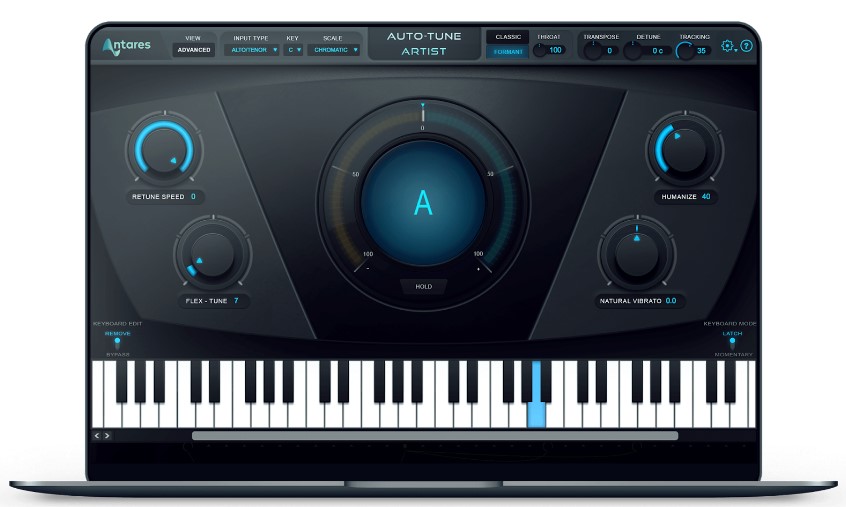
The music industry’s embrace of AI technology has reached a market valuation of USD 229 million in 2022. Growth is estimated to accelerate at a 28.6% Compound Annual Growth Rate (CAGR), registering an incremental revenue of USD 2.6 billion by 2032. Antares Audio Technologies, creator of world-famous Auto-Tune,, revealed that artists using Auto-Tune during live performances experience increased audience engagement and a notable rise in ticket sales.

Live Pitch Correction in Concerts

Suppose you’re attending a live concert where your favourite artist delivers an unforgettable performance. But what happens if they hit a sour note? That’s where graphics processing unit (GPU) acceleration steps in, providing needed computational power for real-time pitch correction during live performances. GPUs are high-speed processors designed to handle complex computations in parallel.

In live concerts, real-time pitch correction software inspects incoming vocal signals rapidly and adjusts accordingly. GPUs are specifically designed for parallel processing tasks, making them ideal for analysing and processing audio signals simultaneously, which is crucial for live performances where timing is crucial.

Latency, or the delay between input and output, means any noticeable delay in pitch correction can negatively impact the live performance. GPUs help minimise latency by rapidly processing vocal signals and applying real-time corrections. While GPUs are primarily associated with graphics rendering tasks, they are also used in various software applications beyond graphics processing.

During live performances, singers like Beyoncé and Bruno Mars have utilised real-time pitch correction software such as Waves Tune Real-Time. This software, powered by GPU acceleration, allows artists to maintain pitch accuracy and deliver exceptional shows consistently. This integration allows the software to harness the GPU’s computational power for faster and more efficient processing of vocal signals.

Real Time Pitch Correction with Antares Auto-Tune Artist | Source: Bulding Beats

Analysing Vocal Performance Metrics

By processing visual data from live performances or recordings, Computer Vision algorithms provide valuable insights to singers & producers, aiding vocal improvement and refinement. It analyses vocal performance metrics like pitch accuracy, vocal timbre, and dynamics.

Computer Vision inspects vocal timbre (the unique quality of someone’s voice), pitch accuracy (how in tune someone sings), and dynamics (how loud or soft someone sings). This helps musicians understand their strengths and areas for improvement in their singing.

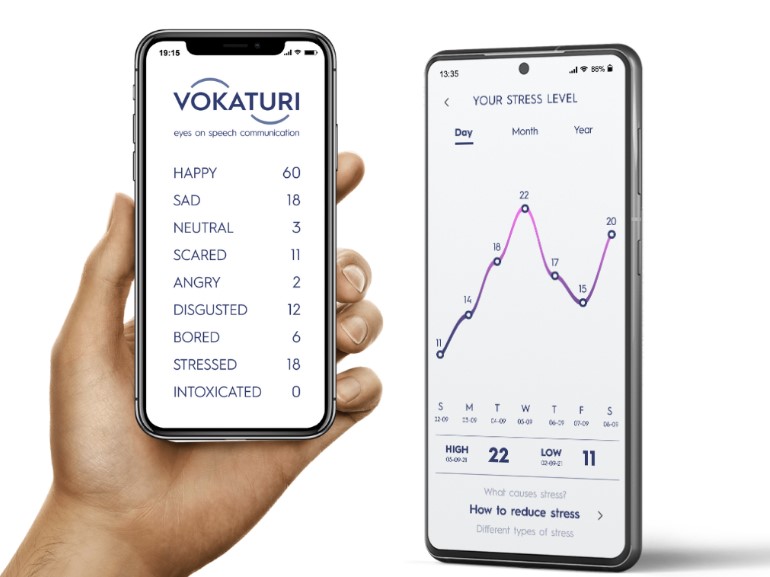
VoCo by Adobe Systems uses Computer Vision technology to edit and manipulate recorded speech with remarkable accuracy and ease. Whereas, Vokaturi analyses facial expressions during singing, offering insights into emotional expression and performance quality.

Accurate Recognition of Mental States to Improve Speech Communication

Incorporate Natural-sounding Vocal Effects

By analysing existing vocal recordings, generative AI technology employs advanced techniques to produce natural-sounding vocal effects, like harmonies and textures. It’s like having a virtual assistant that can create new vocal effects based on characteristics of existing vocals.

Consider plugins like VocalSynth by iZotope, which leverage Generative AI to synthesise intricate vocal effects effortlessly. This technology allows producers to experiment with various vocal textures, harmonies, and modulations, unleashing creative possibilities in vocal production.

Vocal Training and Education

Vocal training & education is all about learning how to sing better. AI offers customised solutions, real-time feedback and data-driven insights to singers, to develop their skills and reach their full potential in the music industry. AI-powered technologies like Internet of Things (IoT) edge computing, natural language processing (NLP) and data-driven insights elevate the singing experience worldwide.

Personalised Vocal Training Devices

Imagine having a smart vocal training device that adapts to your unique needs. With IoT edge computing, these devices analyse your voice in real time, offering customised exercises and feedback to help you improve. The device can give you feedback instantly as you’re singing without any delays.

So, when you’re practising with a vocal training app like SINGPRO, the app uses IoT edge computing to listen to your voice, analyse it in real time, and give you personalised exercises and feedback right away. This way, you can improve your singing technique on the spot, wherever you are, without waiting for feedback from a distant server.

SINGPRO Vocal Training Tools To Improve Your Voice

NLP for Interactive Voice Feedback

NLP helps computers understand and interpret human language in a way similar to how people communicate. In vocal training apps, NLP algorithms enable conversations between users and AI-powered virtual assistants. These virtual assistants can listen to what you’re saying, understand it, and respond in a way that helps improve your singing skills.

For example, when practising with an app like Vanido, NLP allows you to talk to the virtual assistant just like you would to a real vocal coach. You can ask questions, express concerns, or seek advice on specific aspects of your singing technique. This virtual assistant understands your words and responds with personalised feedback and suggestions tailored to your needs.

Data-Driven Insights Improving Singing Techniques

To identify trends and patterns in singing techniques, AI algorithms analyse vast amounts of vocal performance like pitch accuracy, vocal range, and dynamics. By analysing these insights, singers and coaches can optimise training programs and achieve better results.

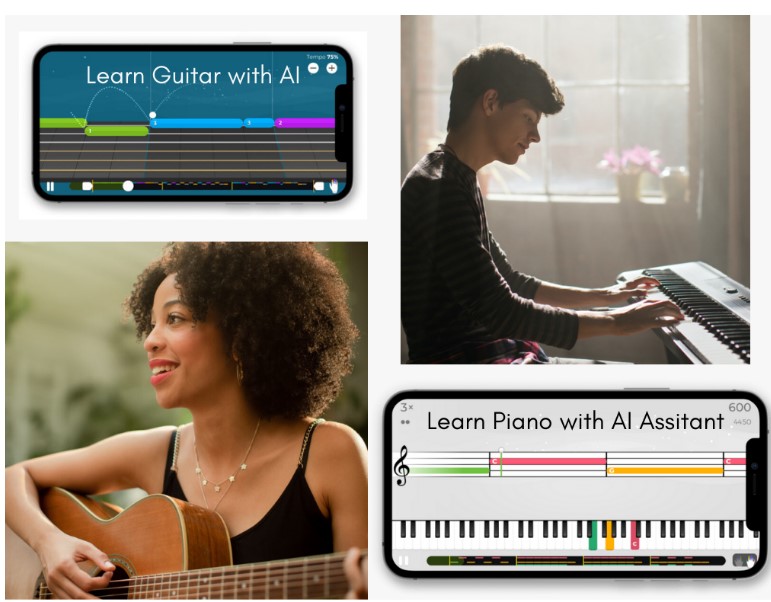
Yousician suggests targeted vocal exercises or practice routines tailored to address the specific areas where a user needs improvement. Users who practise specific vocal exercises consistently demonstrate improvement in certain areas, such as breath control or vocal range expansion.

Yousician Platform to Learn a Musical Instrument

Vocal Health Monitoring and Management

AI is the key to next-generation vocal health monitoring and management due to the design of advanced algorithms, machine learning models and integration with wearable devices to bring about personalised, proactive care to singers.

Detection of Vocal Strain and Fatigue

In AI-driven vocal health systems, the live data from a singer’s performance is processed in real time. By comparing current vocal patterns with historical samples, the system accurately detects signs of vocal strain and fatigue, even in the most complex performances incorporating different styles and music genres. Let’s say Jane applies a vocal health monitoring application during her rehearsal sessions.

While she practises, the app continuously analyses her vocal performance, capturing parameters like pitch stability, vocal intensity, and vibrato rate. The app detects a decrease in pitch accuracy and increased vocal intensity beyond Jane’s typical range, indicating potential vocal strain. These data points are measured against baseline recordings during optimal vocal health conditions.

By providing real-time feedback on vocal health, singers can better understand and manage their vocal strain and fatigue, improving vocal performance and maintaining a long-term singing career. Moreover, it is a valuable resource for vocal coaches, educators, and healthcare professionals in promoting vocal health and preventing vocal injuries among singers.

Integration with Health Wearables for Comprehensive Health Analysis

Let’s say Jane syncs her vocal health monitoring app with her smartwatch, which tracks additional health parameters such as heart rate variability and sleep quality. The app correlates this data with Jane’s vocal performance metrics to comprehensively analyse her overall health and its impact on vocal well-being.

Integration with the smartwatch allows the app to identify correlations between Jane’s physiological state, such as elevated stress levels or insufficient rest, and episodes of vocal strain. This holistic approach enables Jane to make informed lifestyle adjustments to support her vocal health.

Wearable device for vocal fatigue senses when your voice needs a break | Source: Northwestern News

Benefits

  • Perfect Pitch: Imagine hitting each note perfectly at a live concert. Such vocal enhancement software allows singers to fix the pitch immediately while they are on stage, which leads to straighter and more guaranteed performance.

  • Endless Creativity: AI isn’t only about correcting; it’s about creating too. Advanced algorithms can analyse existing music data and generate new compositions, providing artists with fresh inspiration and ideas.

  • Accessible Learning: AI-driven websites you may use for singing classes can be accessed in your bedroom or anywhere. Gather reviews, refine your talents, and polish your vocals while at your home in a private environment

  • Personalised Music Production: AI-driven platforms offer accessible tools for aspiring singers to practise, receive feedback, and improve their vocal skills remotely.

  • Exploration of New Sounds: AI allows musicians to experiment with a whole range of unconventional sounds and styles, creating thrilling new and innovative music.

Challenges

  • Authenticity Concerns: There will be listeners who will question the genuineness of artistically modulated vocals, and there will be arguments about the importance of human emotions and sentiments in music-making.

  • Ethical Considerations: There are many ethical concerns regarding copyright belonging, leading to AI-generated music ownership and human musicians’ jobs elimination.

  • Overreliance on Technology: The intensive use of AI tools for vocal processing and composition may induce a reduction in the degree of human creativity and naturalness, which are a significant part of music.

  • Technical Limitations: AI algorithms can still be failure-prone, at times imprecisely replicating the human singing that contains so many complications and subtleness of emotions and vocal performance.

  • Bias in Algorithms: AI algorithms can reproduce the bias based on the training data, which may be unfair to different people or even cause stereotyping.

What Can Technolynx Offer You as a Software Company?

TechnoLynx specialises in developing customised AI solutions. Our advanced AI technologies can leverage Computer Vision, Generative AI, GPU performance engineering, and IoT edge computing to redefine various industries. We aim to support individuals in various stages of their creative process, regardless of their specific industry. Whether you’re an aspiring singer seeking to refine your vocal abilities or a songwriter in search of fresh inspiration, we can customise our AI-powered tools to cater your requirements.

We offer a range of AI-powered tools and services that can revolutionise various aspects of your software development process. Whether you need assistance with enhancing user experience, optimising workflow efficiency, automating repetitive tasks, or improving data analytics, our AI solutions can provide valuable insights & capabilities. Our team works closely with you to understand your specific requirements and challenges, ensuring that our AI solutions are precisely tailored to address your needs.

We aspire to create an AI platform that inspects visual content related to mood and theme, providing artists with insights into the emotional resonance of their compositions and creating immersive and impactful experiences. Experience the future of musical innovation with TechnoLynx – your trusted partner in shaping the future of music.

Final Thoughts

In conclusion, we have explored the transformative impact of AI in musical arts to enhance vocal performances. In this article, we’ve witnessed how AI technologies have revolutionised traditional practices, presenting AI tools and solutions to artists and creators. At TechnoLynx, we channel the energy of the AI generation to empower artists and enrich artistic expression. Our expertise in innovation makes us the ideal partner for artists and musicians to harness the power of AI tools.

References:

  • Adobe Voco. ROI4CIO [online] [Accessed 16 Feb. 2024].

  • Anon, (n.d.). Essential Ai In Music Production Statistics in 2023 • ZipDo. [online] [Accessed 16 Feb. 2024].

  • Market.Us (2023). Generative AI in Music Market to Reach Valuation of USD 2.6 Bn at CAGR of 28.6% by 2032. [online] GlobeNewswire News Room [Accessed 16 Feb. 2024].

  • Semantico (2021). Vokaturi emotion…. [online] Understand the emotion in a speaker’s voice.

  • Singpro.com (2024) [Accessed 16 Feb. 2024].

  • Technology (Auto-Tune), A.A. (n.d.). Antares Audio Technologies, creator of the world-famous Auto-Tune® software suite, announces completion of minority investment by Atairos. [online] www.prnewswire.com [Accessed 16 Feb. 2024].

  • waves.com. (n.d.). Waves Tune Real-Time Plugin - Waves Audio. [online] [Accessed 16 Feb. 2024].

  • iZotope. (n.d.). VocalSynth—Vocal Synthesizer Plug-in [online].

Cost, Efficiency, and Value Are Not the Same Metric

Cost, Efficiency, and Value Are Not the Same Metric

17/04/2026

Performance per dollar. Tokens per watt. Cost per request. These sound like the same thing said differently, but they measure genuinely different dimensions of AI infrastructure economics. Conflating them leads to infrastructure decisions that optimize for the wrong objective.

Precision Is an Economic Lever in Inference Systems

Precision Is an Economic Lever in Inference Systems

17/04/2026

Precision isn't just a numerical setting — it's an economic one. Choosing FP8 over BF16, or INT8 over FP16, changes throughput, latency, memory footprint, and power draw simultaneously. For inference at scale, these changes compound into significant cost differences.

Precision Choices Are Constrained by Hardware Architecture

Precision Choices Are Constrained by Hardware Architecture

17/04/2026

You can't run FP8 inference on hardware that doesn't have FP8 tensor cores. Precision format decisions are conditional on the accelerator's architecture — its tensor core generation, native format support, and the efficiency penalties for unsupported formats.

Steady-State Performance, Cost, and Capacity Planning

Steady-State Performance, Cost, and Capacity Planning

17/04/2026

Capacity planning built on peak performance numbers over-provisions or under-delivers. Real infrastructure sizing requires steady-state throughput — the predictable, sustained output the system actually delivers over hours and days, not the number it hit in the first five minutes.

How Benchmark Context Gets Lost in Procurement

How Benchmark Context Gets Lost in Procurement

16/04/2026

A benchmark result starts with full context — workload, software stack, measurement conditions. By the time it reaches a procurement deck, all that context is gone. The failure mode is not wrong benchmarks but context loss during propagation.

Building an Audit Trail: Benchmarks as Evidence for Governance and Risk

Building an Audit Trail: Benchmarks as Evidence for Governance and Risk

16/04/2026

High-value AI hardware decisions need traceable evidence, not slide-deck bullet points. When benchmarks are documented with methodology, assumptions, and limitations, they become auditable institutional evidence — defensible under scrutiny and revisitable when conditions change.

The Comparability Protocol: Why Benchmark Methodology Defines What You Can Compare

The Comparability Protocol: Why Benchmark Methodology Defines What You Can Compare

16/04/2026

Two benchmark scores can only be compared if they share a declared methodology — the same workload, precision, measurement protocol, and reporting conditions. Without that contract, the comparison is arithmetic on numbers of unknown provenance.

A Decision Framework for Choosing AI Hardware

A Decision Framework for Choosing AI Hardware

16/04/2026

Hardware selection is a multivariate decision under uncertainty — not a score comparison. This framework walks through the steps: defining the decision, matching evaluation to deployment, measuring what predicts production, preserving tradeoffs, and building a repeatable process.

How Benchmarks Shape Organizations Before Anyone Reads the Score

How Benchmarks Shape Organizations Before Anyone Reads the Score

16/04/2026

Before a benchmark score informs a purchase, it has already shaped what gets optimized, what gets reported, and what the organization considers important. Benchmarks function as decision infrastructure — and that influence deserves more scrutiny than the number itself.

Accuracy Loss from Lower Precision Is Task‑Dependent

Accuracy Loss from Lower Precision Is Task‑Dependent

16/04/2026

Reduced precision does not produce a uniform accuracy penalty. Sensitivity depends on the task, the metric, and the evaluation setup — and accuracy impact cannot be assumed without measurement.

Precision Is a Design Parameter, Not a Quality Compromise

Precision Is a Design Parameter, Not a Quality Compromise

16/04/2026

Numerical precision is an explicit design parameter in AI systems, not a moral downgrade in quality. This article reframes precision as a representation choice with intentional trade-offs, not a concession made reluctantly.

Mixed Precision Works by Exploiting Numerical Tolerance

Mixed Precision Works by Exploiting Numerical Tolerance

16/04/2026

Not every multiplication deserves 32 bits. Mixed precision works because neural network computations have uneven numerical sensitivity — some operations tolerate aggressive precision reduction, others don't — and the performance gains come from telling them apart.

Throughput vs Latency: Choosing the Wrong Optimization Target

16/04/2026

Throughput and latency are different objectives that often compete for the same resources. This article explains the trade-off, why batch size reshapes behavior, and why percentiles matter more than averages in latency-sensitive systems.

Quantization Is Controlled Approximation, Not Model Damage

16/04/2026

When someone says 'quantize the model,' the instinct is to hear 'degrade the model.' That framing is wrong. Quantization is controlled numerical approximation — a deliberate engineering trade-off with bounded, measurable error characteristics — not an act of destruction.

GPU Utilization Is Not Performance

15/04/2026

The utilization percentage in nvidia-smi reports kernel scheduling activity, not efficiency or throughput. This article explains the metric's exact definition, why it routinely misleads in both directions, and what to pair it with for accurate performance reads.

FP8, FP16, and BF16 Represent Different Operating Regimes

15/04/2026

FP8 is not just 'half of FP16.' Each numerical format encodes a different set of assumptions about range, precision, and risk tolerance. Choosing between them means choosing operating regimes — different trade-offs between throughput, numerical stability, and what the hardware can actually accelerate.

Peak Performance vs Steady‑State Performance in AI

15/04/2026

AI systems rarely operate at peak. This article defines the peak vs. steady-state distinction, explains when each regime applies, and shows why evaluations that capture only peak conditions mischaracterize real-world throughput.

The Software Stack Is a First‑Class Performance Component

15/04/2026

Drivers, runtimes, frameworks, and libraries define the execution path that determines GPU throughput. This article traces how each software layer introduces real performance ceilings and why version-level detail must be explicit in any credible comparison.

The Mythology of 100% GPU Utilization

15/04/2026

Is 100% GPU utilization bad? Will it damage the hardware? Should you be worried? For datacenter AI workloads, sustained high utilization is normal — and the anxiety around it usually reflects gaming-era intuitions that don't apply.

Why Benchmarks Fail to Match Real AI Workloads

15/04/2026

The word 'realistic' gets attached to benchmarks freely, but real AI workloads have properties that synthetic benchmarks structurally omit: variable request patterns, queuing dynamics, mixed operations, and workload shapes that change the hardware's operating regime.

Why Identical GPUs Often Perform Differently

15/04/2026

'Same GPU' does not imply the same performance. This article explains why system configuration, software versions, and execution context routinely outweigh nominal hardware identity.

Training and Inference Are Fundamentally Different Workloads

15/04/2026

A GPU that excels at training may disappoint at inference, and vice versa. Training and inference stress different system components, follow different scaling rules, and demand different optimization strategies. Treating them as interchangeable is a design error.

Performance Ownership Spans Hardware and Software Teams

15/04/2026

When an AI workload underperforms, attribution is the first casualty. Hardware blames software. Software blames hardware. The actual problem lives in the gap between them — and no single team owns that gap.

Performance Emerges from the Hardware × Software Stack

15/04/2026

AI performance is an emergent property of hardware, software, and workload operating together. This article explains why outcomes cannot be attributed to hardware alone and why the stack is the true unit of performance.

Power, Thermals, and the Hidden Governors of Performance

14/04/2026

Every GPU has a physical ceiling that sits below its theoretical peak. Power limits, thermal throttling, and transient boost clocks mean that the performance you read on the spec sheet is not the performance the hardware sustains. The physics always wins.

Why AI Performance Changes Over Time

14/04/2026

That impressive throughput number from the first five minutes of a training run? It probably won't hold. AI workload performance shifts over time due to warmup effects, thermal dynamics, scheduling changes, and memory pressure. Understanding why is the first step toward trustworthy measurement.

CUDA, Frameworks, and Ecosystem Lock-In

14/04/2026

Why is it so hard to switch away from CUDA? Because the lock-in isn't in the API — it's in the ecosystem. Libraries, tooling, community knowledge, and years of optimization create switching costs that no hardware swap alone can overcome.

GPUs Are Part of a Larger System

14/04/2026

CPU overhead, memory bandwidth, PCIe topology, and host-side scheduling routinely limit what a GPU can deliver — even when the accelerator itself has headroom. This article maps the non-GPU bottlenecks that determine real AI throughput.

Why AI Performance Must Be Measured Under Representative Workloads

14/04/2026

Spec sheets, leaderboards, and vendor numbers cannot substitute for empirical measurement under your own workload and stack. Defensible performance conclusions require representative execution — not estimates, not extrapolations.

Low GPU Utilization: Where the Real Bottlenecks Hide

14/04/2026

When GPU utilization drops below expectations, the cause usually isn't the GPU itself. This article traces common bottleneck patterns — host-side stalls, memory-bandwidth limits, pipeline bubbles — that create the illusion of idle hardware.

Why GPU Performance Is Not a Single Number

14/04/2026

AI GPU performance is multi-dimensional and workload-dependent. This article explains why scalar rankings collapse incompatible objectives and why 'best GPU' questions are structurally underspecified.

What a GPU Benchmark Actually Measures

14/04/2026

A benchmark result is not a hardware measurement — it is an execution measurement. The GPU, the software stack, and the workload all contribute to the number. Reading it correctly requires knowing which parts of the system shaped the outcome.

Why Spec‑Sheet Benchmarking Fails for AI

14/04/2026

GPU spec sheets describe theoretical limits. This article explains why real AI performance is an execution property shaped by workload, software, and sustained system behavior.

Visual Computing in Life Sciences: Real-Time Insights

6/11/2025

Learn how visual computing transforms life sciences with real-time analysis, improving research, diagnostics, and decision-making for faster, accurate outcomes.

AI-Driven Aseptic Operations: Eliminating Contamination

21/10/2025

Learn how AI-driven aseptic operations help pharmaceutical manufacturers reduce contamination, improve risk assessment, and meet FDA standards for safe, sterile products.

AI Visual Quality Control: Assuring Safe Pharma Packaging

20/10/2025

See how AI-powered visual quality control ensures safe, compliant, and high-quality pharmaceutical packaging across a wide range of products.

AI for Reliable and Efficient Pharmaceutical Manufacturing

15/10/2025

See how AI and generative AI help pharmaceutical companies optimise manufacturing processes, improve product quality, and ensure safety and efficacy.

Barcodes in Pharma: From DSCSA to FMD in Practice

25/09/2025

What the 2‑D barcode and seal on your medicine mean, how pharmacists scan packs, and why these checks stop fake medicines reaching you.

Pharma’s EU AI Act Playbook: GxP‑Ready Steps

24/09/2025

A clear, GxP‑ready guide to the EU AI Act for pharma and medical devices: risk tiers, GPAI, codes of practice, governance, and audit‑ready execution.

Cell Painting: Fixing Batch Effects for Reliable HCS

23/09/2025

Reduce batch effects in Cell Painting. Standardise assays, adopt OME‑Zarr, and apply robust harmonisation to make high‑content screening reproducible.

Explainable Digital Pathology: QC that Scales

22/09/2025

Raise slide quality and trust in AI for digital pathology with robust WSI validation, automated QC, and explainable outputs that fit clinical workflows.

Validation‑Ready AI for GxP Operations in Pharma

19/09/2025

Make AI systems validation‑ready across GxP. GMP, GCP and GLP. Build secure, audit‑ready workflows for data integrity, manufacturing and clinical trials.

Edge Imaging for Reliable Cell and Gene Therapy

17/09/2025

Edge imaging transforms cell & gene therapy manufacturing with real‑time monitoring, risk‑based control and Annex 1 compliance for safer, faster production.

AI in Genetic Variant Interpretation: From Data to Meaning

15/09/2025

AI enhances genetic variant interpretation by analysing DNA sequences, de novo variants, and complex patterns in the human genome for clinical precision.

AI Visual Inspection for Sterile Injectables

11/09/2025

Improve quality and safety in sterile injectable manufacturing with AI‑driven visual inspection, real‑time control and cost‑effective compliance.

Predicting Clinical Trial Risks with AI in Real Time

5/09/2025

AI helps pharma teams predict clinical trial risks, side effects, and deviations in real time, improving decisions and protecting human subjects.

Generative AI in Pharma: Compliance and Innovation

1/09/2025

Generative AI transforms pharma by streamlining compliance, drug discovery, and documentation with AI models, GANs, and synthetic training data for safer innovation.

AI for Pharma Compliance: Smarter Quality, Safer Trials

27/08/2025

AI helps pharma teams improve compliance, reduce risk, and manage quality in clinical trials and manufacturing with real-time insights.

Back See Blogs
arrow icon