Introduction
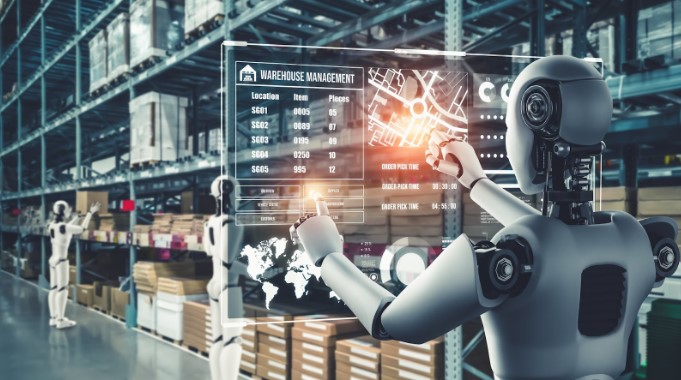
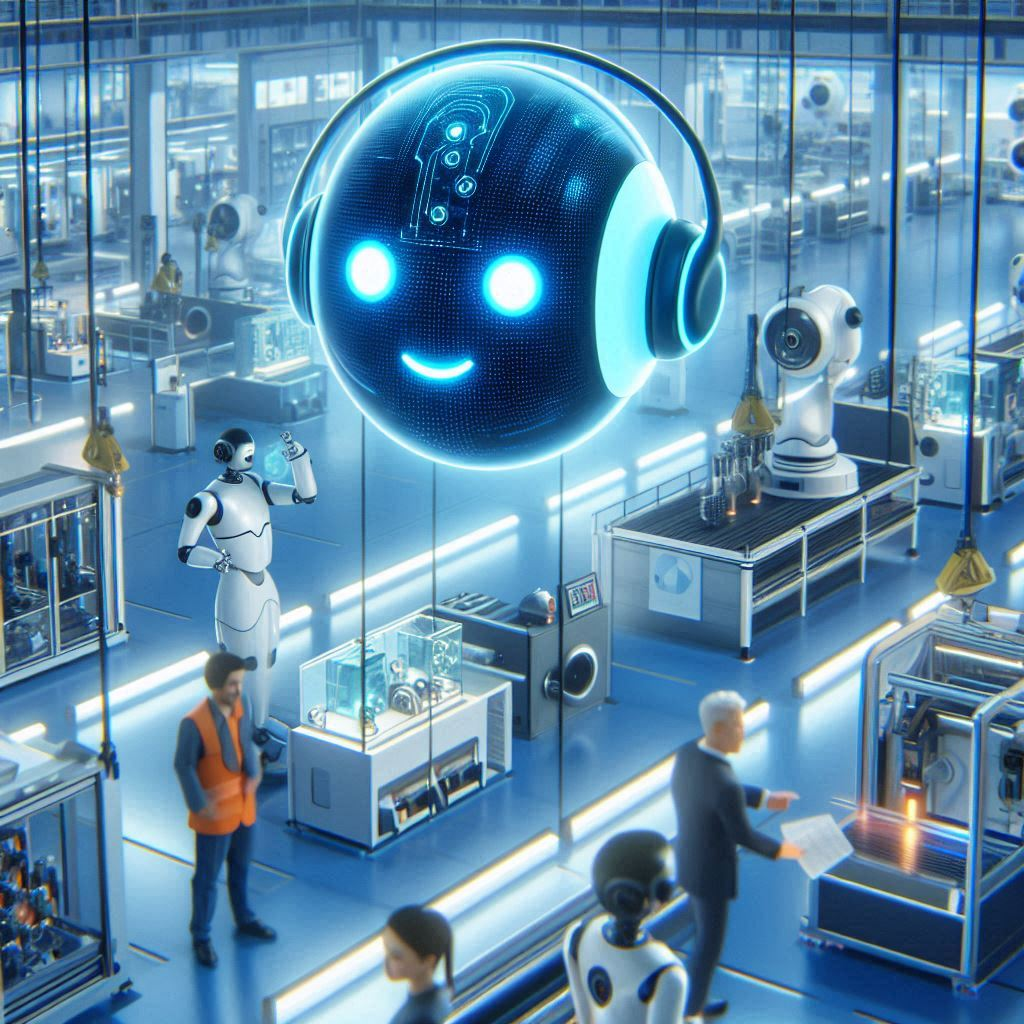
Package delivery robots navigate suburban driveways, underwater vehicles chart deep ocean terrain, self-driving cars transport passengers on highways, and robotic arms guide scalpels through sub-millimeter surgical cuts. This is no longer speculative. It is the working envelope of Autonomous Mobile Robots (AMRs) — machines that pair mechanical mobility with on-board artificial intelligence.
AMRs differ from traditional industrial robots in one structurally important way: they do not follow fixed instructions. They sense, decide, and act inside a dynamic control loop, adjusting to what they encounter rather than waiting for a programmer to anticipate it. In our experience building AMR perception and planning stacks, this is the dividing line that separates a useful autonomous system from an expensive cart on rails.
The market is responding accordingly. The AMR sector was worth $1.24 billion in 2023 and is projected to triple by 2030 at a compound annual growth rate of 13.4% (Next Move Strategy Consulting, 2024 — published-survey). But headline numbers tell you very little about whether AI in robotics actually works in the field. The engineering questions are harder, and they are what this article addresses.
How does AI change what a mobile robot can do?
Pre-AI robots follow fixed instruction sequences. An AMR executes a policy. That difference matters because policies are evaluated against sensor input in real time — which means perception, decision-making, and actuation all have to share a budget measured in milliseconds.
Three capability families do most of the work:
- Perception. Computer vision and sensor fusion (LiDAR, depth cameras, IMU) build a usable model of the environment. The model is rarely complete; the AMR has to act on partial information.
- Decision-making. Planning and reinforcement learning select actions consistent with the goal and the current model. Generative AI is increasingly used for route candidate generation, especially in cluttered or partially-mapped spaces.
- Interaction. Natural language processing and gesture recognition let humans hand off intent without specialised interfaces — useful in clinical, logistics, and service settings.
None of these run for free. The on-board compute envelope — typically a Jetson-class module or a small GPU paired with a CPU — has to host inference for multiple models concurrently, often under thermal constraints. This is where engineering judgement, not algorithmic novelty, decides whether a robot ships.
AI’s diverse applications in AMRs
Revolutionising supply chain with AI-powered drones
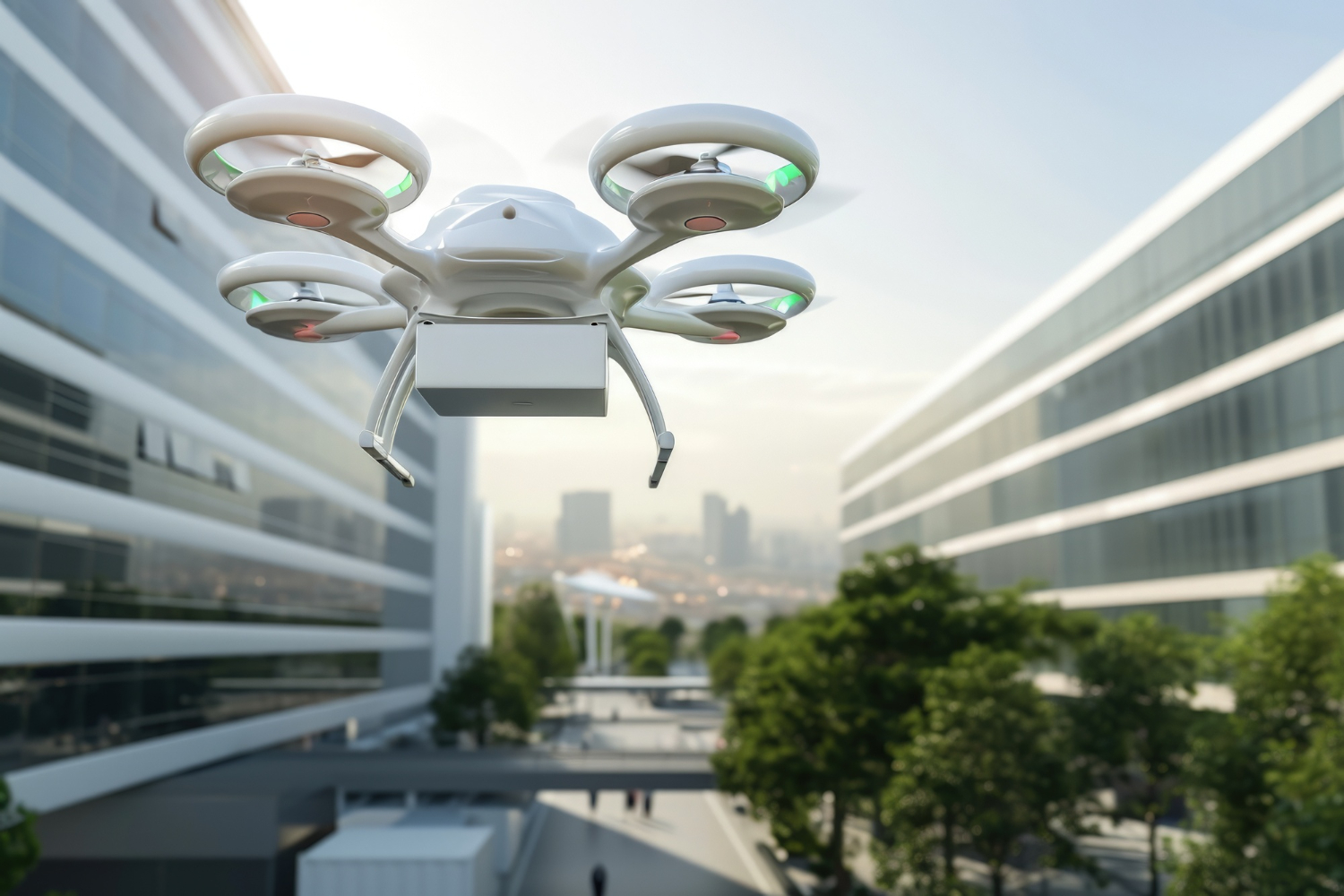
Last-mile delivery drones now operate in scenarios that grounded earlier systems: crowded city airspace, shifting weather fronts, and moving hazards including foot traffic and bicycles. The shift comes from replacing waypoint following with real-time perception and re-planning.
The work TechnoLynx has done in this space combines computer vision for obstacle detection with generative AI for path candidate evaluation, factoring live traffic and weather data into route selection. The principle generalises: when conditions change faster than a static plan can accommodate, the planner has to be on board. Cloud round-trips do not meet the latency budget.
For context on the market trajectory, the global delivery drones segment is estimated at USD 0.69 billion in 2024 and projected to reach USD 1.75 billion by 2029, at a 20.33% CAGR (Mordor Intelligence, 2024 — published-survey). The bottleneck is no longer airframe cost; it is autonomy reliability under adverse conditions, and that is where the AI architecture matters. We discuss the broader implications in our piece on the transformative role of AI in supply chain management and how it interacts with AI-driven urban design.
Unveiling the oceans with AI-driven USVs

Underwater exploration is a clear case where autonomy is not a luxury. Communication bandwidth is severely constrained — acoustic links carry a few kilobits per second at best — so a remote operator cannot drive an Unmanned Surface Vehicle (USV) the way they would drive an ROV in a swimming pool. The vehicle has to handle the loop locally.
Modern USVs use computer vision for underwater object detection, integrate inertial and acoustic sensors for navigation, and exploit IoT edge computing so the on-board stack can decide without surfacing. NLP layers facilitate higher-level mission updates from onshore teams when bandwidth permits, but the moment-to-moment behaviour is the robot’s responsibility.
The global USV market is projected to grow from $0.8 billion in 2023 to $1.2 billion by 2028 at a 10.3% CAGR (MarketsandMarkets, 2024 — published-survey). For a deeper look at the on-board inference patterns that make this feasible, see our notes on generative AI and GPU-accelerated edge compute.
Conquering the cosmos with AI-equipped rovers
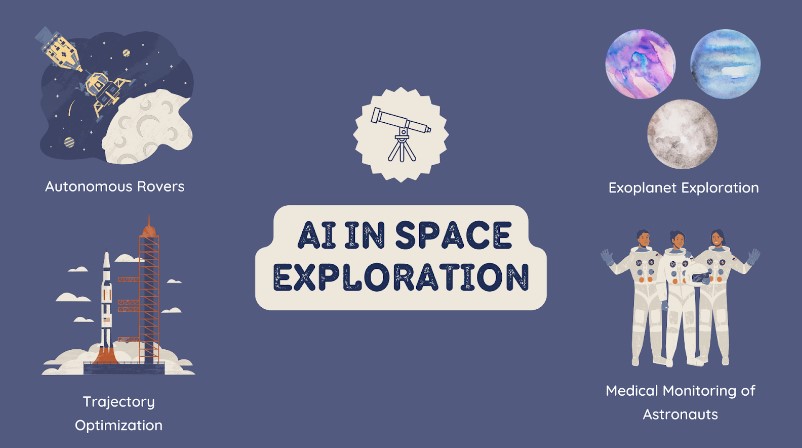
Space exploration sharpens the autonomy argument further. Round-trip light delay to Mars varies between four and twenty-four minutes; teleoperation in the traditional sense is impossible. A rover that waits for instructions wastes solar daylight. A rover that decides locally — within bounded, verified policies — gets science done.
AI-equipped rovers use machine vision for terrain classification and obstacle avoidance and apply generative AI approaches to plan exploration routes from sensor data. NASA’s Perseverance rover, operating on Mars since 2021, has used its on-board AutoNav system to traverse and sample autonomously — a working demonstration of bounded autonomy in an environment where supervision is not an option. We expand on the broader pattern in exploring outer space with the help of AI innovations.
Redefining food service with AI-powered kitchen assistants
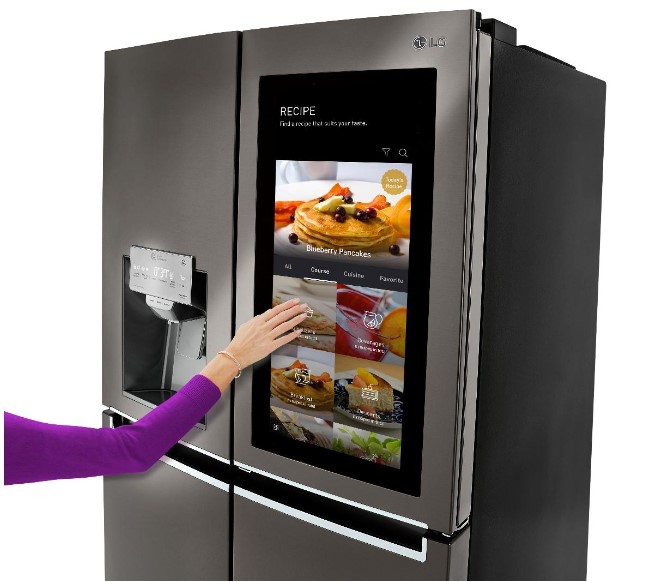
The food service industry has different constraints — abundant connectivity, but tight cost margins, high turnover, and food-safety regulation. AI-powered kitchen assistants address persistent labour shortages and quality variance by handling the repetitive, attention-intensive parts of service work.
These systems use computer vision and deep learning to identify ingredients and monitor cooking processes, ensuring consistent doneness and portion control. Generative AI handles personalised recipe recommendations conditioned on dietary restrictions, and NLP allows chefs to interact with the robot the way they would with a junior cook. We have written about how this reshapes operations in how the food industry is reconfigured by AI and edge computing.
The future of surgery with AI-assisted surgical robots
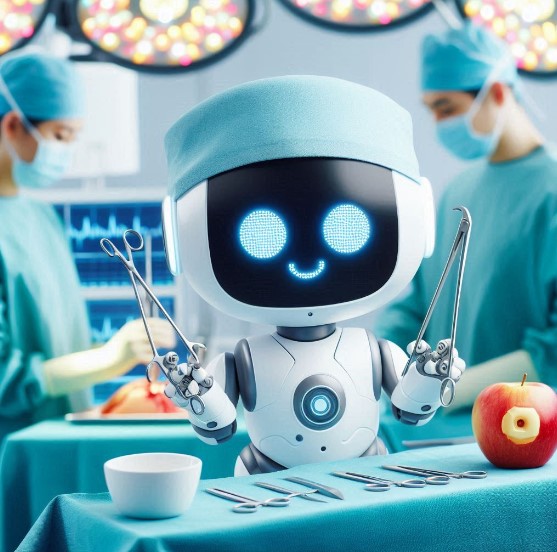
AI-assisted surgical robots operate under the strictest reliability budget in the AMR space. The robot does not replace the surgeon; it amplifies precision and stabilises tremor while the surgeon retains decision authority. Haptic feedback layered through augmented reality interfaces gives the operator a calibrated sense of tissue resistance — closing the loop that pure visual feedback leaves open.
The market signal here is meaningful: the surgical robots segment is projected to reach $29.8 billion by 2025 (Bajaj, 2024 — published-survey). The engineering signal matters more. Regulatory clearance for these systems requires deterministic latency, traceable decision paths, and explicit human-override semantics — constraints that should also be informing safety design in every other AMR domain, even when regulators do not yet require it.
Where the AMR autonomy stack actually meets each application
| Application | Primary AI capability | Latency budget | On-board vs cloud |
|---|---|---|---|
| Delivery drones | Vision + path re-planning | Tens of milliseconds | Mostly on-board |
| USVs | Vision + acoustic fusion | Hundreds of milliseconds | Fully on-board |
| Planetary rovers | Terrain classification + AutoNav | Seconds | Fully on-board |
| Kitchen assistants | Vision + NLP | Hundreds of milliseconds | Hybrid |
| Surgical robots | Vision + haptic + control | Single-digit milliseconds | Fully on-board |
Deployment architecture comparisons across sectors reveal this pattern—no benchmark data exists yet. The table is meant as a decision aid, not a specification.
Challenges and the road ahead
Four core engineering challenges still block full AMR capability.
Safety under distribution shift. A policy that performs well in a tested environment can fail unpredictably when conditions drift — new lighting, new obstacle types, partial sensor degradation. Robust evaluation against worst-case scenarios is harder than evaluating average performance, and the industry has not converged on a standard methodology.
Data privacy and provenance. AMRs collect rich sensor data continuously. The question of who owns it, where it is stored, and what consent applies — particularly in public or clinical environments — is increasingly an architectural concern, not just a legal one.
Regulation lag. Aviation, maritime, automotive, and medical regulators move at different speeds and apply different evidentiary standards. A system certified for one jurisdiction may have to be rebuilt for another. Planning for regulatory friction early is cheaper than retrofitting.
Explainability. When an AMR makes a wrong decision, the operator needs to understand why. End-to-end neural policies are difficult to introspect. The systems that ship tend to be hybrid — neural perception, classical planning, with verifiable interfaces between the two.
Active research is addressing all four, but the practical path forward is incremental: better fail-safe mechanisms, more conservative deployment envelopes, and operator-in-the-loop designs that earn autonomy progressively rather than claiming it up front.
What TechnoLynx can offer
TechnoLynx designs AMR autonomy stacks to work within these constraints rather than avoid them. The capability mix depends on the application, but the engagement model is consistent: we own the engineering outcome.
Computer vision
We design and train object detection and recognition systems suited to the operating domain — obstacle avoidance in cluttered dynamic environments, product classification in warehouse settings, terrain segmentation for outdoor robots. The work includes calibration, edge-case mining, and model compression for on-board deployment.
Generative AI
We use generative approaches for path candidate generation, anomaly detection, and predictive maintenance. These models supplement, rather than replace, deterministic planners — the combination is what makes the system both flexible and verifiable.
GPU acceleration
GPU-powered systems are the foundation for real-time inference at the edge. We size the compute envelope to the workload, profile inference graphs against thermal limits, and apply CUDA/TensorRT optimisations where they pay back.
IoT edge computing
For AMRs operating with intermittent or absent connectivity, on-board data analysis and decision-making are mandatory. We architect the stack so the robot remains capable when the network is not, and so it can synchronise efficiently when it returns.
Natural language processing
Voice control and natural language interaction reduce the cognitive load of operating an AMR alongside other work. We integrate ASR and intent recognition pipelines tuned for the acoustic environment of the deployment.
AR/VR/XR
For operator training and remote supervision, we build immersive virtual environments that let operators learn the system before it is in front of them and supervise it effectively when it is.
If you are evaluating AI for an AMR programme — at the prototype, pilot, or scale stage — contact us to discuss where the engineering risk actually sits.
Conclusion
Adding AI to a mobile robot is not a bolt-on feature upgrade. It is the layer that turns mobility into autonomy, and it brings its own engineering constraints — latency, compute envelope, safety, explainability, data governance. The AMR market is growing because the underlying capability is real, but the gap between a working demonstration and a deployable system remains substantial. That gap is where TechnoLynx works.
The next decade of AMRs will be defined less by which company has the best individual model and more by which teams understand how to compose perception, planning, and interaction into systems that earn their autonomy. We are not neutral observers of that shift. We are building toward it.
Frequently Asked Questions
What is an Autonomous Mobile Robot (AMR)?
An AMR is a robot that combines mobility with on-board perception and decision-making, allowing it to operate in dynamic environments without continuous human control. Unlike fixed-path industrial robots, AMRs sense their surroundings, plan locally, and adjust their behaviour in real time.
How does AI make AMRs different from traditional robots?
Traditional robots execute pre-programmed scripts. AMRs execute policies that are evaluated against live sensor data, which means perception, decision-making, and actuation all run in a tight real-time loop. This is what enables them to handle conditions a programmer cannot anticipate in advance.
Where do AMRs actually work today?
Real deployments span delivery drones in urban environments, unmanned surface vehicles for marine exploration, planetary rovers like NASA’s Perseverance, kitchen assistants in food service, and surgical robots in operating theatres. Each domain has different latency, connectivity, and reliability constraints, and the AI stack is tuned accordingly.
What are the main engineering challenges for AMRs?
The four hardest problems are safety under distribution shift (when conditions drift from training), data privacy and provenance, regulatory variability across jurisdictions, and explainability of neural decisions. Most production systems address these through hybrid architectures — neural perception with classical, verifiable planning layers on top.
References
- Bajaj, R. (2024, March 6). AI-Powered Surgical Robotics Transforming Precision Surgery with Enhanced Accuracy and Patient Outcomes. LinkedIn. Retrieved June 15, 2024.
- MarketsandMarkets. (2024, January 16). Unmanned Surface Vehicles Market Size, Share, Industry Report, Revenue Trends and Growth Drivers. MarketsandMarkets. Retrieved July 5, 2024.
- Mordor Intelligence. (2024). Drone Delivery Market Size, Analysis & Statistics. Mordor Intelligence. Retrieved July 5, 2024.
-
Next Move Strategy Consulting. (2024, April). AMR Market Size and Share Statistics – 2030. Next Move Strategy Consulting. Retrieved July 6, 2024.