Introduction
Two arms, two legs, one blueprint—yet no two faces, no two gaits, no two voices repeat across the seven billion. Each of us has their own genes, which are expressed to create the wonderful individuals we are. When unpacking a gift, what we are looking forward to is the contents of the box, not the paper wrap. The same applies to humans. True beauty comes from within, but, as with presents, nice wrapping really sets the mood.
The cosmetics industry has turned that wrapping into a multibillion-dollar economy. We see three places where AI changes the game in practice: helping people choose products, replacing animal testing with skin-modelling pipelines, and supporting cosmetic surgery with computer-vision guidance. None of these is futuristic — the underlying technologies (real-time computer vision on consumer hardware, augmented-reality try-on, edge inference, and speech-driven NLP assistants) are already deployed. What is missing is the integration.
Make me Stunning
Throwback
Annual global revenues in beauty now exceed half a trillion dollars, fueled by influencer launches, quarterly reformulations, and an accelerating product cycle. Cosmetics have been around for ages — in fact, since ancient times. Excavations have shown that ancient Egyptians used to grind minerals such as green malachite or black galena to create makeup, or used red ochre to blush their cheeks. The Iliad and the Odyssey were the first sources that showed that the Greeks infused plants, flowers, spices, and fragrant woods like myrrh and oregano with oil to create fragrances (Cosmetics in the Ancient World — World History Encyclopedia). Some of these preparations proved to be poisonous or just gross, so we stopped using them, but the hunt for external beauty still goes on.
How does AI actually help shoppers in a cosmetics store?
You walk into the mall. There it is, shiny, magnificent — the cosmetics store. Rows after rows of primers, foundations, contours, blushes, lipsticks, moisturisers, shades, and concealers. Deep down, you want to try them all, but you do not have the hours. This is where the modern stack starts to earn its place.
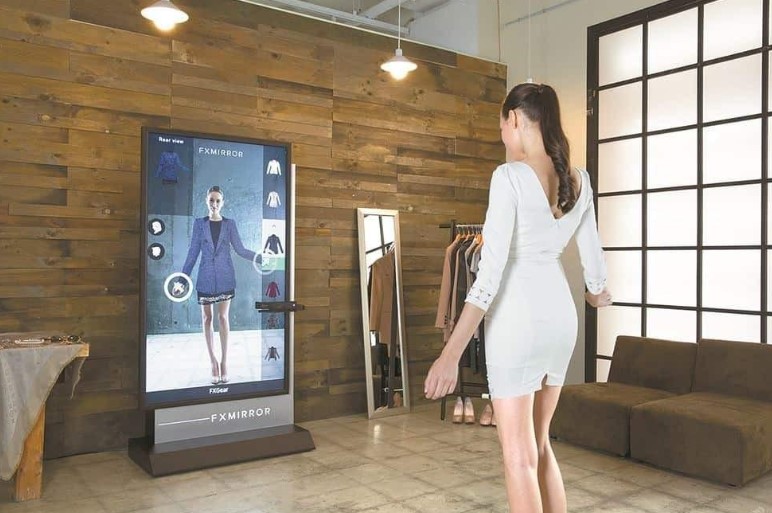
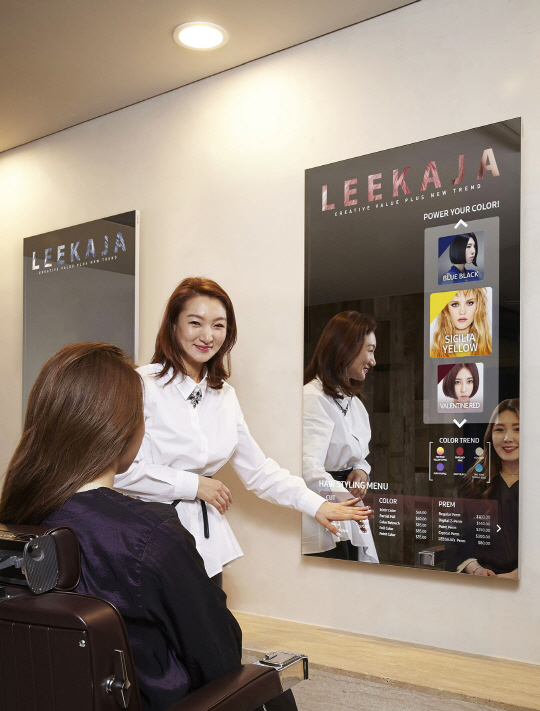
If you read our article on cosmetology, you have seen how smart mirrors can analyse facial characteristics to find the right hairstyle. The same hardware is being repurposed for cosmetics selection. The device uses GPU-accelerated Computer Vision (CV) to scan a face in real time. Through multiple registers of different areas, the mirror identifies skin tone, eye colour and shape, hairstyle, facial symmetry, and even skin condition, and suggests combinations or routine products that work for that specific profile. The underlying models are not exotic — typical pipelines use OpenCV preprocessing, ONNX-exported segmentation networks, and TensorRT-accelerated inference to hit the latency budget that real-time mirror feedback requires.
You will not be convinced just because a machine says so. So show the result. That is the role of Augmented Reality (AR) try-on — a branch of Extended Reality (XR) that overlays the chosen product on the live face feed without applying anything physically.
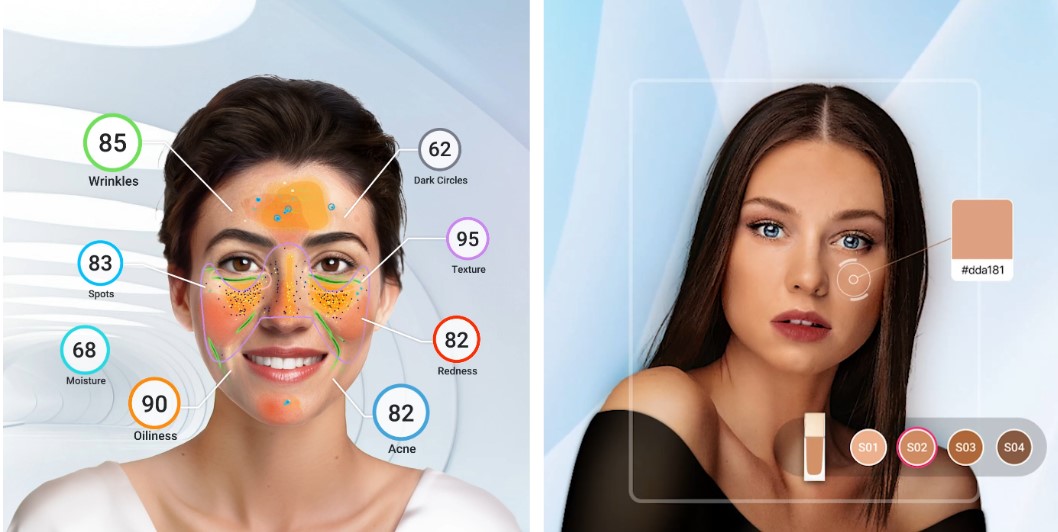
What is missing today — and what closing the loop would look like
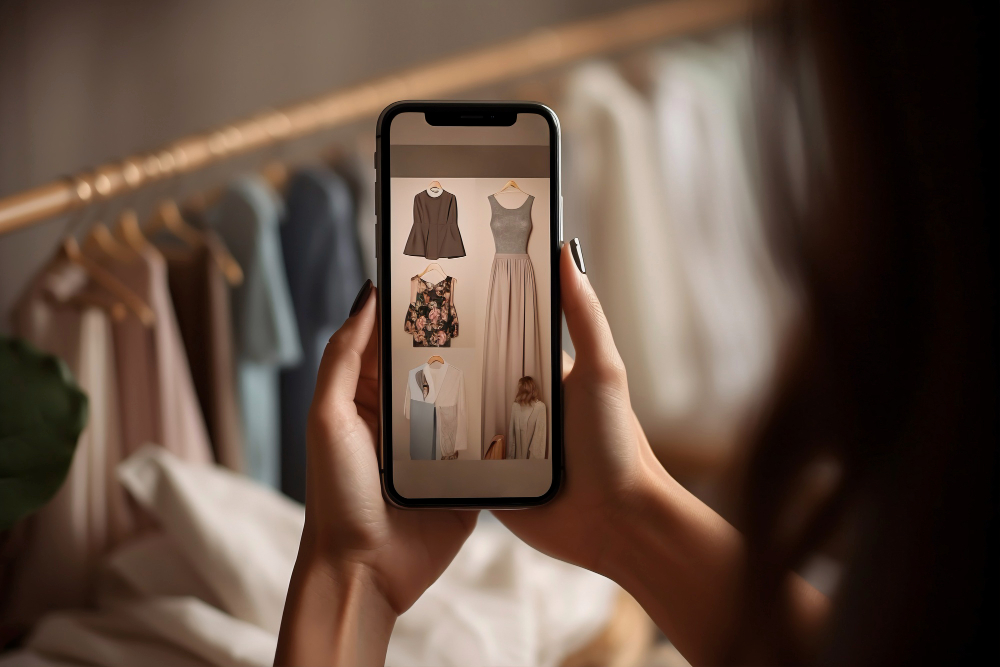
The gap right now is integration. Smart-mirror vendors and cosmetics brands do not yet share product catalogues at the colour-code level. Bridge that, and the mirror moves from advisory to transactional. An established connection to a brand’s cloud service would let the device name the exact SKU and shade code. Add an Internet of Things (IoT) layer — a one-button checkout, with the product routed to your address — and the friction of “I have found it but I still have to open my phone” disappears. The same logic runs on a smartphone camera, so a dedicated mirror is not strictly necessary.
Natural Language Processing (NLP) is the other half of this stack. Digital assistants have used NLP for years to extract intent and form answers (you may want to recall a certain fruit phone at this point). Wrap a speech-to-text-to-speech loop around a product-recommendation model and you have a mirror that responds when asked, “Mirror, mirror on the wall, who is the fairest of them all?” — and gives back something more useful than flattery: a filtered shortlist that respects stated preferences and allergens.
For a broader view of where this stack is heading, see AI Revolutionising Fashion & Beauty.
Why me? Replacing animal testing with skin modelling
Behind the gloss and the Instagram flats lies an older, grimmer practice: formulation testing on animals. Major cosmetics companies continue to test products on animals or, to comply with local regulations, perform these tests in countries where the practice is allowed (These Beauty Brands Are Still Tested on Animals, 2015). The justification is consumer safety; no brand wants product-liability exposure. That is a real concern, but it should not require testing on beings that cannot consent. People for the Ethical Treatment of Animals (PETA) is the largest animal rights organisation in the world, with more than 9 million members and supporters worldwide.
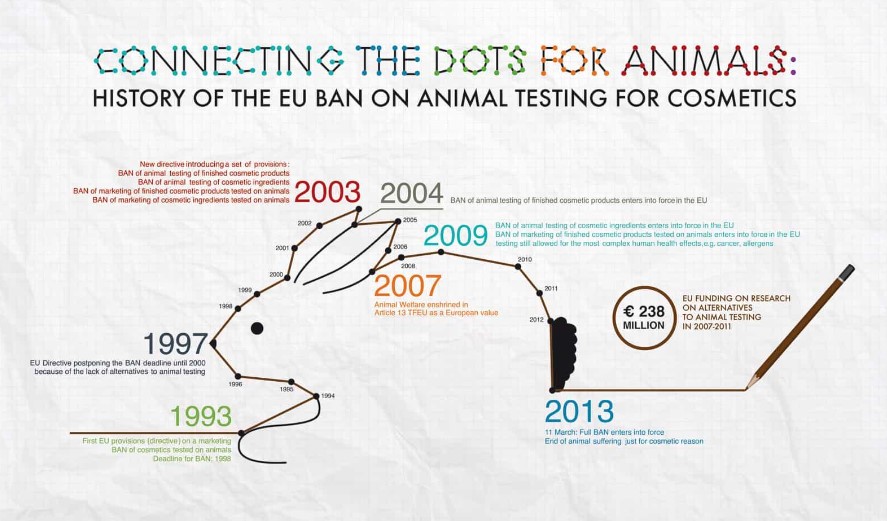
Quick comparison — testing approaches in cosmetics
| Approach | What it measures | Animal involvement | Practical constraint |
|---|---|---|---|
| Traditional animal test | Direct in-vivo reaction | High | Ethically contested; banned in EU and UK for finished cosmetics |
| Human skin-type CV analysis | Surface features, predicted compatibility | None | Needs representative training data across skin types |
| Edge-computed virtual skin panels | Millions of synthetic exposure trials | None | Requires curated, continuously enriched skin database |
| Pet-skincare CV variant | Companion-animal product fit | Voluntary, non-invasive | Smaller market; specialist datasets needed |
The technical core is shared. A well-trained CV algorithm extracts features from skin — texture, pore density, pigmentation, hydration cues — and a downstream model predicts response classes. The same pipeline, with adjusted training data, applies to human skin types (“normal”, “oily”, “dry”, combinations) and, with further tuning, to animal skin for companion product development. Cosmetic safety testing then moves from “expose an animal and observe” to “score a candidate formulation against a skin-feature database and flag risk”.
Running this at scale is where Edge Computing earns its place. Pushing millions of virtual evaluations to local infrastructure keeps latency low and data residency clean, which matters when the inputs are biometric. NLP again sits on top: an ingredient-level filter — “exclude parabens, prefer fragrance-free” — turns a vague search into a concrete shortlist.
It’s Just a Scar — CV in cosmetic surgery
Physicians command trust that few other professions enjoy. There is a specific branch destined to make our looks better — cosmetic plastic surgery. Don’t be fooled: plastic surgery is not only aesthetic. There are cases with a purely functional purpose. Blepharoplasty corrects an eyelid that interferes with vision. Rhinoplasty shapes the nose not only for facial harmony but to allow proper airflow. Scar revision minimises visibility of scars, improves texture, and can even restore mobility and relieve discomfort.
Fashion and current trends shape elective decisions. According to the American Society of Plastic Surgeons, between 2019 and 2022 buttock lifting in women increased by 86%, breast reduction for aesthetic purposes by 54%, and blepharoplasty by 13% (Plastic Surgery Statistics). These are population-scale shifts and useful as market direction, not as a guide to any single procedure.
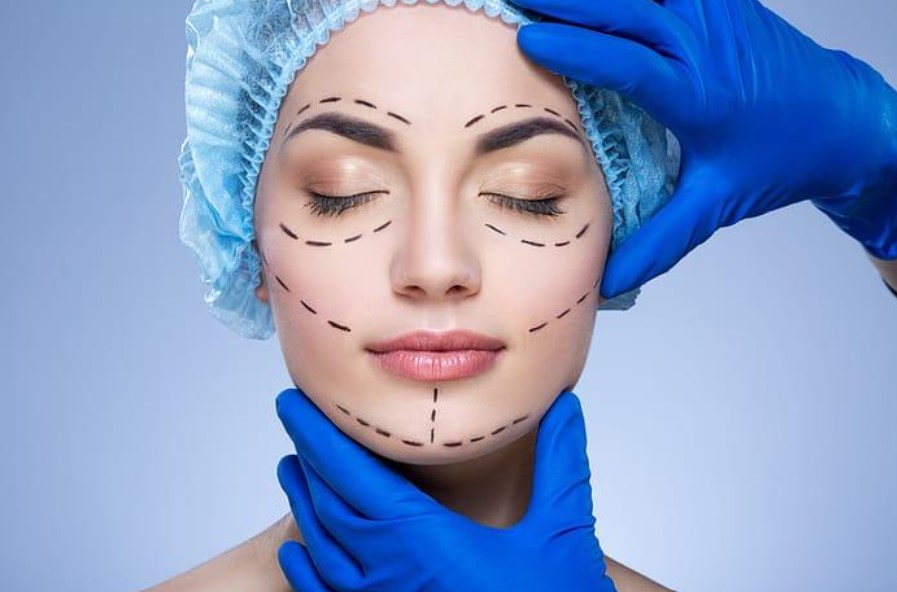
Does it really matter?
The reason someone chooses an operation is their business. What matters is that not every surgery succeeds. Even routine operations can go wrong, with severe implications. Confidence in the surgeon — and the surgeon’s confidence in their plan — is the constraint that AI assistance can soften without replacing.
The usual suspect, CV, contributes before the operation starts. By examining the patient with structured imaging, the surgical team can plan the optimal method, estimate filler dosage, or quantify the tissue volume to be removed — narrowing the band of variability that drives most adverse outcomes. Inside the theatre, an extra pair of computer eyes watching the procedure, or overlaying anatomical guides through AR or Virtual Reality (VR), brings the same benefit that surgical robotics already brings to larger procedures. Devices such as the da Vinci system have shown that precision beyond human limits is a real category — there is no principled reason to limit it to general surgery. A cosmetic-surgery-grade assistive platform, with vision-guided planning and robotic-arm execution, would target maximum precision, minimum scarring, shorter rehabilitation, and a tighter outcome distribution.
For more on the visualisation side of this, see How Augmented Reality is Transforming Beauty and Cosmetics.
Summing Up
Concrete, testable pathways exist for artificial intelligence to reshape cosmetics R&D, replacing outdated protocols with faster, safer methods. Computer Vision and Natural Language Processing change how shoppers interact with products at the shelf and the mirror. The same vision pipelines, with curated skin datasets and edge-computed inference, are a credible alternative to animal testing for many cosmetic formulations. In cosmetic surgery, CV-driven planning and AR-overlay guidance tighten the outcome distribution that matters most to patients. None of these are blue-sky promises — the parts exist; what is missing is integration across brands, devices, and clinical workflows.
What We Offer
Narrowing the lens reveals where Chasing Beauty Twist converges. In cosmetics and beauty tech that means CV pipelines for real-time facial analysis, AR overlays calibrated to specific product catalogues, edge-deployed inference for biometric data that should not leave the device, and NLP layers that turn natural questions into structured product searches. We are comfortable working across the full stack — from camera capture and GPU-accelerated inference through to the cloud and IoT plumbing that closes the loop with brands and retailers.
If you are thinking through where AI fits in a cosmetics product, a try-on experience, or a surgical-assist platform, get in touch. We are happy to talk through what is realistic and what is not.
Frequently Asked Questions
How do smart mirrors recommend cosmetics in real time?
A smart mirror runs a GPU-accelerated computer-vision pipeline that segments the face, extracts skin tone, eye colour, facial geometry, and skin-condition cues, then matches the profile against a product catalogue. Inference is typically handled by ONNX models with TensorRT acceleration so the recommendation can be paired with an AR overlay at interactive framerates.
Can AR try-on replace physical sampling at the cosmetics counter?
For shade and colour decisions, AR try-on is already accurate enough to filter a long list down to a few candidates. It does not replace the tactile and skin-chemistry parts of sampling — wear time, texture, and reaction to individual skin still require physical product — but it removes most of the wasted trips through the shortlist.
Is it really possible to test cosmetics safety without animals?
For a growing class of formulations, yes. The pattern is to build a curated skin-feature database, train models that predict response classes, and run millions of synthetic exposure trials on edge infrastructure. This does not eliminate every regulatory requirement, but it has displaced significant volumes of animal testing already, especially in jurisdictions where finished-product animal tests are banned.
Where does AI fit in cosmetic surgery without overstepping the surgeon?
The strongest fit is in planning and intra-operative guidance: CV-based measurement of target tissue, AR overlays that mark the surgical plan against live anatomy, and robotic assistance for the precision-bound steps. The surgeon stays in the decision loop; AI narrows the band of variability that drives most adverse outcomes.
Works Cited
Admin (2024). ‘The Future of Plastic Surgery with AI and Personalized Procedures’, Small business articles and business insurance information, 11 January. (Accessed: 27 March 2024).
- Cosmetics (no date). Understanding Animal Research.
- Cosmetics in the Ancient World (no date). World History Encyclopedia. (Accessed: 27 March 2024).
- Med, I.L. with the (2018). ‘Make Up and Beauty in Ancient Greece’, In Love with the Med, 17 September. (Accessed: 27 March 2024).
- Plastic Surgery Statistics (no date). American Society of Plastic Surgeons. (Accessed: 27 March 2024).
- Smart Makeup Mirror: The Complete Guide 2024 (2024). PerfectCorp. (Accessed: 27 March 2024).
- These Beauty Brands Are Still Tested on Animals (2015). PETA. (Accessed: 27 March 2024).