Mixed reality moved out of the demo reel and into a handful of everyday workflows somewhere between 2023 and 2026. The interesting question is no longer “what is MR” — it is which use cases actually stuck, which ones quietly disappeared, and what that tells you if you are scoping a new programme. Stakeholders still use “AR”, “VR”, “MR”, and “XR” interchangeably, which masks the fact that the everyday wins so far have clustered in a narrow slice of that space.
The honest picture in 2026: AR running on smartphones has become routine for specific tasks. Headset-based MR has carved out a focused-session niche for work, entertainment, and fitness. Daily, all-day headset use remains deferred. That gap between phone-AR and headset-MR is the most useful lens for reading the everyday examples below.
What counts as “everyday” mixed reality?
Before listing examples, it helps to draw a line. Mixed reality, in the working definition used across this site, means digital content that is registered to the physical world — placed in your room, anchored to a surface, locked to your face — and that responds to the geometry and lighting it sits in. That excludes ordinary video calls, 2D screen overlays, and pure VR sessions that replace your surroundings entirely. It includes a smartphone app that drops a chair on your living-room floor, a headset that pins a holographic dashboard to a wall, and a navigation arrow painted onto the street ahead of you.
The category boundary matters because the underlying engineering does. Pinning a virtual object to a real surface needs simultaneous localisation and mapping, plane detection, and a rendering loop that composites virtual content with the camera feed at 60+ frames per second. Whether a given device class can actually sustain that render loop under real content load, rather than in a demo, is the question our GPU Performance Audit is built to answer. That is the [observed-pattern] minimum frame budget below which the illusion of “object stays put” breaks. Phones meet it now; entry-level headsets meet it; cheap web AR sometimes does not.
The examples that actually became routine
Five categories of mixed reality reached mainstream consumer use by 2026 in our experience watching this space, and they cluster tightly around tasks that benefit from spatial registration without demanding long sessions.
| Use case | Device class | Why it stuck |
|---|---|---|
| Virtual try-on (glasses, makeup, clothes) | Smartphone | Short session, clear purchase decision, tolerates imperfect occlusion |
| AR navigation (Google Maps Live View, Apple Maps) | Smartphone | High-value moment, used briefly, augments existing app habit |
| In-room furniture placement (IKEA Place and peers) | Smartphone | Replaces a slow imagination task with a fast visual one |
| Face-and-world AR filters (Snap, Instagram, TikTok) | Smartphone | Social loop, sub-minute sessions, low fidelity acceptable |
| Headset MR (Apple Vision Pro, Meta Quest 3 / 3S) | Headset | Focused work, entertainment, fitness — not all-day wear |
The pattern is consistent: the everyday categories are either short, task-specific phone interactions or seated, session-bounded headset use. The “always-on wearable computer” future continues to be deferred — that is a [observed-pattern], not a definitive forecast, but the daily-active-user numbers have not moved.
Virtual try-on at the purchase decision
Try-on is the cleanest example of MR pulling its weight commercially. Warby Parker, Sephora, L’Oréal, Nike, and dozens of smaller brands route mid-funnel traffic through a face-tracked AR session. The session lasts under a minute. It tolerates approximate fit because the user is comparing against other approximations, not against ground truth. We cover the production constraints of this pattern in AR in retail: virtual try-on at production scale — the engineering reality is more demanding than the demos suggest.
AR navigation when you actually need it
Google Maps Live View and Apple Maps Look Around use the phone camera plus IMU plus visual positioning to paint walking arrows onto the street. People do not use it for every trip. They use it when they emerge from a metro station and cannot tell which way they are facing. That is a high-value, short-session moment, which is exactly where AR earns its keep. The pattern recurs across consumer AR: short bursts, high decision value, tolerant of registration drift.
Headset MR as a focused-session device
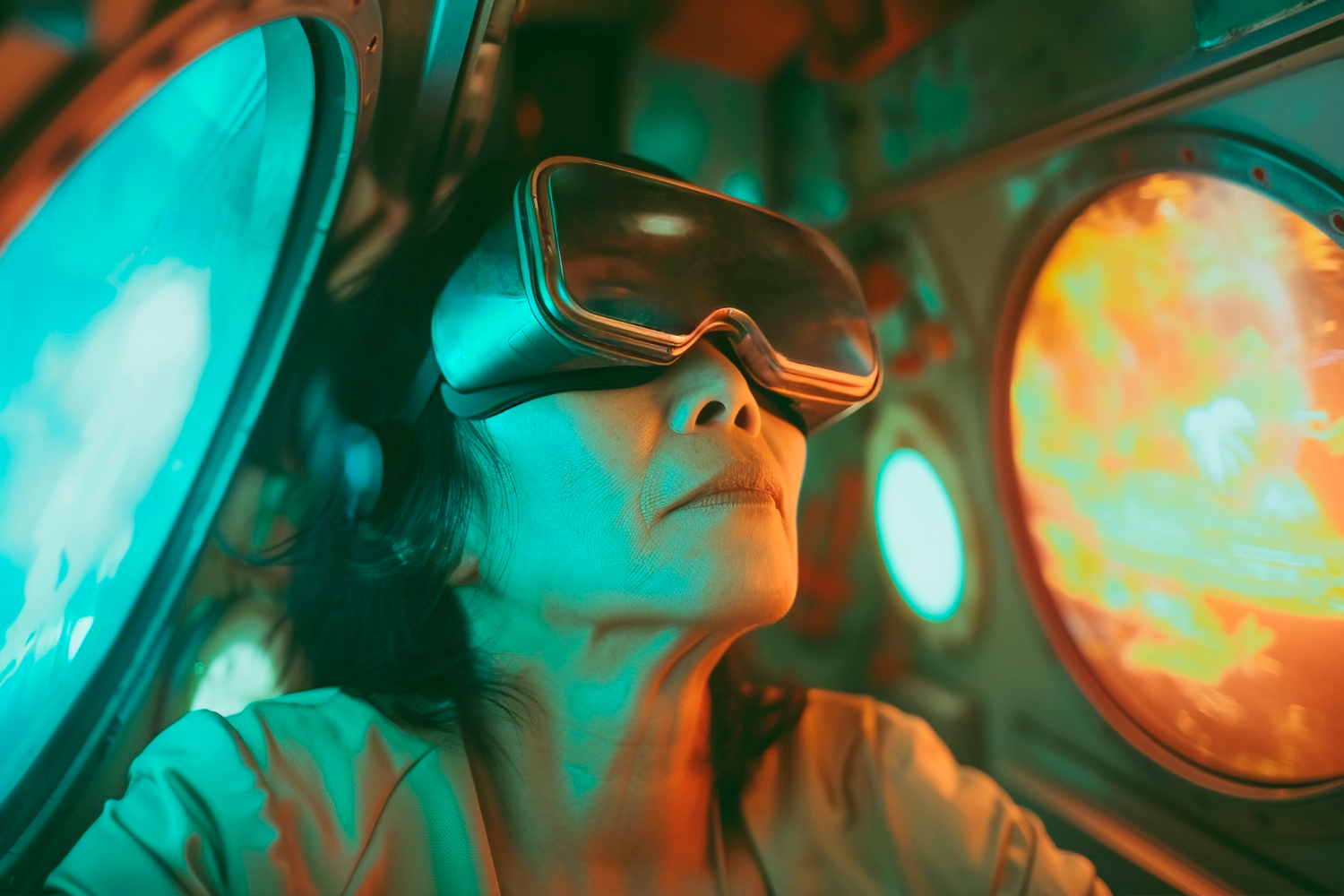
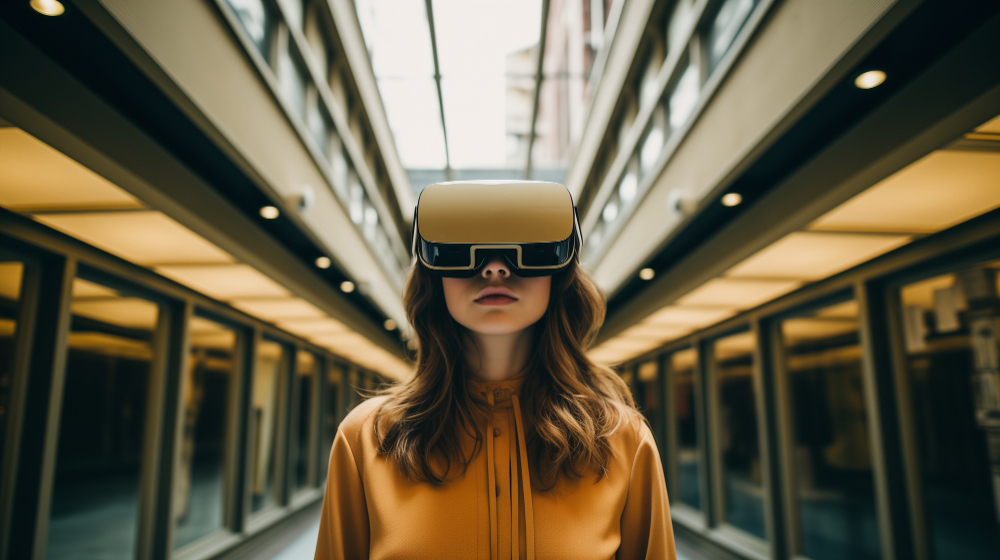
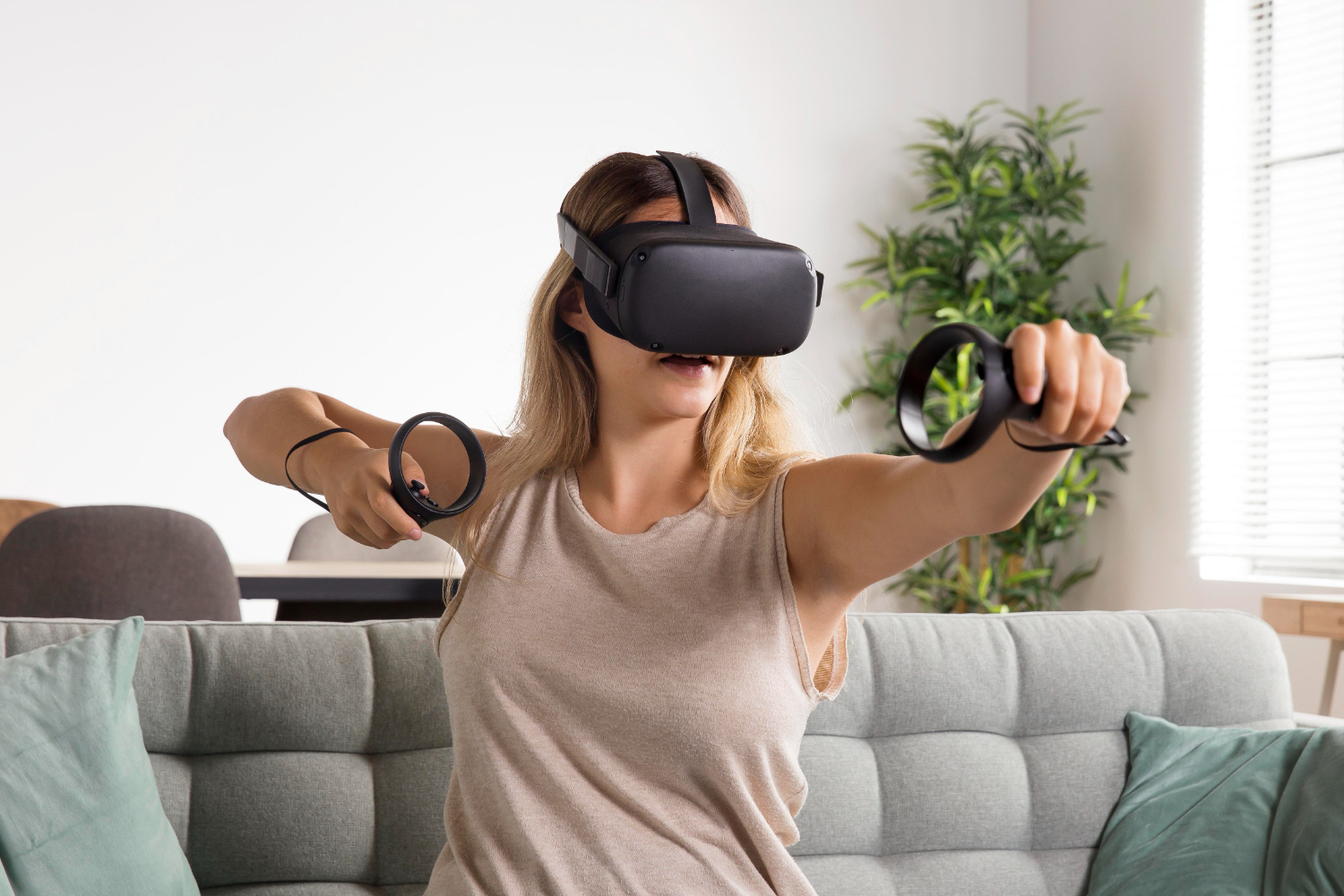
Apple Vision Pro and Meta Quest 3 / 3S are the first headsets with passthrough fidelity good enough that “mixed reality” is the default mode, not a novelty. The daily-active categories on these devices in 2026 are productivity (multi-monitor virtual displays for focused work), entertainment (immersive video, gaming), and fitness (Supernatural, Les Mills XR, FitXR). None of these are all-day uses. Sessions cluster in the 15–60 minute range, which matches comfort and thermal envelopes of the current hardware generation.
Why the other examples in the old MR pitch deck did not stick
The original mixed-reality marketing — circa 2018 — featured surgeons consulting holographic CT scans, factory workers guided by floating arrows, designers reviewing 3D CAD in a shared room. Those use cases exist, but they remain enterprise pilots rather than everyday tools. The reason is mostly the device side: AR glasses with the field of view, weight, and battery life needed for shift-long use are not yet a consumer product. Microsoft discontinued the consumer HoloLens line. Magic Leap pivoted to enterprise. Smart glasses (Meta Ray-Ban, Xreal, Android XR partners) have grown as a category, but they are not yet a holographic compute platform — they are camera-and-audio devices with light AR overlays.
The decision framework that follows from all this: if you are scoping a new MR programme today, choose your paradigm based on environmental coupling, session duration, and authoring economics — not on which headset generated the loudest keynote. We work through the paradigm-selection logic in detail in AR vs VR vs XR: choosing the right reality paradigm, the hub article this piece supports.
How everyday smartphone MR actually works
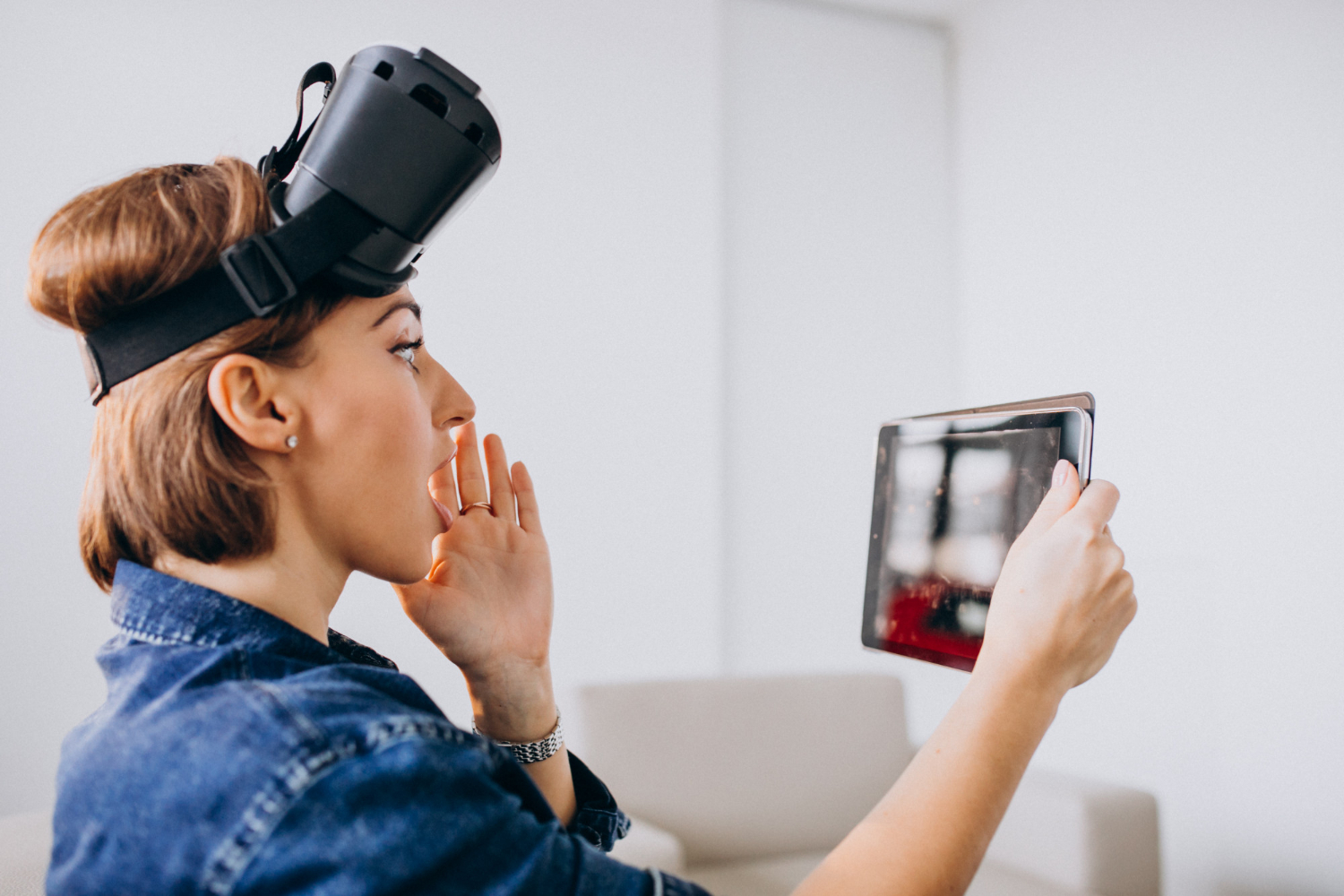
The engineering stack under a virtual try-on or a Live View navigation arrow is, by 2026 standards, mature. ARKit on iOS and ARCore on Android provide real-time SLAM, plane detection, face tracking, hand tracking, and ambient lighting estimation. The phone’s camera, IMU, and — on newer devices — lidar feed the perception stack. The rendering layer composites virtual content with the camera feed at 60 frames per second or higher on supported devices; that frame budget is the floor below which registration starts to feel wrong.
The newer wrinkle is generative content. Apple Intelligence and Gemini Nano put on-device generative models within reach of the AR runtime, which means the virtual object placed in your room does not have to be pre-authored. That changes the content-authoring economics, which has historically been one of the bigger barriers to scaling MR beyond catalogue items.
Will headsets replace phones for everyday use?
Not within the next decade. We pay close attention to this question because the answer shapes how clients should sequence their AR investments. The honest read on the next five years: smart glasses become a real consumer category — used for specific tasks alongside the phone, not as its replacement — and headsets remain focused-session devices for work, entertainment, and fitness. The phone stays the dominant computing form factor through 2030 in any plausible scenario we have seen modelled.
That has implications for where engineering investment should go. Smartphone AR runtimes are the broadest reach. Headset MR is the deepest engagement per session. Smart-glasses AR is the bet on the next form factor, but it is not yet the bet you make if you need users today. The right paradigm is rarely the most futuristic one; it is the one whose constraints match the use case.
Frequently asked questions
What are everyday examples of mixed reality in 2026?
Five that have reached mainstream consumer use: (1) virtual try-on for glasses, makeup, hairstyles, and clothes on smartphones; (2) AR navigation in Google Maps Live View and Apple Maps; (3) IKEA Place and equivalents for placing furniture in your home; (4) Snap Lens-class face-and-world AR filters; (5) Apple Vision Pro and Meta Quest 3 / 3S for productivity, entertainment, and gaming in MR mode. The category has moved from novelty to routine in many of these use cases.
Which mixed-reality applications are people actually using daily?
Honestly, the daily-active categories in 2026 are still narrow: AR navigation, face filters in messaging and short-form video, virtual try-on at purchase decisions, and a growing fitness / wellness category on dedicated headsets (Supernatural, Les Mills XR, meditation apps). The “wear a headset for hours a day” future continues to be deferred; the “use AR on your phone for a specific task” future is here.
How does mixed reality work in everyday smartphone apps?
ARKit (iOS) and ARCore (Android) provide real-time SLAM, plane detection, face tracking, and lighting estimation; app developers add 3D content and interaction on top. The phone’s camera, IMU, and (on newer phones) lidar feed the perception stack; rendering composites virtual content with the camera feed at 60+ fps. The latest evolution is on-device generative models (Apple Intelligence, Gemini Nano) producing AR content on the fly rather than requiring pre-authored assets.
Will mixed reality replace smartphones for everyday use?
Not within the next decade. Smartphones remain the dominant computing form factor through 2026; smart glasses and headsets grow as a complementary category. The realistic five-year view: smart glasses become a real consumer category (Meta Ray-Ban, Xreal, Android XR partners) used for specific tasks alongside the phone, not as its replacement. Headsets remain a focused-session device for work, entertainment, and fitness, not an all-day wearable.
Daily routines already shaped by mixed reality
Retail apps now let shoppers preview furniture at home before purchase, surgeons rehearse procedures on patient-specific anatomy, and warehouse staff see pick lists overlaid on shelving—all shipped features, not prototypes. Mixed Reality Everyday Life rewards teams that measure first and argue later — start with the smallest instrumented slice and let the numbers settle the design.
The everyday MR shortlist is shorter than the marketing once promised, but the categories that did stick share a structural signature — short sessions, clear value moments, paradigm matched to use case. That is the framing we bring when scoping new programmes: pick the paradigm before the vendor, and pick it against constraints the user actually has.
Image credits: Freepik