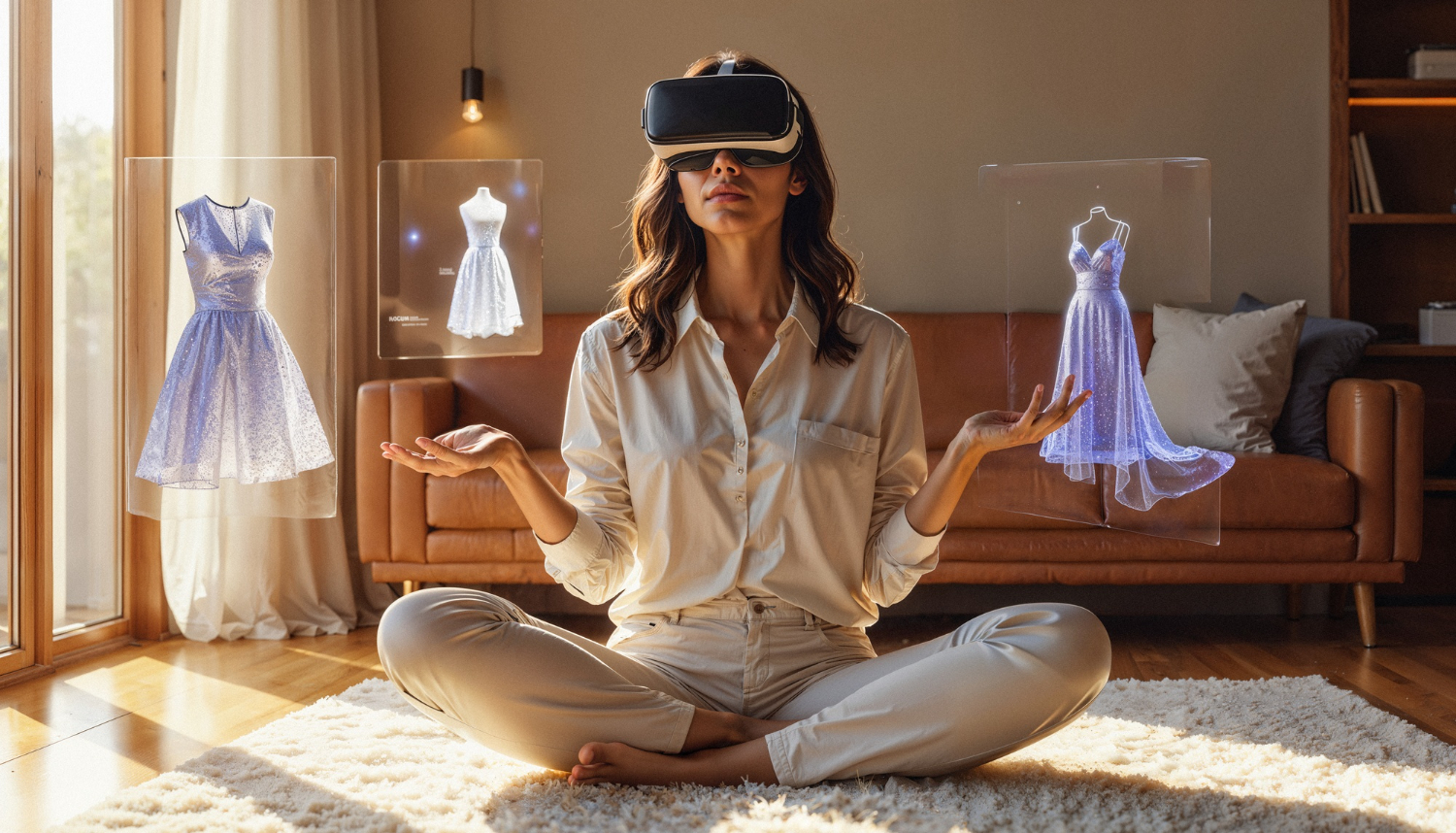
Virtual reality solves a narrower set of problems than its marketing has ever admitted, and that narrowness is exactly where the interesting engineering lives. The honest 2026 read is that VR has earned its place in a handful of high-value categories — high-stakes training, specific clinical protocols, immersive design review, and a few entertainment formats — and that everything outside those categories tends to drift back to flat screens within a year of the pilot. The question worth asking is not “what can VR do?” but “where does the headset actually beat the next-best alternative for long enough to recover its production cost?”
That framing changes how we think about VR projects. It moves the conversation away from feature lists and toward the specific operational constraints — latency budgets, content cost per immersive minute, session-length limits, device-tier rendering — that decide whether a deployment survives contact with real users. The same engineering discipline shows up across our AR/VR/XR work: the pipeline has to hold its budget on the devices your audience actually owns, not the flagship headset on the demo bench.
Where VR actually earns its keep
Training simulations, phobia treatment, and remote collaboration represent VR’s strongest use cases—each replacing scenarios where physical presence carries unacceptable risk, cost, or distance. Each one shares a common structural property: the physical version of the activity is either dangerous, expensive, geographically scattered, or impossible.
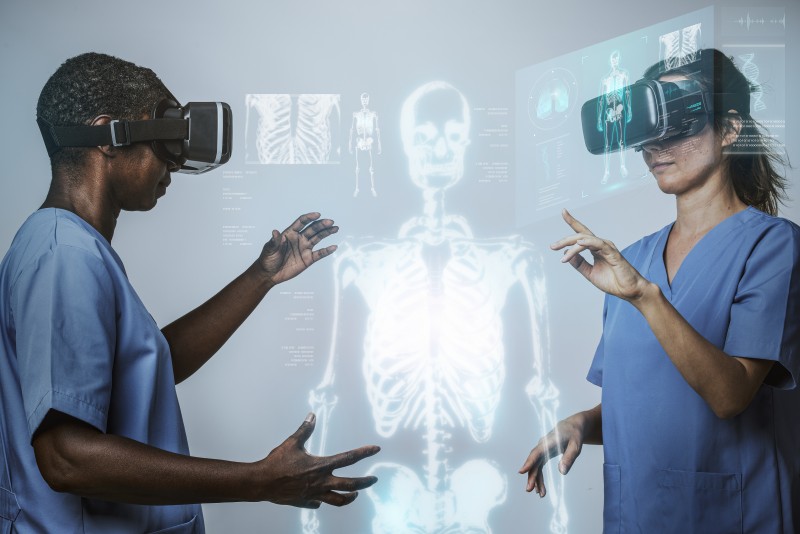
High-stakes training. Surgical residency programmes, military and aviation simulators, industrial maintenance for nuclear and offshore environments, and emergency-response drills all use VR because the alternative is a real operating room, a real aircraft, or a real reactor hall. The operational measurement that matters is time-to-competency on the real equipment after training, not “immersion score” or session enjoyment. When the comparison is made on that axis, headset-based training tends to win against video and against partial-task trainers for skills that involve spatial judgement under stress.
Clinical protocols with documented evidence. Exposure therapy for phobias and PTSD, pain distraction during procedures (burns dressings, dental work, paediatric venipuncture), motor rehabilitation after stroke, and balance training in older populations have peer-reviewed evidence behind them. This is a published-survey class of claim — the studies are real and the protocols are specific. What is not yet validated is “VR therapy” as a generic category. The strong clinical results come from particular protocols delivered by trained clinicians, not from handing a patient a headset.
Design review and remote collaboration on 3D artefacts. Architecture, automotive, aerospace, and large-scale industrial design teams use VR for the one thing flat screens genuinely cannot do: let three or four people walk around the same full-scale model and point at the same beam at the same time. The conversion lift here is not measured in clicks; it is measured in rework avoided when the design freezes.
Immersive entertainment and social formats. Gaming, location-based entertainment, and a slowly growing set of live-event experiences. The headset is the product, not an instrument for something else. This is the most price-elastic category, but also the one that has kept Meta Quest 3 and 3S in the consumer market.
Where the evidence is still mixed or thin
Two categories demand closer scrutiny than most vendor pitches provide. The first is general “VR education” as opposed to specific simulator-based training — the meta-analyses are far weaker than the LinkedIn posts, and many of the studies that do show positive effects compare VR against doing nothing rather than against a well-made video or a hands-on lab. The second is cognitive therapy for depression and ADHD focus training, where early signals exist but the protocols are not yet standardised and the effect sizes have not been independently replicated at scale.
This is an observed pattern across the AR/VR engagements we look at: the projects that ship and stay shipped have a specific, measurable job-to-be-done that VR is structurally better at. The projects that quietly fold are the ones where VR was the answer before the question was clearly stated.
The barriers that actually still bite
| Barrier | What it actually constrains in 2026 |
|---|---|
| Headset weight and battery | Comfortable session length 30–90 minutes for most current devices; longer sessions need tethered or swappable-battery rigs |
| Content production cost | Polished immersive minute remains expensive relative to video; reuse across projects is harder than it looks |
| Motion sickness fraction | Roughly 10–40% of users affected depending on content type (locomotion-heavy content worst) |
| Social-acceptance friction | Headsets in shared spaces still feel awkward; dedicated rooms or solo use dominate |
| Heterogeneous device fleet | Enterprise deployments span Quest 2, Quest 3/3S, Pico, Vision Pro — content has to render acceptably on the slowest tier |
Motion sickness quietly eliminates more potential users than any other single barrier. It is not the average user’s experience that decides whether a programme scales; it is the tail. If, illustratively, 20% of your warehouse staff cannot use the training module for more than ten minutes without nausea, the programme is functionally unavailable to a fifth of the workforce, and HR will retire it before procurement does.
How big is the VR market in 2026, really?
Adoption curves remain well below the projections circulated between 2015 and 2022. This is a market-direction observation, not an operational benchmark — annual headset shipments globally have settled in the single-digit millions rather than the tens or hundreds of millions that were sometimes projected. Apple Vision Pro confirmed that high-end spatial computing is a premium niche. Meta Quest 3 and 3S held the enthusiast and gamer base. Enterprise VR is healthy but small, concentrated in the training and design-review categories above.
The category survived; it did not become the next mobile. That is actually useful information for anyone planning a VR initiative — it means you can buy hardware confidently for a five-year horizon, but you should not stake a business on the assumption of a consumer-VR landslide that is not coming.
Engineering implications
Three patterns worth carrying into any VR programme:
- Pick the right comparison. The relevant question is whether the headset beats the next-best alternative, not whether it is “immersive”. Often the next-best alternative is a well-made video, a tablet app, or an in-person session. Sometimes VR wins; sometimes it does not. The honest comparison is what protects the budget.
- Budget for the device tier mix, not the flagship. This is the same discipline that governs virtual try-on at production scale: the pipeline has to hold its latency and rendering budget on the devices your users actually own. Building for Vision Pro and hoping Quest 2 catches up is how projects die quietly.
- Measure the tail, not the mean. Average session comfort hides the 20% who cannot tolerate the content; as a rule of thumb, that intolerant tail drives whether the programme scales past the pilot cohort. Measure the fifth-percentile experience and design to it.
At TechnoLynx we work on the engineering layer beneath these decisions — the GPU and CV pipelines that decide whether an AR/VR deployment holds its latency budget across a heterogeneous device fleet. The strategic question of whether VR is the right tool is one our clients usually answer themselves; our work begins once they have decided it is, and the production engineering has to survive contact with real users on real hardware.
Frequently asked questions
What does AR shopping actually mean at production scale — try-on, navigation, or storefront overlay?
In 2026 it is overwhelmingly try-on, with a small but growing fraction of in-store navigation in large-format retail. Storefront overlay (point your phone at a shop window and see content) has not scaled — the activation cost is too high relative to the engagement. Production AR retail is dominated by try-on for eyewear, cosmetics, footwear, and a slowly maturing apparel category, plus indoor wayfinding in flagship stores and warehouses.
How do virtual try-on systems handle clothing fit, eyewear, and cosmetics differently in the CV pipeline?
Eyewear and cosmetics are face-anchored: the CV pipeline tracks facial landmarks at high frame rate, and the rendering layer composites a 3D asset (frames) or a shader effect (lipstick, foundation) onto the live video. Clothing is body-anchored and far harder — it requires full or partial body pose estimation, garment simulation that responds to body shape, and either a learned drape model or a real-time physics pass. The accuracy bar for cosmetics is lower because users tolerate approximation; the bar for clothing fit is the one that decides whether returns drop.
What conversion lift is realistic for retail AR pilots today, and how is it measured?
This is an observed pattern across the retail-AR engagements we track rather than a benchmarked rate: well-executed try-on pilots tend to lift conversion in the categories where fit uncertainty is the dominant friction (eyewear, cosmetics, footwear). The honest measurement compares matched cohorts with and without the try-on flow, controls for traffic source, and includes return rates rather than only conversion. Vendors that quote a single conversion-lift number without that structure are usually quoting their best-case pilot.
Which technology stacks (Google try-on, Amazon, native ARKit) power production virtual try-on apps?
Three families dominate. Native ARKit and ARCore for in-house iOS and Android apps where the retailer owns the experience end-to-end. Platform try-on (Google’s apparel try-on, Amazon’s try-before-you-buy AR for select categories) for retailers who want reach without building. Specialist vendors (Perfect Corp, Modiface, Vyking) for cosmetics and footwear where the rendering quality and brand-asset pipeline matter more than platform reach. Most large retailers run a mix. Scoping which of those three families fits a specific store fleet is exactly the kind of assessment our retail computer-vision practice runs before a pilot is greenlit.
Where do AR retail pilots break down — model accuracy, latency, content pipeline, or merchandising integration?
Latency and content pipeline, in that order. Latency breaks the experience on mid-tier phones if the rendering tier is not chosen per device. Content pipeline breaks the programme economically — every new product needs a 3D asset, and the cost per SKU is what determines whether the catalogue ever reaches the long tail. Model accuracy is usually fine for the face-anchored categories and still maturing for apparel. Merchandising integration is the boring blocker: if the AR experience does not push to the same cart and inventory system as the rest of the site, it gets quietly retired.
How does AI-driven virtual try-on differ from classical AR overlays in deployment cost and result quality?
Classical AR overlays composite a pre-authored 3D asset onto tracked landmarks — cheap to render, expensive to author per SKU, and limited in how well the result conforms to the user’s actual body or face shape. AI-driven try-on uses learned models to generate or adapt the rendered image to the user, which raises result quality (especially for apparel and hair) but shifts cost into inference compute and into the training data the model needs. The deployment economics flip: classical AR pays per asset; AI try-on pays per inference. Which is cheaper depends on catalogue size and traffic volume.
Where biggest problems Virtual Reality leaves you
Selecting which technical limitations your organization can tolerate matters far more than the capabilities themselves. That answer is workload-specific, and it is worth writing down before you build. Image credits: Freepik