
Artificial Intelligence (AI) vs. Machine Learning Explained

Learn the differences between Artificial Intelligence (AI) and Machine Learning. Understand their applications, from NLP to driving cars, and how TechnoLynx can help.

Artificial Intelligence (AI) vs. Machine Learning Explained
Written by TechnoLynx Published on 20 Nov 2024

Artificial Intelligence and Machine Learning are often mentioned together. While closely related, they are not the same. They complement each other and drive modern technological advancements. From self-driving vehicles to chat assistants, their impact is visible in various areas of the real world.

What Is Artificial Intelligence?

Artificial Intelligence refers to systems or machines designed to mimic human thought processes. These systems can learn, reason, and make decisions, allowing them to perform tasks typically requiring human intelligence.

Examples include:

  • Systems that analyse complex data in healthcare.

  • Virtual assistants that respond to customer queries.

  • Applications in image recognition and video analysis.

The field includes various specialised areas:

Artificial intelligence technologies play a key role in industries but require responsible governance to ensure ethical and safe use.

What Is Machine Learning?

Machine Learning is a subset of Artificial Intelligence. It focuses on creating systems that improve performance by learning from data. It uses algorithms to analyse information and make predictions or decisions.

Three primary types of learning in this area include:

  • Supervised Learning: Using labelled data to train systems.

  • Unsupervised Learning: Finding patterns in unlabelled data.

  • Reinforcement Learning: Improving through trial and feedback.

Applications of machine learning include:

  • Systems that recommend products on shopping websites.

  • Algorithms that detect fraudulent transactions.

  • Predictive models in weather forecasting.

Read more: Machine learning in urban planning

Machine Learning Algorithms and Their Role

At the heart of machine learning lies the use of specialised algorithms. These are sets of instructions that enable systems to identify patterns within data. Different algorithms are applied depending on the task:

  • Decision Trees: These classify data based on conditions, often used for predicting outcomes.

  • Linear Regression: This finds relationships between variables and is common in forecasting.

  • Clustering Algorithms: These group similar data points without pre-labelling.

The choice of an algorithm depends on the goal. Machine learning algorithms are essential for powering technologies that predict trends or detect anomalies.

Machine Learning Models in Practice

Machine learning models are designed to learn from past data and improve their predictions. These models take in raw data sets, extract meaningful insights, and perform tasks that mimic human decision-making.

For example:

  • Spam Filters: Models detect spam emails based on certain patterns.

  • Product Recommendations: Online retailers use models to predict what customers may want to purchase.

  • Driving Cars: Autonomous vehicles analyse data from sensors and cameras to navigate safely.

Deep neural networks, a type of machine learning model, are especially powerful. They process vast amounts of information to detect hidden patterns, making them useful for image recognition, speech processing, and fraud detection.

Read more: Machine-learning to boost energy efficiency

How They Differ

Although closely connected, Artificial Intelligence and Machine Learning serve different functions. Artificial intelligence focuses on creating systems capable of simulating thought, while machine learning develops models that learn and improve based on data.

For example, a self-driving vehicle might use machine learning for recognising objects on the road and a broader artificial intelligence system for making decisions about navigation.

Working Together

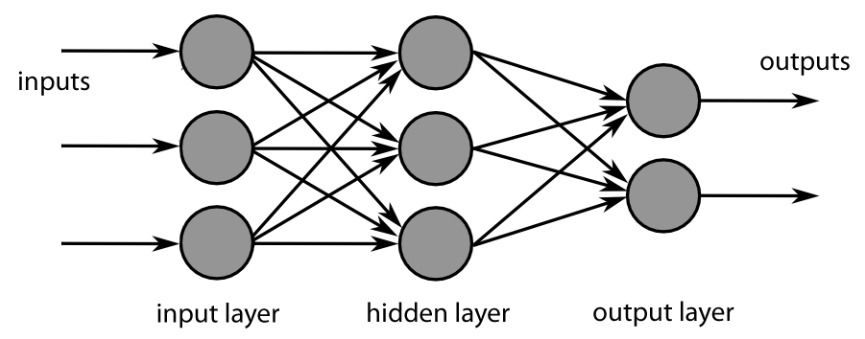
In most cases, the two concepts are not separate. Machine learning provides the tools for creating more advanced intelligent systems. Neural networks, which mimic the structure of the human brain, play a significant role in this. They process vast amounts of data and allow systems to recognise patterns, enabling intelligent behaviours in various applications.

Applications in Daily Life

The combination of these technologies is shaping numerous industries.

Healthcare

  • Automated tools support diagnosis and treatment recommendations.

  • Algorithms predict patient recovery trends.

Read more: AI and Machine Learning: Shaping the Future of Healthcare

Finance

  • Fraud detection systems monitor transactions.

  • Algorithms provide investment insights.

Read more: What are the key benefits of using AI in financial services?

Retail

  • Recommendation systems personalise shopping experiences.

  • Inventory management systems optimise stock based on demand.

Read more: The AI Innovations Behind Smart Retail

Automotive

  • Vehicles with advanced systems improve road safety.

  • Recognition tools identify pedestrians and road signs.

Read more: AI for Autonomous Vehicles: Redefining Transportation

These applications demonstrate their potential to handle tasks efficiently, often faster and more accurately than traditional methods.

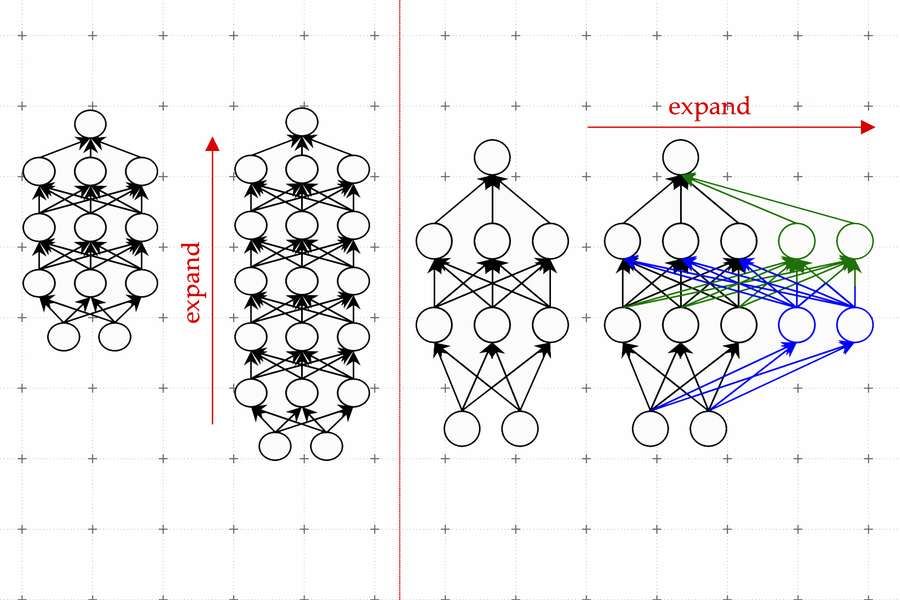
Read more: Growing machine learning models

Data as the Foundation

Data drives both areas. Without data, learning models cannot function effectively. The quality of information used to train these systems directly affects their performance.

The process involves:

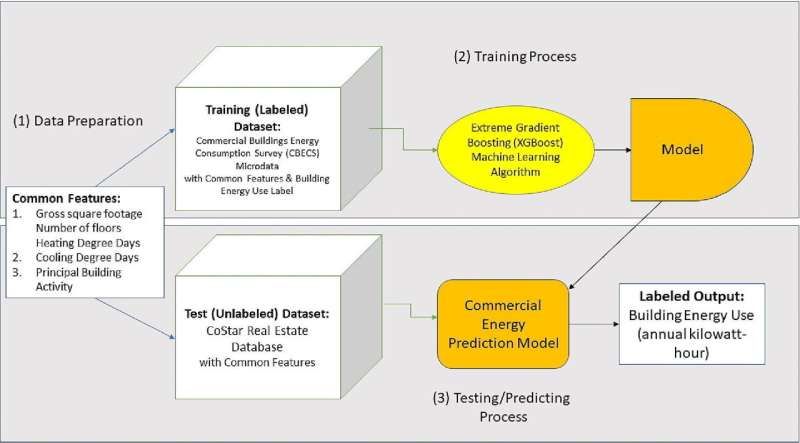
  • Training: Systems are exposed to data to recognise patterns and relationships.

  • Testing: After training, they are evaluated to ensure reliable results.

Data from diverse sources, such as text, images, or transactions, ensures robust and adaptable systems.

The Human Brain Analogy

Machine learning systems are often compared to the human brain. Neural networks mimic how the brain processes information. These networks allow systems to recognise objects in images, translate text, or respond to spoken commands. However, unlike humans, machines require structured data to perform these tasks.

The Impact of Generative AI

Generative AI focuses on creating content, such as text, images, or music, by mimicking existing patterns. This is achieved through models trained on vast data sets. Unlike traditional systems, which follow strict rules, generative AI systems create original outputs that resemble human work.

Applications include:

  • Content Creation: Writing articles or designing graphics.

  • Virtual Assistants: Producing human-like conversations.

  • Medical Imaging: Generating synthetic images for training medical professionals.

Generative AI has brought significant advancements but requires careful governance to ensure ethical and accurate usage.

Data Sets: The Building Blocks of AI

The performance of any AI system depends on the quality of data sets used for training. These sets contain samples that help the system learn patterns, rules, and relationships.

For instance:

Poor-quality data can lead to biased results, emphasising the need for thorough preparation and validation.

AI Systems in the Real World

AI systems have become integral to solving real-world challenges. They can process and analyse data faster than humans. From managing traffic flow in cities to assisting doctors in diagnosing diseases, these systems deliver measurable outcomes.

For example:

By applying cutting-edge machine learning technologies, organisations improve operational efficiency and customer satisfaction.

Deep Neural Networks: Advancing AI

Deep neural networks simulate how the human brain processes information. These networks consist of layers of interconnected nodes, which pass data through a series of operations.

They are highly effective in applications like:

  • Facial Recognition: Identifying people from images.

  • Speech Processing: Transcribing spoken words into text.

  • Autonomous Driving: Making decisions in real time.

Deep neural networks power many generative AI systems, enabling machines to create images or compose music. They play a crucial role in advancing both artificial intelligence and computer science.

AI Governance: Why It Matters

As AI technologies grow more influential, ensuring their responsible use is essential. AI governance involves creating guidelines for ethical and fair applications of these systems. It addresses key issues such as bias, privacy, and accountability.

For instance:

  • Bias in Data Sets: Ensuring diverse and inclusive training data.

  • Transparency: Explaining how machine learning models make decisions.

  • Security: Protecting sensitive information from misuse.

Good governance ensures AI systems deliver value without causing harm.

Challenges and Governance

With the growing adoption of these systems, challenges arise. Ethical considerations, bias in data, and accountability are critical issues. Proper frameworks ensure these technologies are used responsibly and benefit society.

How TechnoLynx Can Help

TechnoLynx specialises in providing tailored solutions using these advanced technologies. Our team develops efficient learning models, ensuring seamless integration into your business. From predictive analytics to natural language processing applications, we deliver systems that address your specific needs.

Whether you need assistance with training data, implementing cutting-edge systems, or guidance on governance, TechnoLynx offers reliable expertise. Contact us now to find out!

Continue reading: Machine Learning versus Deep Learning

Check our Solutions to see more of our offerings!

Image credits: Freepik

Cost, Efficiency, and Value Are Not the Same Metric

Cost, Efficiency, and Value Are Not the Same Metric

17/04/2026

Performance per dollar. Tokens per watt. Cost per request. These sound like the same thing said differently, but they measure genuinely different dimensions of AI infrastructure economics. Conflating them leads to infrastructure decisions that optimize for the wrong objective.

Precision Is an Economic Lever in Inference Systems

Precision Is an Economic Lever in Inference Systems

17/04/2026

Precision isn't just a numerical setting — it's an economic one. Choosing FP8 over BF16, or INT8 over FP16, changes throughput, latency, memory footprint, and power draw simultaneously. For inference at scale, these changes compound into significant cost differences.

Precision Choices Are Constrained by Hardware Architecture

Precision Choices Are Constrained by Hardware Architecture

17/04/2026

You can't run FP8 inference on hardware that doesn't have FP8 tensor cores. Precision format decisions are conditional on the accelerator's architecture — its tensor core generation, native format support, and the efficiency penalties for unsupported formats.

Steady-State Performance, Cost, and Capacity Planning

Steady-State Performance, Cost, and Capacity Planning

17/04/2026

Capacity planning built on peak performance numbers over-provisions or under-delivers. Real infrastructure sizing requires steady-state throughput — the predictable, sustained output the system actually delivers over hours and days, not the number it hit in the first five minutes.

How Benchmark Context Gets Lost in Procurement

How Benchmark Context Gets Lost in Procurement

16/04/2026

A benchmark result starts with full context — workload, software stack, measurement conditions. By the time it reaches a procurement deck, all that context is gone. The failure mode is not wrong benchmarks but context loss during propagation.

Building an Audit Trail: Benchmarks as Evidence for Governance and Risk

Building an Audit Trail: Benchmarks as Evidence for Governance and Risk

16/04/2026

High-value AI hardware decisions need traceable evidence, not slide-deck bullet points. When benchmarks are documented with methodology, assumptions, and limitations, they become auditable institutional evidence — defensible under scrutiny and revisitable when conditions change.

The Comparability Protocol: Why Benchmark Methodology Defines What You Can Compare

The Comparability Protocol: Why Benchmark Methodology Defines What You Can Compare

16/04/2026

Two benchmark scores can only be compared if they share a declared methodology — the same workload, precision, measurement protocol, and reporting conditions. Without that contract, the comparison is arithmetic on numbers of unknown provenance.

A Decision Framework for Choosing AI Hardware

A Decision Framework for Choosing AI Hardware

16/04/2026

Hardware selection is a multivariate decision under uncertainty — not a score comparison. This framework walks through the steps: defining the decision, matching evaluation to deployment, measuring what predicts production, preserving tradeoffs, and building a repeatable process.

How Benchmarks Shape Organizations Before Anyone Reads the Score

How Benchmarks Shape Organizations Before Anyone Reads the Score

16/04/2026

Before a benchmark score informs a purchase, it has already shaped what gets optimized, what gets reported, and what the organization considers important. Benchmarks function as decision infrastructure — and that influence deserves more scrutiny than the number itself.

Accuracy Loss from Lower Precision Is Task‑Dependent

Accuracy Loss from Lower Precision Is Task‑Dependent

16/04/2026

Reduced precision does not produce a uniform accuracy penalty. Sensitivity depends on the task, the metric, and the evaluation setup — and accuracy impact cannot be assumed without measurement.

Precision Is a Design Parameter, Not a Quality Compromise

Precision Is a Design Parameter, Not a Quality Compromise

16/04/2026

Numerical precision is an explicit design parameter in AI systems, not a moral downgrade in quality. This article reframes precision as a representation choice with intentional trade-offs, not a concession made reluctantly.

Mixed Precision Works by Exploiting Numerical Tolerance

Mixed Precision Works by Exploiting Numerical Tolerance

16/04/2026

Not every multiplication deserves 32 bits. Mixed precision works because neural network computations have uneven numerical sensitivity — some operations tolerate aggressive precision reduction, others don't — and the performance gains come from telling them apart.

Throughput vs Latency: Choosing the Wrong Optimization Target

16/04/2026

Throughput and latency are different objectives that often compete for the same resources. This article explains the trade-off, why batch size reshapes behavior, and why percentiles matter more than averages in latency-sensitive systems.

Quantization Is Controlled Approximation, Not Model Damage

16/04/2026

When someone says 'quantize the model,' the instinct is to hear 'degrade the model.' That framing is wrong. Quantization is controlled numerical approximation — a deliberate engineering trade-off with bounded, measurable error characteristics — not an act of destruction.

GPU Utilization Is Not Performance

15/04/2026

The utilization percentage in nvidia-smi reports kernel scheduling activity, not efficiency or throughput. This article explains the metric's exact definition, why it routinely misleads in both directions, and what to pair it with for accurate performance reads.

FP8, FP16, and BF16 Represent Different Operating Regimes

15/04/2026

FP8 is not just 'half of FP16.' Each numerical format encodes a different set of assumptions about range, precision, and risk tolerance. Choosing between them means choosing operating regimes — different trade-offs between throughput, numerical stability, and what the hardware can actually accelerate.

Peak Performance vs Steady‑State Performance in AI

15/04/2026

AI systems rarely operate at peak. This article defines the peak vs. steady-state distinction, explains when each regime applies, and shows why evaluations that capture only peak conditions mischaracterize real-world throughput.

The Software Stack Is a First‑Class Performance Component

15/04/2026

Drivers, runtimes, frameworks, and libraries define the execution path that determines GPU throughput. This article traces how each software layer introduces real performance ceilings and why version-level detail must be explicit in any credible comparison.

The Mythology of 100% GPU Utilization

15/04/2026

Is 100% GPU utilization bad? Will it damage the hardware? Should you be worried? For datacenter AI workloads, sustained high utilization is normal — and the anxiety around it usually reflects gaming-era intuitions that don't apply.

Why Benchmarks Fail to Match Real AI Workloads

15/04/2026

The word 'realistic' gets attached to benchmarks freely, but real AI workloads have properties that synthetic benchmarks structurally omit: variable request patterns, queuing dynamics, mixed operations, and workload shapes that change the hardware's operating regime.

Why Identical GPUs Often Perform Differently

15/04/2026

'Same GPU' does not imply the same performance. This article explains why system configuration, software versions, and execution context routinely outweigh nominal hardware identity.

Training and Inference Are Fundamentally Different Workloads

15/04/2026

A GPU that excels at training may disappoint at inference, and vice versa. Training and inference stress different system components, follow different scaling rules, and demand different optimization strategies. Treating them as interchangeable is a design error.

Performance Ownership Spans Hardware and Software Teams

15/04/2026

When an AI workload underperforms, attribution is the first casualty. Hardware blames software. Software blames hardware. The actual problem lives in the gap between them — and no single team owns that gap.

Performance Emerges from the Hardware × Software Stack

15/04/2026

AI performance is an emergent property of hardware, software, and workload operating together. This article explains why outcomes cannot be attributed to hardware alone and why the stack is the true unit of performance.

Power, Thermals, and the Hidden Governors of Performance

14/04/2026

Every GPU has a physical ceiling that sits below its theoretical peak. Power limits, thermal throttling, and transient boost clocks mean that the performance you read on the spec sheet is not the performance the hardware sustains. The physics always wins.

Why AI Performance Changes Over Time

14/04/2026

That impressive throughput number from the first five minutes of a training run? It probably won't hold. AI workload performance shifts over time due to warmup effects, thermal dynamics, scheduling changes, and memory pressure. Understanding why is the first step toward trustworthy measurement.

CUDA, Frameworks, and Ecosystem Lock-In

14/04/2026

Why is it so hard to switch away from CUDA? Because the lock-in isn't in the API — it's in the ecosystem. Libraries, tooling, community knowledge, and years of optimization create switching costs that no hardware swap alone can overcome.

GPUs Are Part of a Larger System

14/04/2026

CPU overhead, memory bandwidth, PCIe topology, and host-side scheduling routinely limit what a GPU can deliver — even when the accelerator itself has headroom. This article maps the non-GPU bottlenecks that determine real AI throughput.

Why AI Performance Must Be Measured Under Representative Workloads

14/04/2026

Spec sheets, leaderboards, and vendor numbers cannot substitute for empirical measurement under your own workload and stack. Defensible performance conclusions require representative execution — not estimates, not extrapolations.

Low GPU Utilization: Where the Real Bottlenecks Hide

14/04/2026

When GPU utilization drops below expectations, the cause usually isn't the GPU itself. This article traces common bottleneck patterns — host-side stalls, memory-bandwidth limits, pipeline bubbles — that create the illusion of idle hardware.

Why GPU Performance Is Not a Single Number

14/04/2026

AI GPU performance is multi-dimensional and workload-dependent. This article explains why scalar rankings collapse incompatible objectives and why 'best GPU' questions are structurally underspecified.

What a GPU Benchmark Actually Measures

14/04/2026

A benchmark result is not a hardware measurement — it is an execution measurement. The GPU, the software stack, and the workload all contribute to the number. Reading it correctly requires knowing which parts of the system shaped the outcome.

Why Spec‑Sheet Benchmarking Fails for AI

14/04/2026

GPU spec sheets describe theoretical limits. This article explains why real AI performance is an execution property shaped by workload, software, and sustained system behavior.

Planning GPU Memory for Deep Learning Training

16/02/2026

GPU memory estimation for deep learning: calculating weight, activation, and gradient buffers so you can predict whether a training run fits before it crashes.

CUDA AI for the Era of AI Reasoning

11/02/2026

How CUDA underpins AI inference: kernel execution, memory hierarchy, and the software decisions that determine whether a model uses the GPU efficiently or wastes it.

Deep Learning Models for Accurate Object Size Classification

27/01/2026

A clear and practical guide to deep learning models for object size classification, covering feature extraction, model architectures, detection pipelines, and real‑world considerations.

GPU vs TPU vs CPU: Performance and Efficiency Explained

10/01/2026

CPU, GPU, and TPU compared for AI workloads: architecture differences, energy trade-offs, practical pros and cons, and a decision framework for choosing the right accelerator.

AI and Data Analytics in Pharma Innovation

15/12/2025

Machine learning in pharma: applying biomarker analysis, adverse event prediction, and data pipelines to regulated pharmaceutical research and development workflows.

Visual Computing in Life Sciences: Real-Time Insights

6/11/2025

Learn how visual computing transforms life sciences with real-time analysis, improving research, diagnostics, and decision-making for faster, accurate outcomes.

AI-Driven Aseptic Operations: Eliminating Contamination

21/10/2025

Learn how AI-driven aseptic operations help pharmaceutical manufacturers reduce contamination, improve risk assessment, and meet FDA standards for safe, sterile products.

AI Visual Quality Control: Assuring Safe Pharma Packaging

20/10/2025

See how AI-powered visual quality control ensures safe, compliant, and high-quality pharmaceutical packaging across a wide range of products.

AI for Reliable and Efficient Pharmaceutical Manufacturing

15/10/2025

See how AI and generative AI help pharmaceutical companies optimise manufacturing processes, improve product quality, and ensure safety and efficacy.

Barcodes in Pharma: From DSCSA to FMD in Practice

25/09/2025

What the 2‑D barcode and seal on your medicine mean, how pharmacists scan packs, and why these checks stop fake medicines reaching you.

Pharma’s EU AI Act Playbook: GxP‑Ready Steps

24/09/2025

A clear, GxP‑ready guide to the EU AI Act for pharma and medical devices: risk tiers, GPAI, codes of practice, governance, and audit‑ready execution.

Cell Painting: Fixing Batch Effects for Reliable HCS

23/09/2025

Reduce batch effects in Cell Painting. Standardise assays, adopt OME‑Zarr, and apply robust harmonisation to make high‑content screening reproducible.

Explainable Digital Pathology: QC that Scales

22/09/2025

Raise slide quality and trust in AI for digital pathology with robust WSI validation, automated QC, and explainable outputs that fit clinical workflows.

Validation‑Ready AI for GxP Operations in Pharma

19/09/2025

Make AI systems validation‑ready across GxP. GMP, GCP and GLP. Build secure, audit‑ready workflows for data integrity, manufacturing and clinical trials.

Edge Imaging for Reliable Cell and Gene Therapy

17/09/2025

Edge imaging transforms cell & gene therapy manufacturing with real‑time monitoring, risk‑based control and Annex 1 compliance for safer, faster production.

Back See Blogs
arrow icon